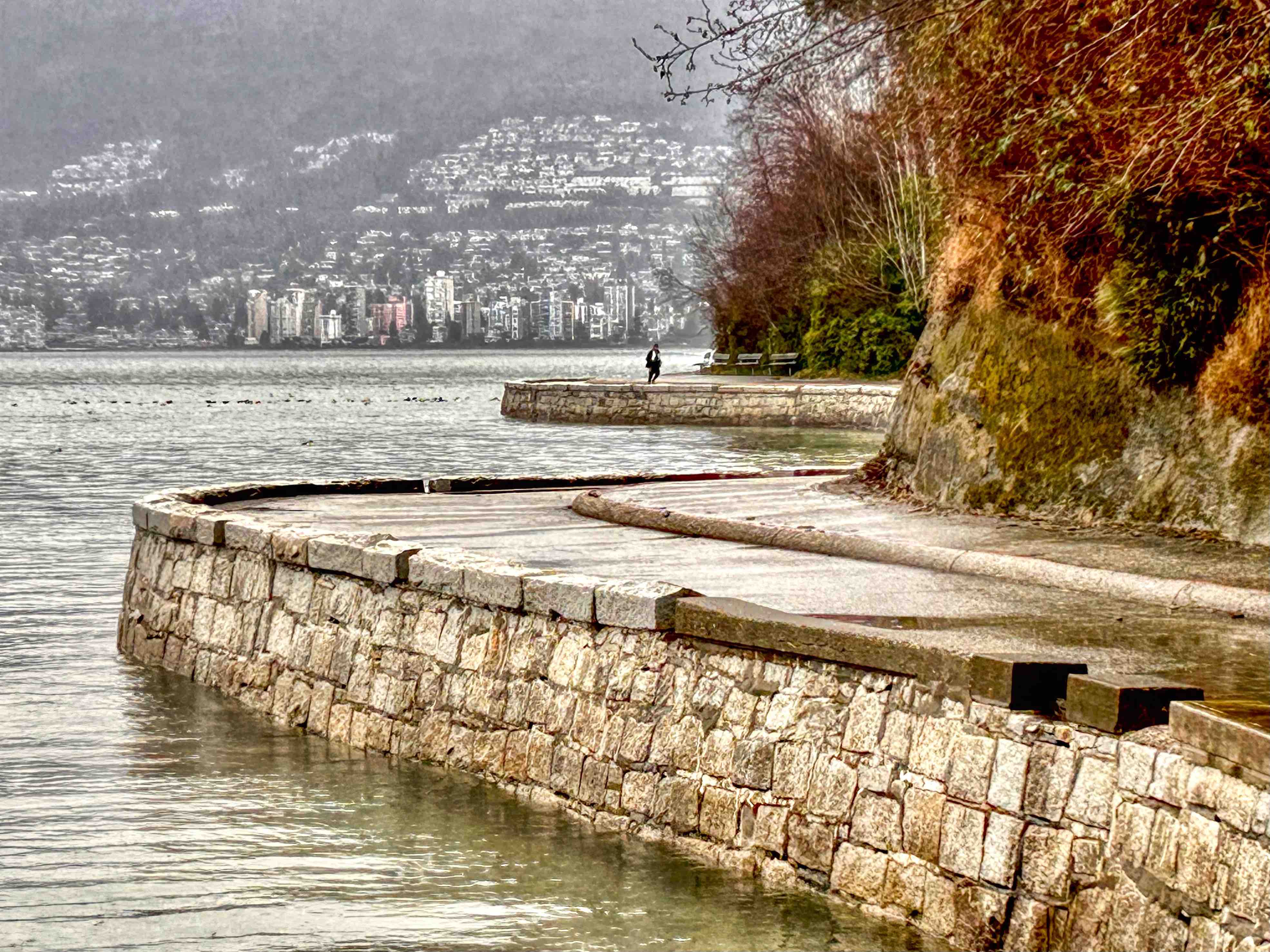
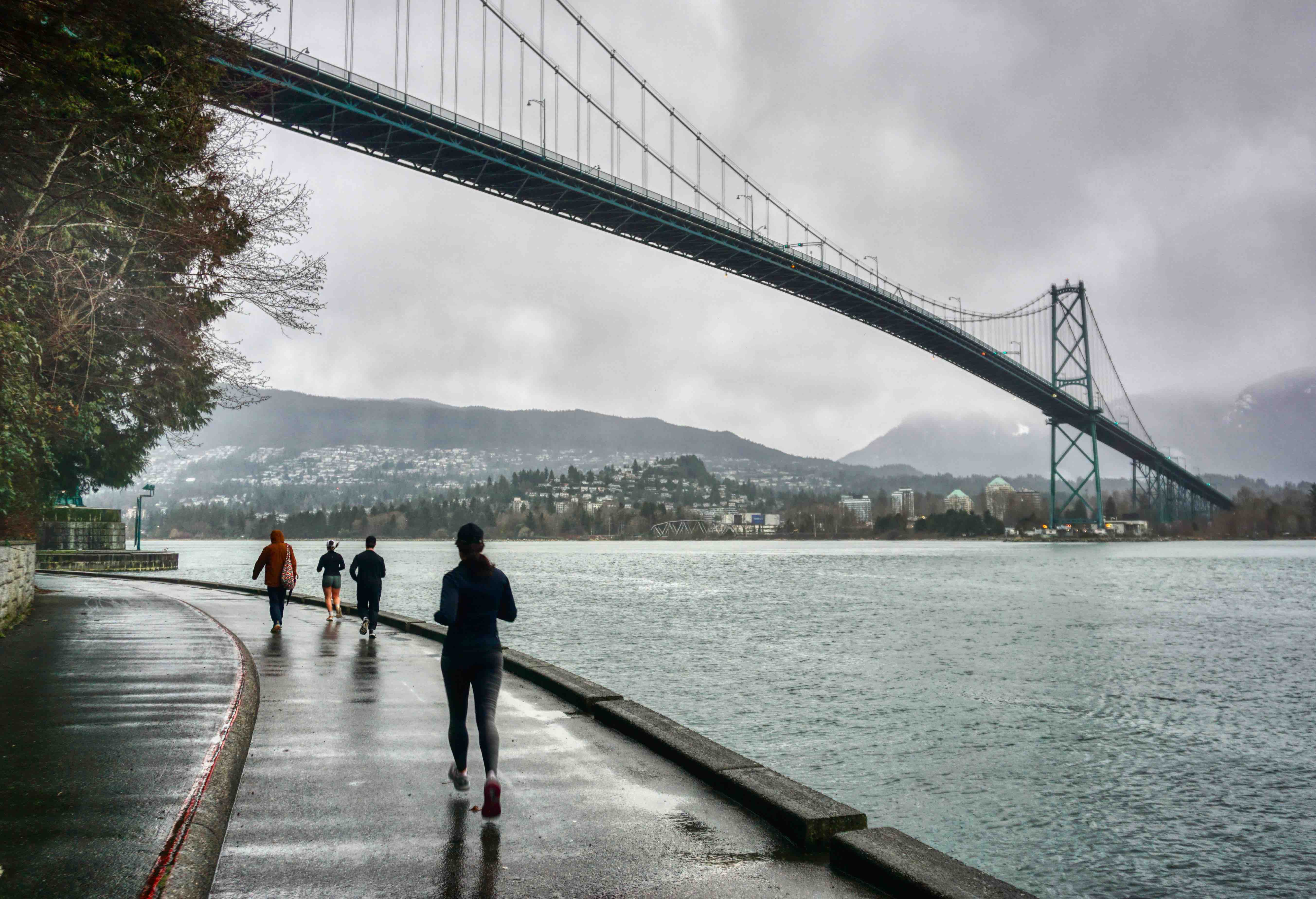
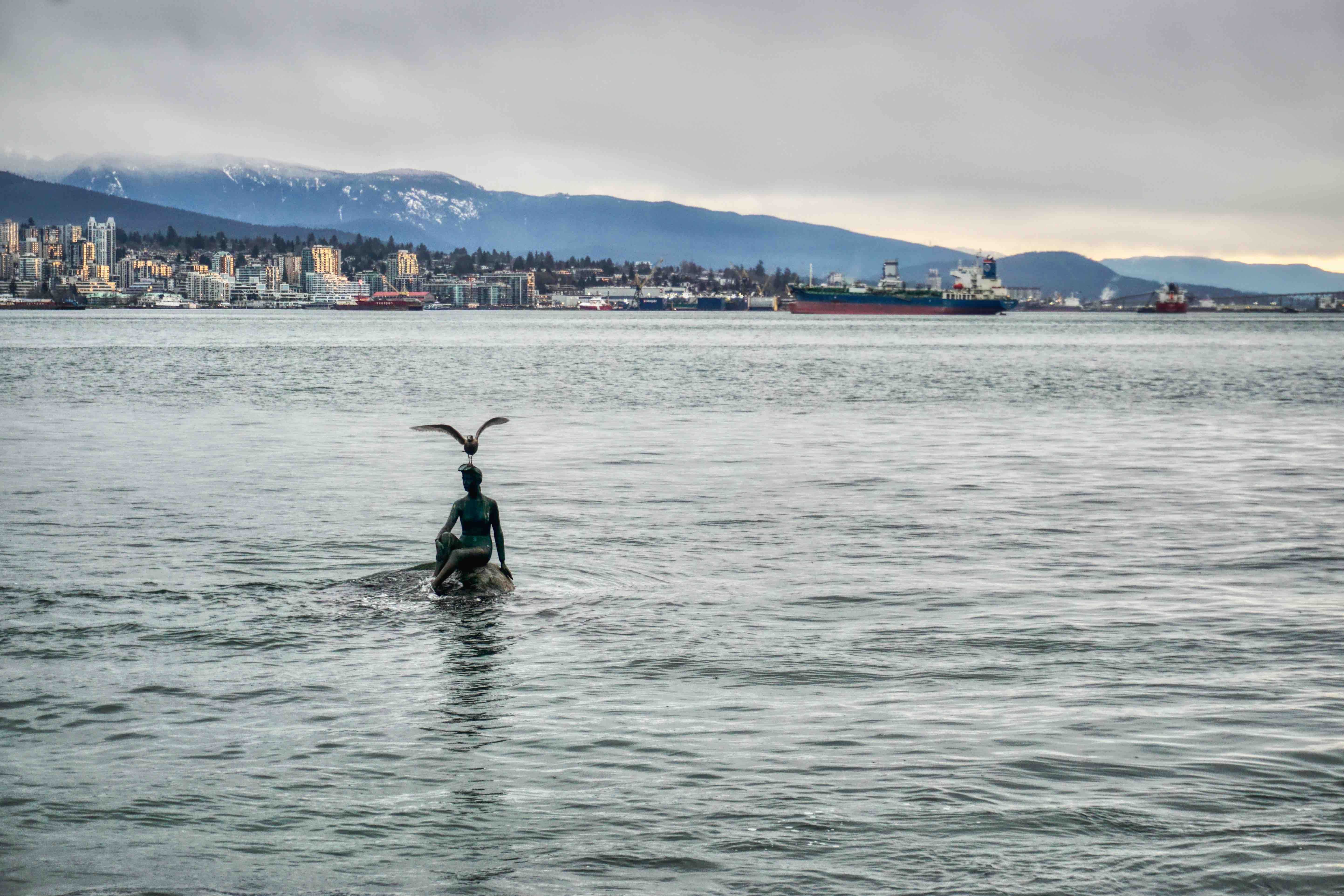
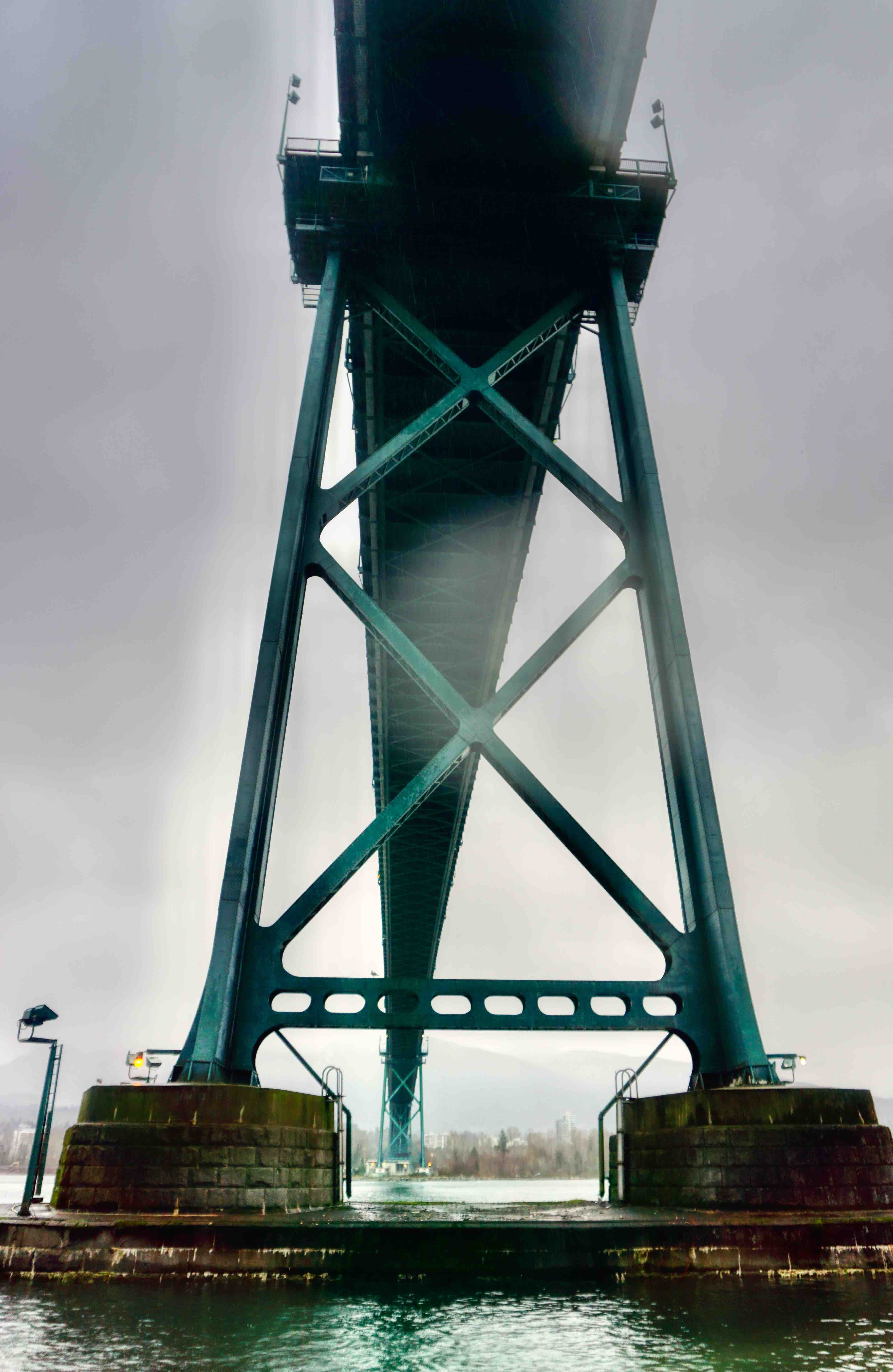
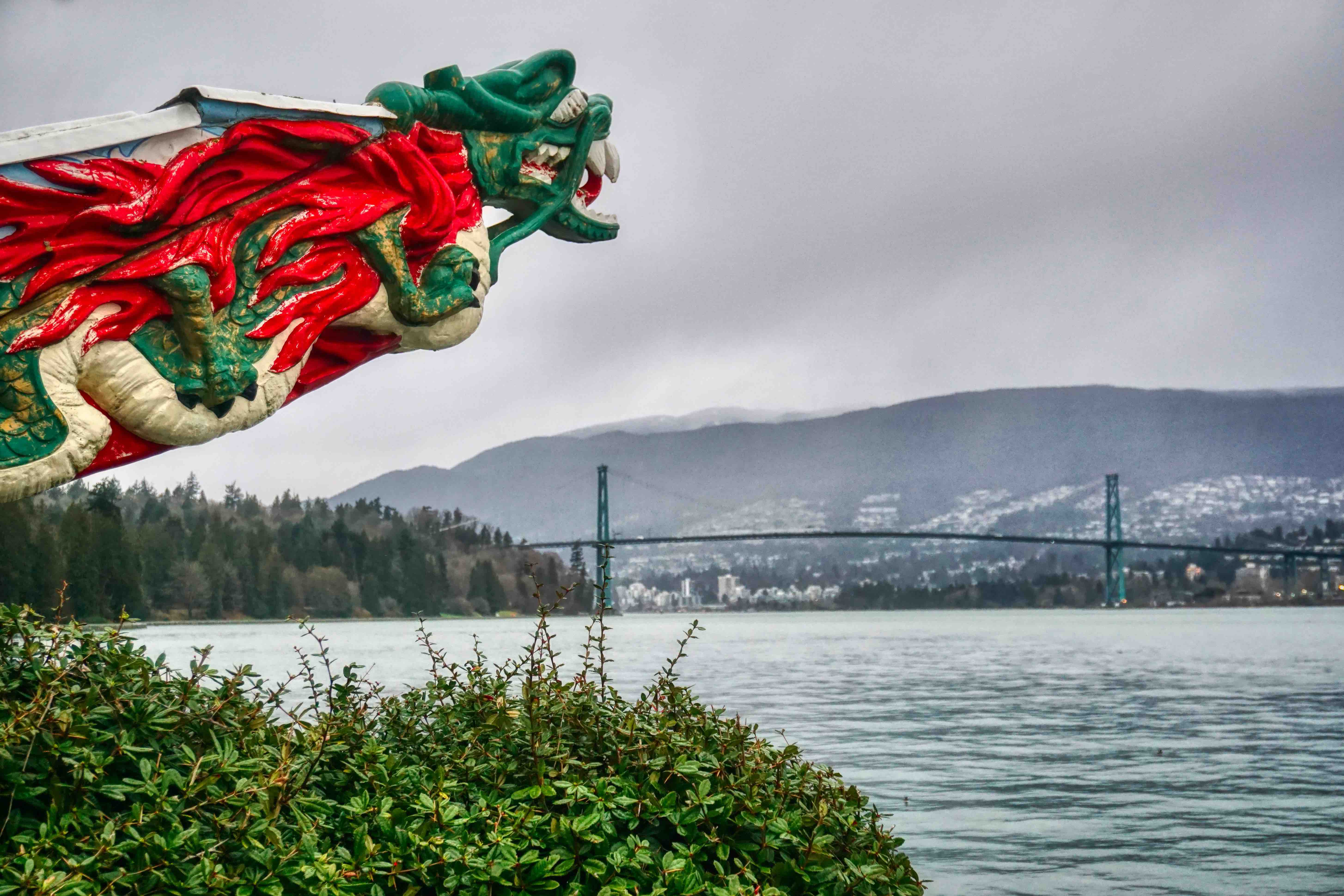
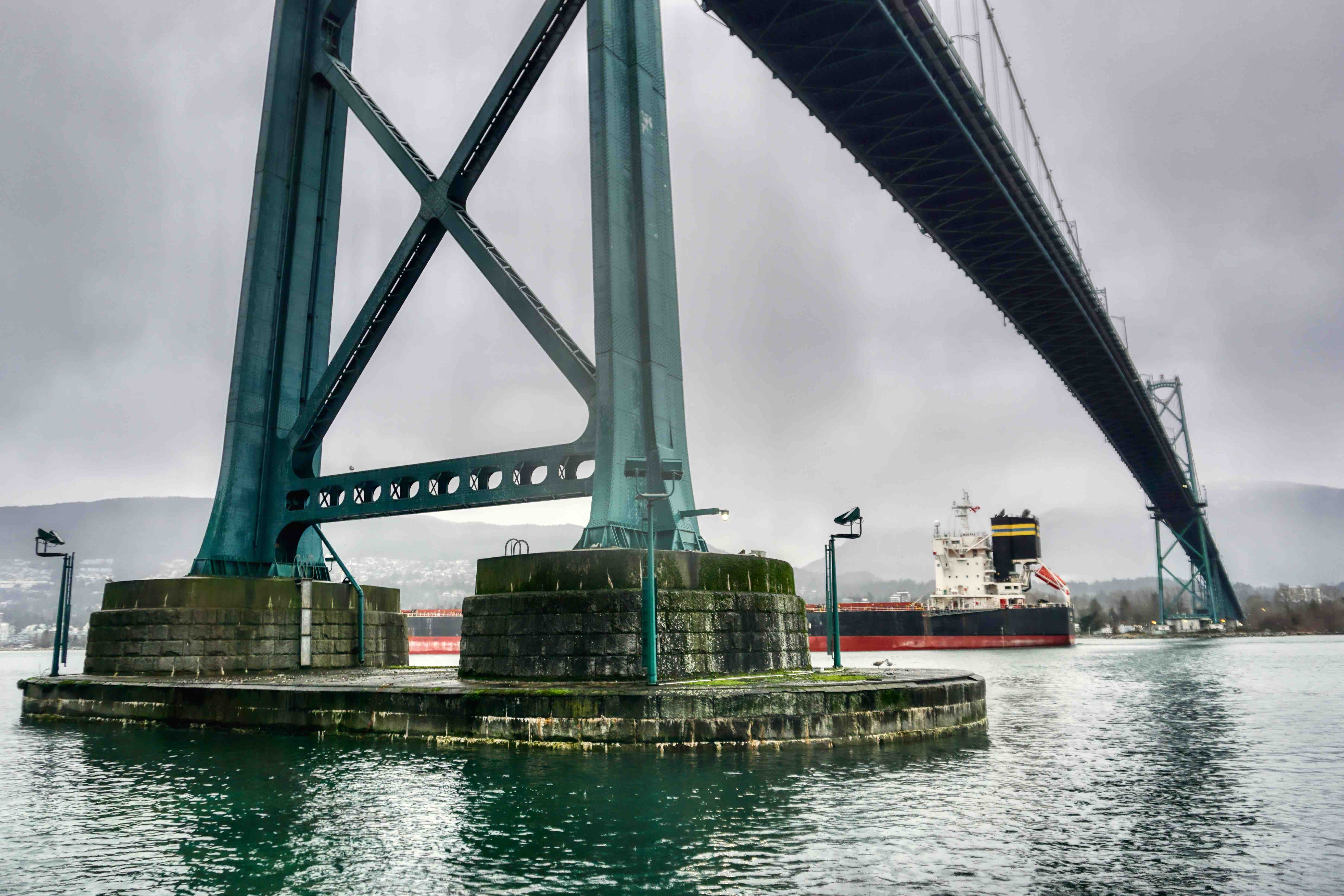
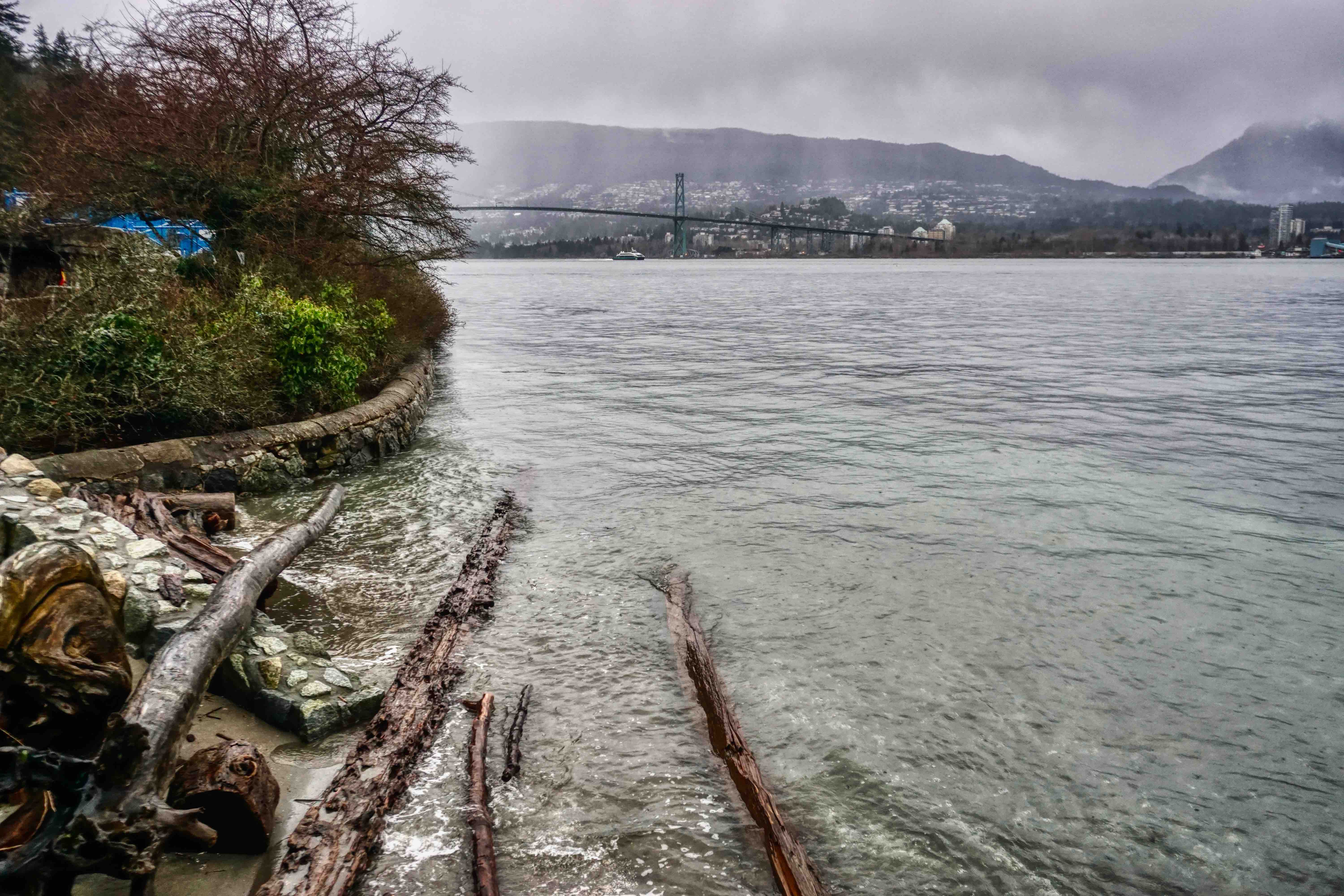
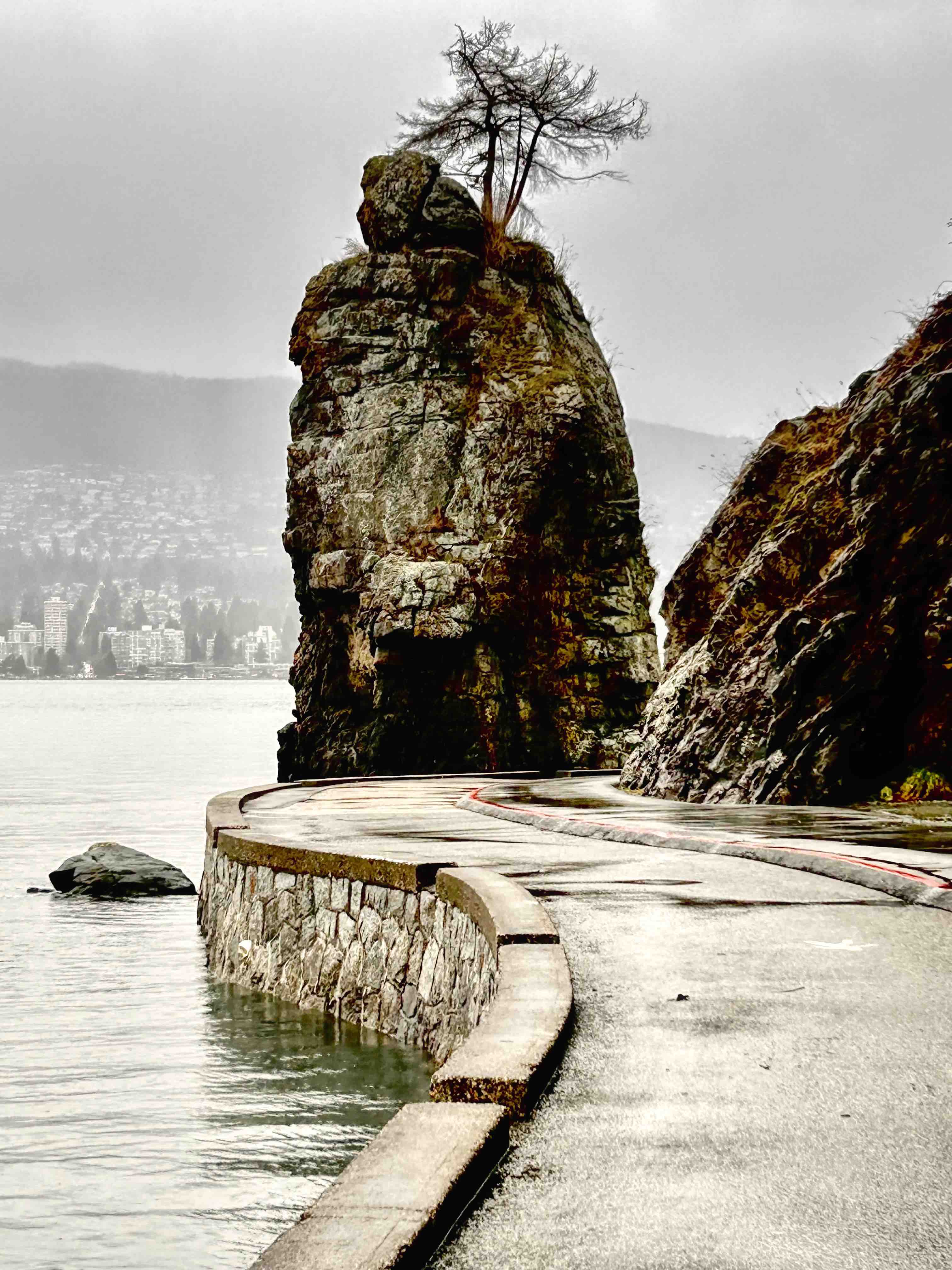
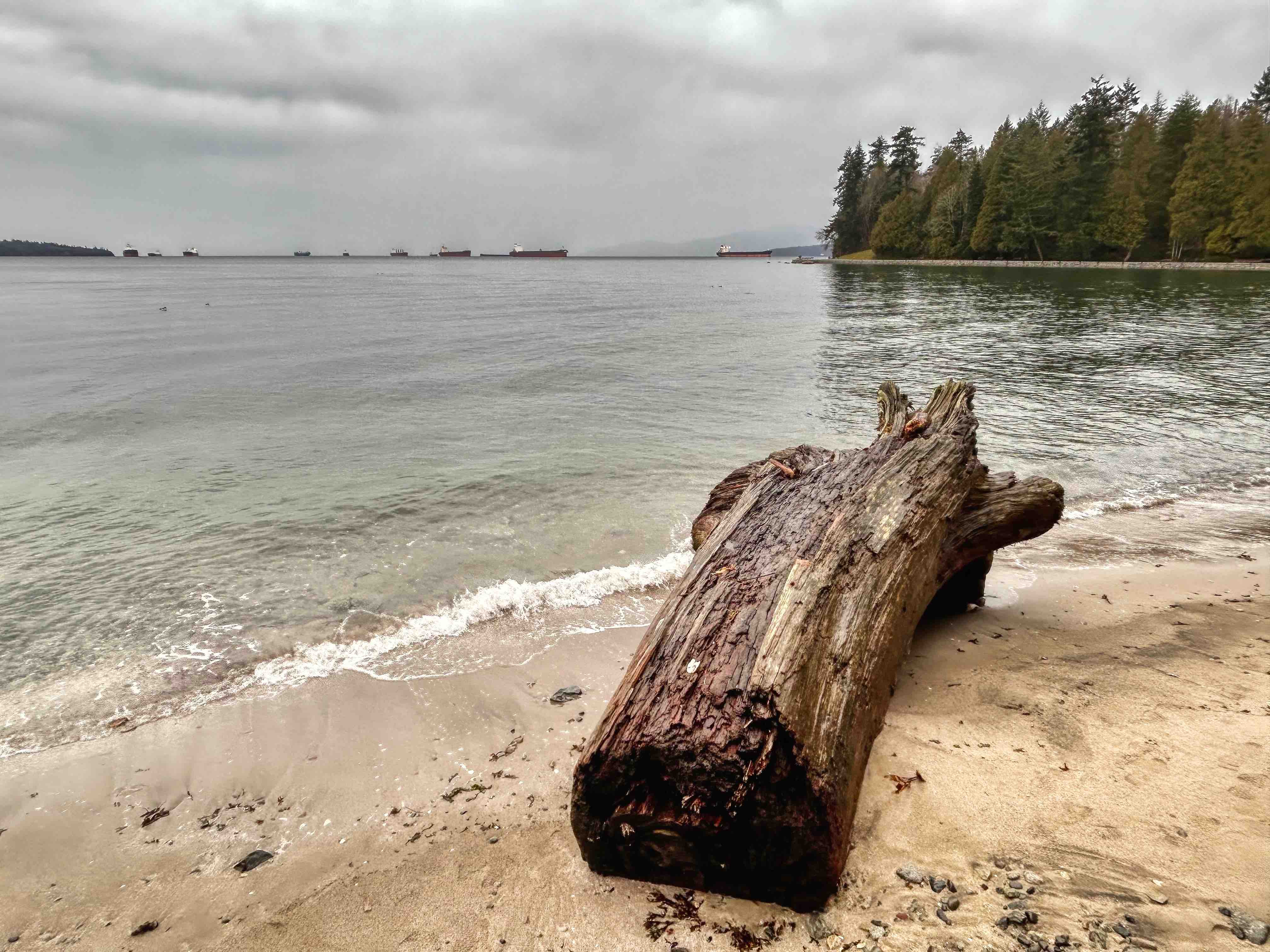
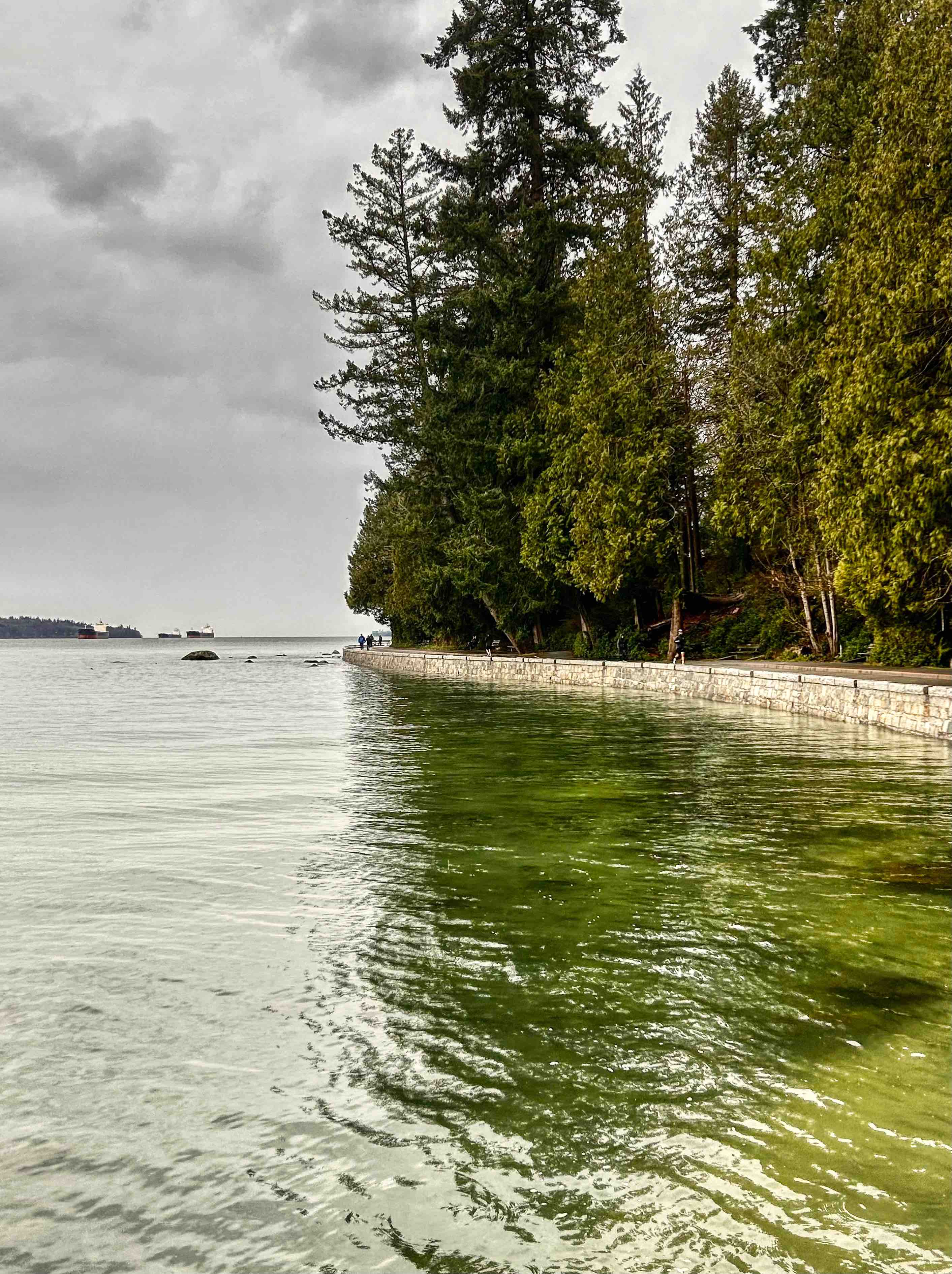
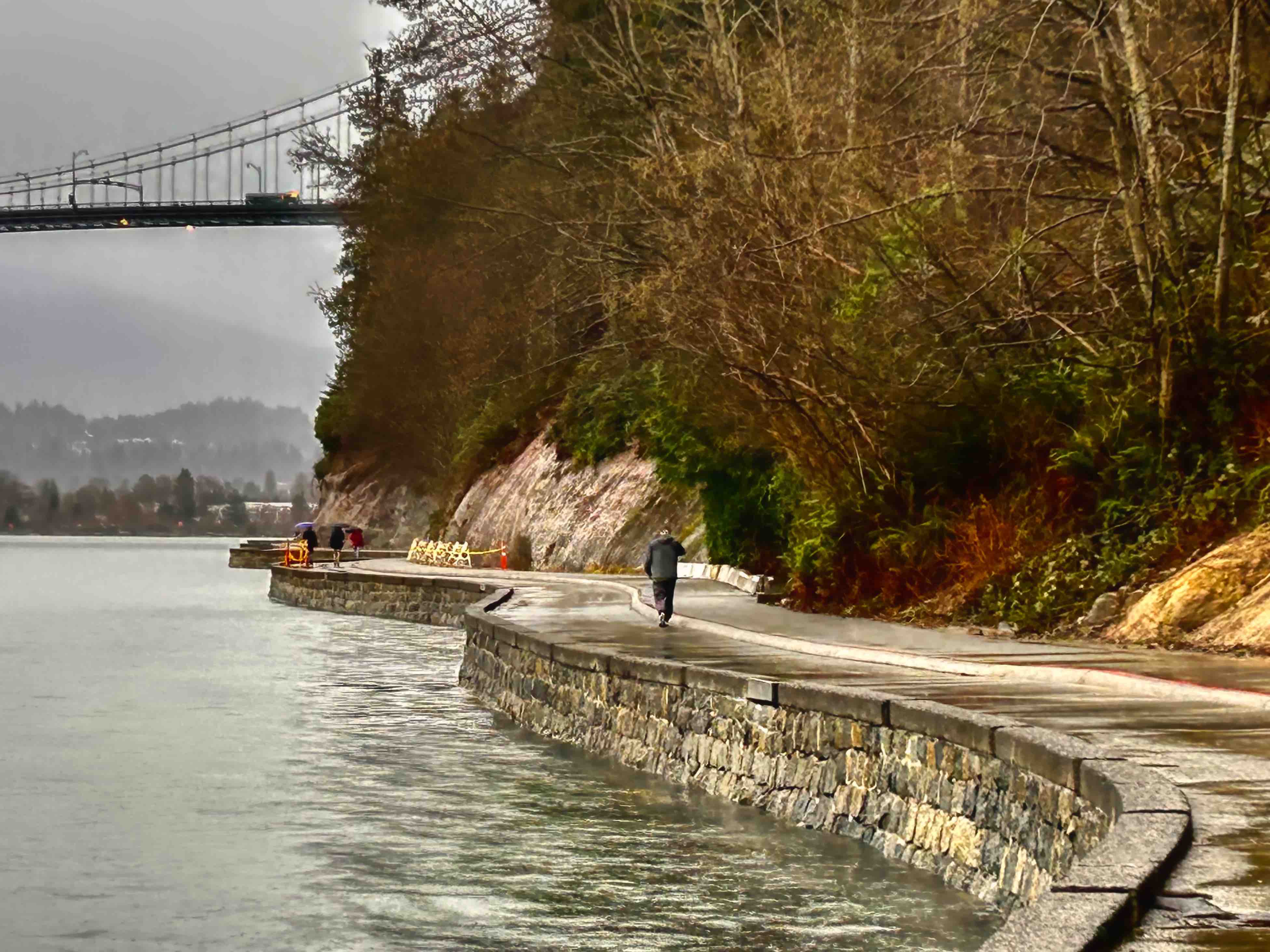
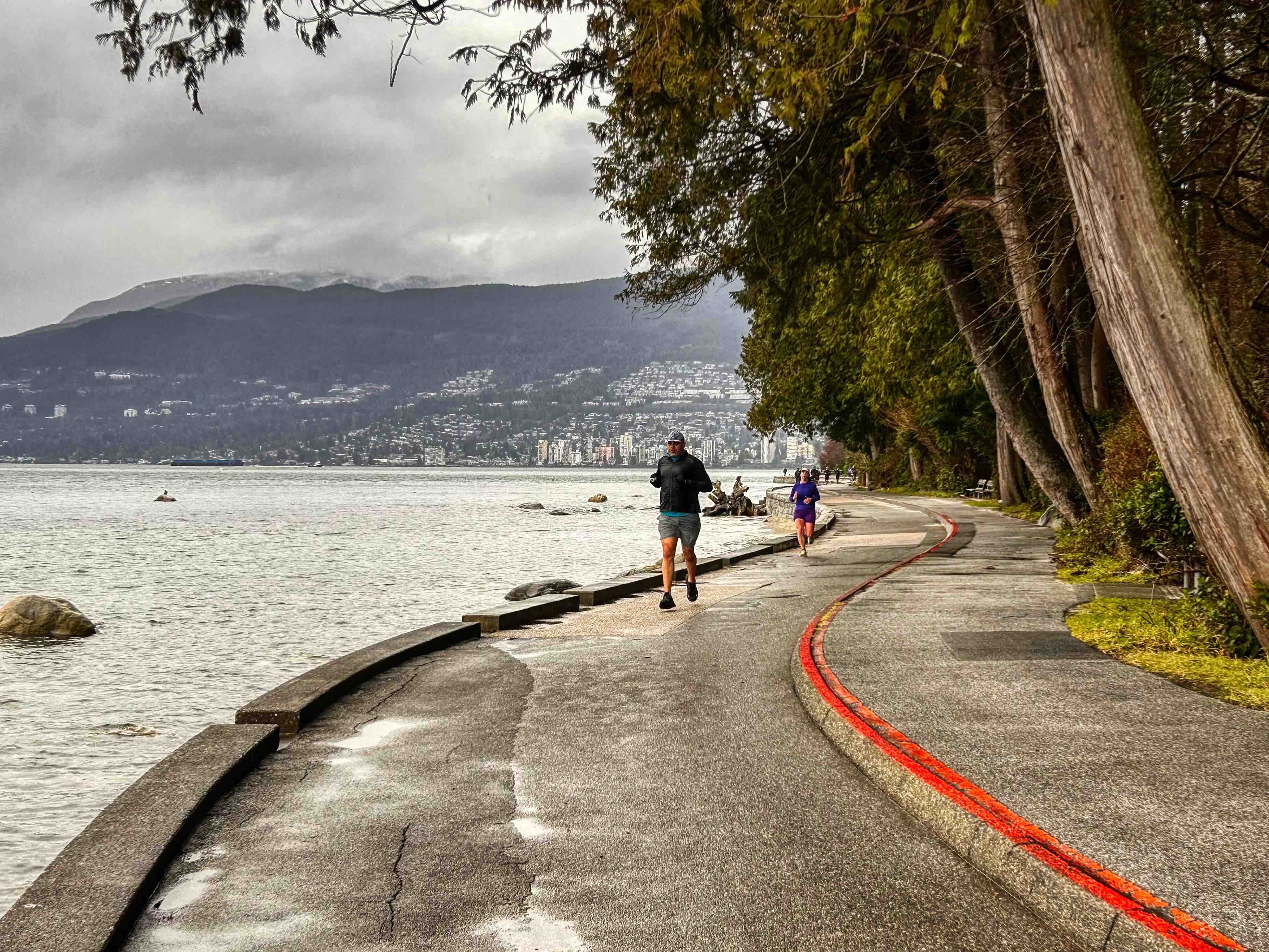
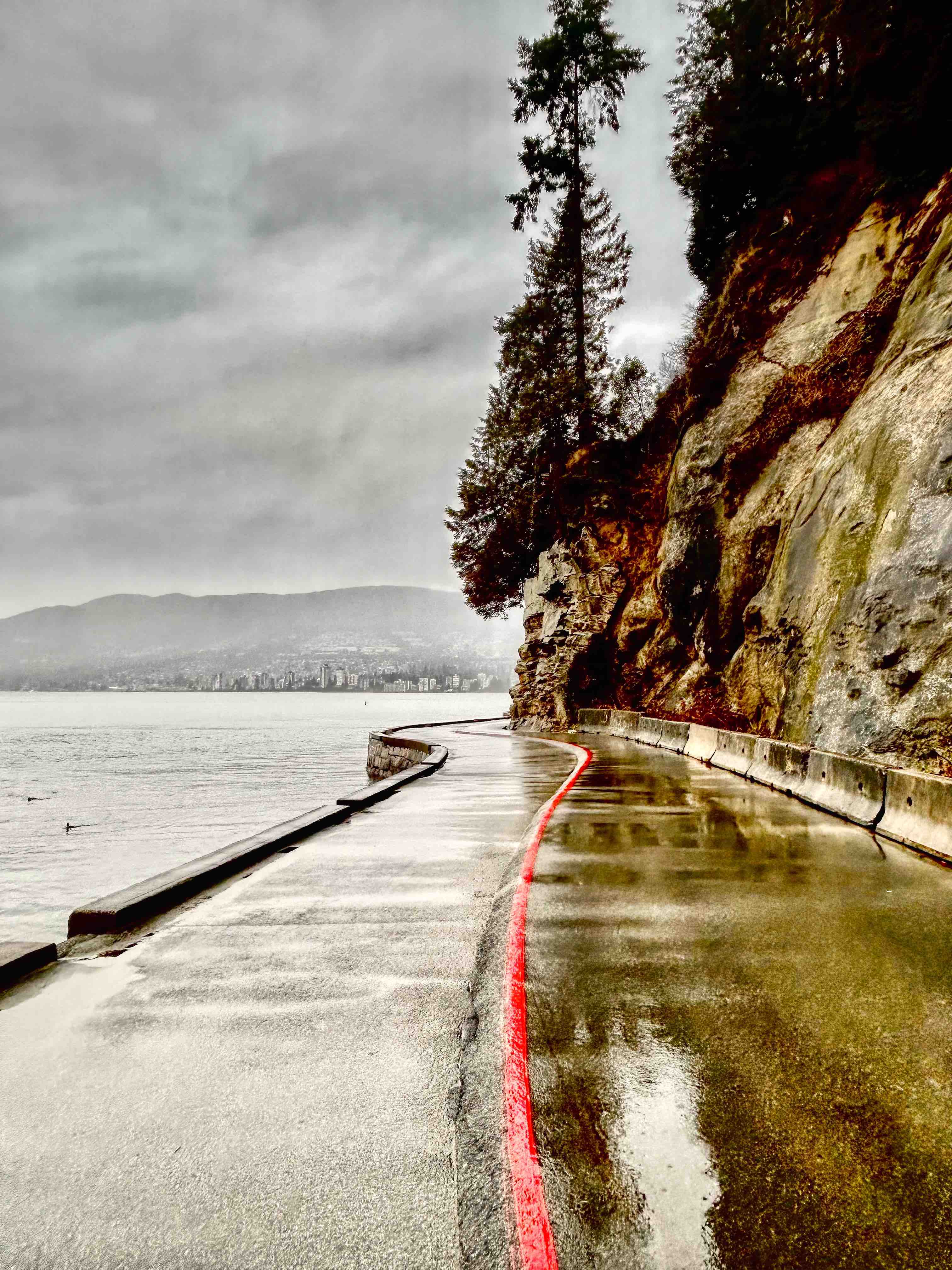
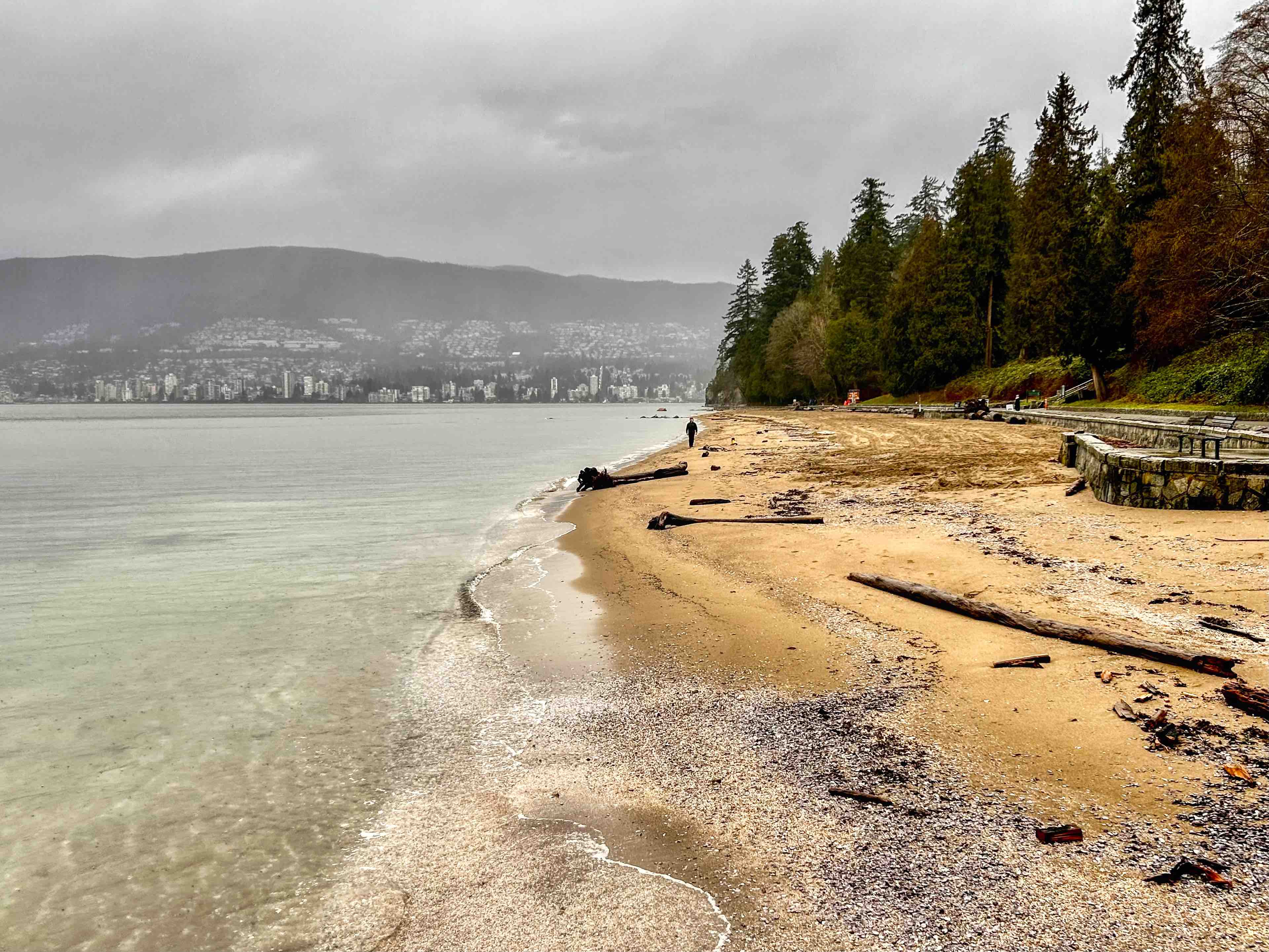
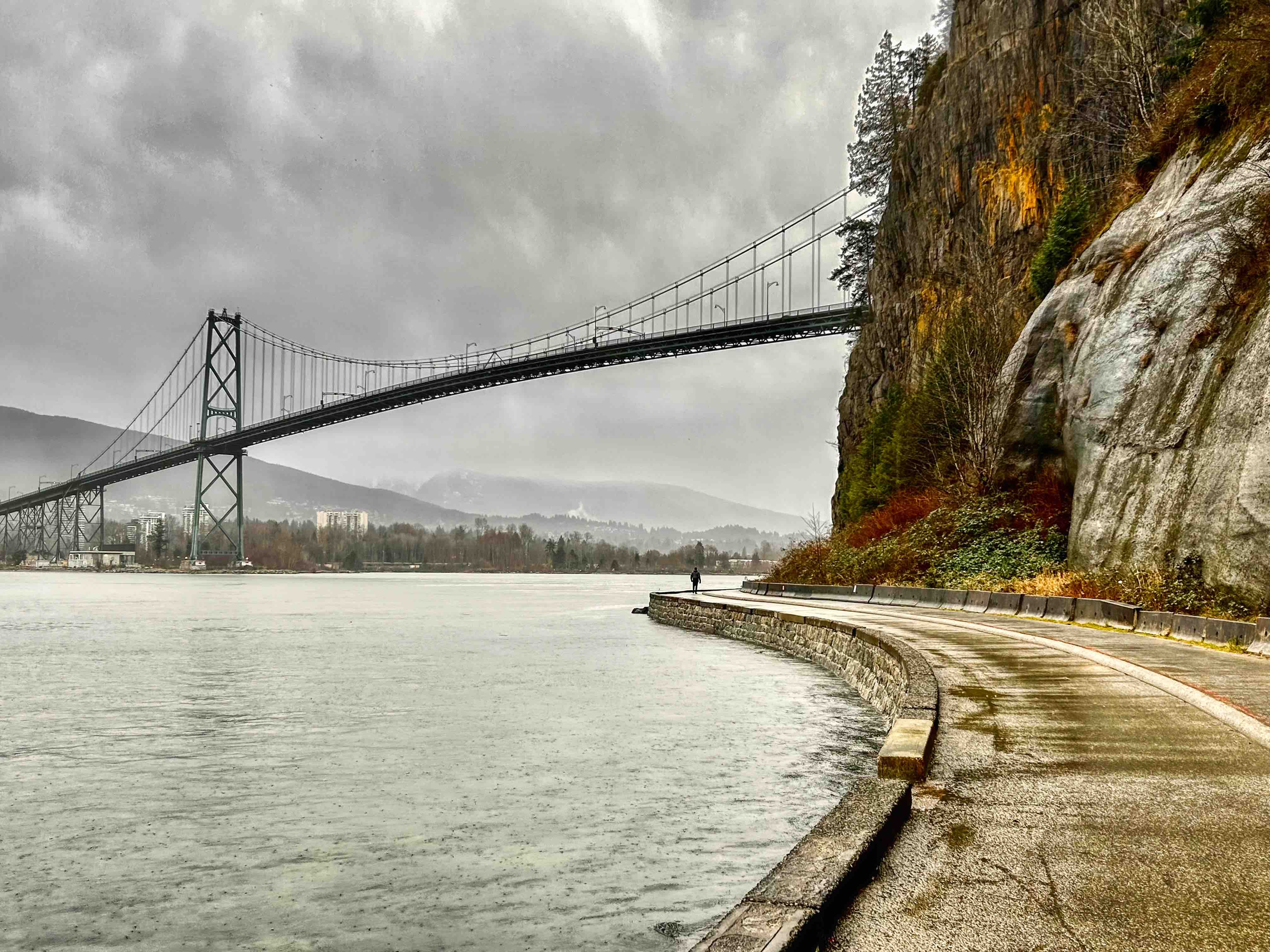
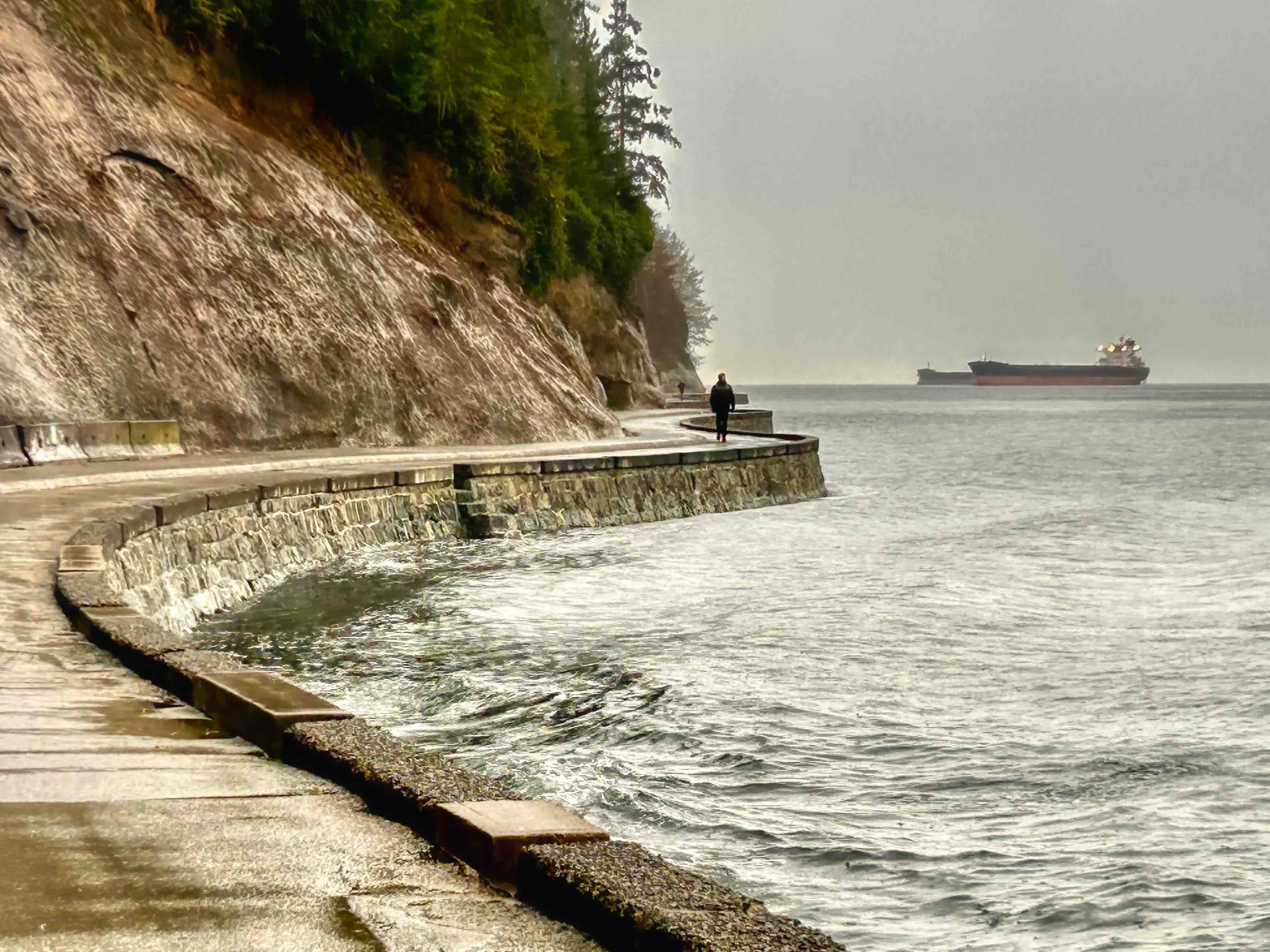
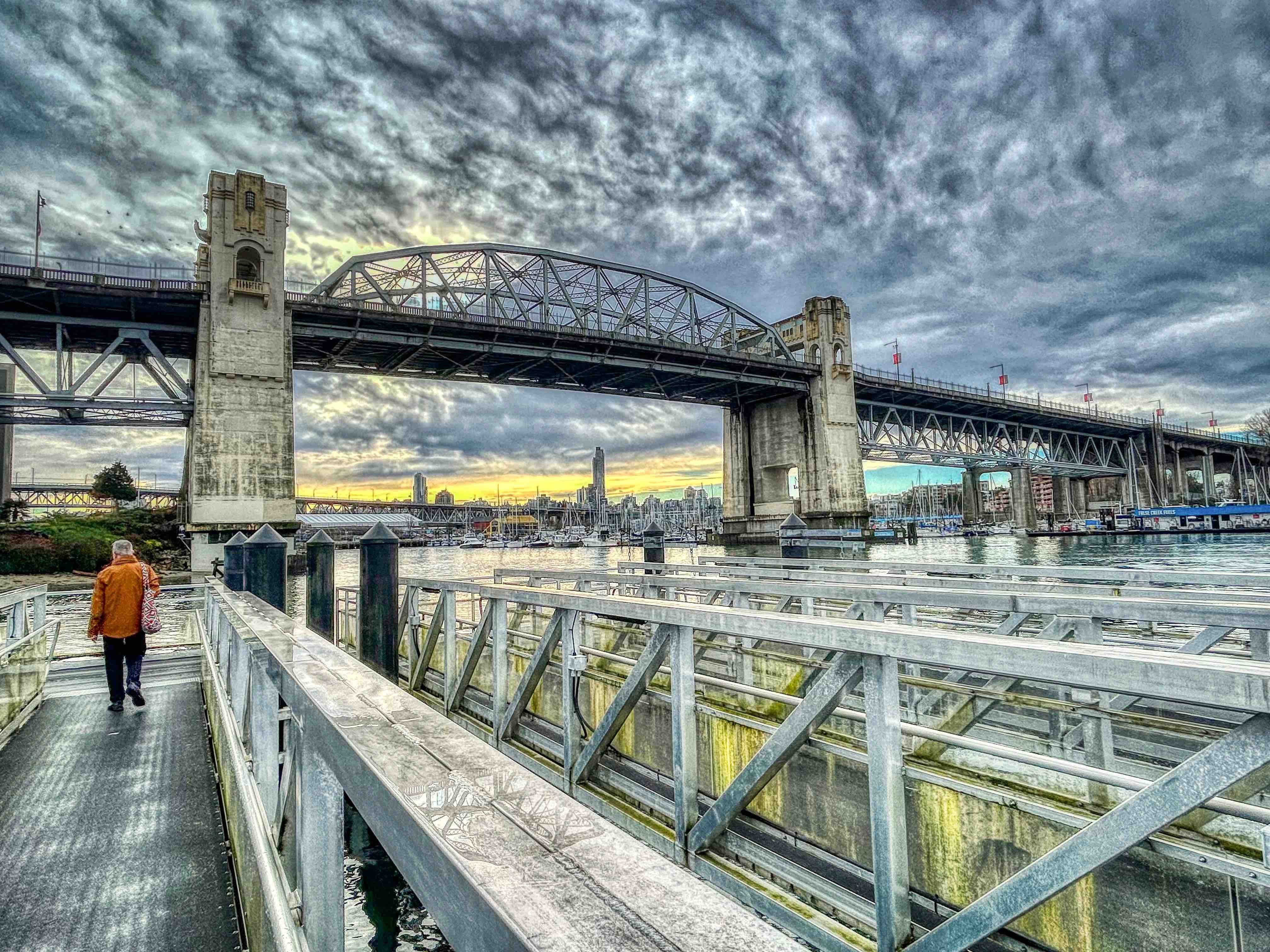
It was a chilly rain-sodden morning that we decided to bite the bullet and walk the Stanley Park Seawall. We’ve been putting it off all week, mainly because of the bad weather, but this day, despite the constant drizzle, we decided now or never. We’d bought the weatherproof gear – on sale – at Cairns Kathmandu, why not use it? It was a glorious, if damp, walk.
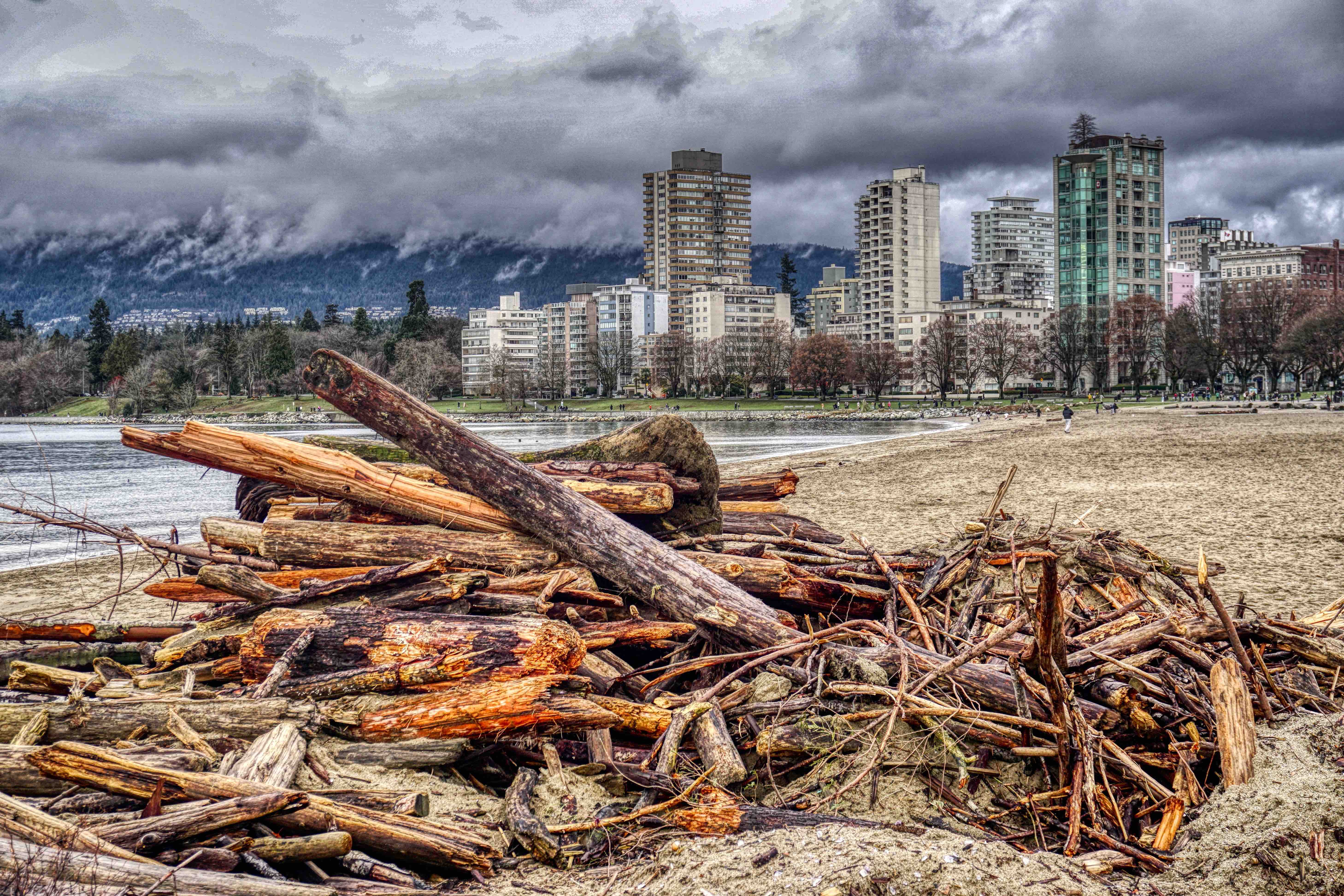
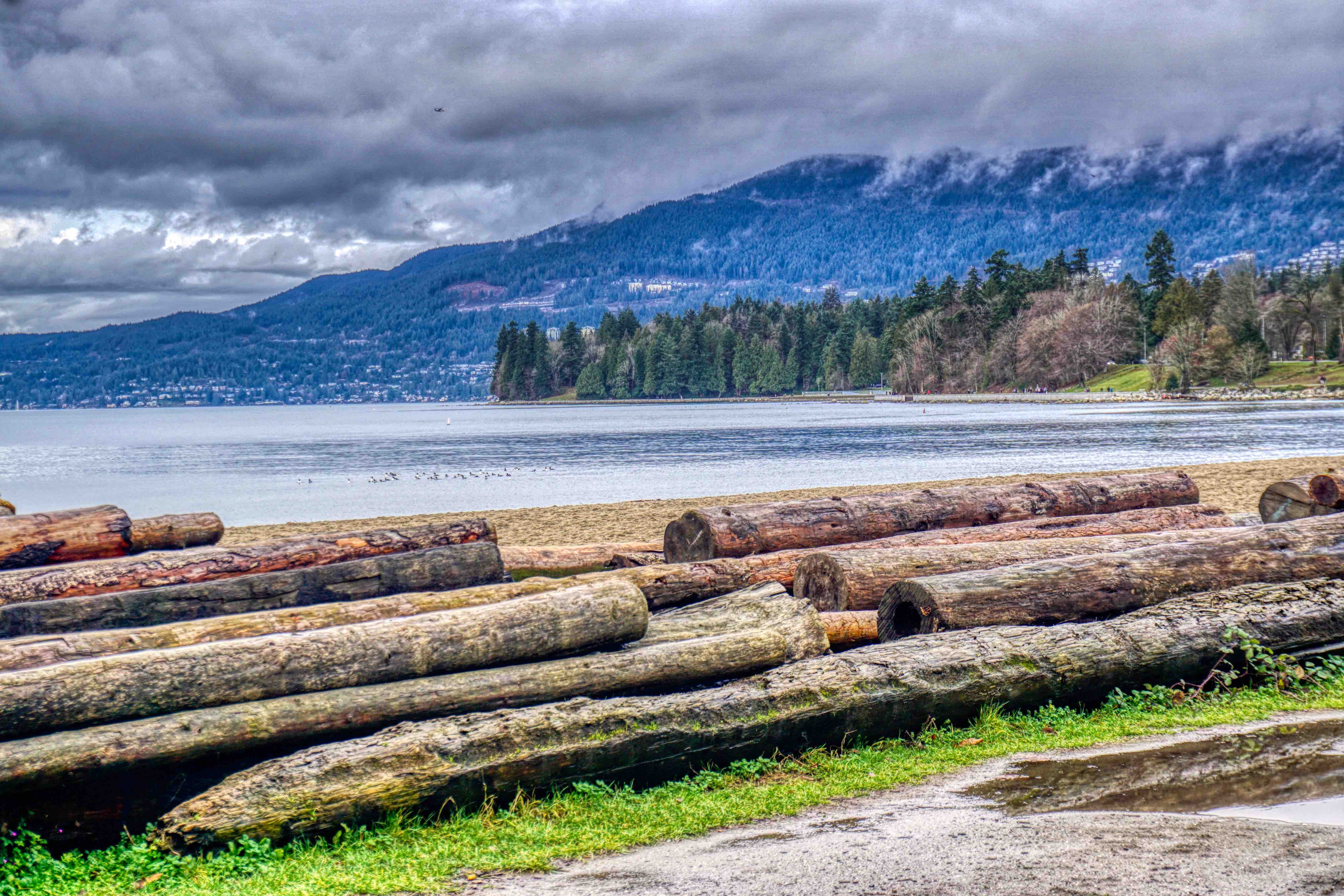
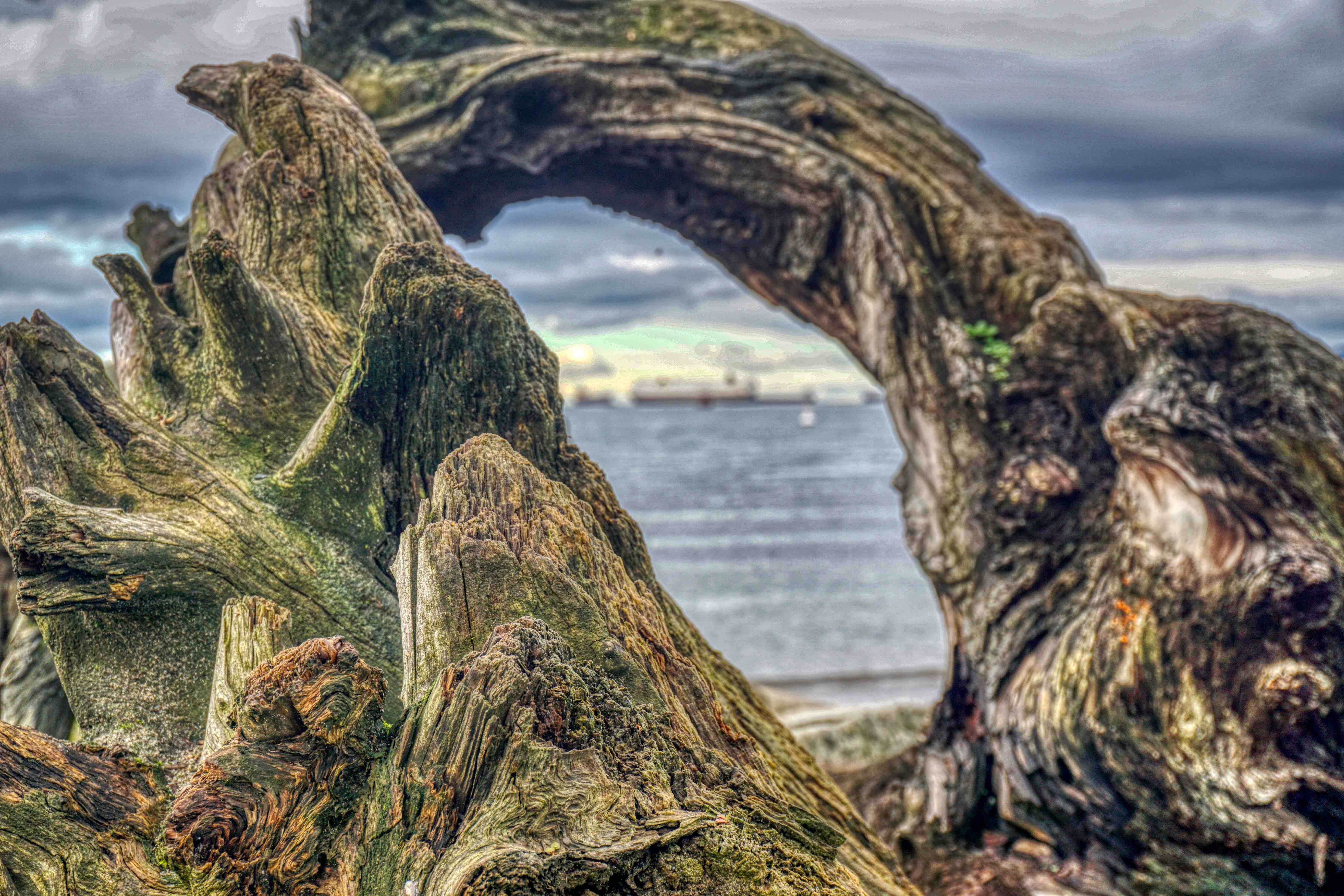
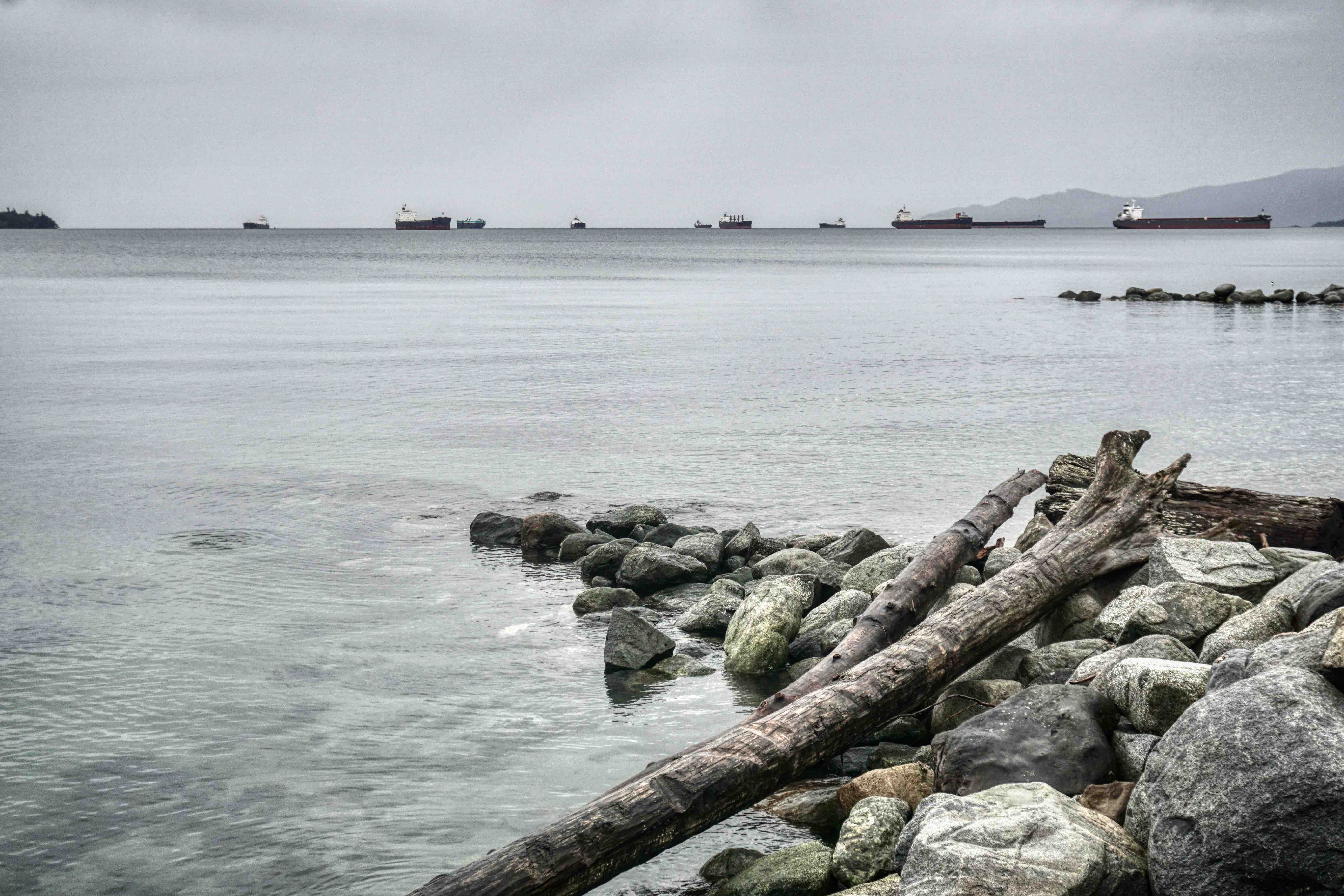
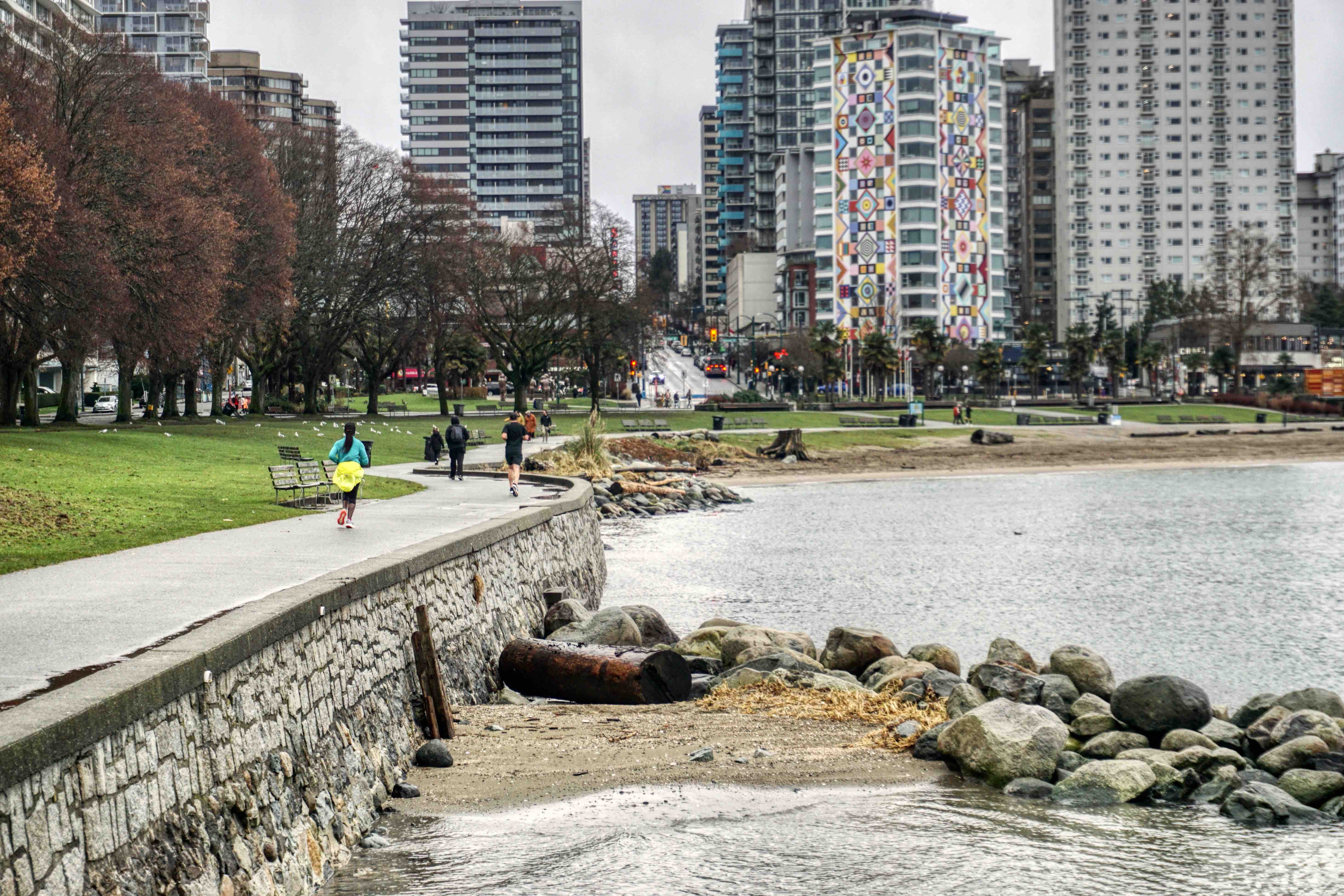
Stanley Park is Vancouver’s lungs at some 400 hectares and sits at the tip of the Vancouver downtown peninsula, capping the West End neighbourhood and surrounded by water on three sides – English Bay, Burrard Inlet and the Georgia Strait out towards the Pacific. The Seawall perimeter loop is some 10k’s all up and can take a couple of hours to walk, depending of course on the distractions along the way. Transferred by Uber and a very nice Canadian Korean driver (who donated us a ragged umbrella as the weather got suddenly worse), we set off from the Totem Poles, having already walked to that point last week, so I guess we had a couple of k’s up our sleeves. It was a miserable morning with steady cold rain, but unbelievably, shortly after setting off, we saw grey seals in the shallows just off the seawall. The water here is incredibly clear and, no doubt incredibly cold. Floating logs are common on Vancouver waterways, I guess from BC’s massive logging industry, and right along the seawall we saw piles of them, particularly in the coves and beaches, which you’d have thought would be a shipping hazard, but boats and ships of all sizes seem to cope with this floating minefield.
We’ll need to come back and explore the forested interior of Stanley Park (perhaps on a dry day – if there is one), as it’s a true urban oasis of lush West Coast rainforest with ancient Douglas Firs, Cedars and Hemlocks with miles of hiking trails. We were told (by our Korean Uber driver) to watch out for the Coyotes in the park, which are part of the natural ecosystem here. Apparently, they’re often seen at dawn and dusk, but as with most urban centres around the world (think of London’s Fox problem), they’re becoming bolder due to human proximity and food, with garbage left out and even intentional feeding by some irresponsible people. Naturally, this has led to some aggressive behaviour, resulting in the sad culling of the animals. There are signs throughout the park and adjacent areas advising visitors of how to co-exist with Coyotes, with one tip on encountering an animal to ‘Be big brave and loud. Stand tall with arms overhead. Yell “Go Away Coyote!” Stand your ground and never run.’ – well, let’s hope we don’t have an actual encounter….
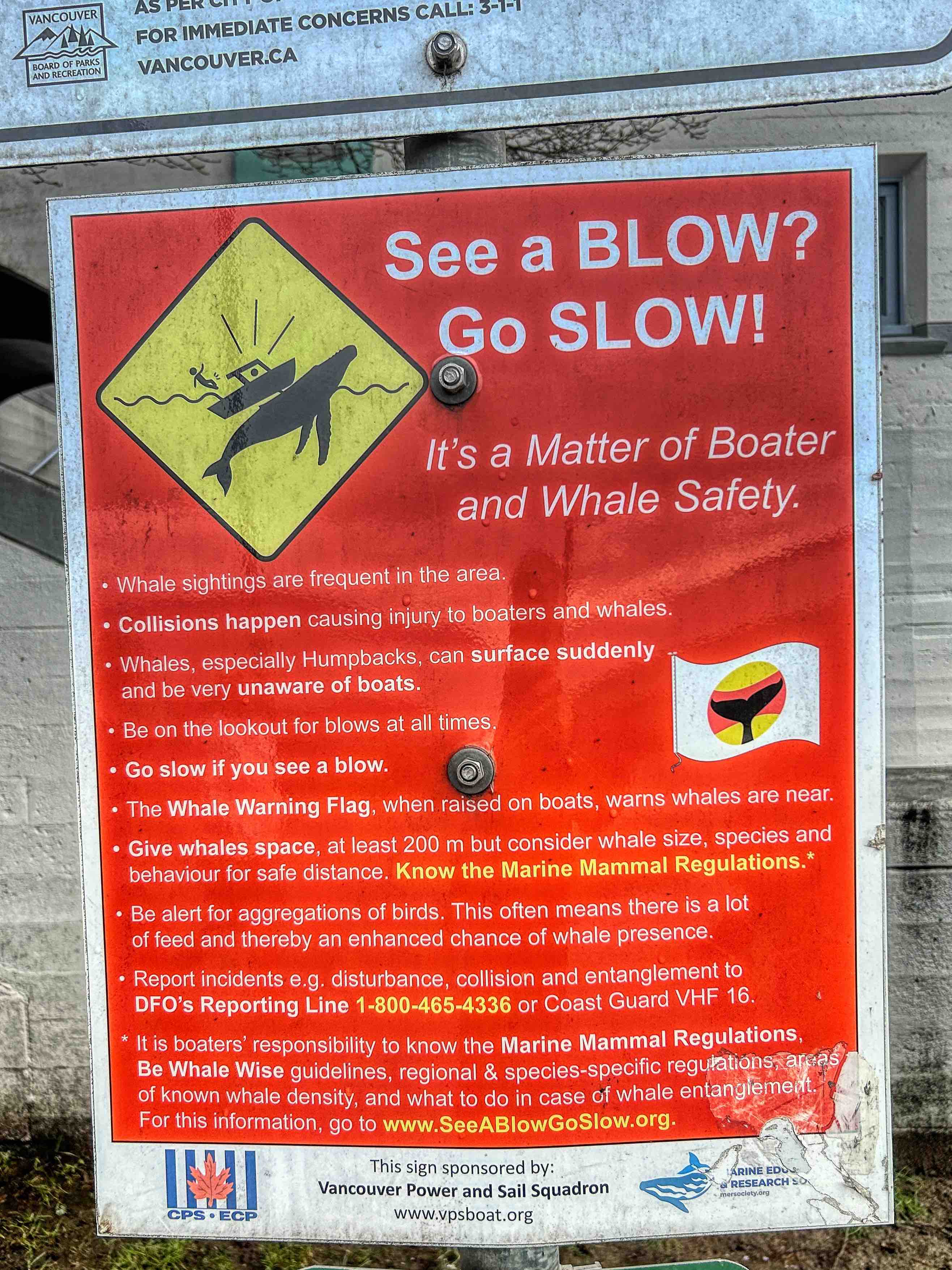
The other interesting sign that grabbed my attention was ‘See a Blow? Go SLOW!’ Not something you’d see on your normal city walk. But it’s intended for boat and Whale safety as Whales are often spotted in these waters such as Greys, and excitingly, Killer Whales (Orcas), attracted by the clear waters and abundant herrings in Burrard Inlet and False Creek. Now, that for one would get us back on this seawall, come rain or shine. We saw on Vancouver tv news that a pod of Killer Whales, not far up the British Columbia coast, is coming annually close to shore to slough off dead skin on beach rocks.
The whole Stanley Park area was once home to many indigenous peoples over thousands of years, most notably the Musqueam and Squamish, right up until the Europeans first arrived in the 1790’s with British Captain Vancouver arriving in 1792 and making initial contact. But it wasn’t until the early 19th Century that the first settlers arrived and then not until the 1860’s that a true settlement sprang up, sadly with the wholesale eviction and displacement of the indigenous people.
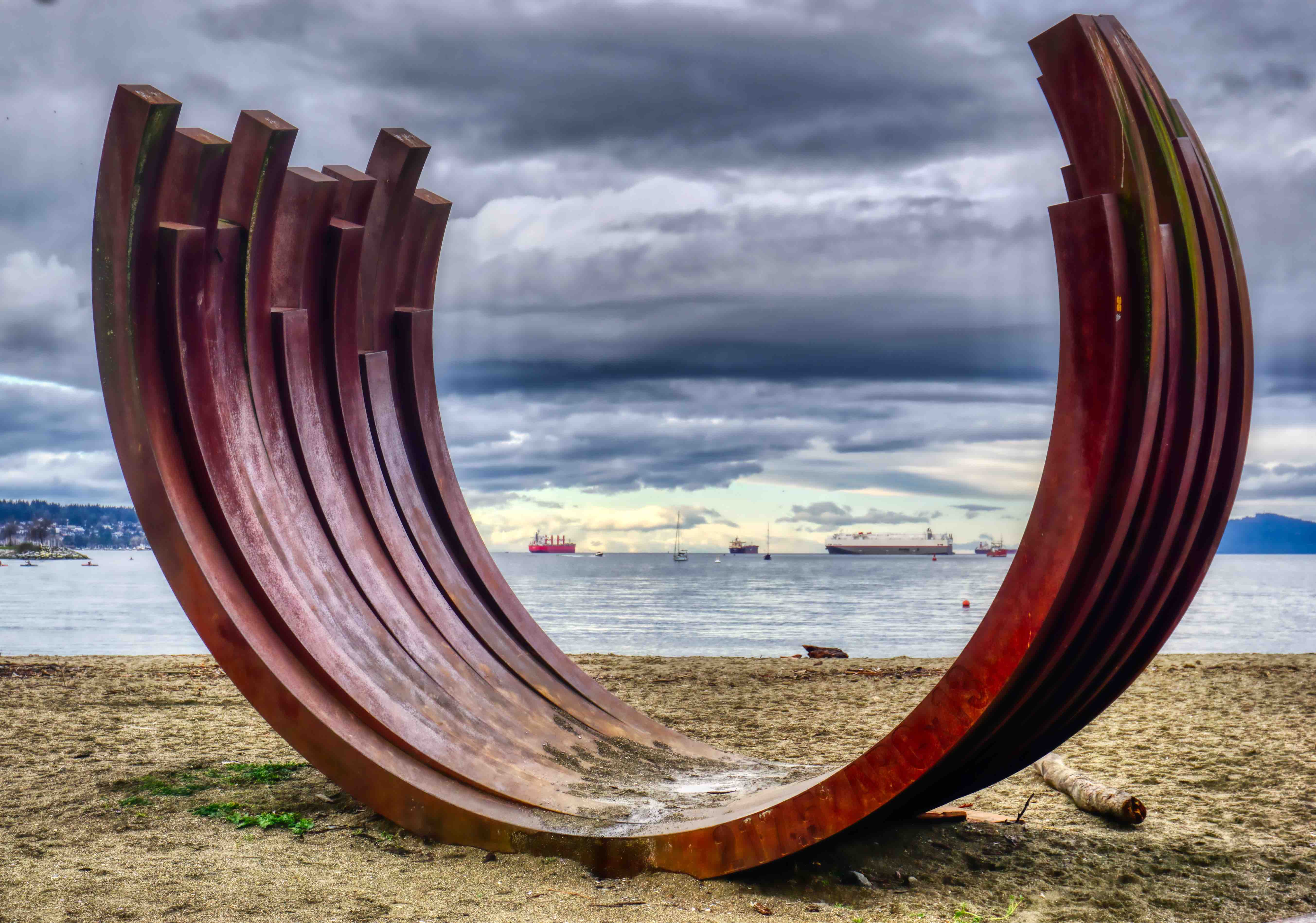
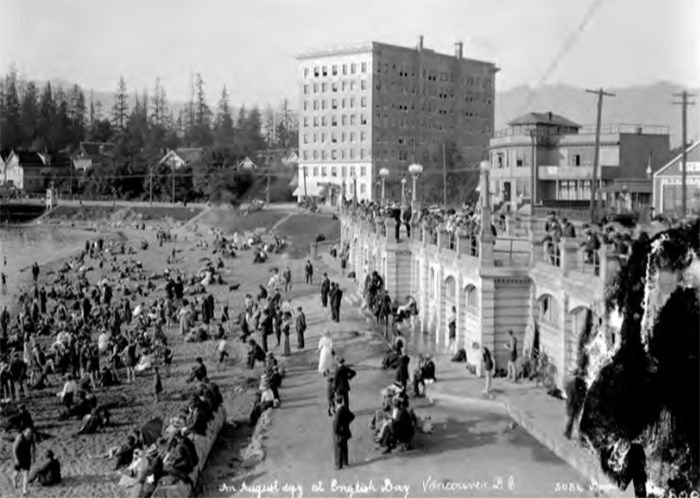
English Bay on the False Creek side of town first become a significant meeting point for the British and Spanish explorers and evolved over time to become one of Vancouver’s key recreational spots, which it remains today. I’m sure on a summer’s day the beach and water would look inviting, but I’m here to tell you, on a cold winter’s day, it was pretty bleak.
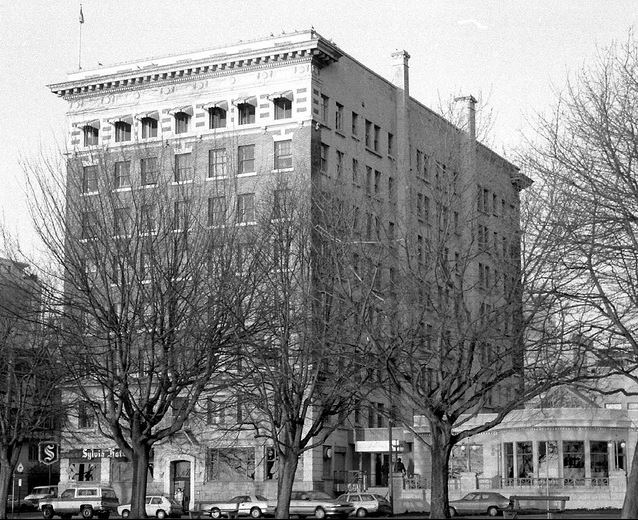
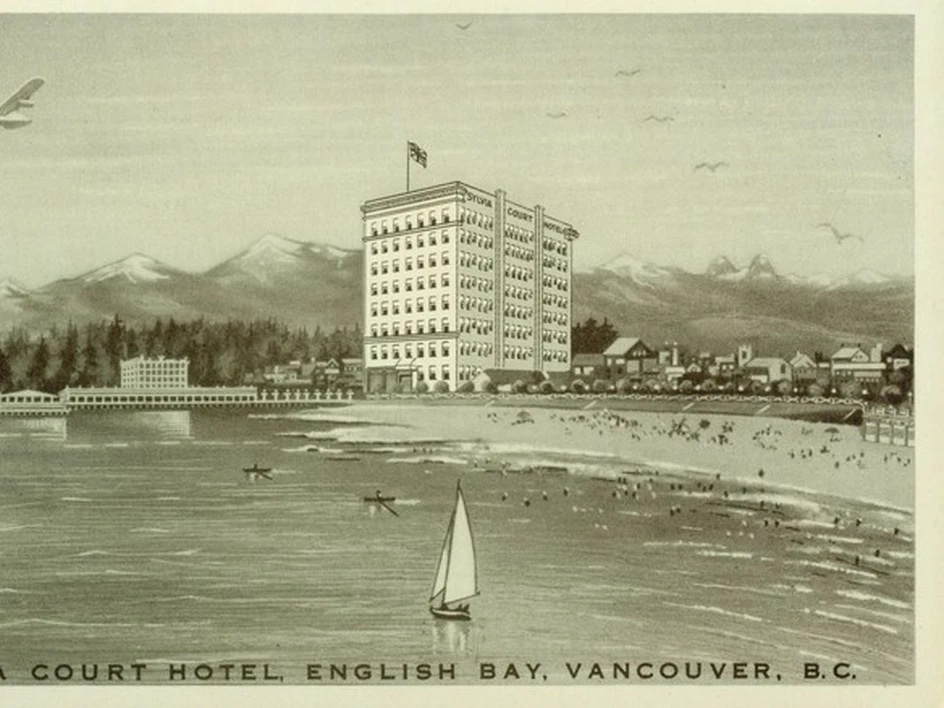
The one thing that strikes you about Vancouver is the apparent lack of ‘old’ architecture, even Victorian. Sure, there’re a few buildings downtown, but outside of the CBD, there’s very little. I guess given Vancouver didn’t really emerge as a proper settlement until the 1880’s and boomtime here didn’t come until the early 20th Century, it’s hard to find anything old. On English Bay there’s a couple of standout buildings. The Sylvia Hotel (1912) is probably the oldest, whilst the Art Deco bathhouse (1931) is the area’s most iconic structure, but on the day we were there, it appeared quite run down and shuttered up.
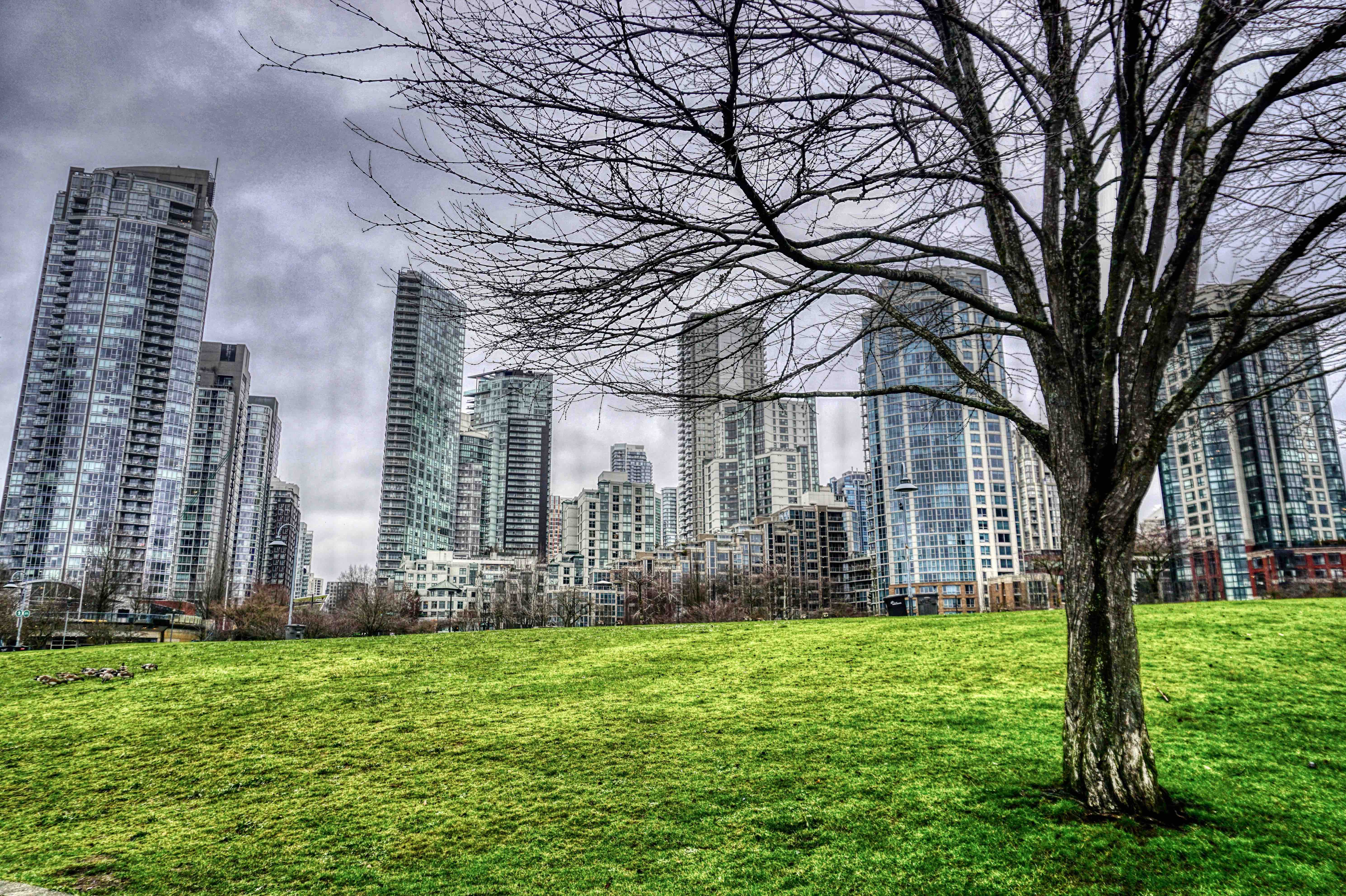
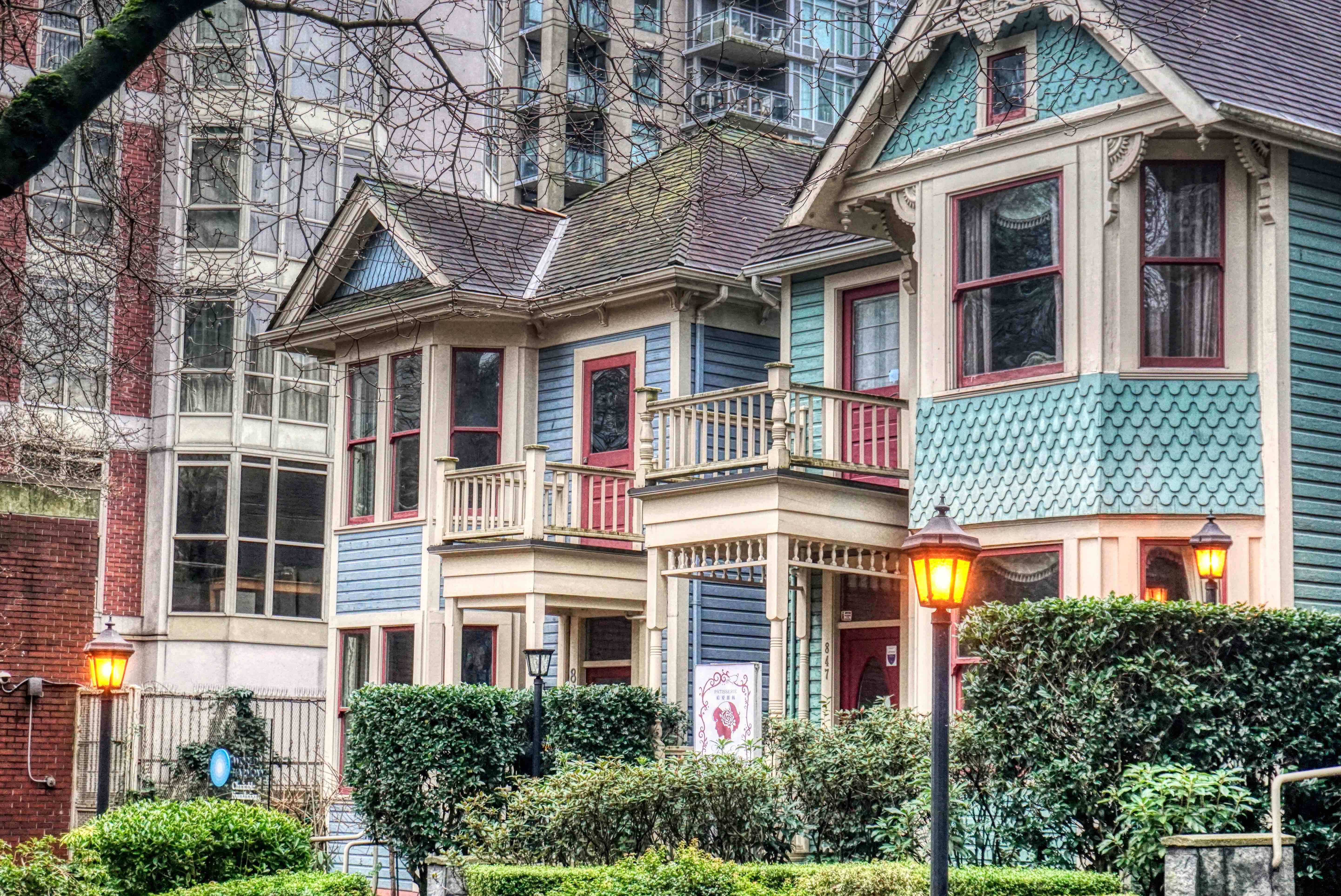
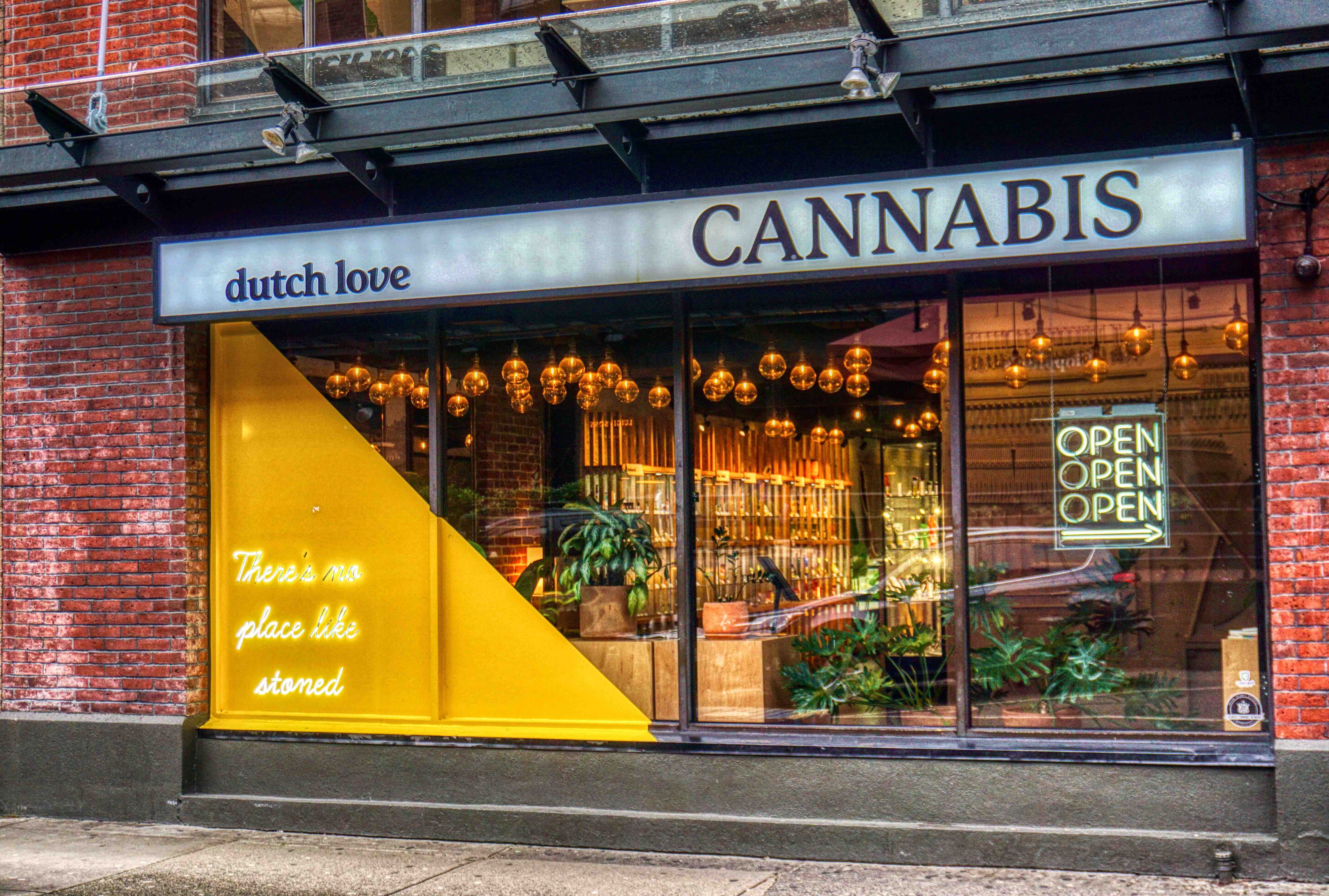
We’re actually staying in trendy Yaletown, just a few blocks from downtown, so super easy from there to reach anywhere on the peninsula. Here it’s all high-rise residential apartment buildings, save for an area of stylish warehouses given over to retail and restaurants, but for the most part, all residential. There is a tiny row of four Victorian house that have remarkably remained unscathed – a true exception for this town. They were built in 1893 when the city was less than 10 years old, but stand alone, hemmed in on all sides by modern development.
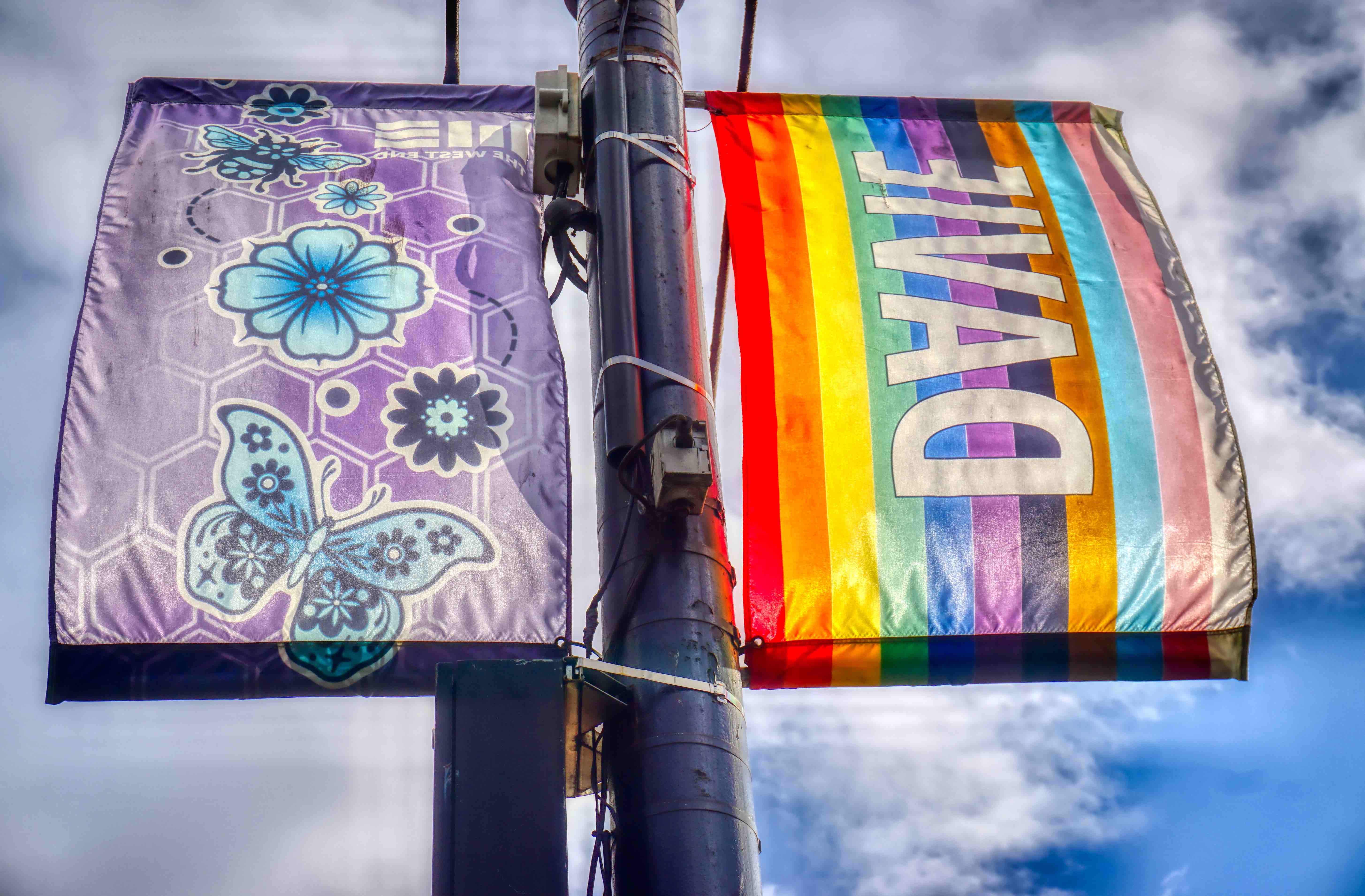
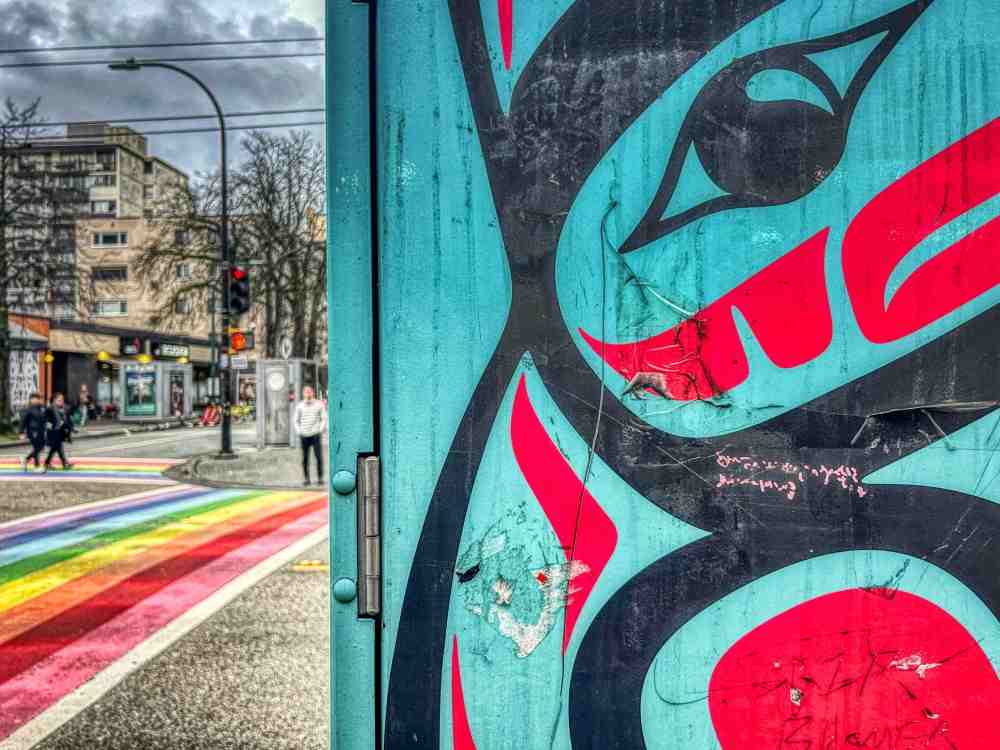
It’s an easy stroll from Yaletown to West End, an area that captures most of the central peninsula, another mainly residential area which leads down to English Bay and Stanley Park. There’s even a dedicated gay area called Davie Village which is supposed to be one of Canada’s premier gay districts, but again, on these grey rain-soaked days, apart from pink bike racks and gay flag pedestrian crossings, there doesn’t seem to be much going on.
 Travels With My Ant
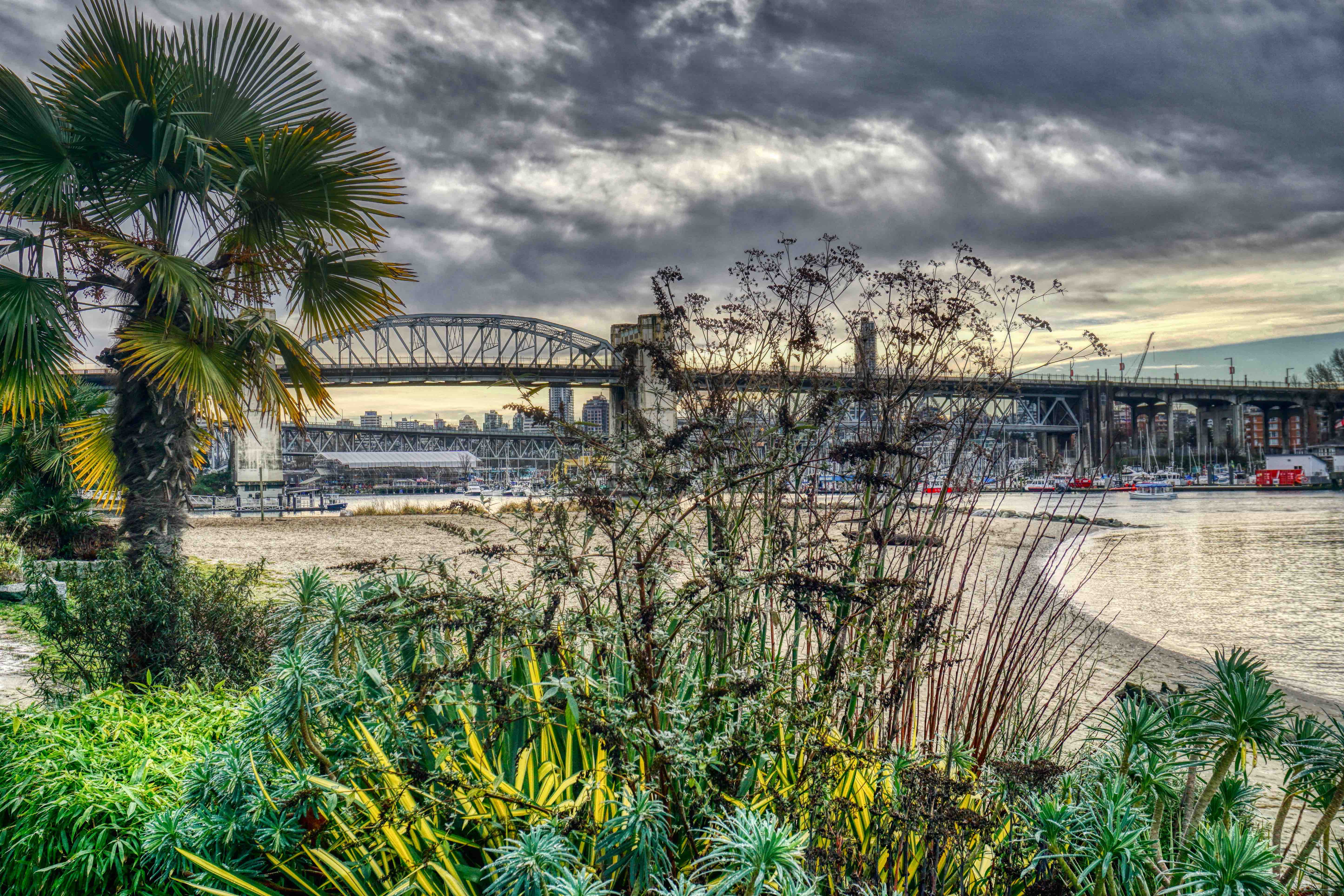
Vancouver certainly seems to be a city of fabulous contrasts, many of the buildings, vistas and art it offers to the visitor’s gaze being fabulous to glimpse through your photos.
LikeLiked by 1 person
Vancouver certainly seems to be a city of fabulous contrasts, many of the buildings, vistas and art it offers to the visitor’s gaze being fabulous to glimpse through your photos.
LikeLiked by 1 person