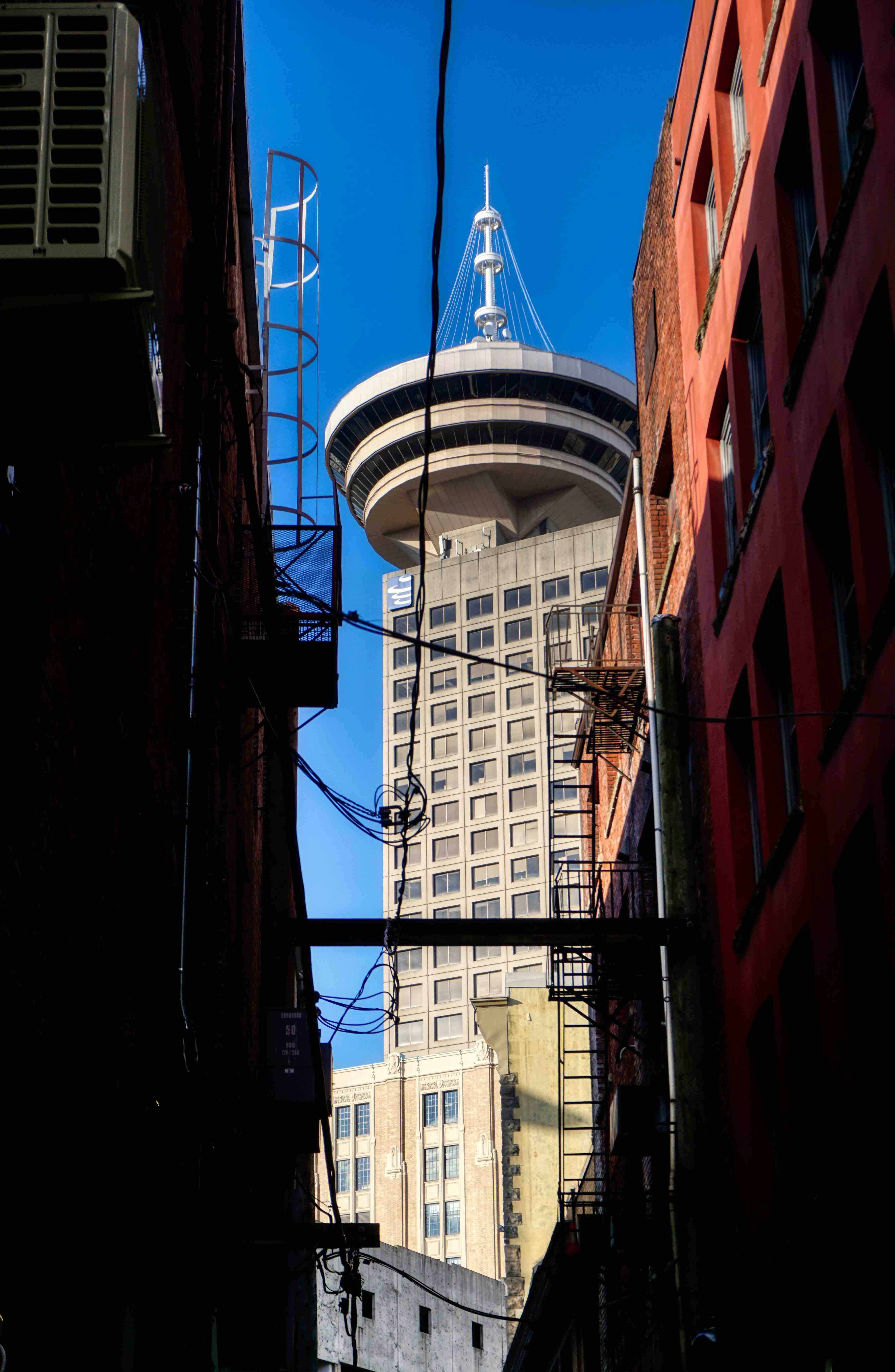
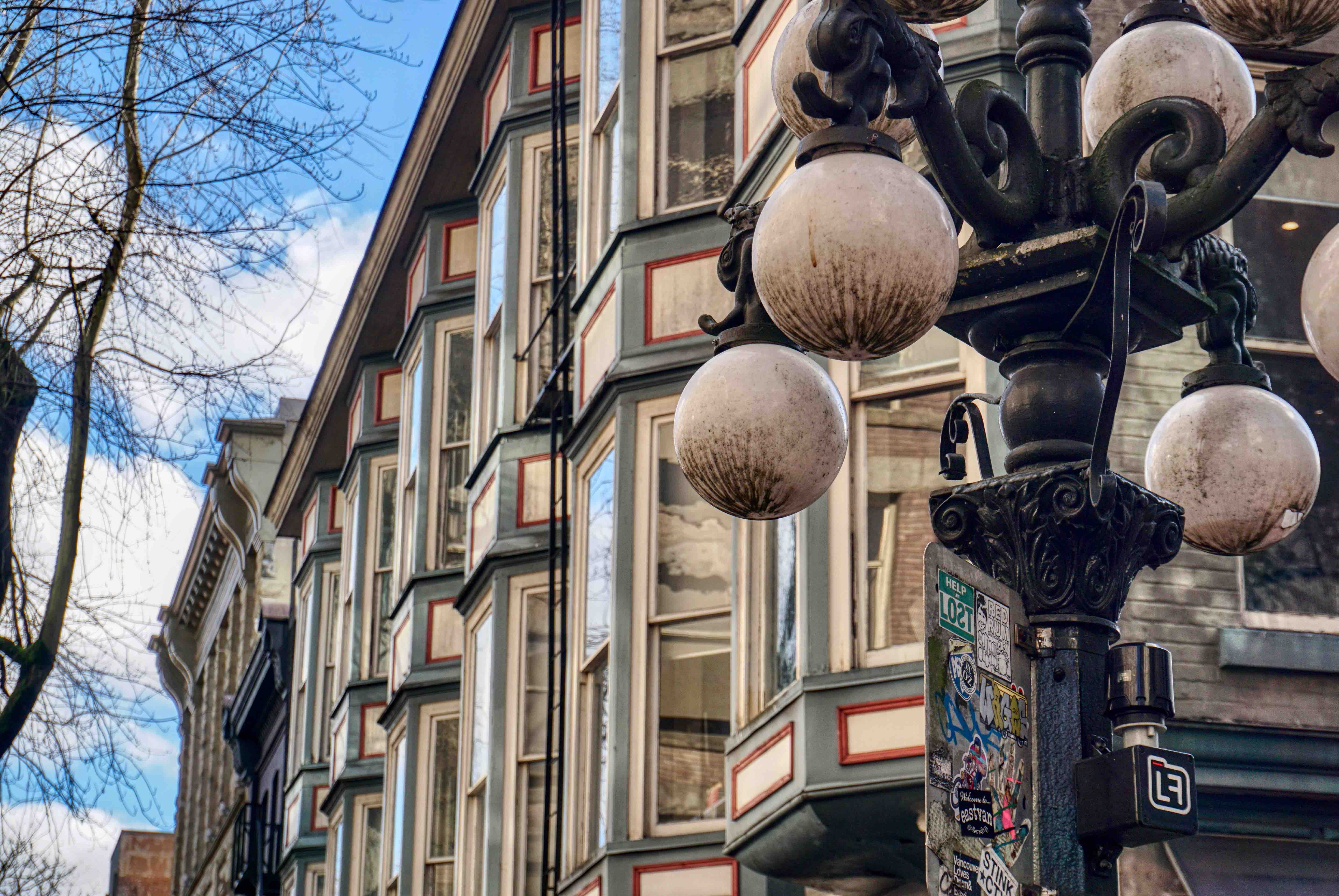
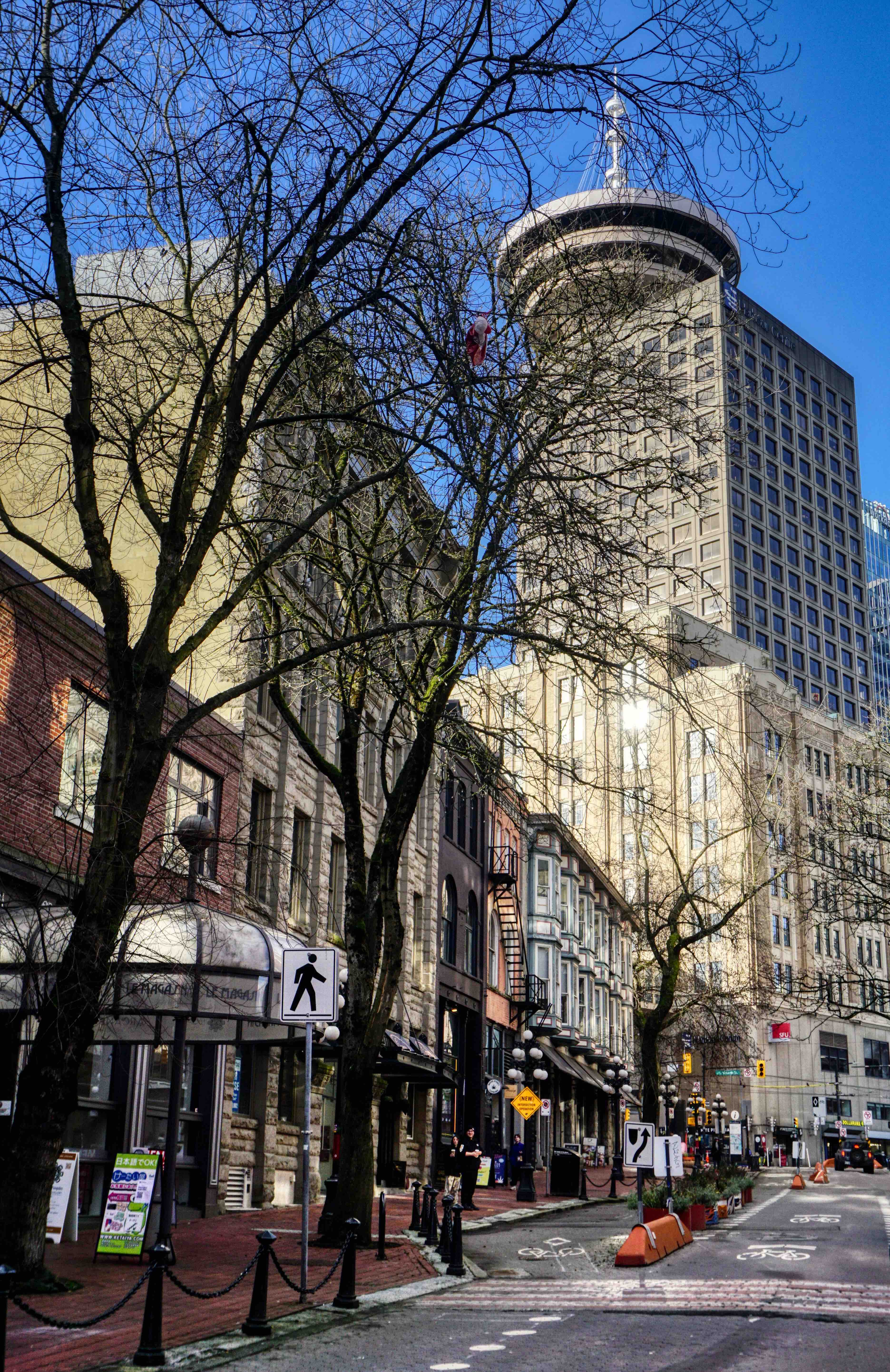
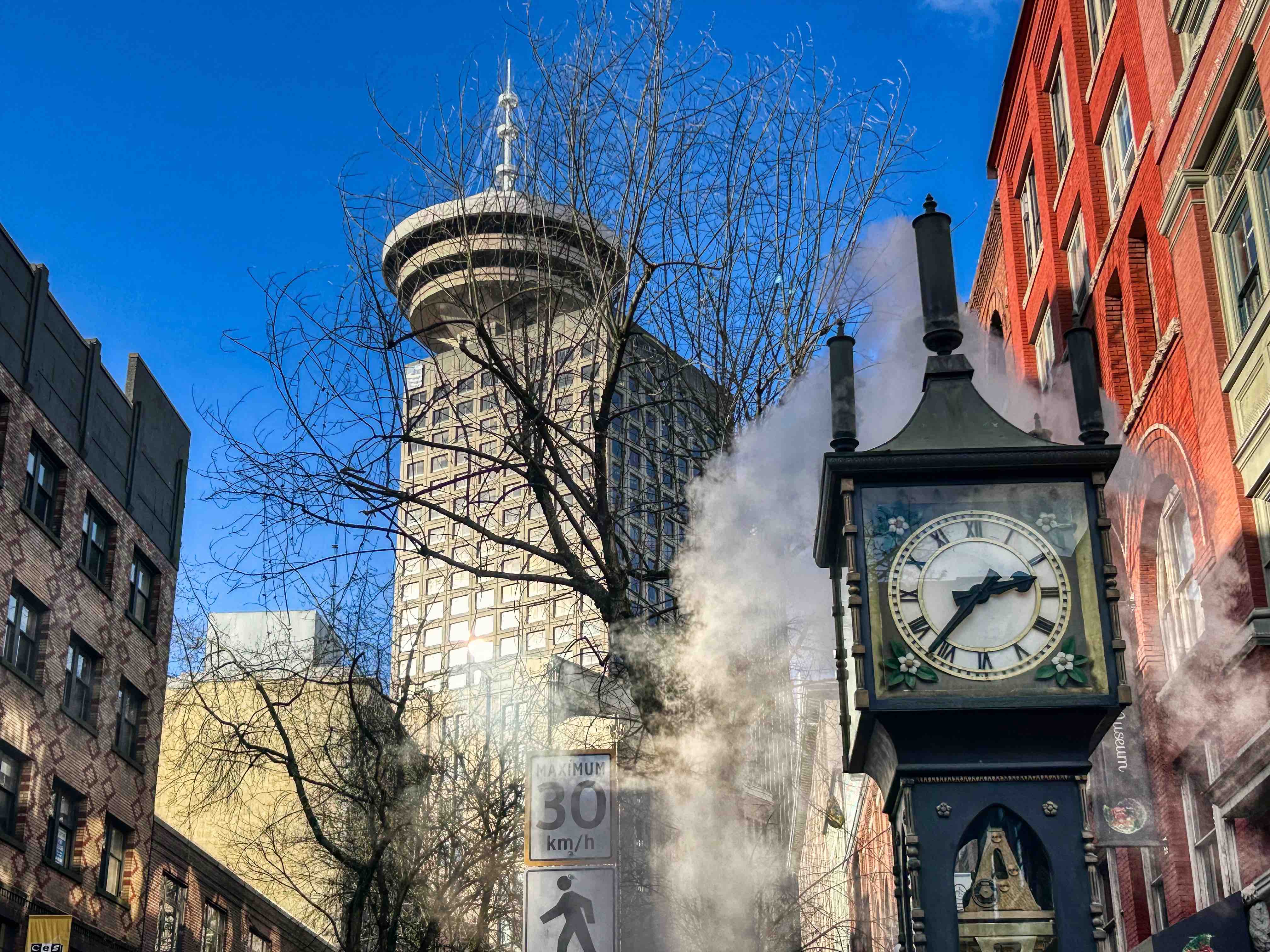
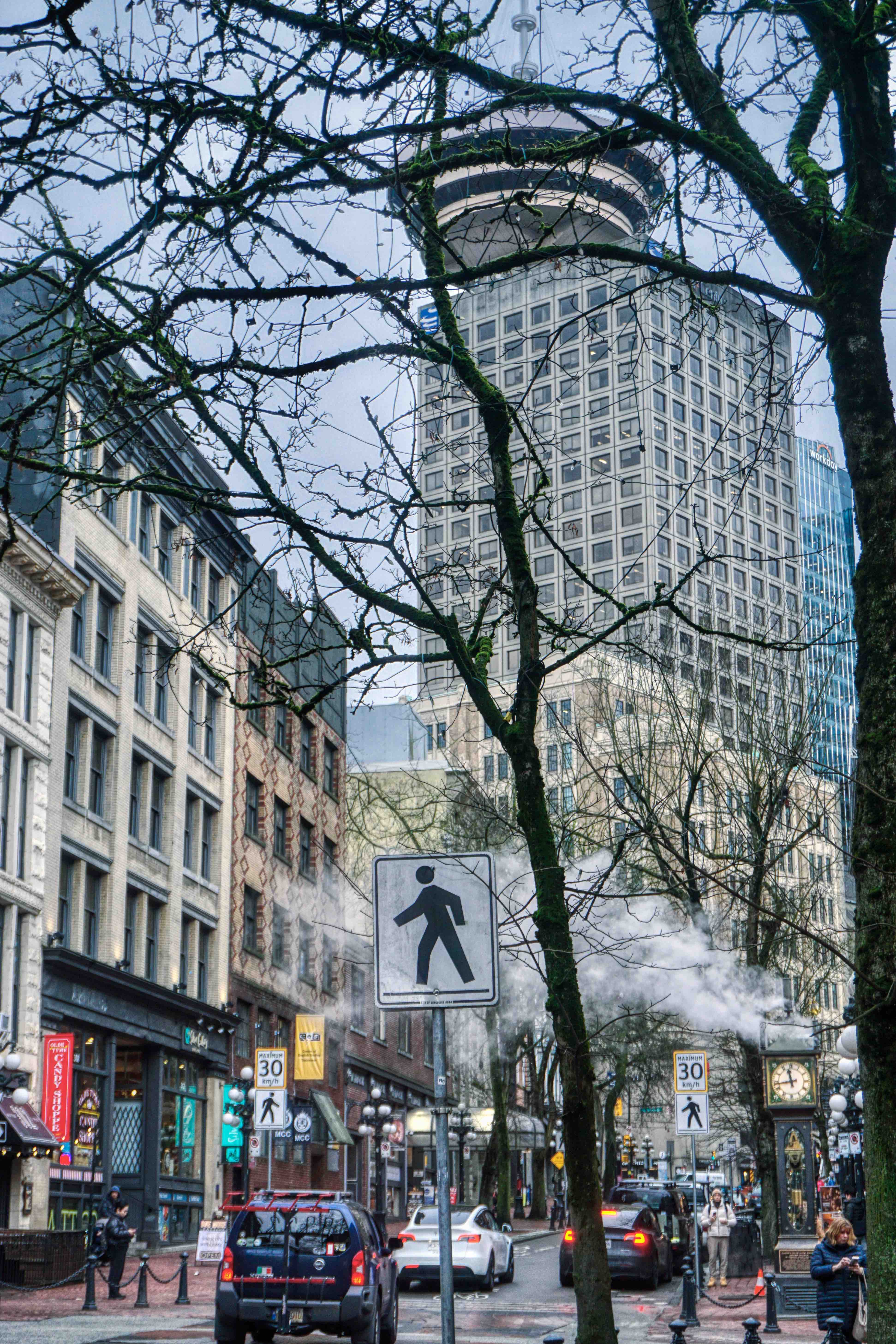
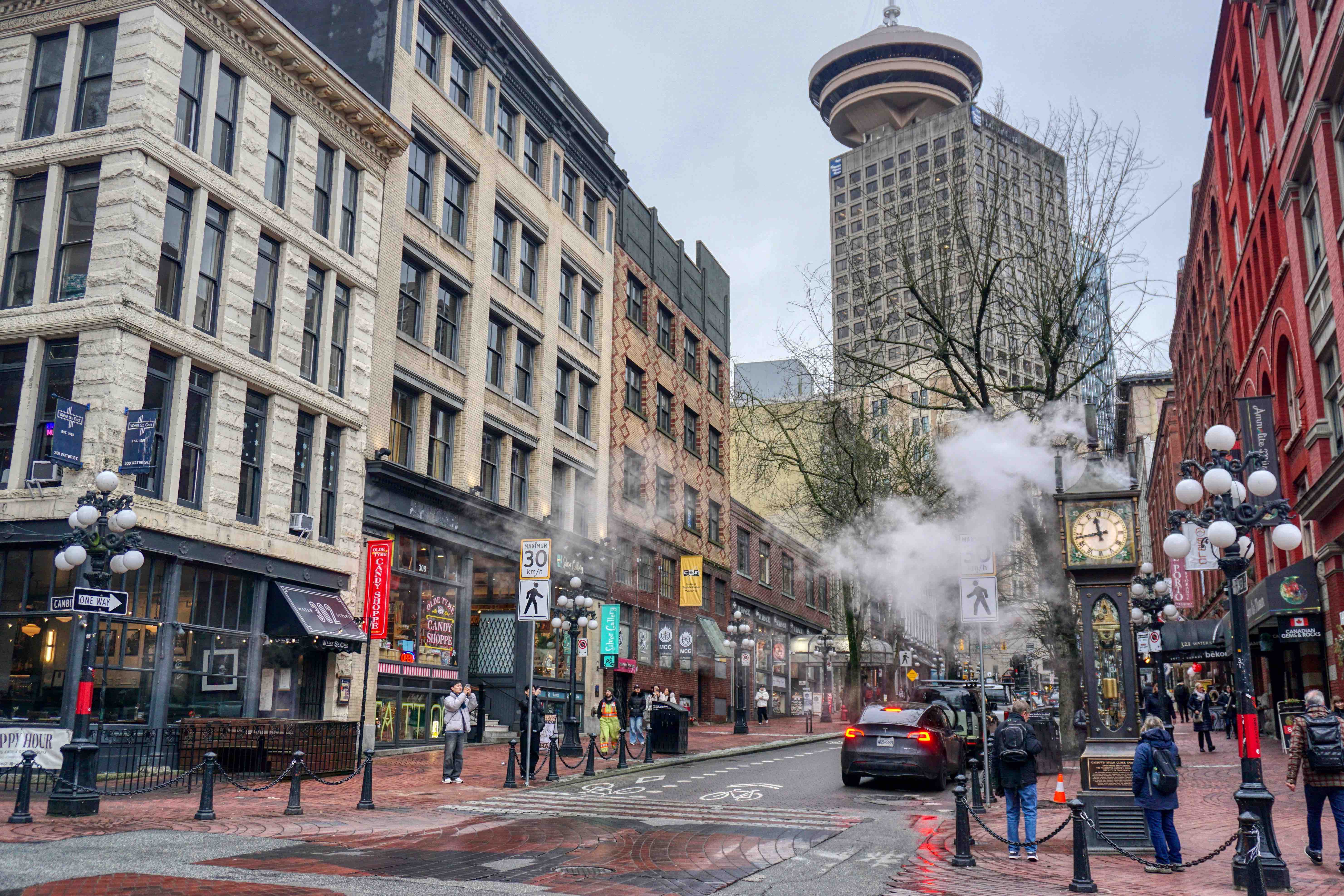
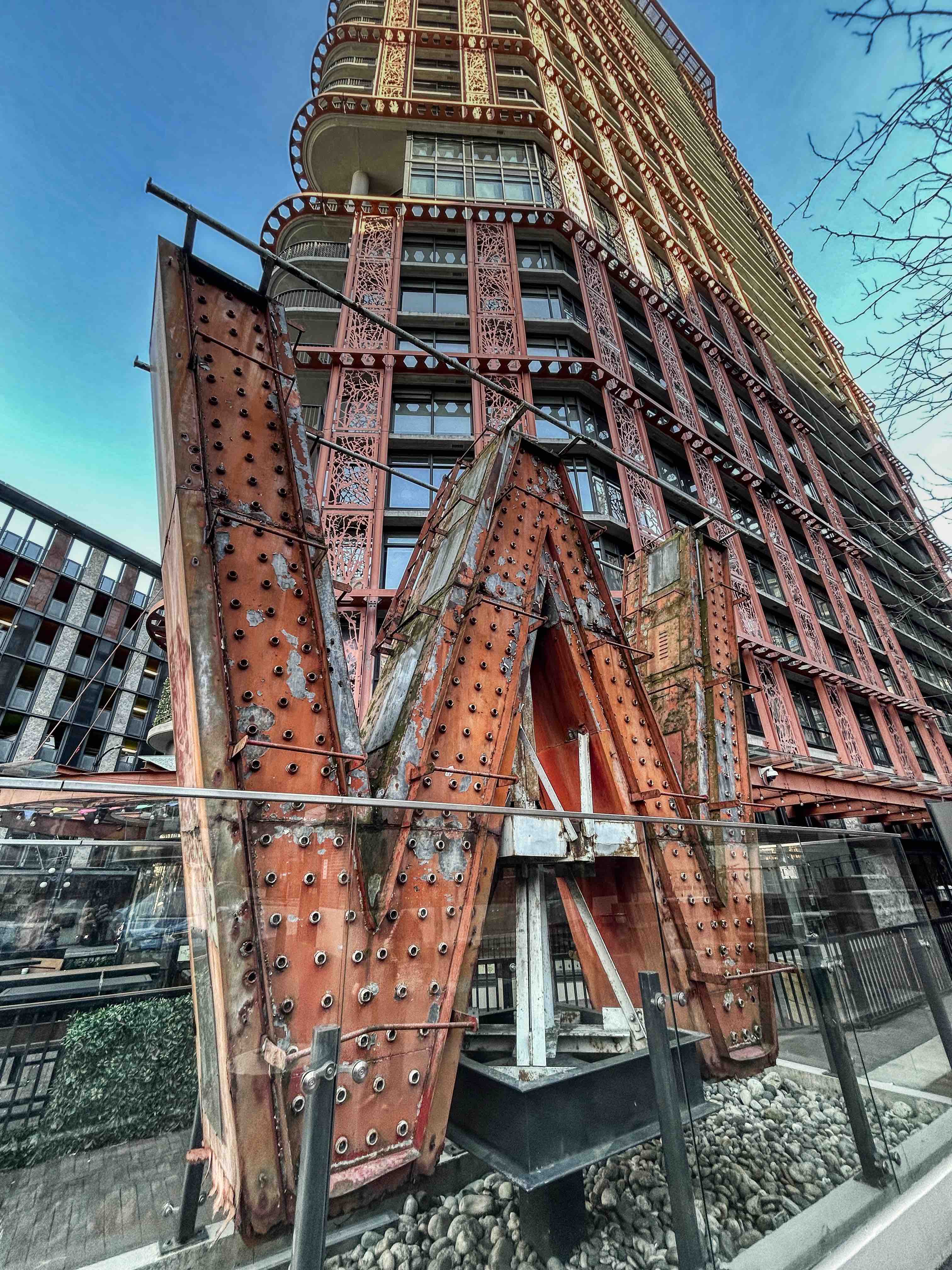
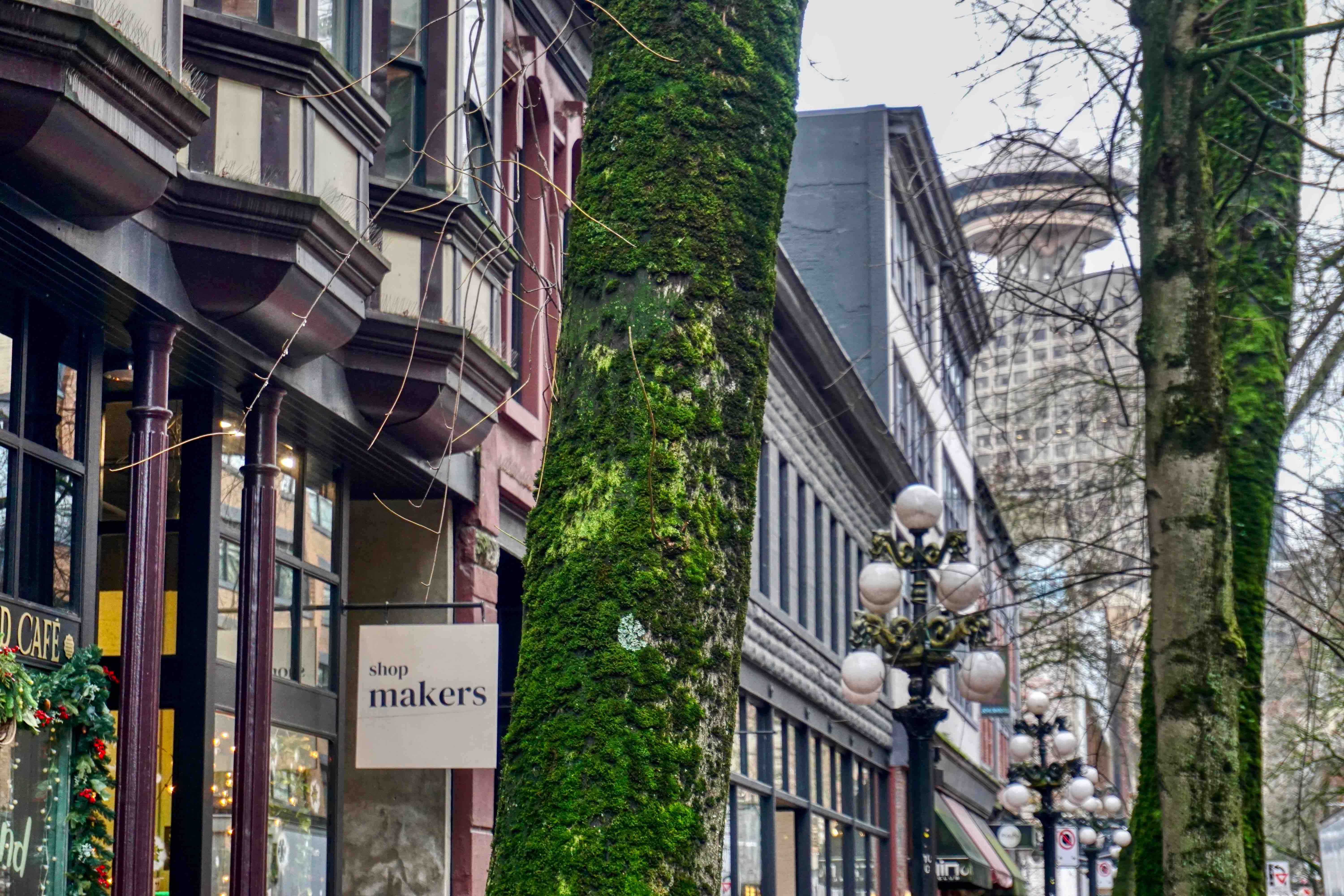
The oldest neighbourhood in Vancouver is Gastown, down on the waterfront dock area. It largely began its life with a certain fellow named “Gassy (chatty) Jack” Deighton arriving in the area in 1867 with a barrel of whiskey to his name, offering thirsty mill workers as much as they could drink in exchange for their help in building The Globe, the first public saloon in the settlement, resulting in a quickly built ramshackle wooden structure, following which emerged a rough and tumble port town known as Gastown, named in his honour.
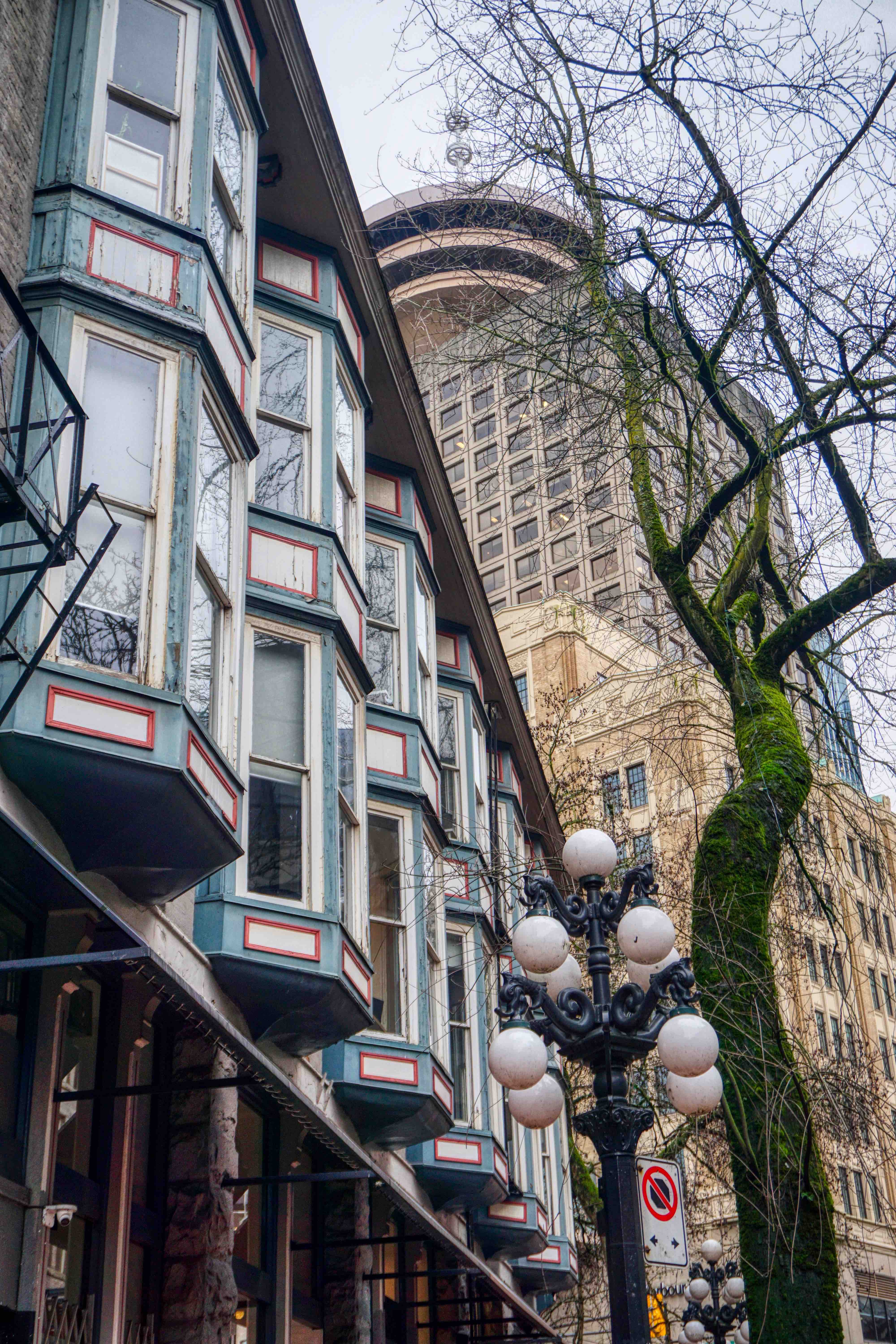
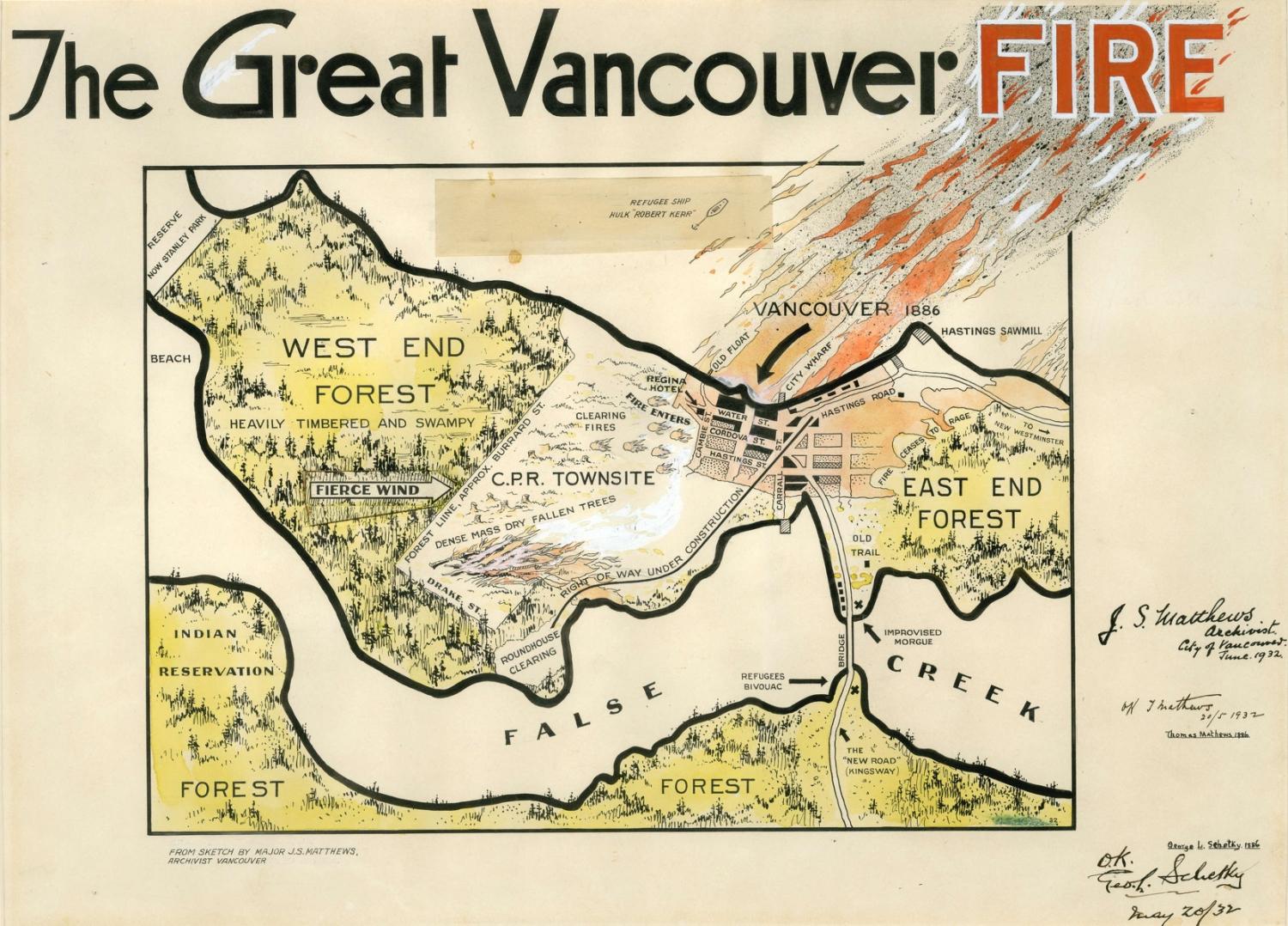
After the devasting fire that obliterated the settlement, extensive rebuilding rapidly commenced creating a golden opportunity to build anew, leading to a massive boom in construction in the expansionist Victoria age. Some impressive buildings went up, including the till-then highest steel frame structures of their kind in the British Empire. Sadly, Gastown fell into neglect after the First World War, becoming even more dilapidated during the Great Depression and, by the 1940’s, earning the moniker ‘Skid Row’. It wasn’t until the late 1960’s and early 70’s that community action started efforts to revitalise Gastown and save its many historic buildings, character and heritage.
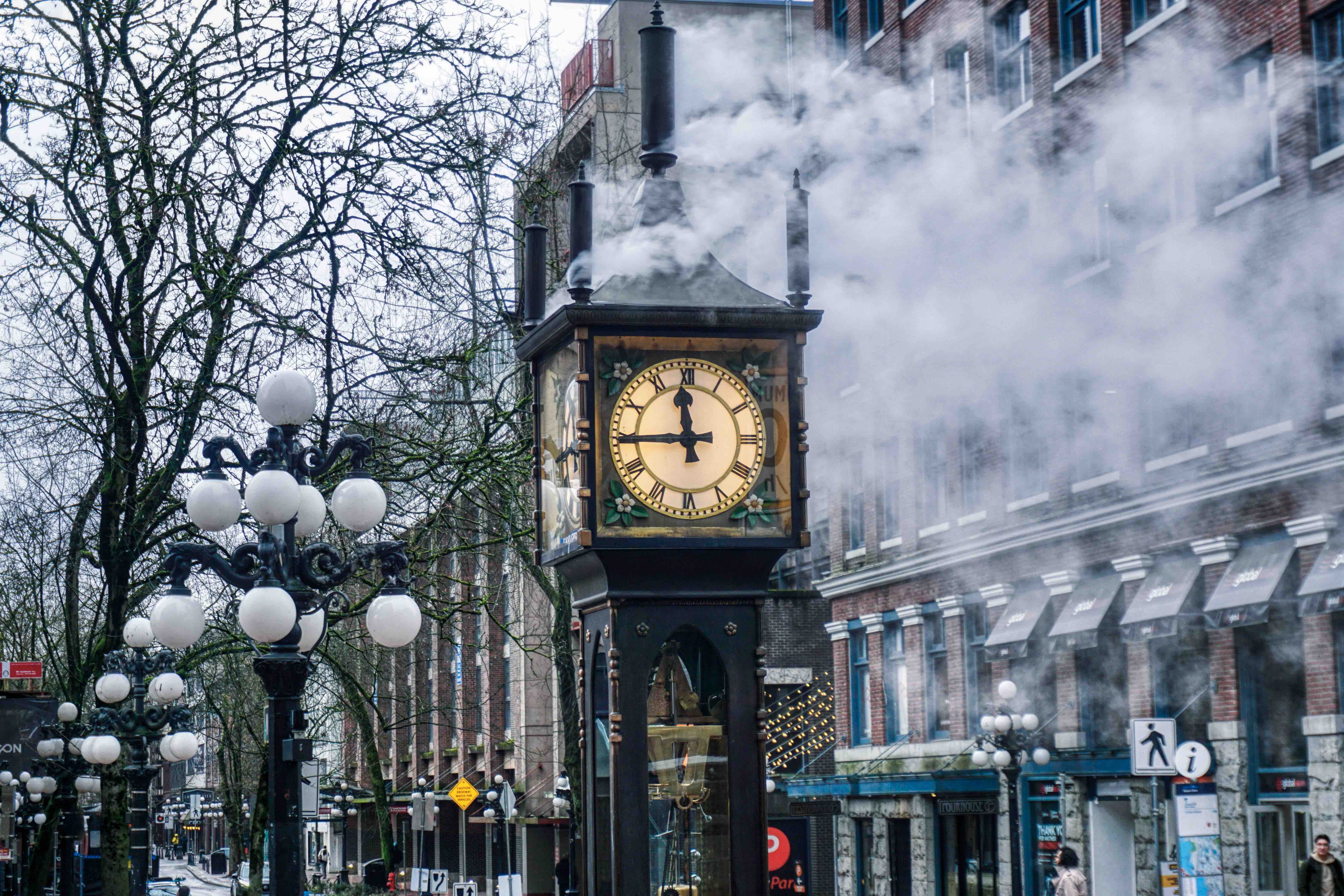
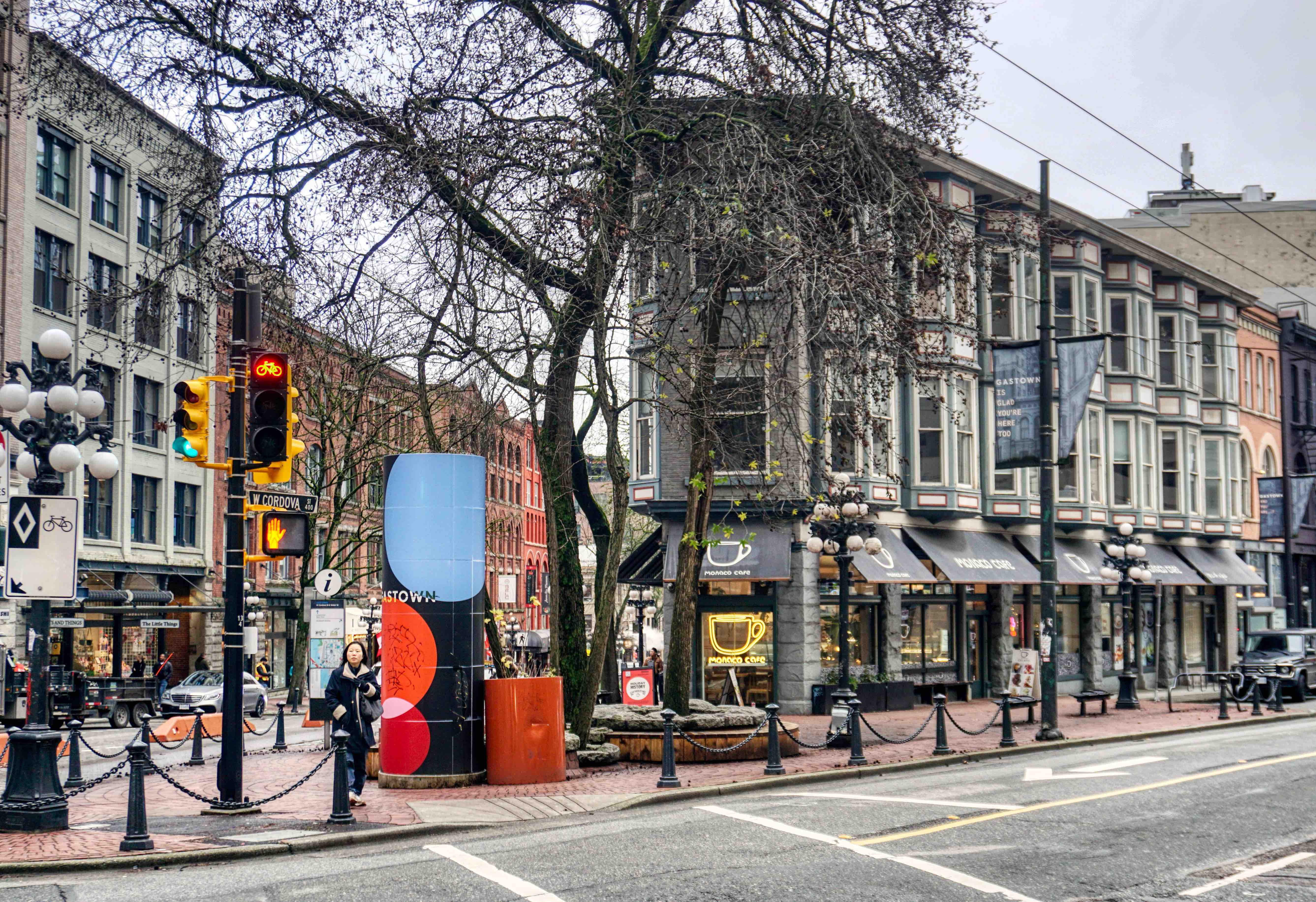
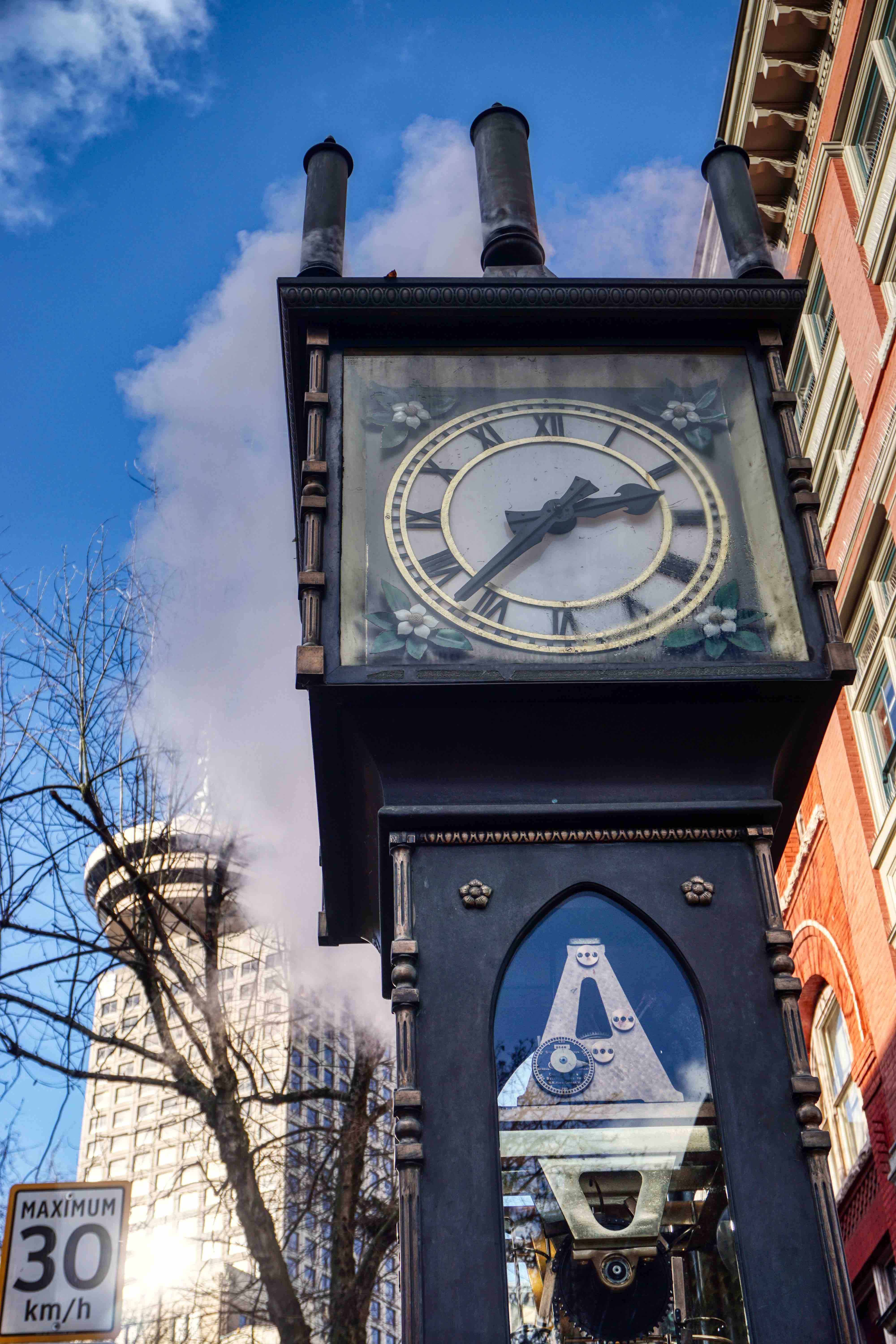
Today Gastown has a sort of Sydney Rocks kind of feel, so rather touristy now but with charm – cobblestone streets and ornate Victorian architecture, repurposed industrial warehouses and several stand out historic buildings. Gastown is full of trendy shops, restaurants, cafés and bars along with one of Vancouver’s most iconic but ‘uber’ Disneyfied attractions, the Gastown Steam Clock. It looks older than it actually is, originally put in place in 1977 to cover over a steam vent in the street and enhance the Victorian feel of the district and, of course, play on the notion of it being ‘Gastown’. It puffs out steam and, every now and again, seemingly at random, whistles and toots to the delight of the tourists that crowd around it. However, the one thing this clock doesn’t do is tell the time, as it seems permanently stuck at twenty to three – or quarter to twelve on the other occasion we passed by. Still wrong!
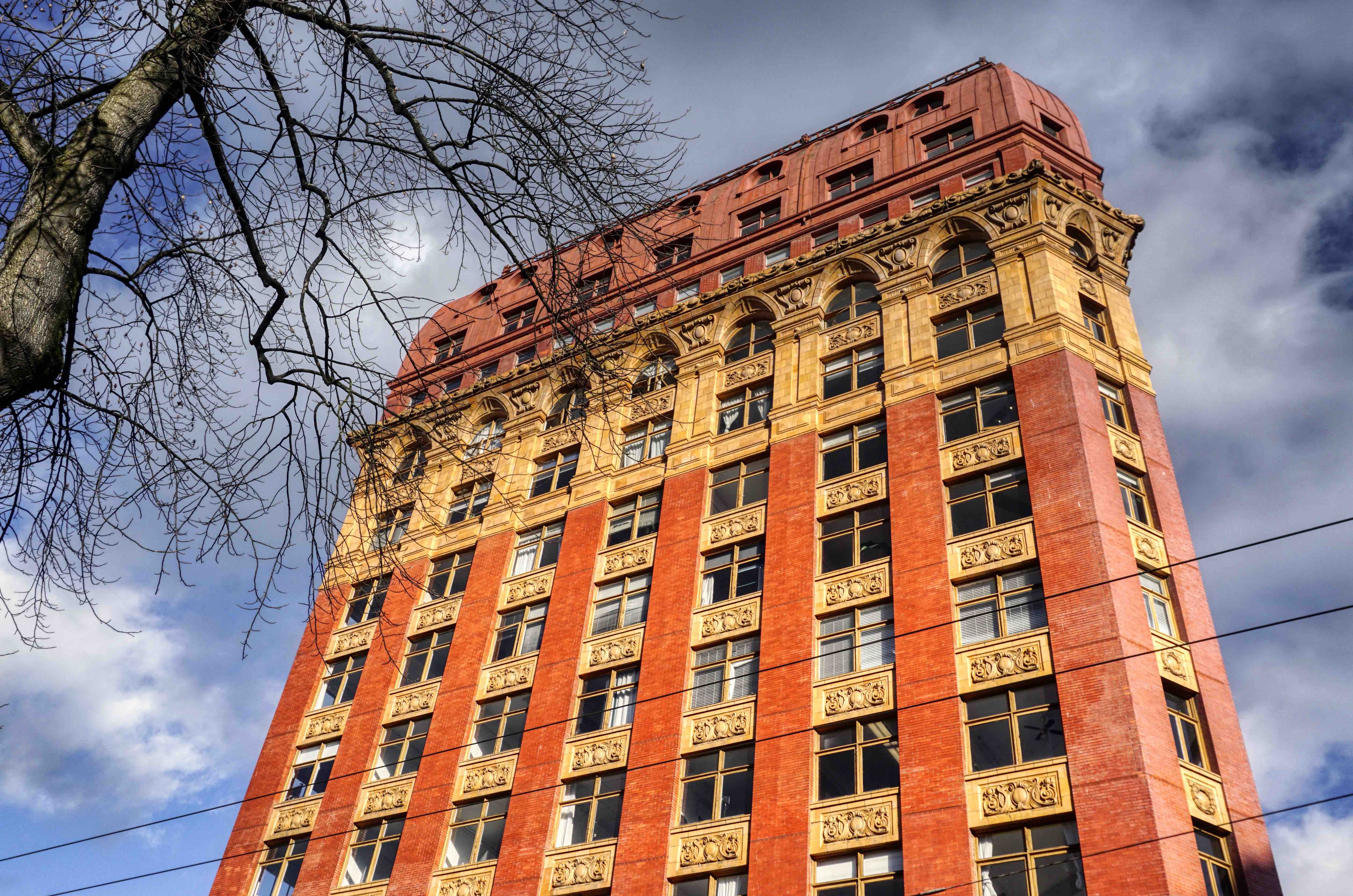
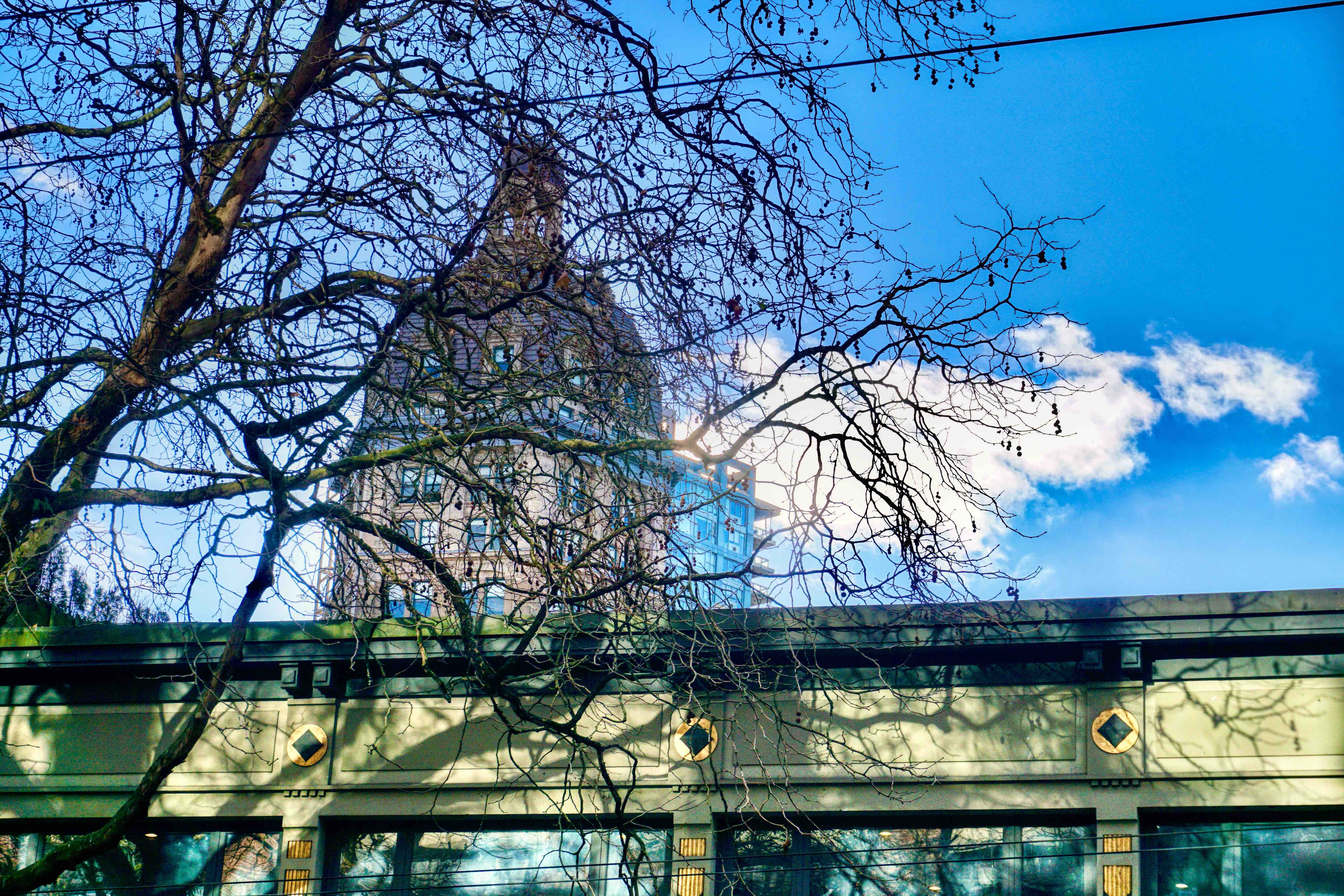
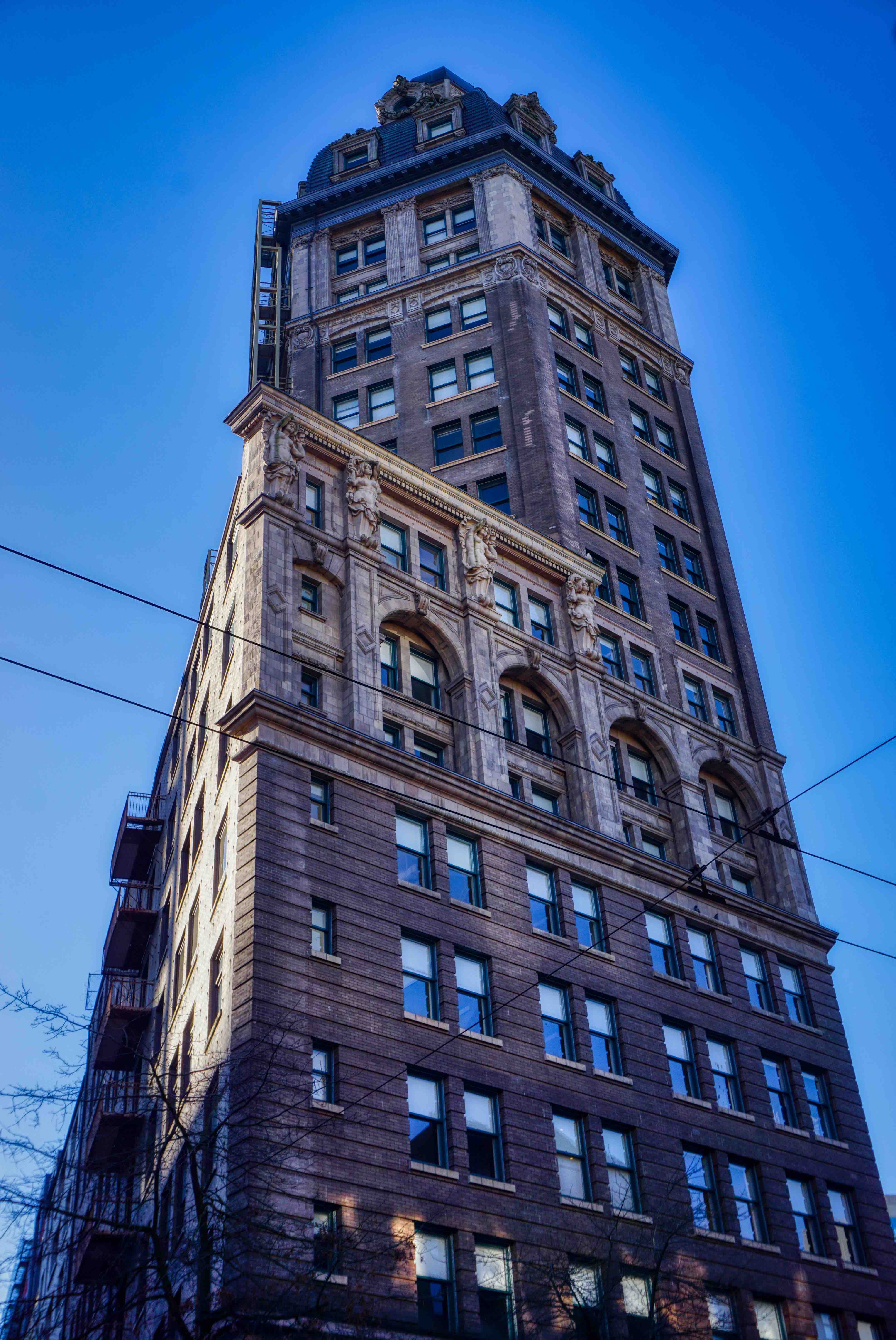
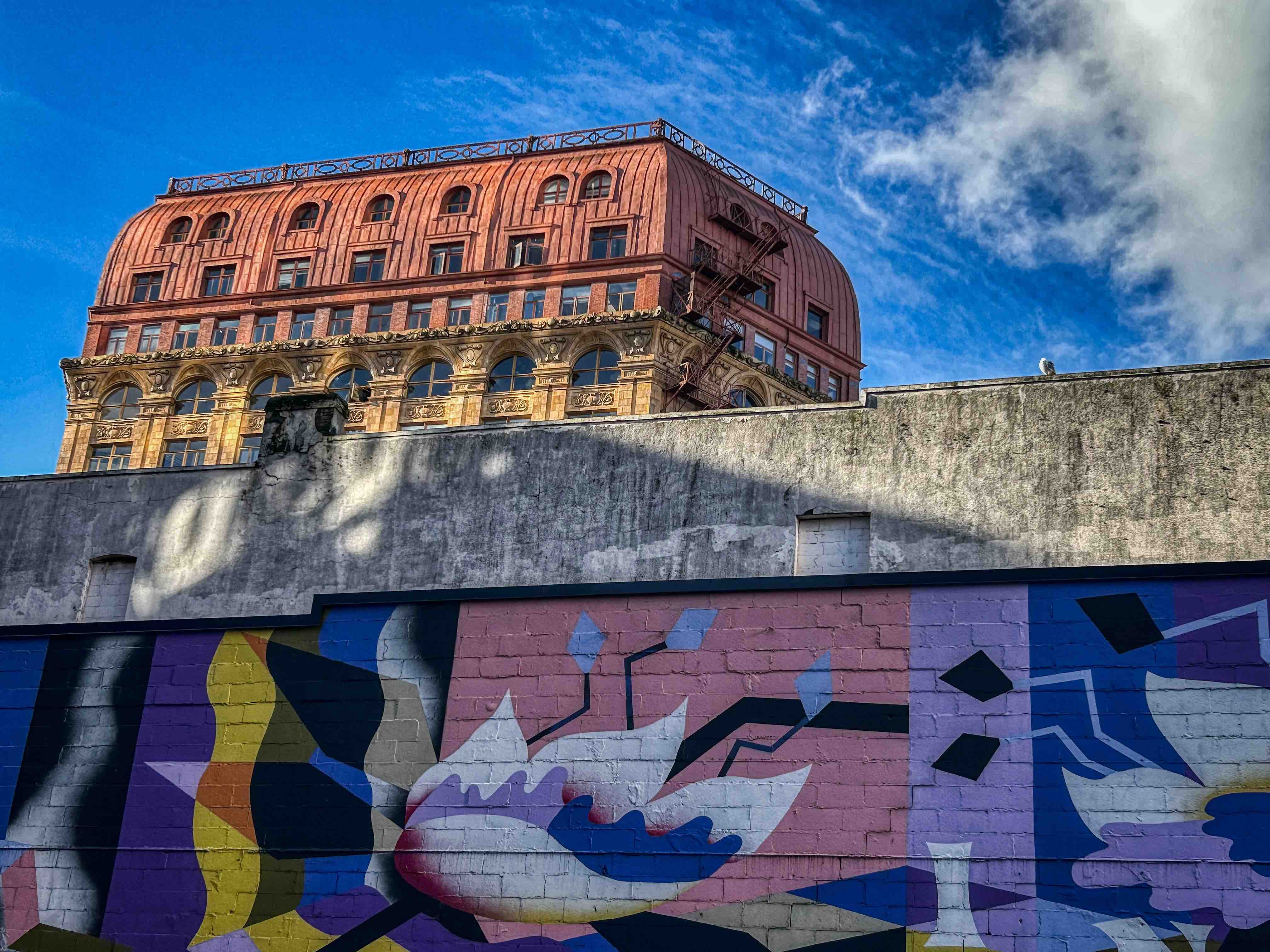
The Dominion Building, a thirteen-storey red brick Beaux-Arts edifice was, questionably, the tallest steel-framed high-rise in the entire British Empire when it was completed in 1910 (I find this hard to believe), flying the British Union Jack from its 12-metre-tall flagpole right up until Canada adopted its own flag in 1965. It was built using steel girders and concrete and remained, well into the 1940’s, one of ‘the’ modern ‘flatiron inspired’ buildings of Vancouver. And, just around the corner, is The Sun Tower, originally named ‘The World Building’ when constructed in 1912. It also became the tallest building in the British Empire at 82 metres (beating The Dominion) and was commissioned by the Mayor to house his newspaper, The Vancouver World. It was known at the time for its ‘faux-patina’ steel dome that was painted to imitate actual copper cladding. Fun fact: in 1918, ‘droves of Vancouverites turned out to watch as Harry Gardiner*, the ‘Human Fly’ scaled the outside of the building.
*Harry H. Gardiner (1871 – 1956), better known as the Human Fly, was an American famous for climbing buildings. He began climbing in 1905, and successfully climbed over 700 buildings in Europe and North America, usually wearing ordinary street clothes and using no special equipment.
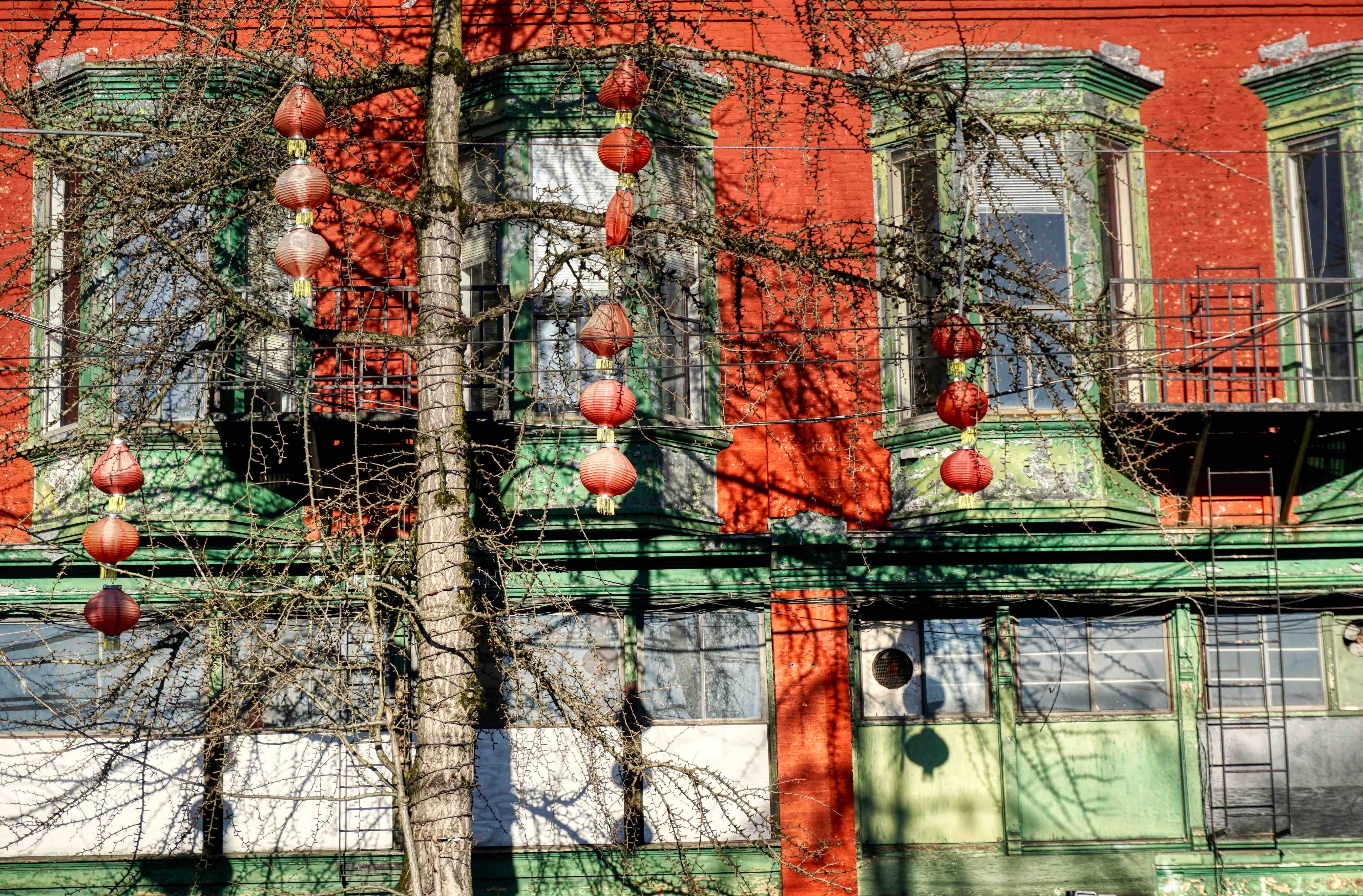
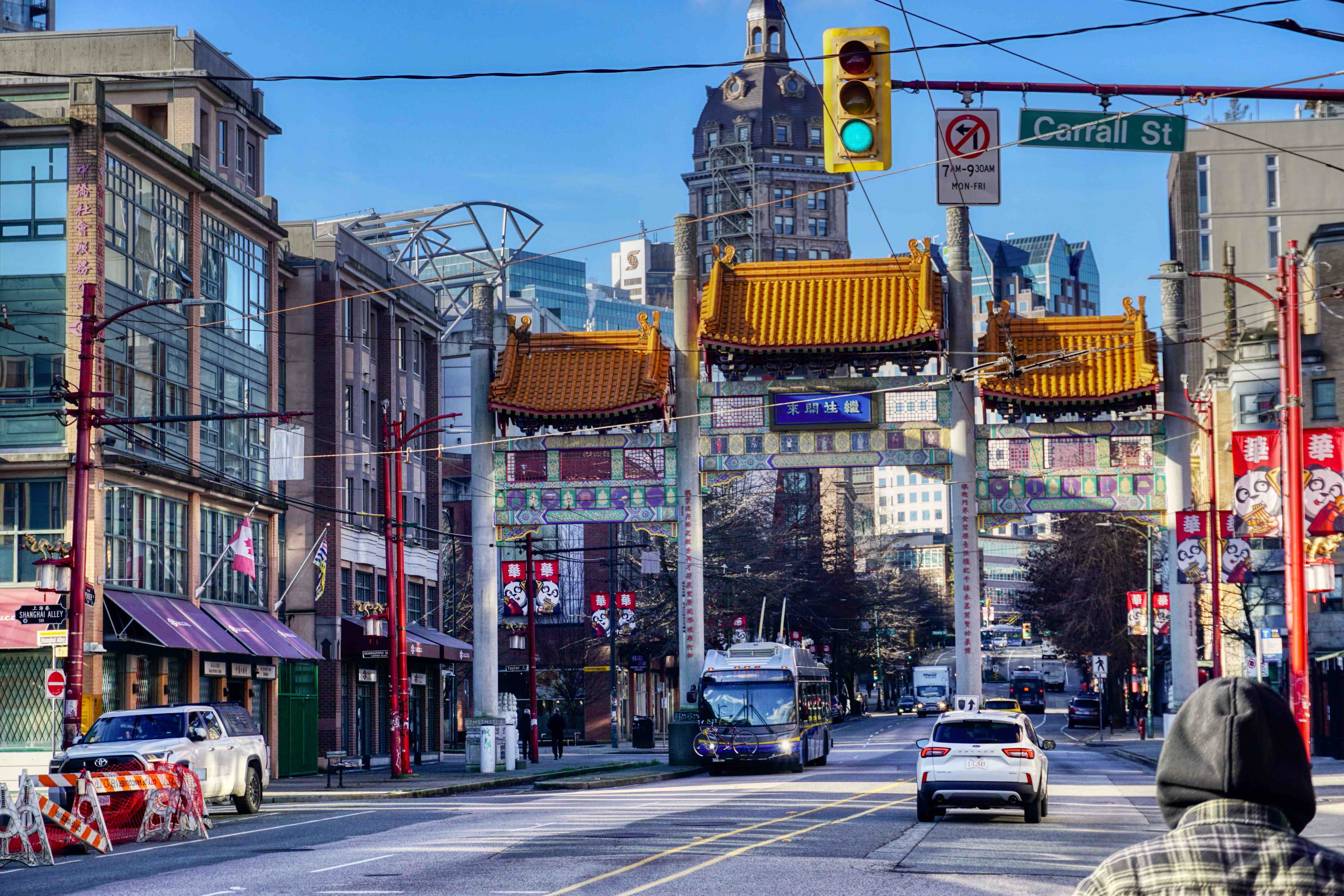
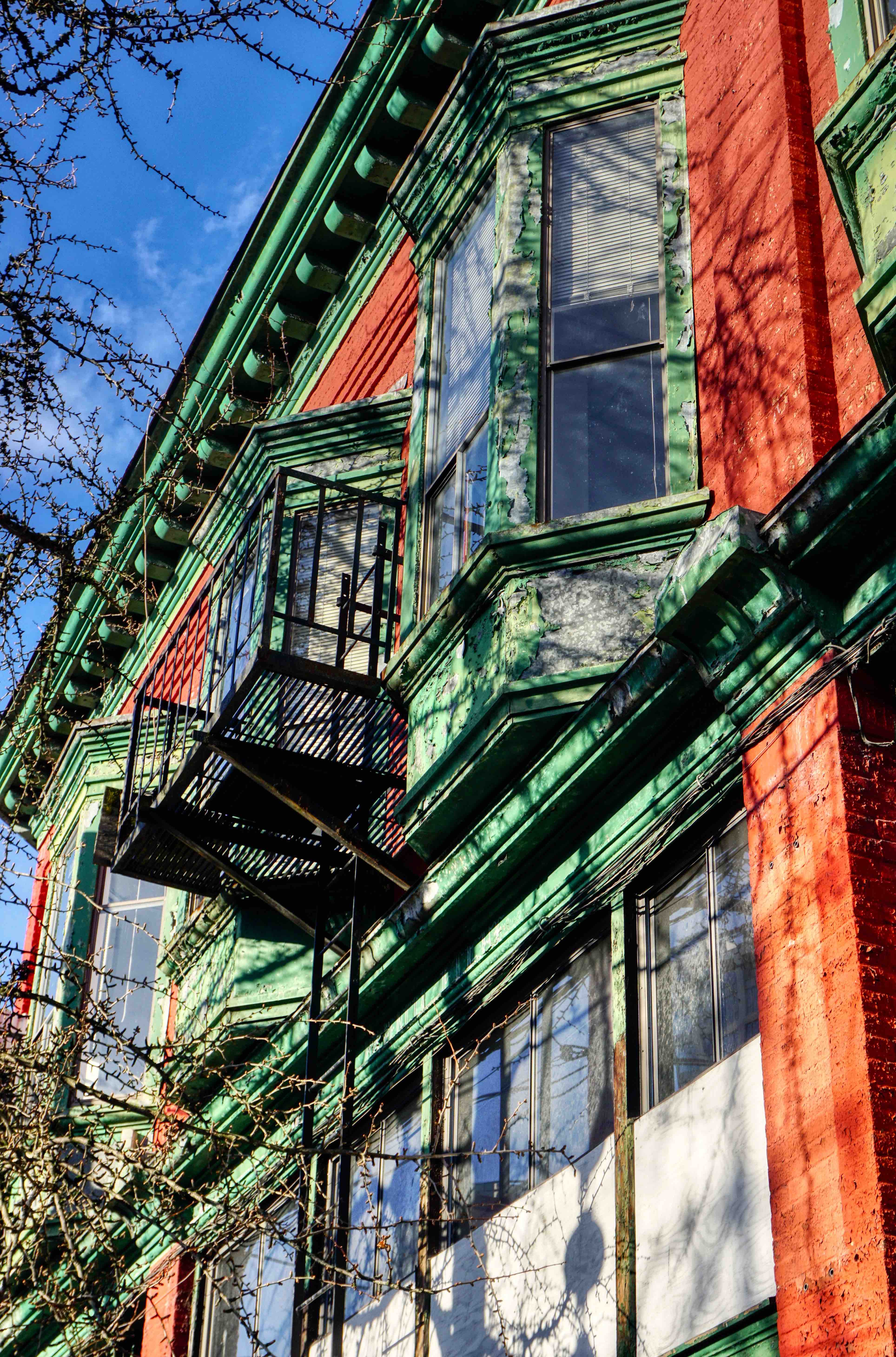
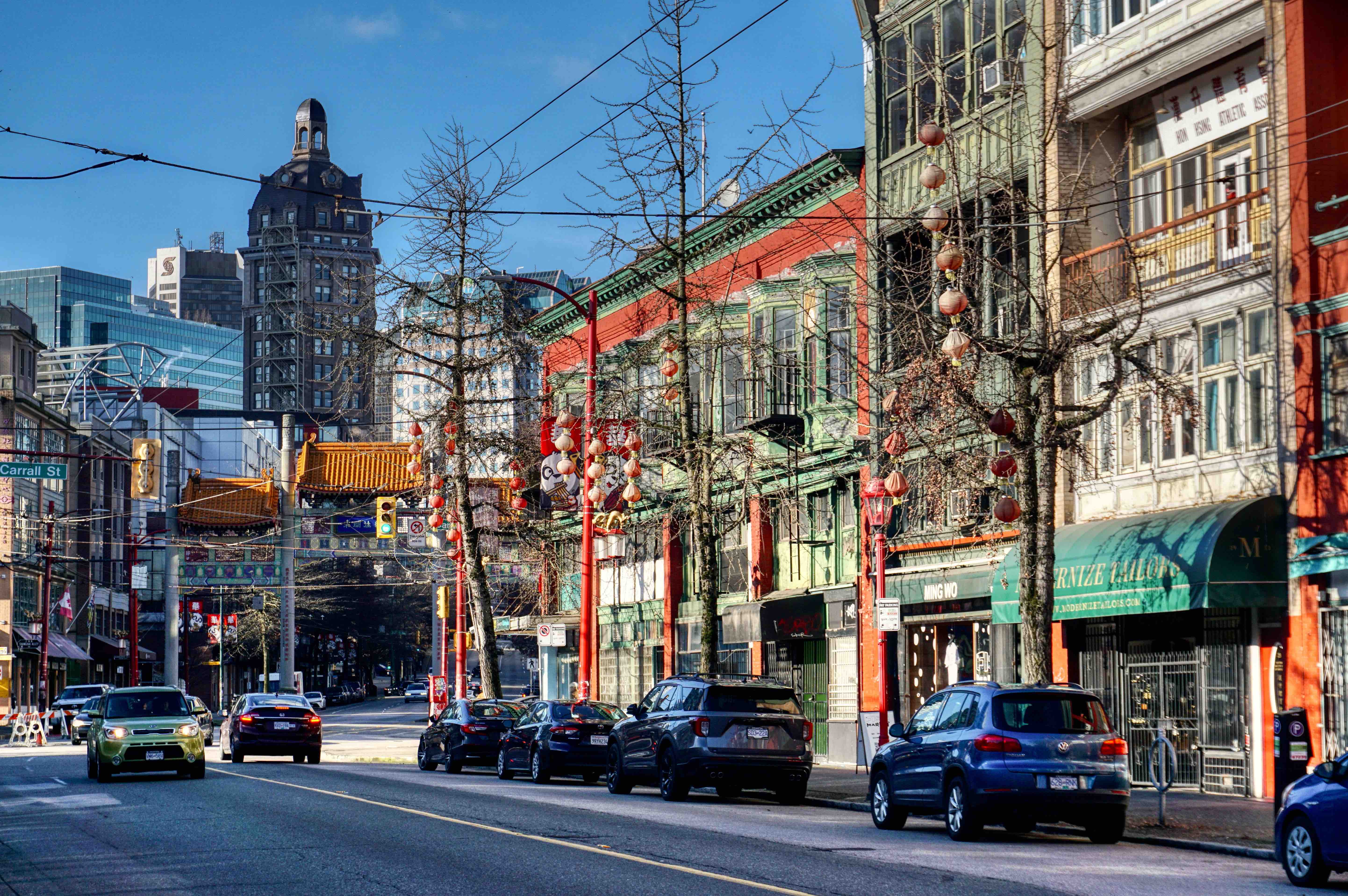
Gastown sort of morphs eastwards into Vancouver’s Chinatown, which we had high hopes for, given it’s meant to be the oldest and largest in Canada, and the third largest in North America. So many Chinese people immigrated to Canada in the 20th Century that the city began to be referred to as ‘Hongcouver’.
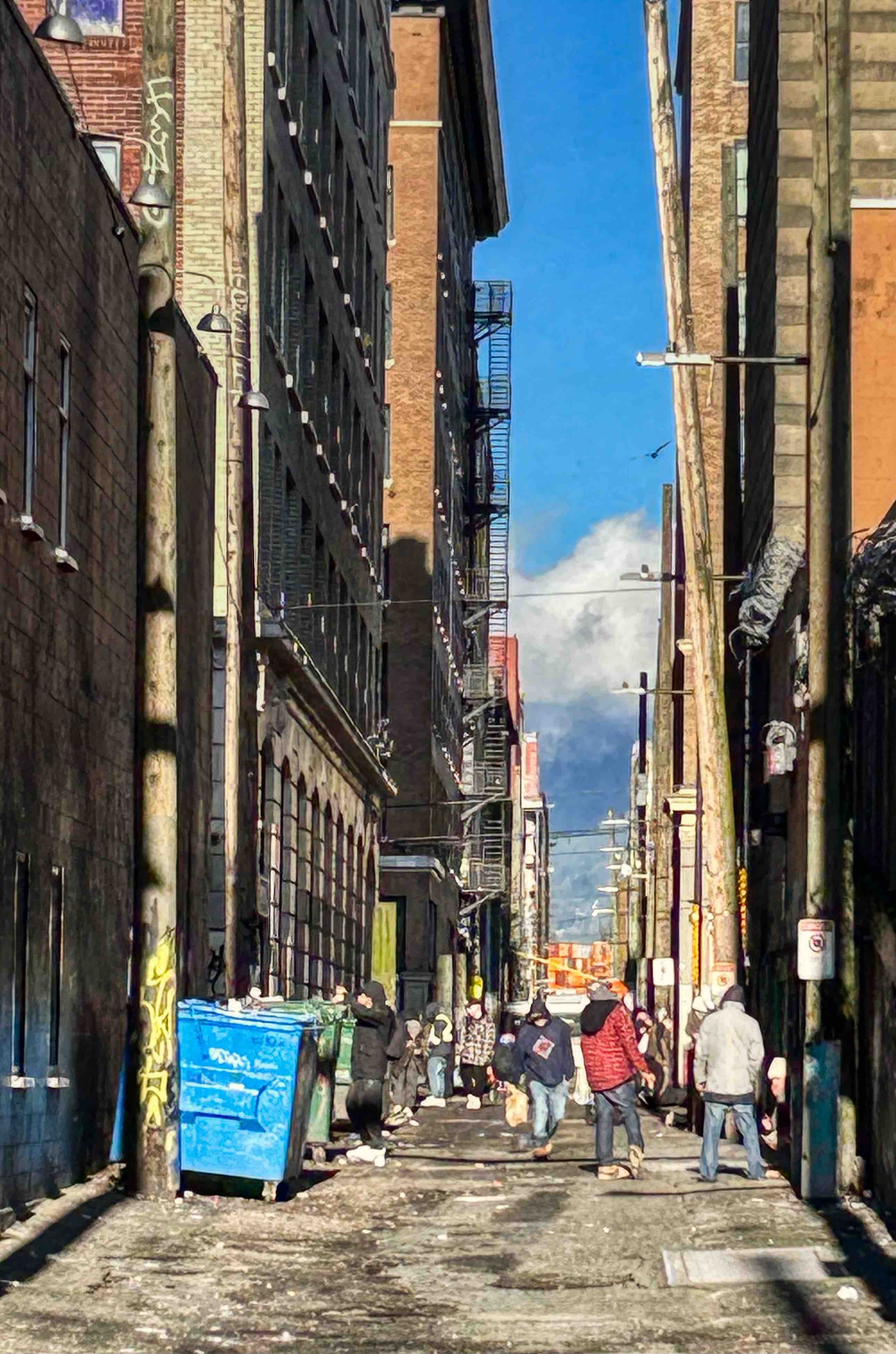
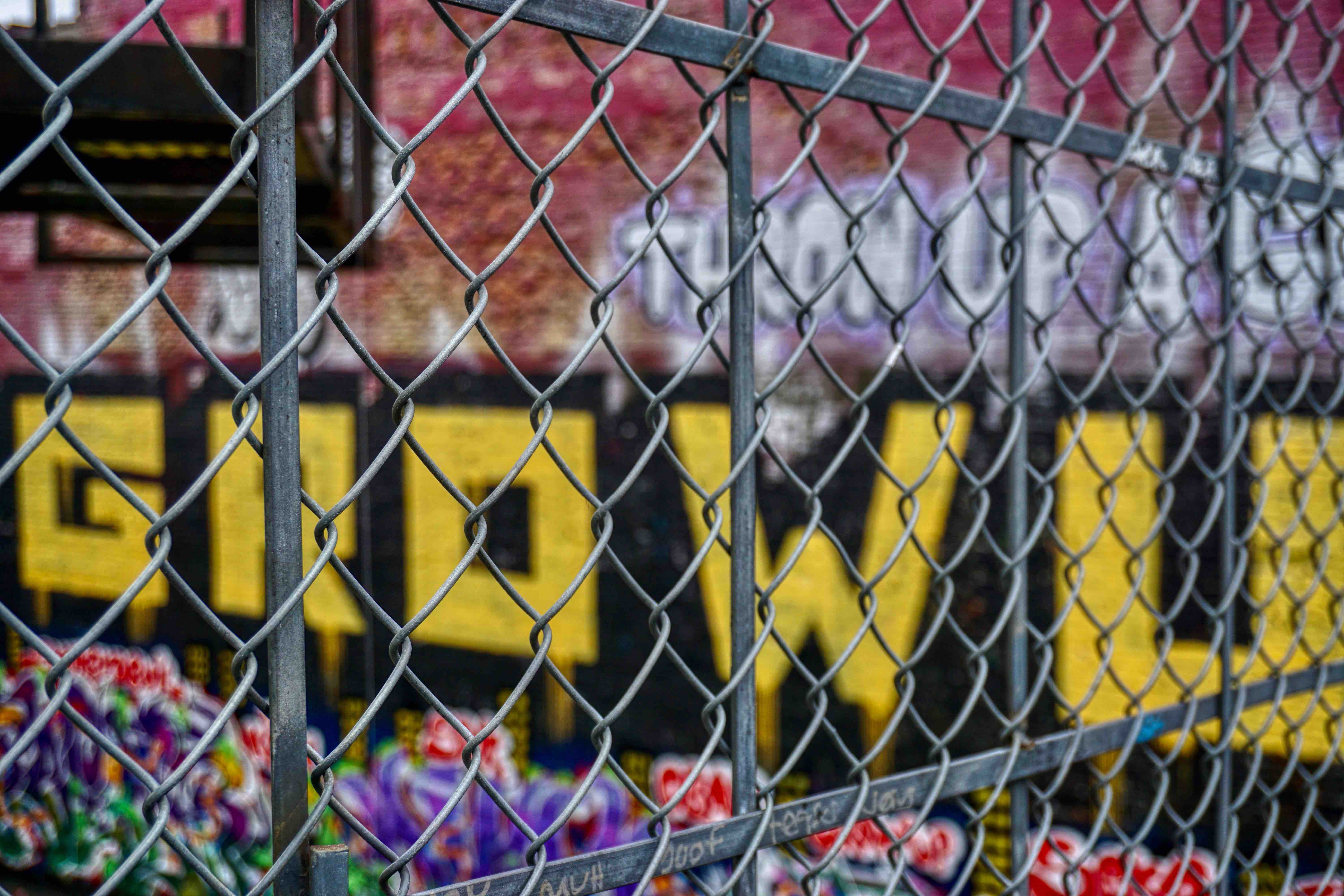
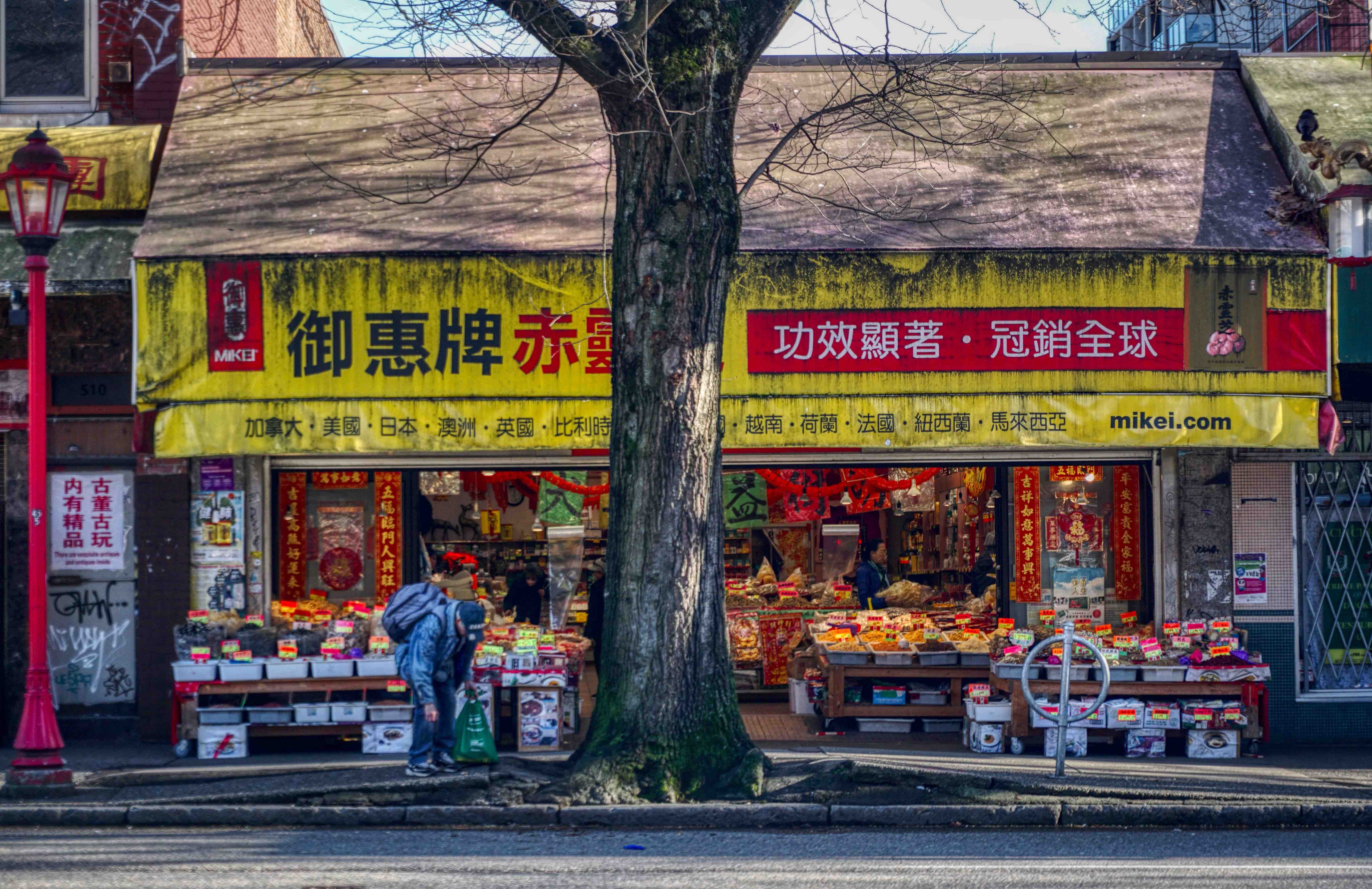
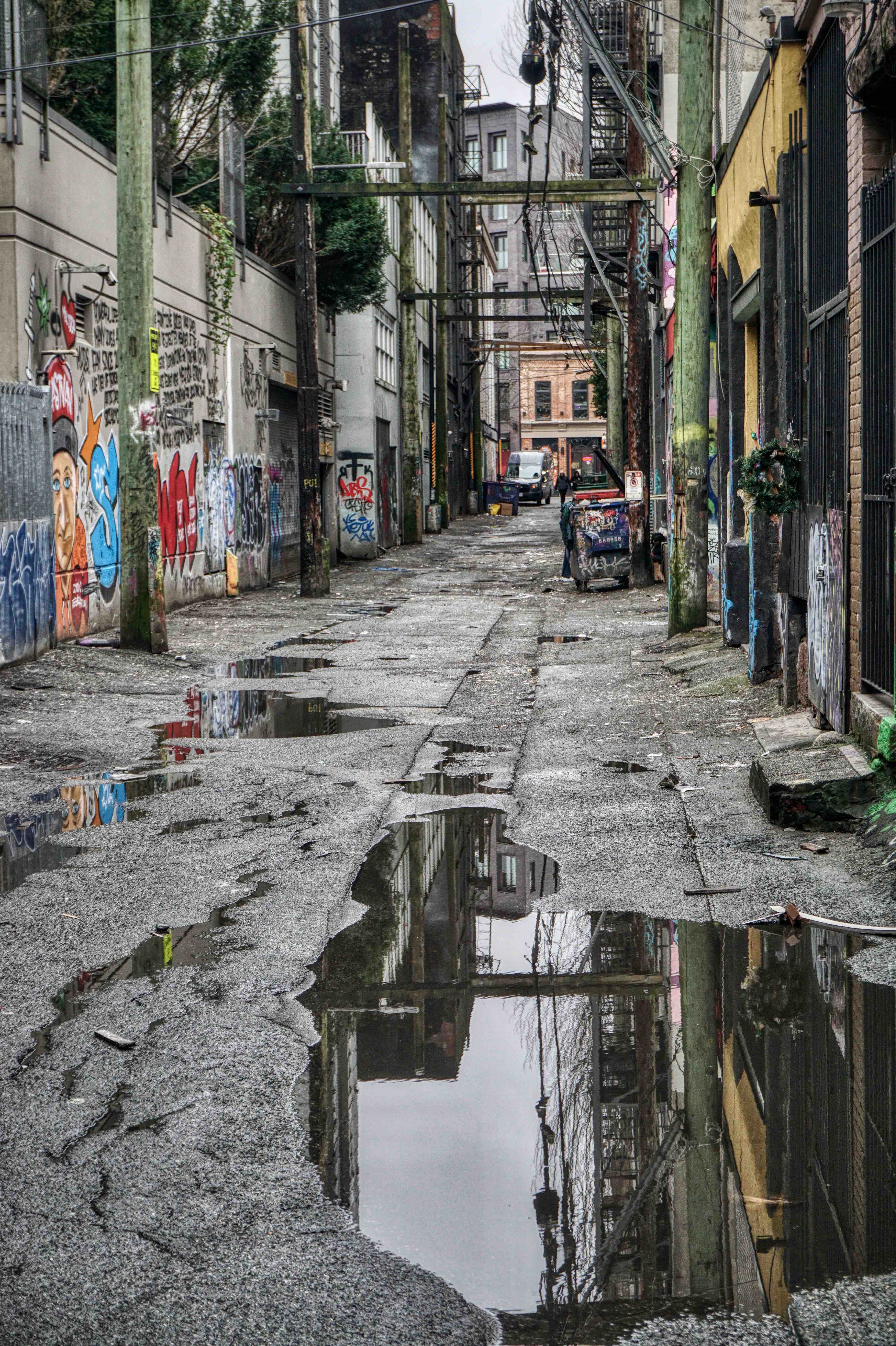
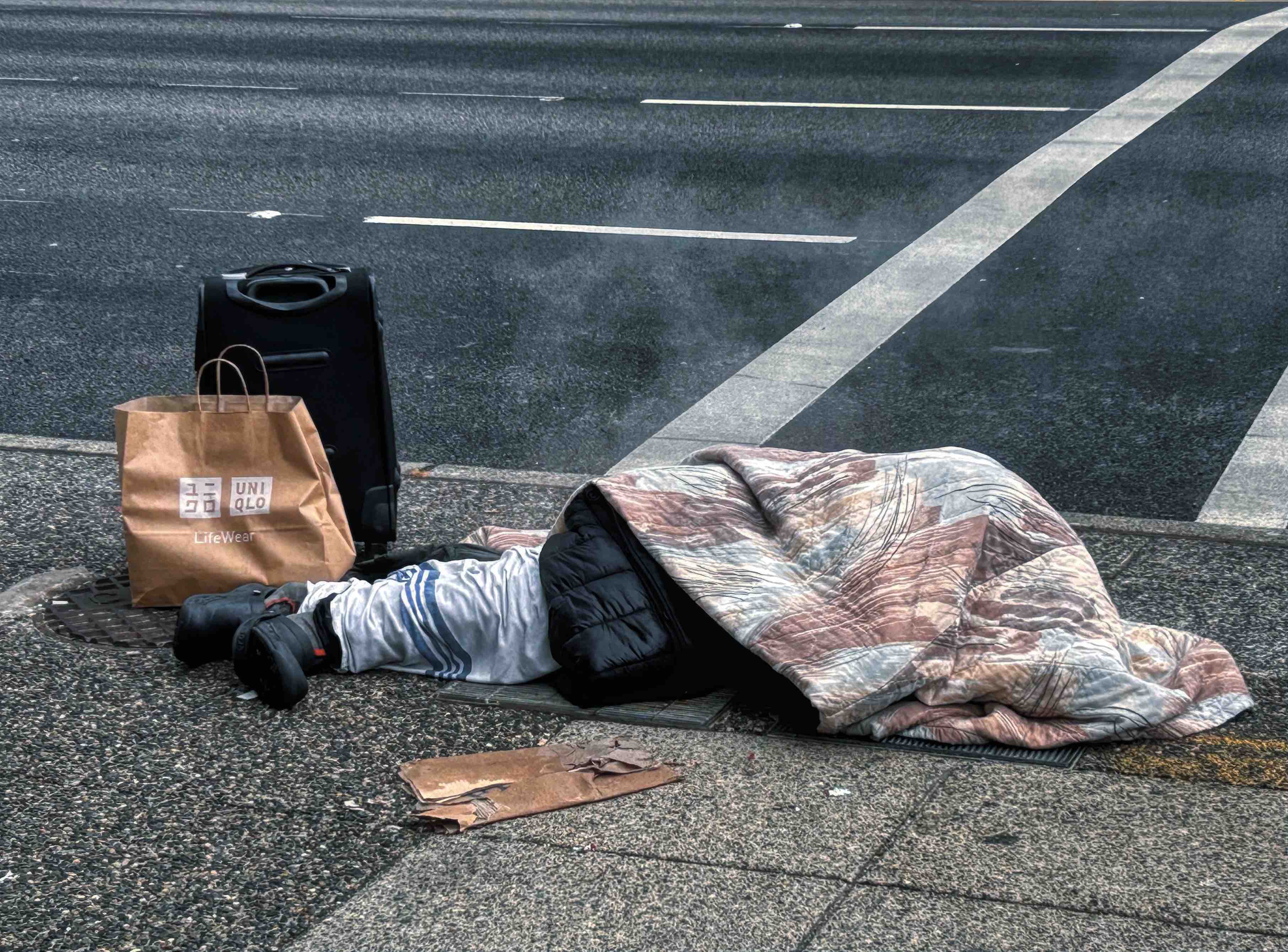
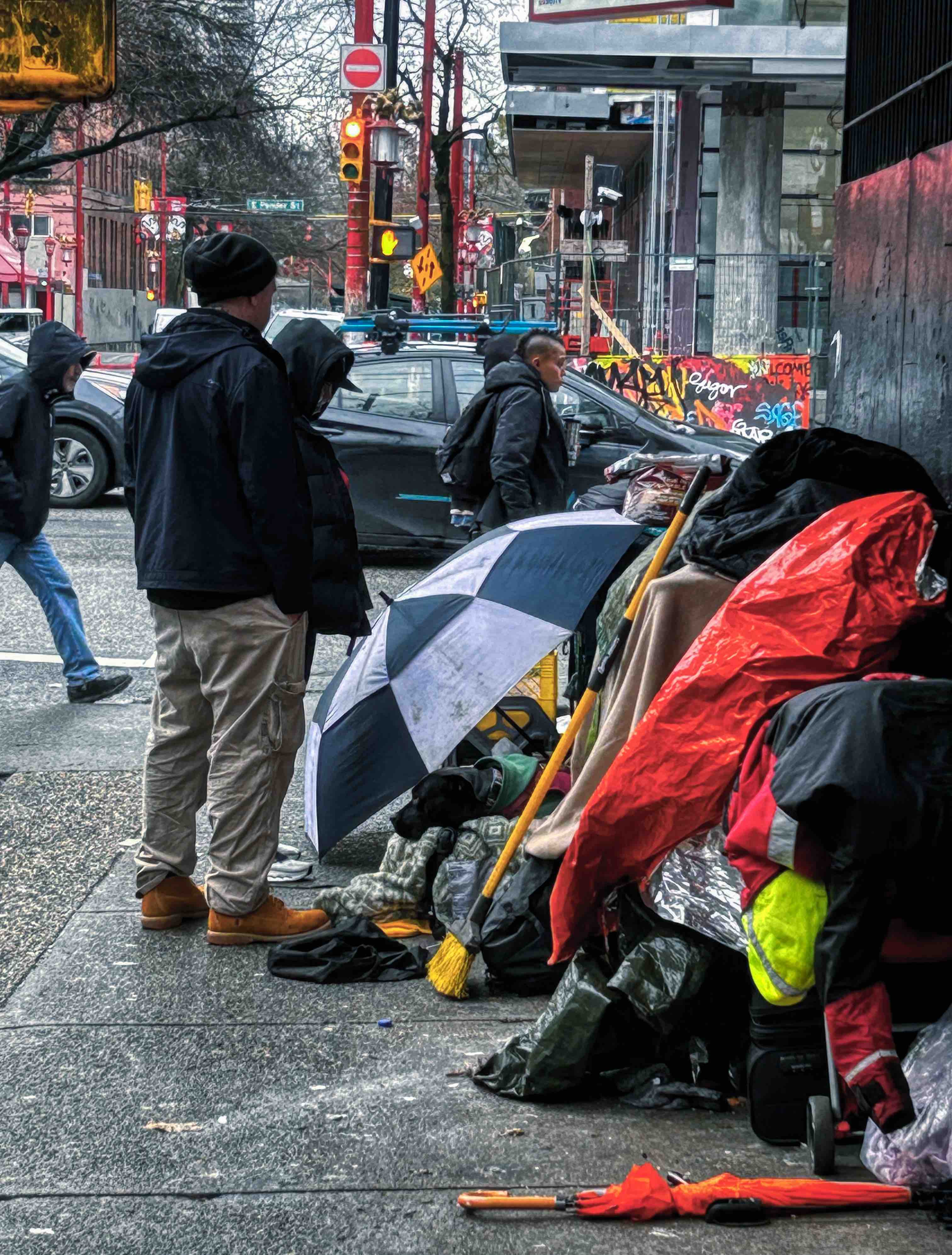
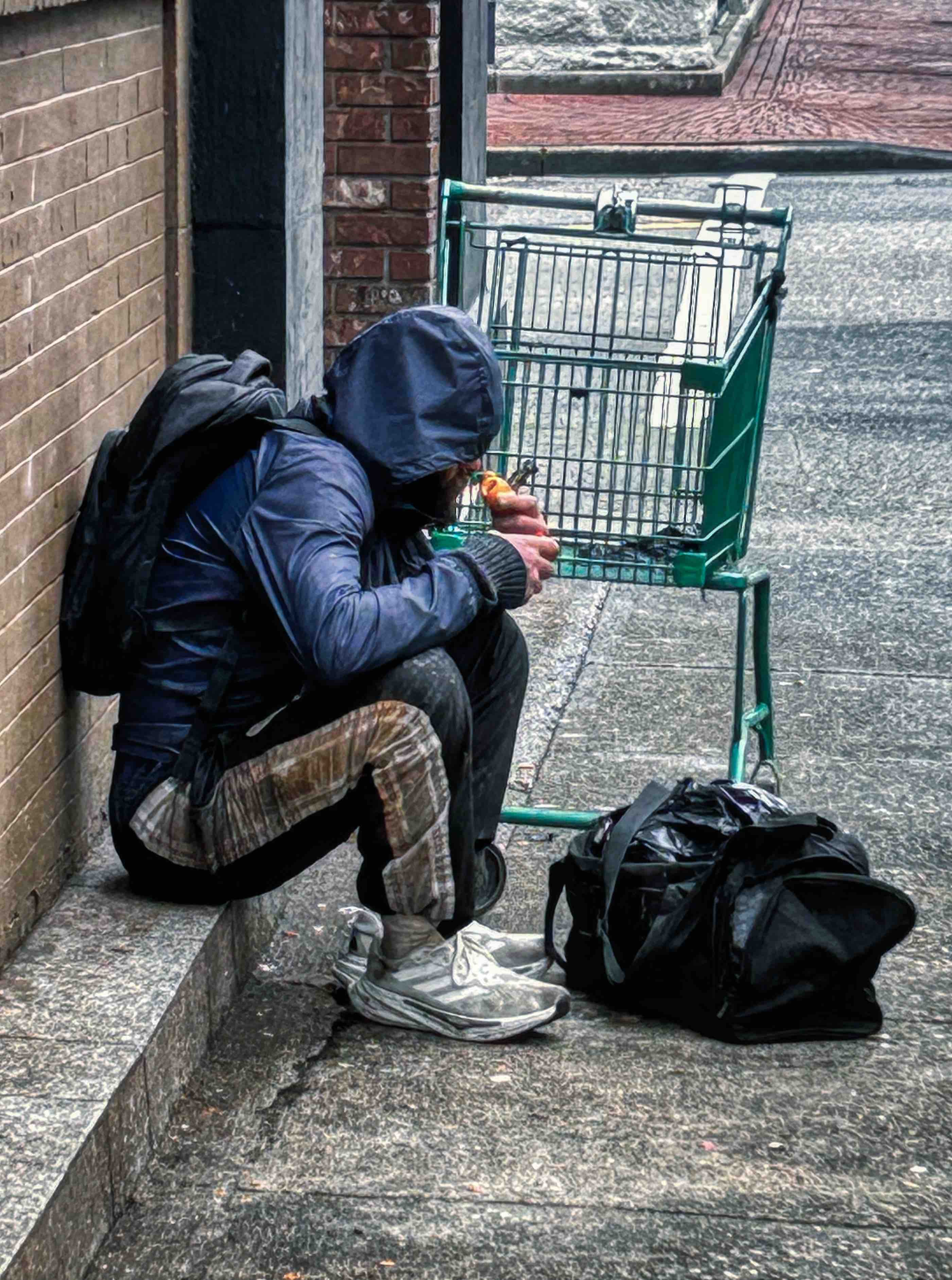
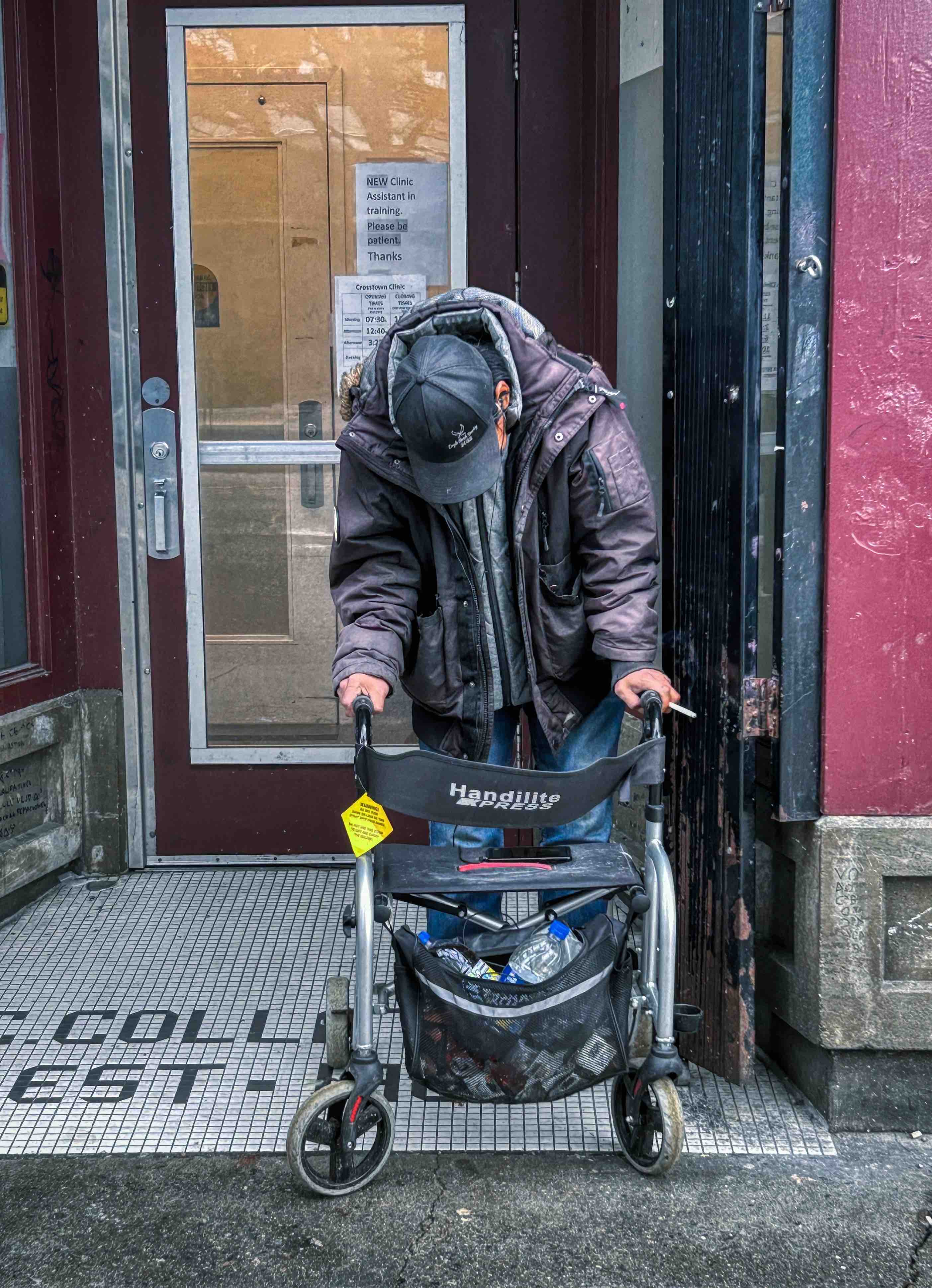
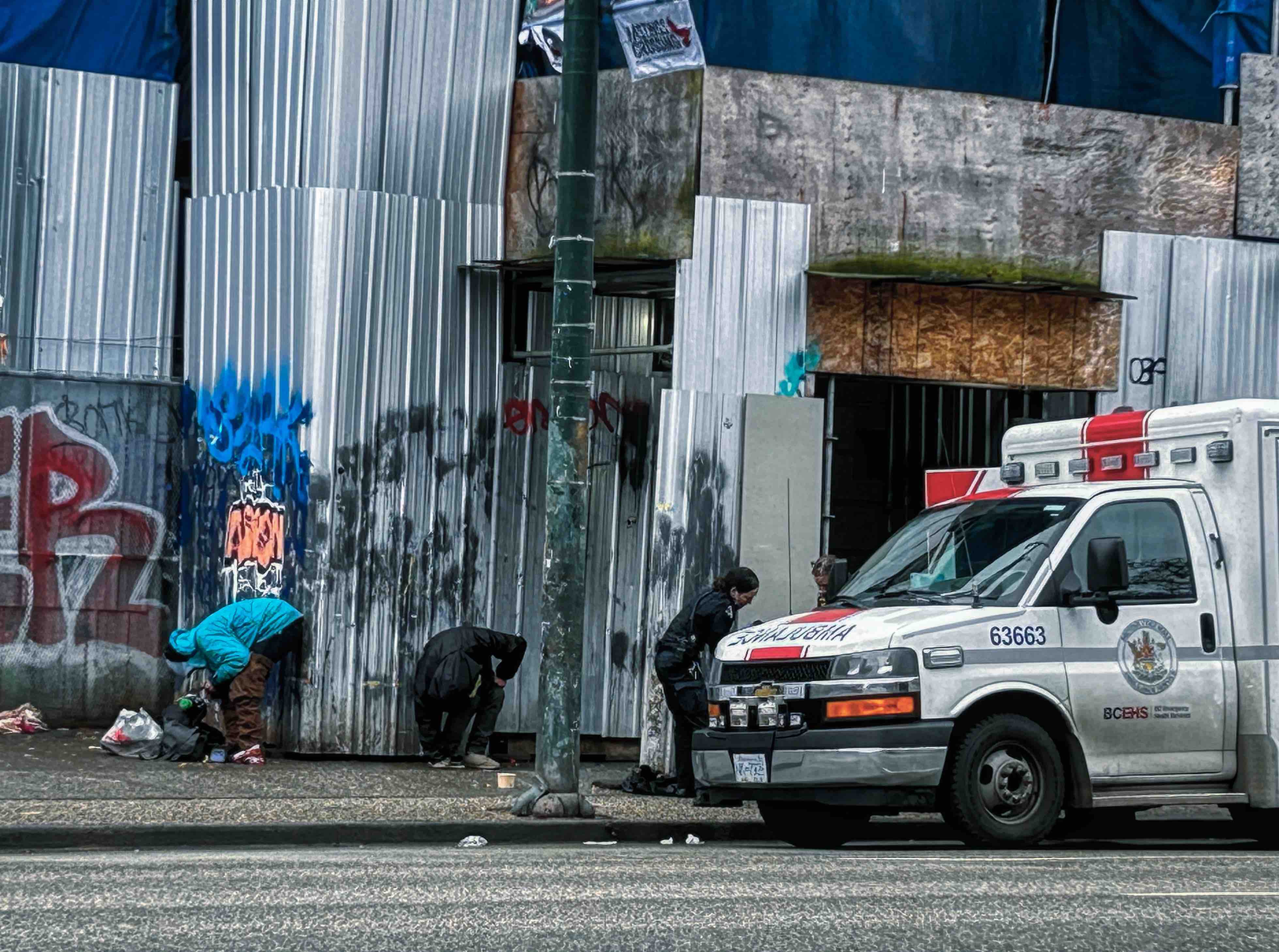
I’ve been reading that the area has suffered in recent years as the Chinese community have dispersed to other parts of the Vancouver metropolitan area, so on the day we explored it felt quite down-at-heel and, sad to say, mostly full of druggies and dropouts. Very few Chinese out and about apart from some older folks shopping in the few remaining Chinese grocery stores. We had high hopes of finding that gem of a Chinese restaurant – you know, where the locals hang and the food is authentic and so good. We couldn’t find one – and we looked. Drug-related problems are now rife on the streets of Chinatown, largely stemming from its proximity to one of Vancouver’s most troubled areas, Downtown Eastside (DTES) which has become the epicentre of British Columbia’s overdose crisis.
Sadly, one of the scourges of modern-day North America, particularly in the big cities and including Canada, is the use of fentanyl, a lethal synthetic opioid that’s up to 100 times more potent than Morphine and 50 times more potent than Heroin. Vancouver has one of the biggest problems in Canada and its use is evident almost on every street corner in Downtown, particularly in and around community centres – of which there are a fair few in the Chinatown district. One of the tell-tale signs of fentanyl use is what’s known as the ‘fentanyl fold’ – you see zombie-like people dead in their eyes with hollowed out white faces bent over at the waist, slumped over in the street, unable to move. It’s caused by the drug’s powerful depressant effects on the central nervous system which lead to severe muscle weakness and loss of motor control. I can tell you, it’s quite shocking to see this and really quite frightening. They occasionally snap out of their stupor and rage at the world, lurching at people on the streets, like the zombies they are. And where are the cops you might ask? Good question. We haven’t seen any. So, walking the streets of Downtown can be a challenge – you need to have your wits about you, that’s for sure.
Whilst drug use is not legalised in British Columbia, the personal possession and use of small amounts in specific locations has been decriminalised under a temporary federal exemption (aimed at destigmatising drug addiction). Adults in BC can possess a cumulative total of 2.5 grams of certain illegal substances including, would you believe, fentanyl, heroin, morphine, cocaine, methamphetamine and MDMA. But somewhat contradictory to this, possessing or consuming drugs in public spaces remains illegal – but that didn’t seem to deter most people we saw down here, openly smoking crack on the streets.
Along with most North American states and territories, the use of cannabis is legal and widespread, with some slick, fancy and some Vape-Zilla stores now ubiquitous in most cities selling everything from pre-rolls, vapes, edibles and tinctures to concentrates, seeds and flowers. But for me, the strong smell of cannabis that seems to linger on the street isn’t that pleasant and adds an extra seediness to the area.
It’s been so grey and overcast here in recent days that we’re beginning to feel the effects of S.A.D. (Seasonal Affect Disorder). I think a long walk in Stanley Park, some tree hugging and a deep intake of that cold Pacific air should hopefully do the trick. Other than that, a nice sunny day. But sadly, there’s no sunshine in the immediate forecast.
 Travels With My Ant
It would seem a large number of American and Canadian cities are showing that the “The Walking Dead” was to a certain extent prescient. The junkies in kings Cross are positively Enid Blytonesque compared to what you describe. I have sung choruses of “Here Comes the Sun”, as a way of sending good weather wishes winging to you through the aether.
LikeLiked by 1 person