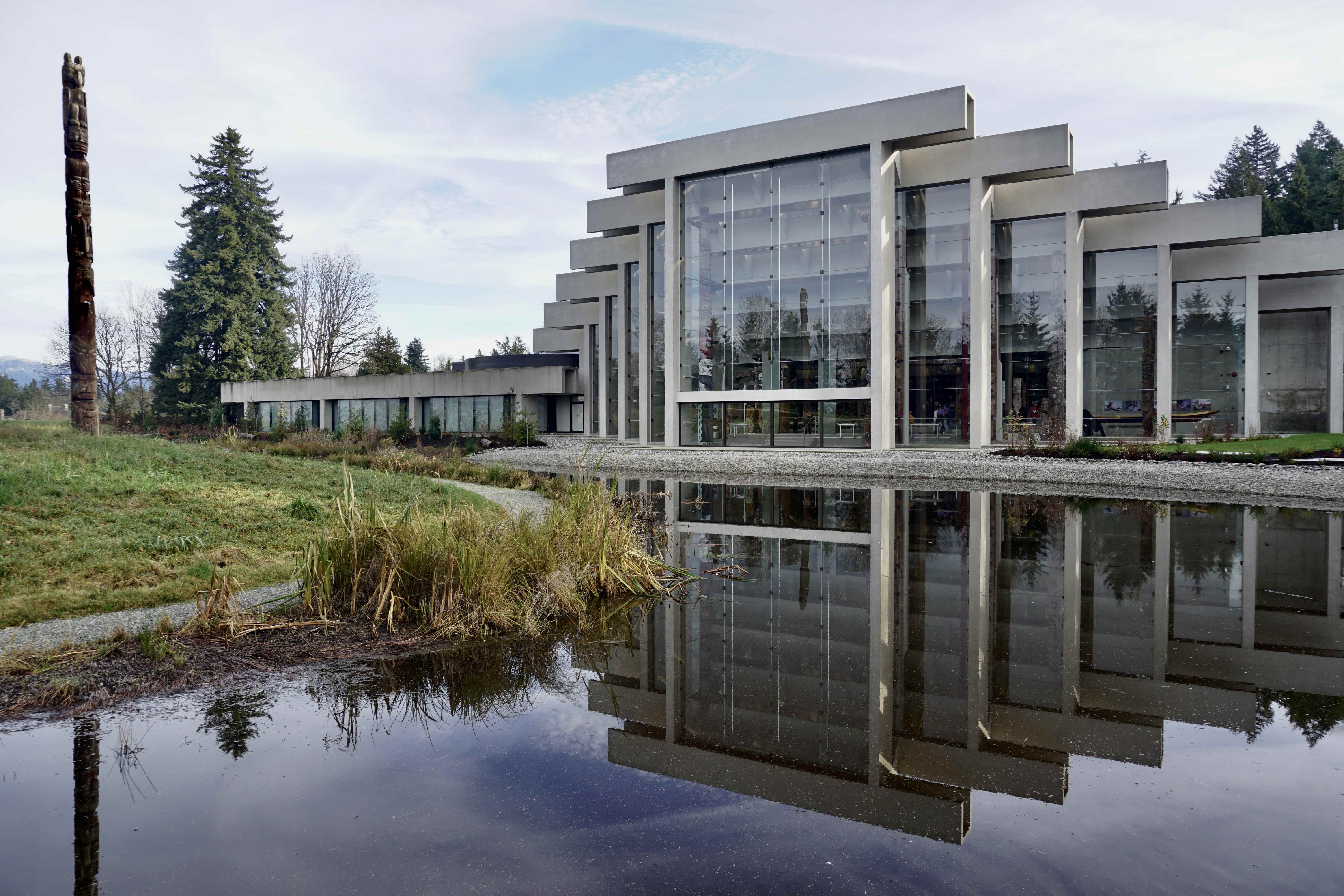


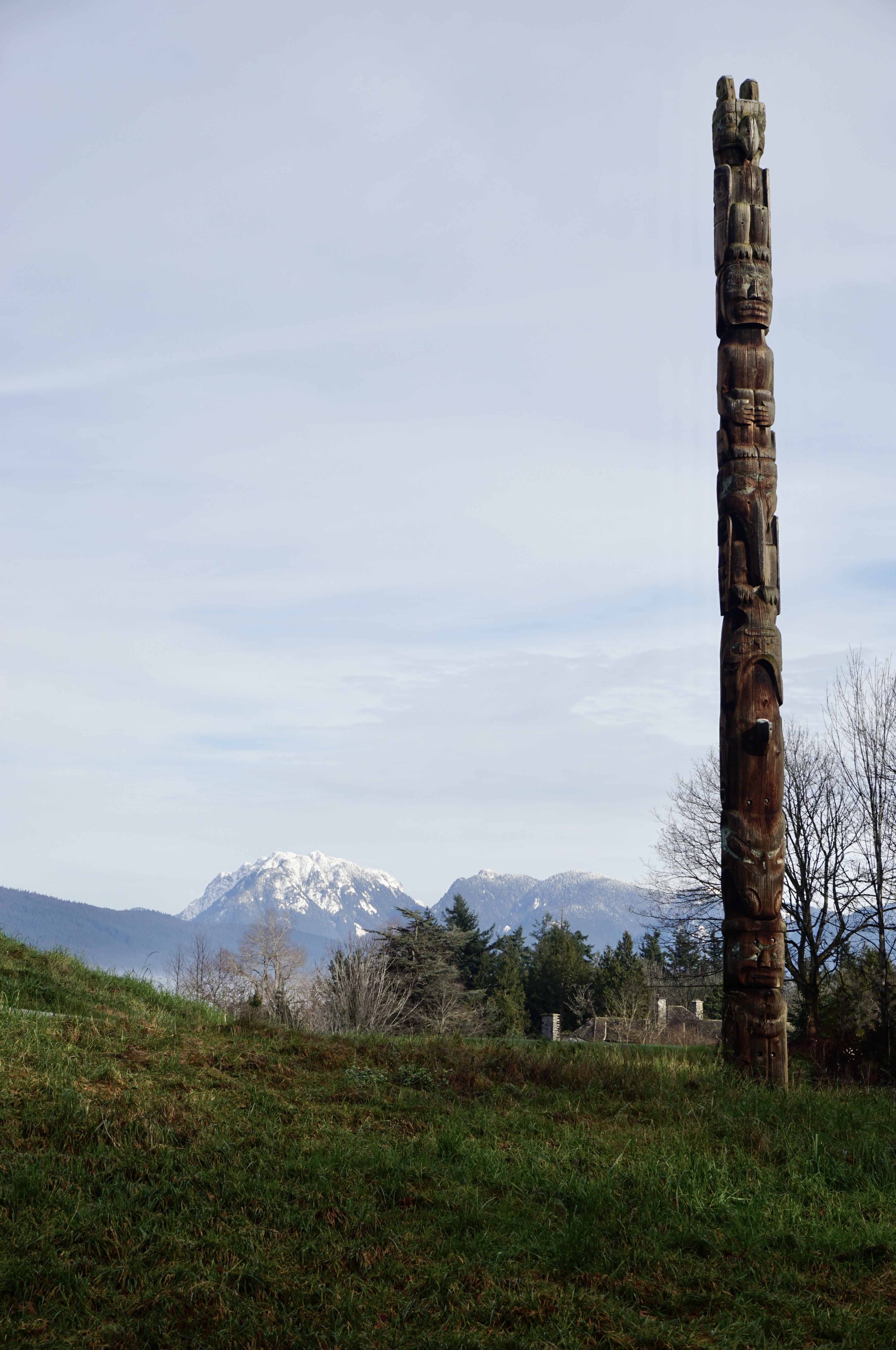

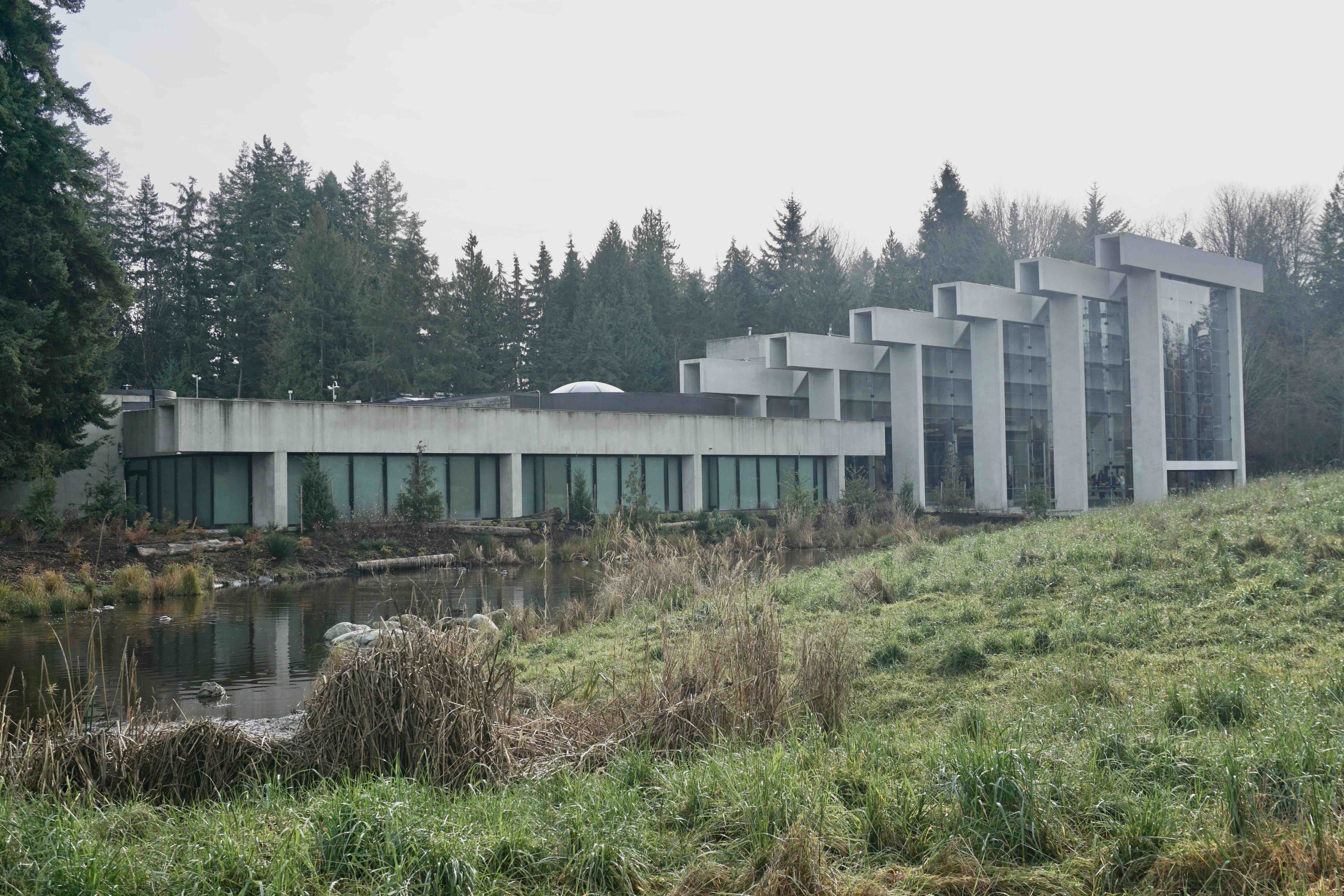
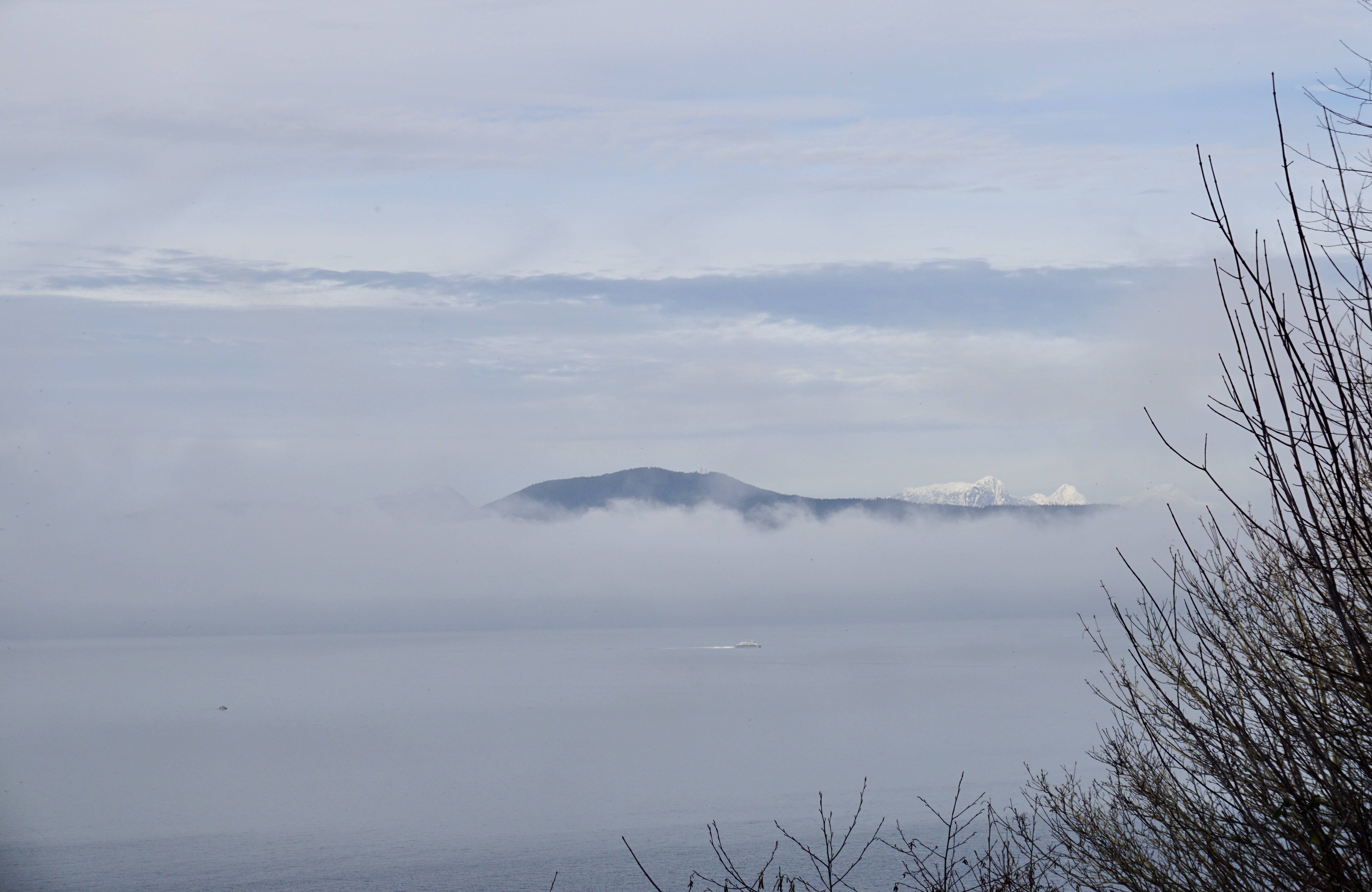
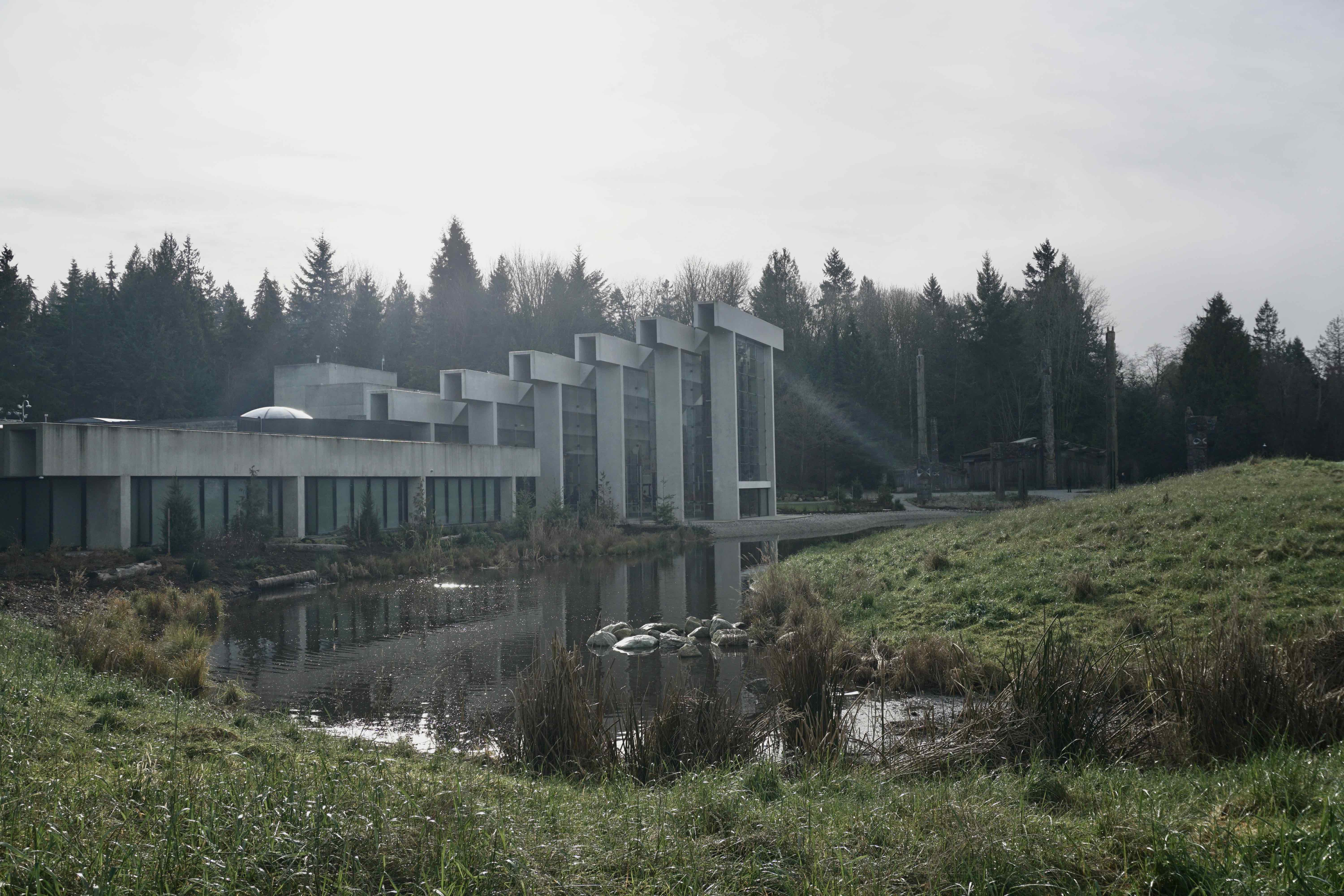


The Museum of Anthropology at the University of British Colombia, designed by celebrated Canadian architect Arthur Erickson, was opened in 1976 and is considered a masterpiece of modern Canadian West Coast architecture. It’s around half an hour’s drive south west of downtown on the beautiful forested Point Grey peninsula that looks out over the Strait of Georgia, Vancouver Island and the snow-capped North Shore mountains. It was a cold foggy morning on the day we visited, so the whole place had a dreamlike washed-out quality about it, with the distant foghorns from the strait and the tiny ferries plying the misty waters below.
This is traditional Musqueam land, the indigenous peoples of this area, and you can sense the spirituality of the place, enhanced by the quiet dampness of the fog and the light murmur of the wind in the trees.
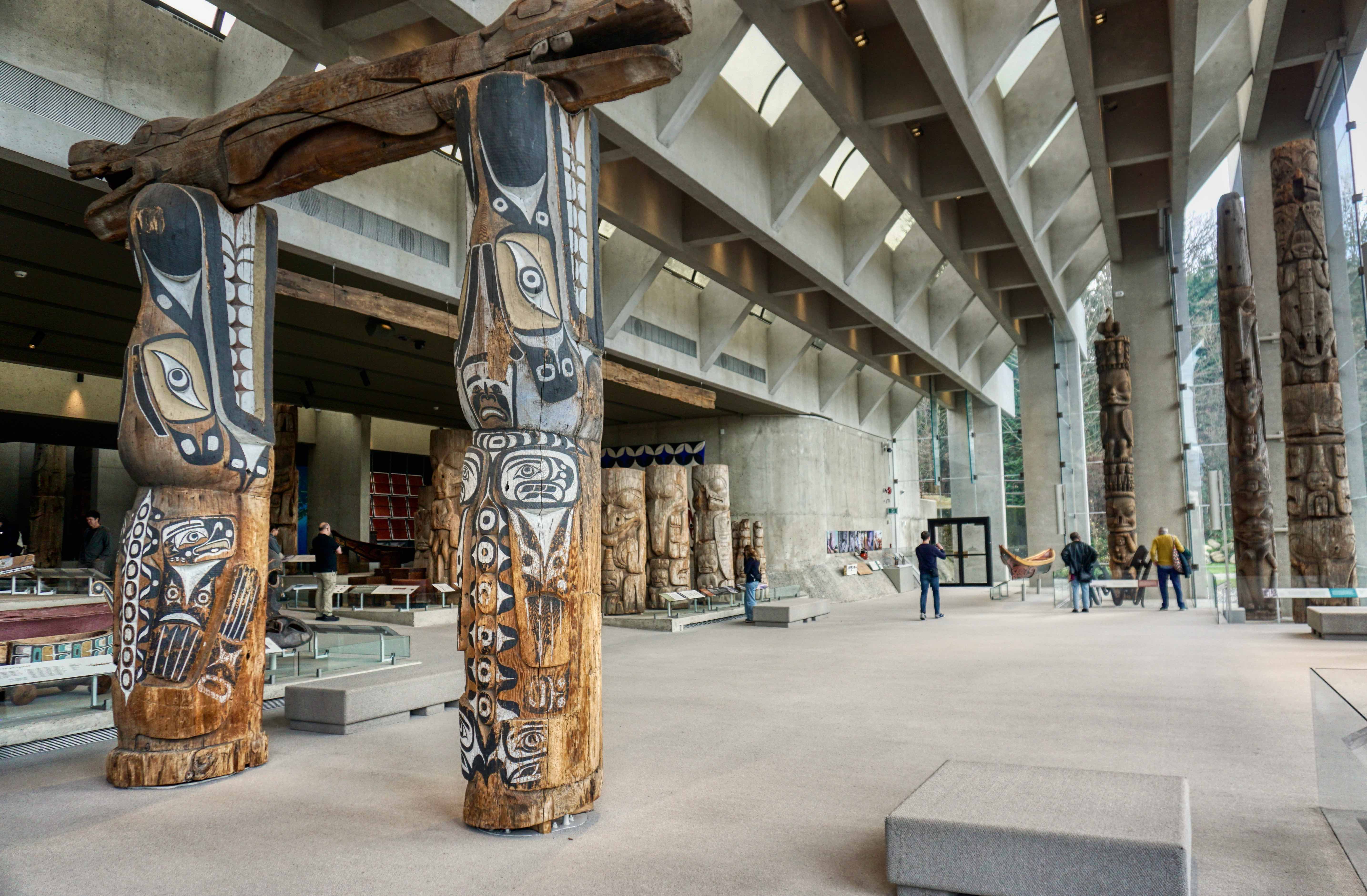
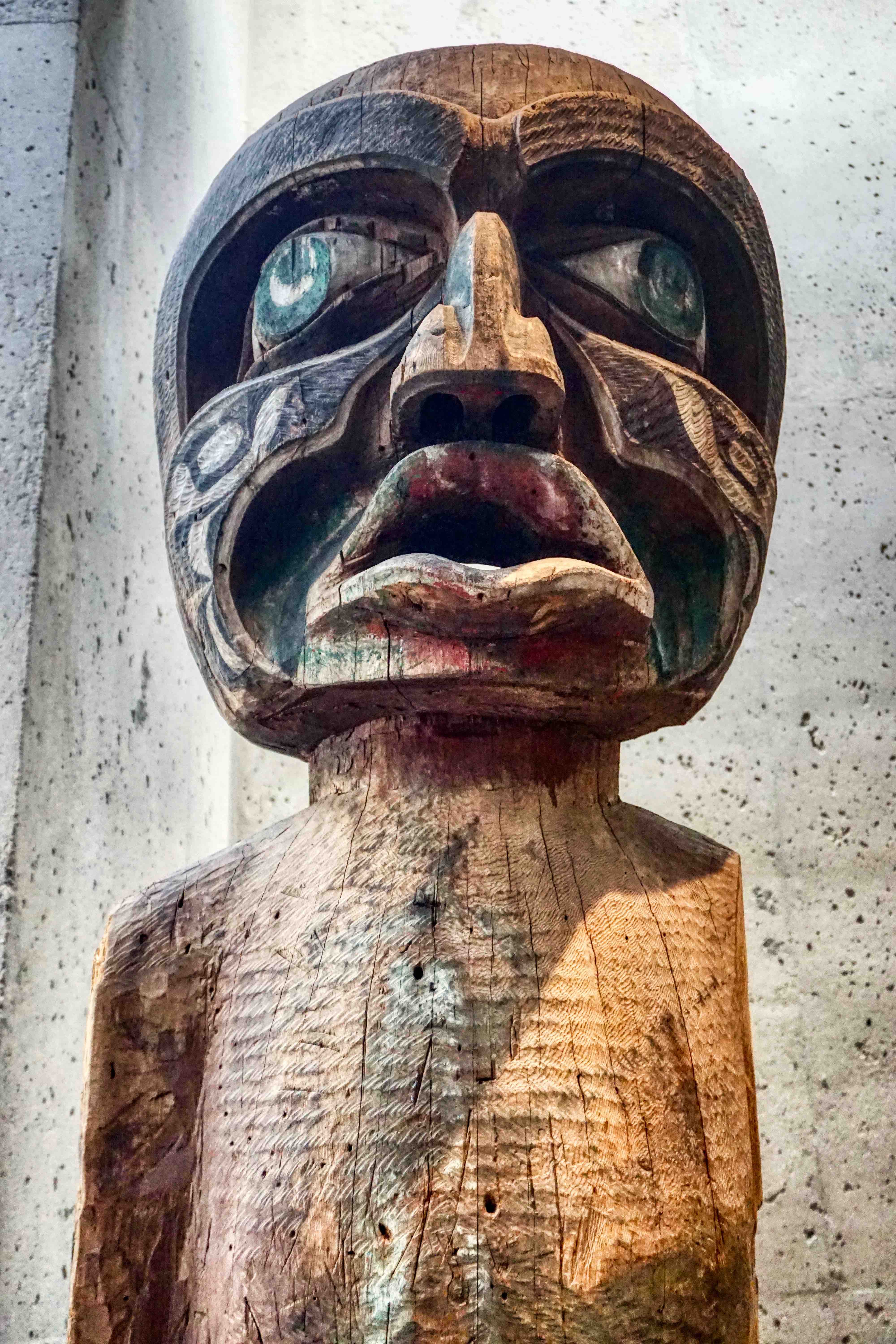
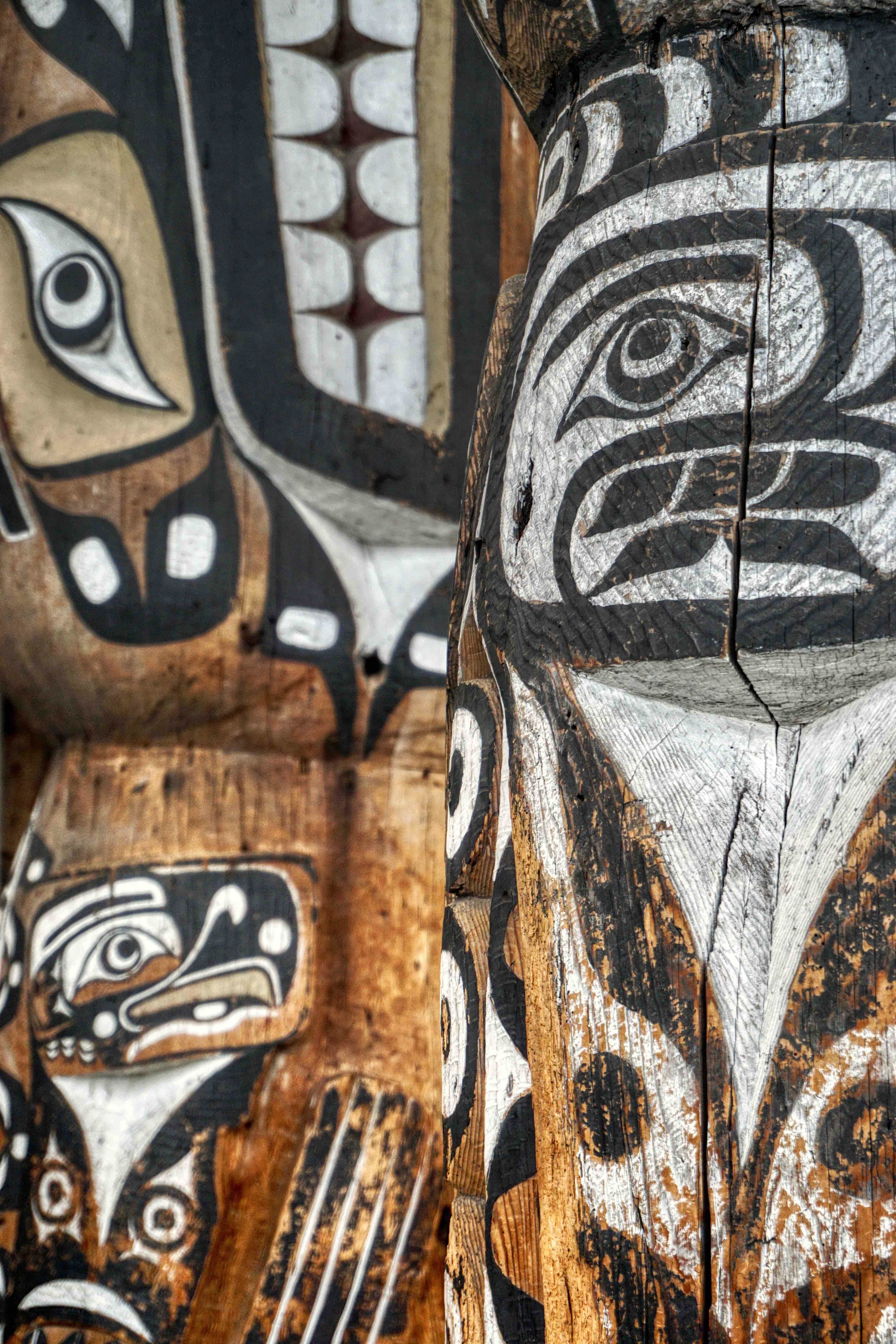
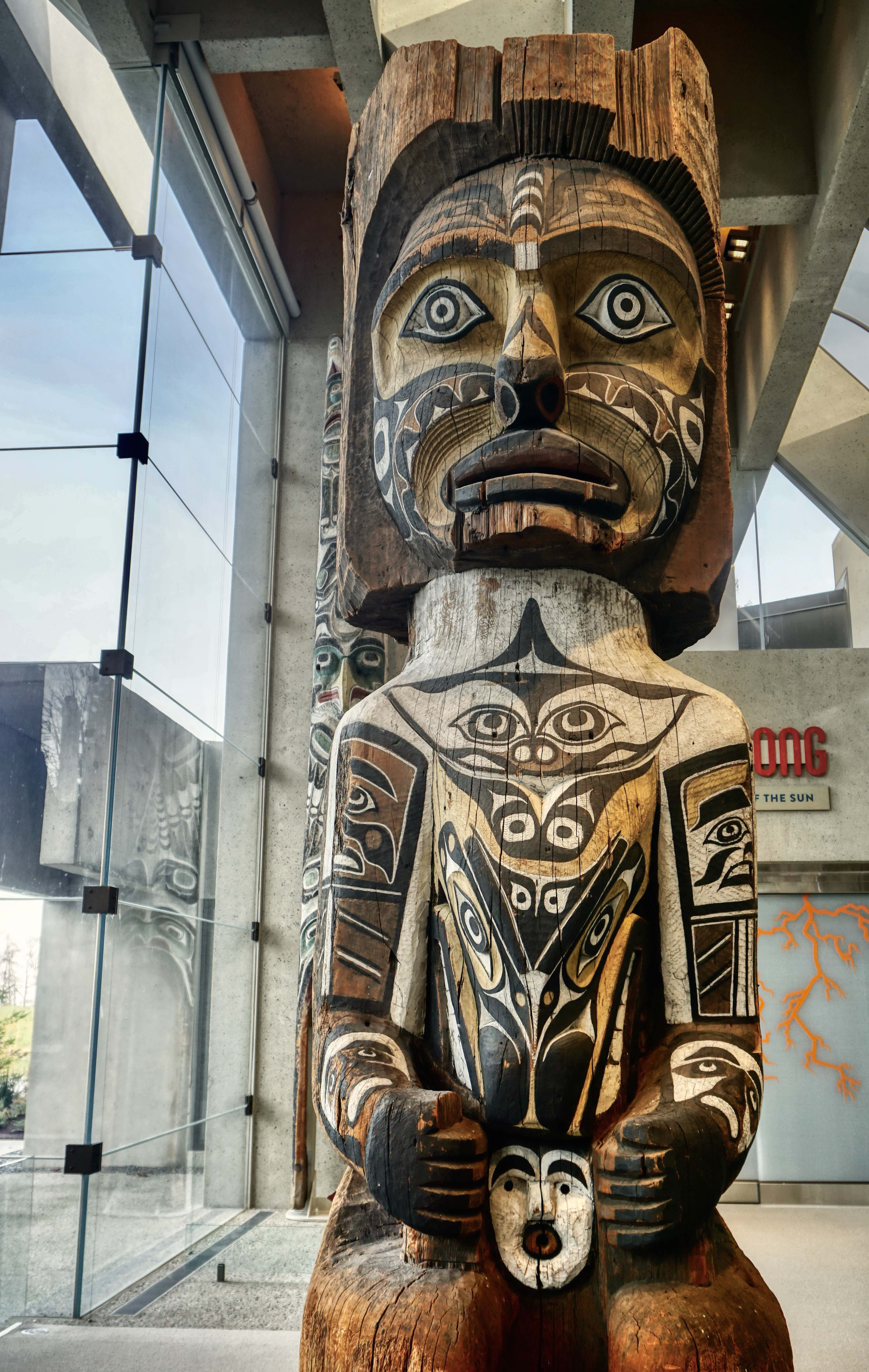
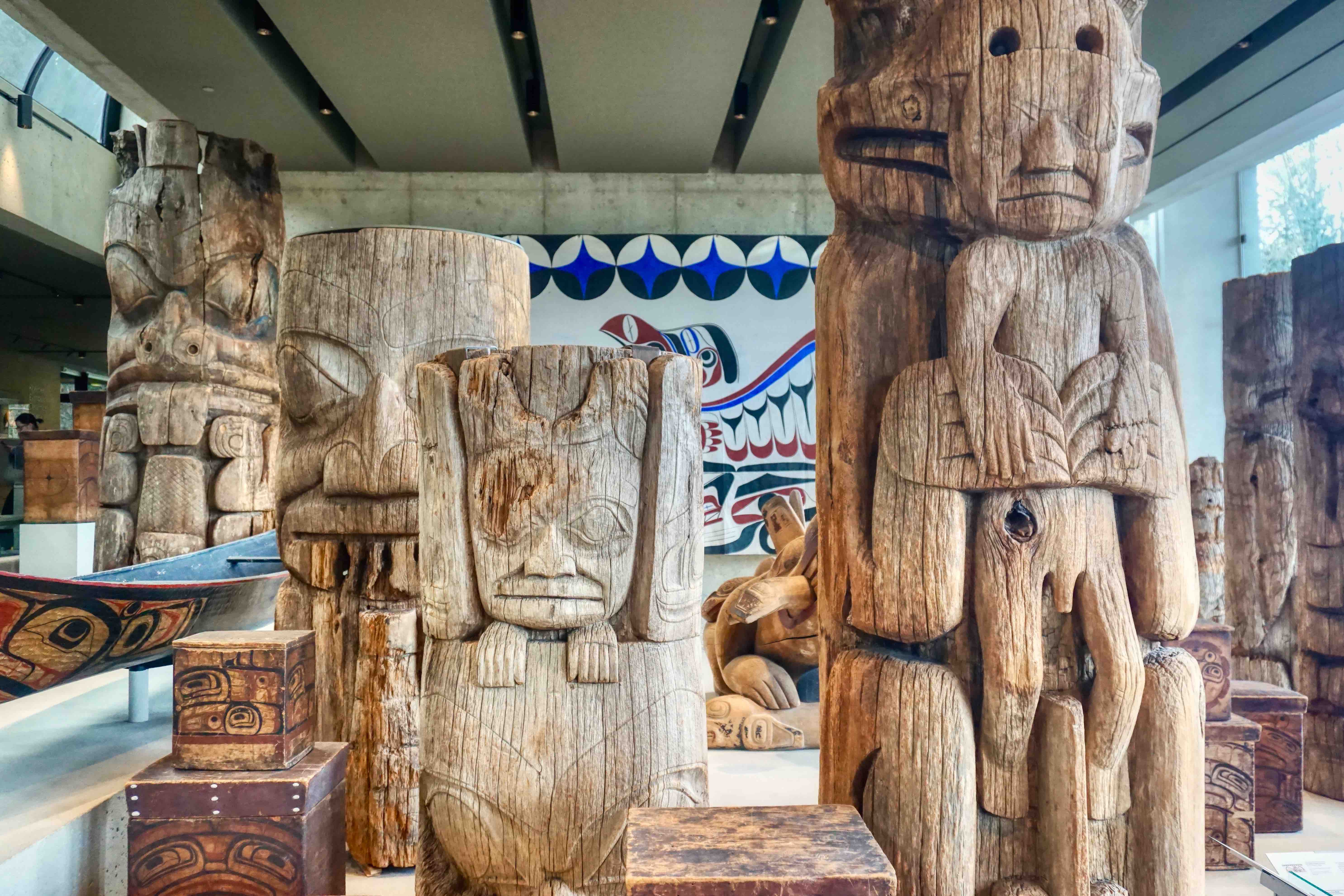
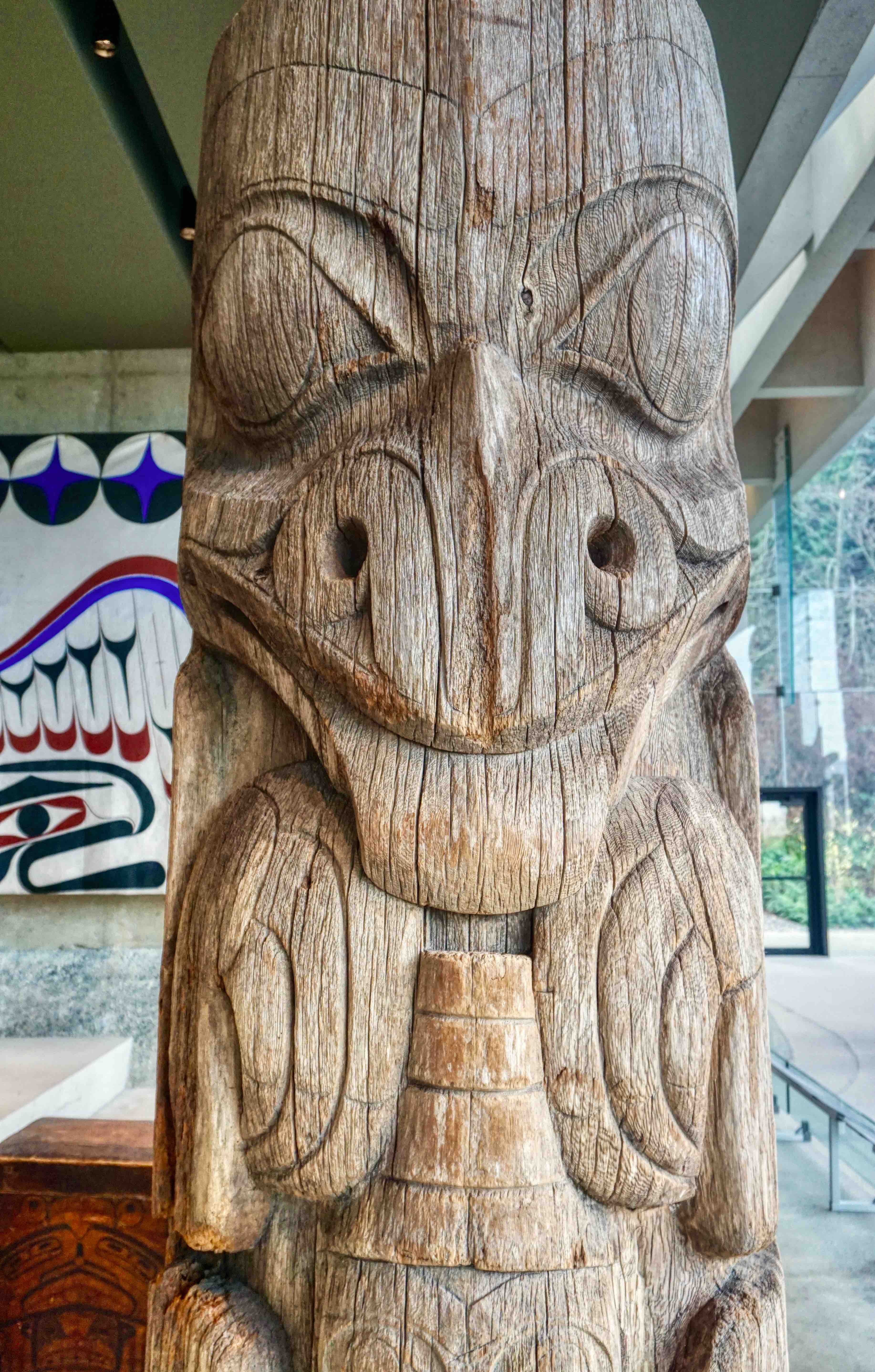
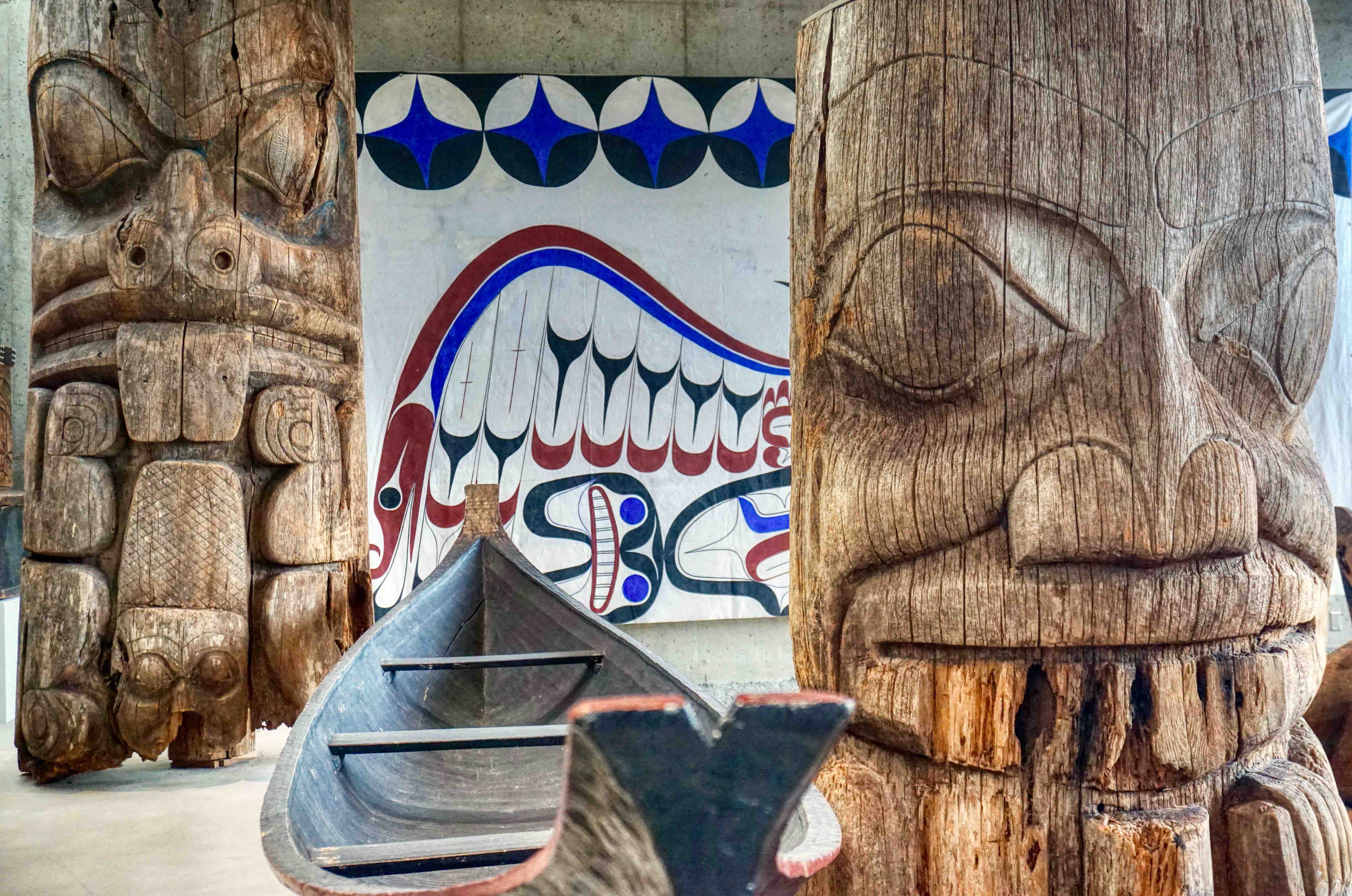
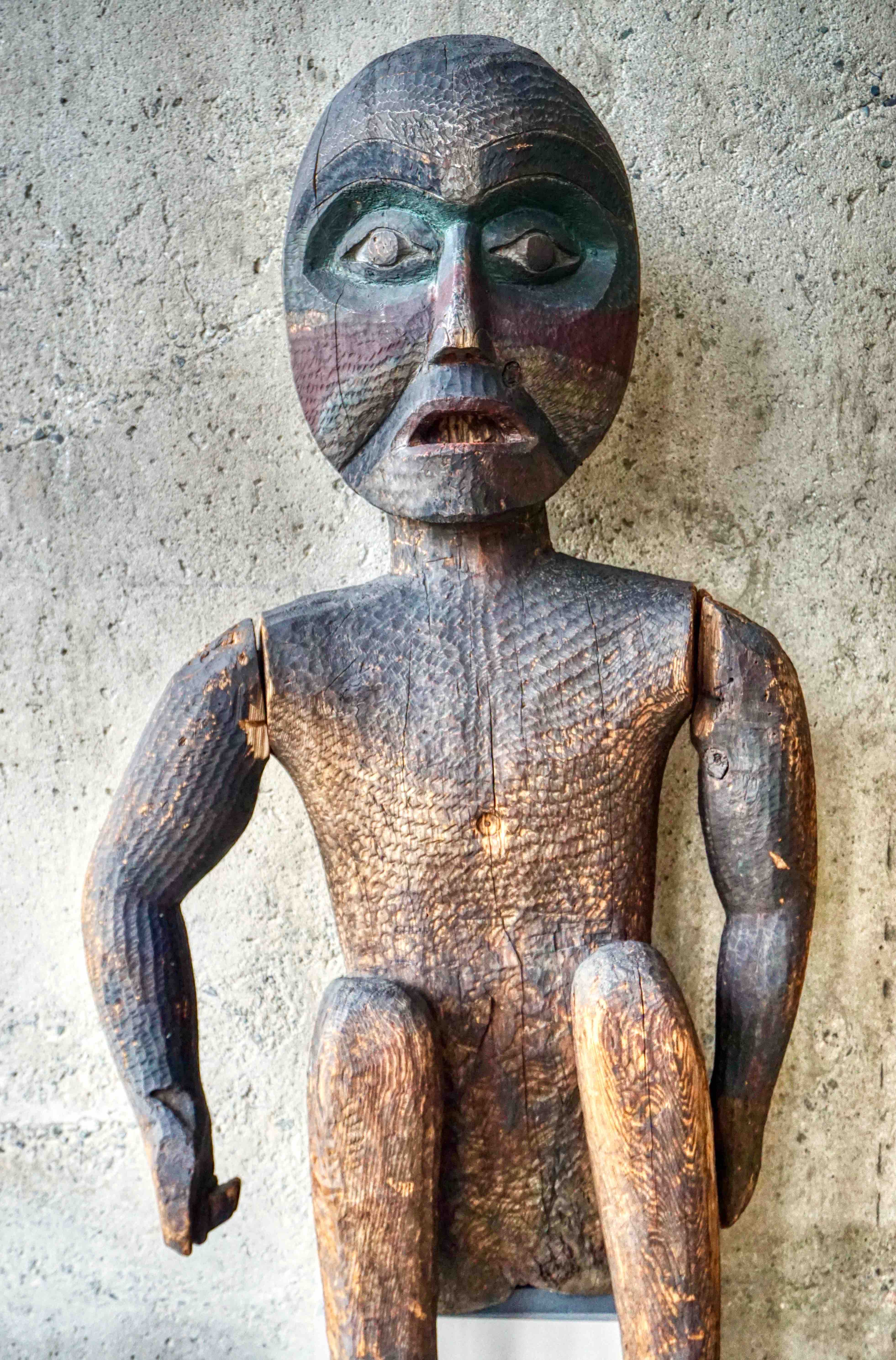
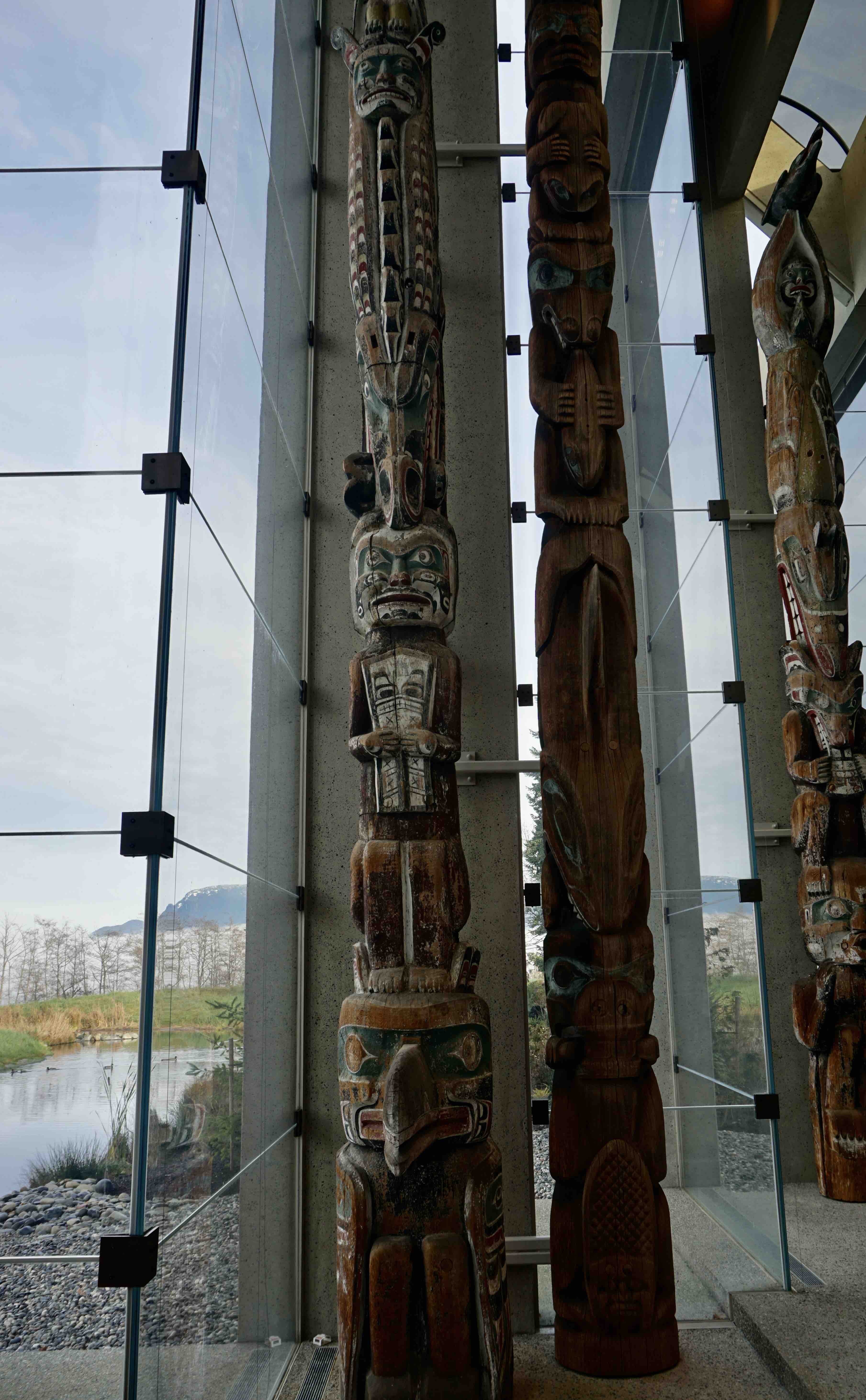
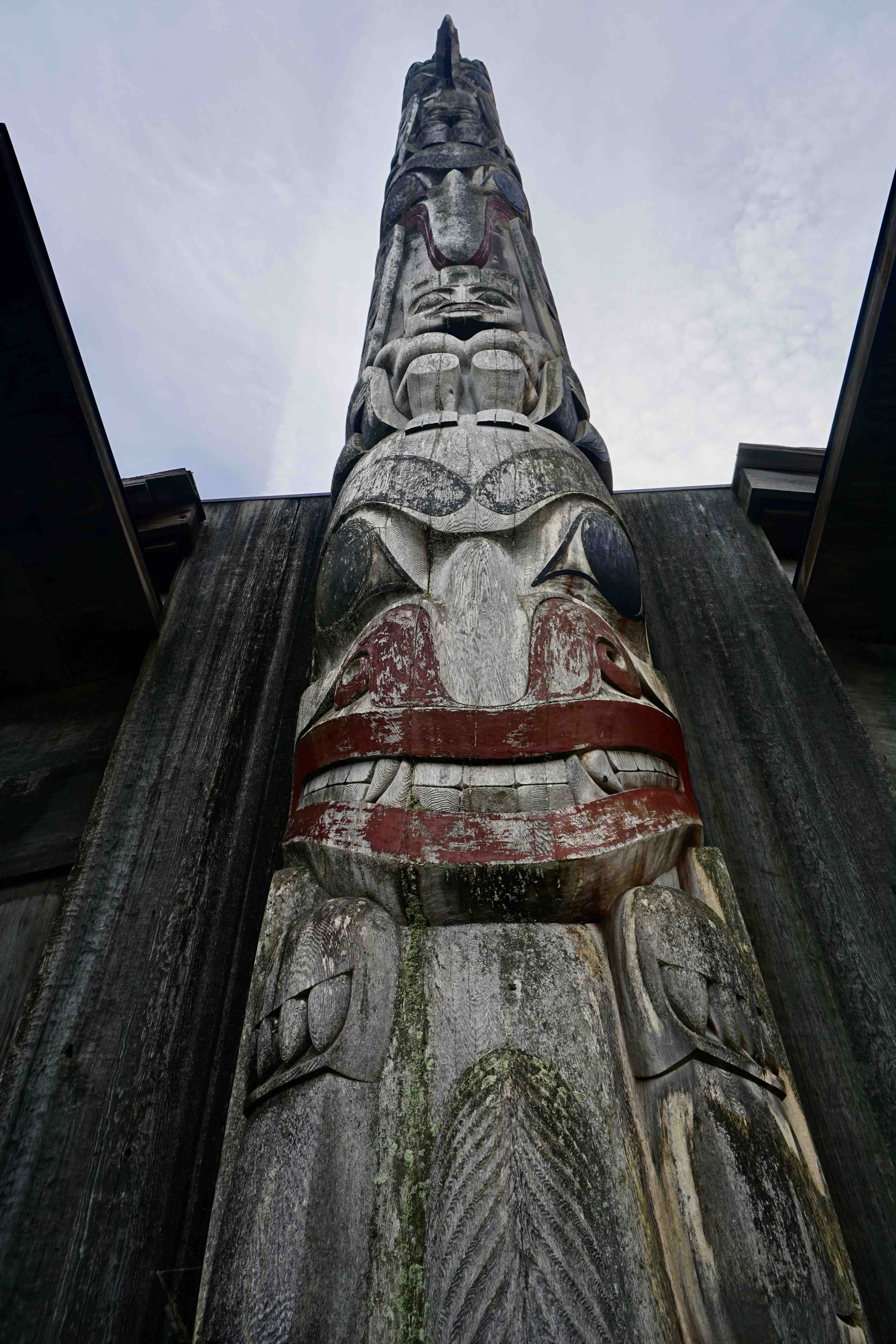
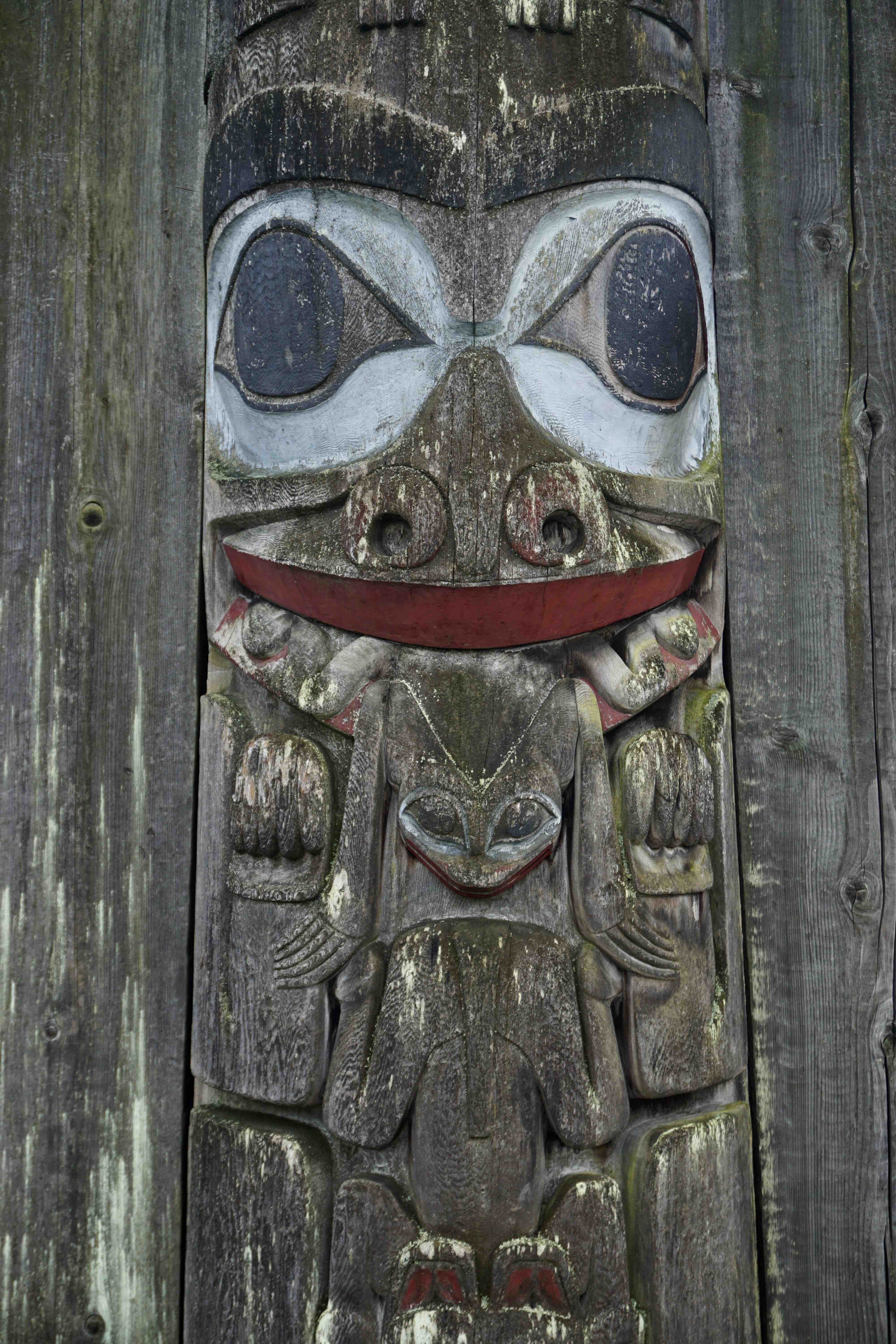
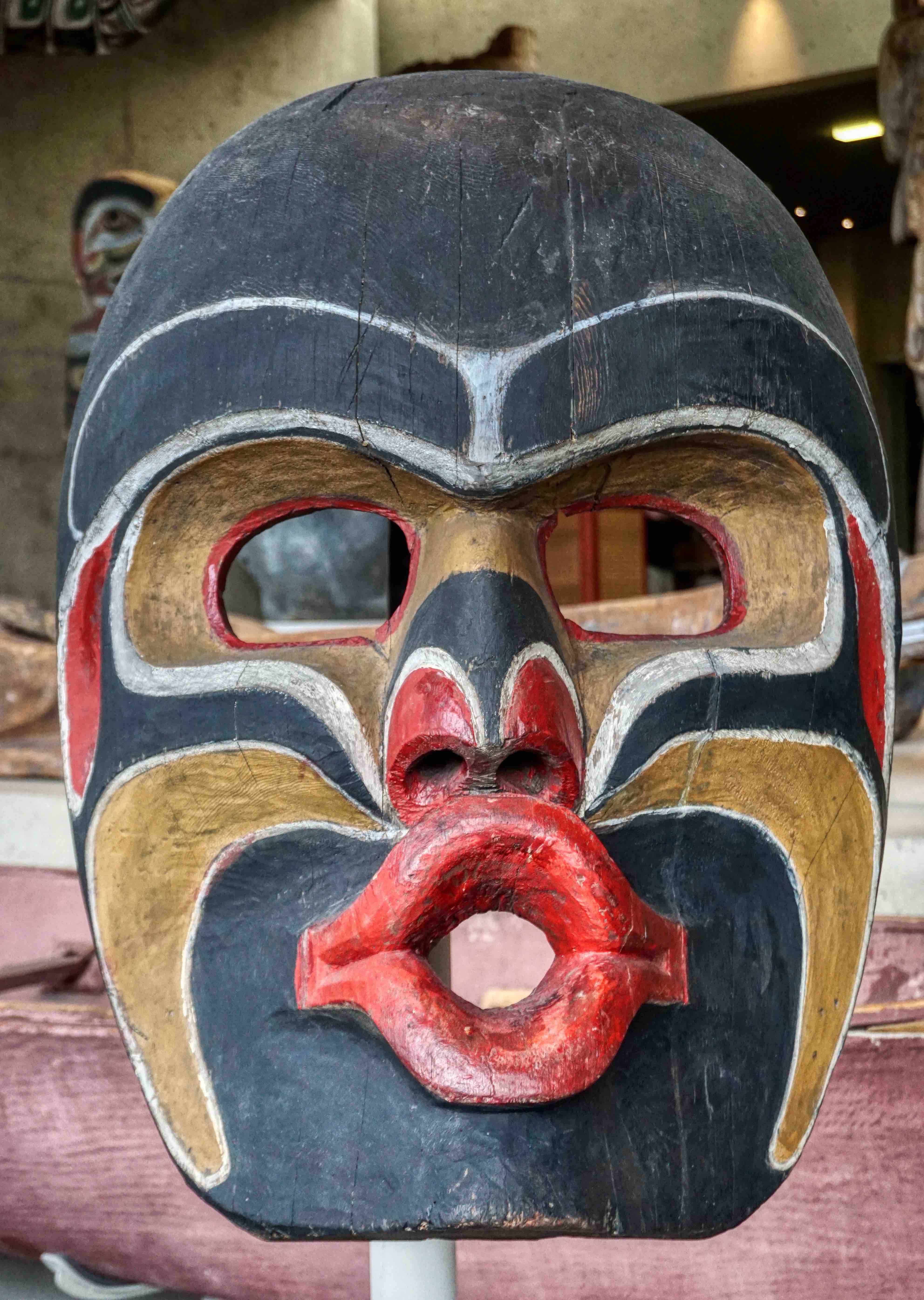
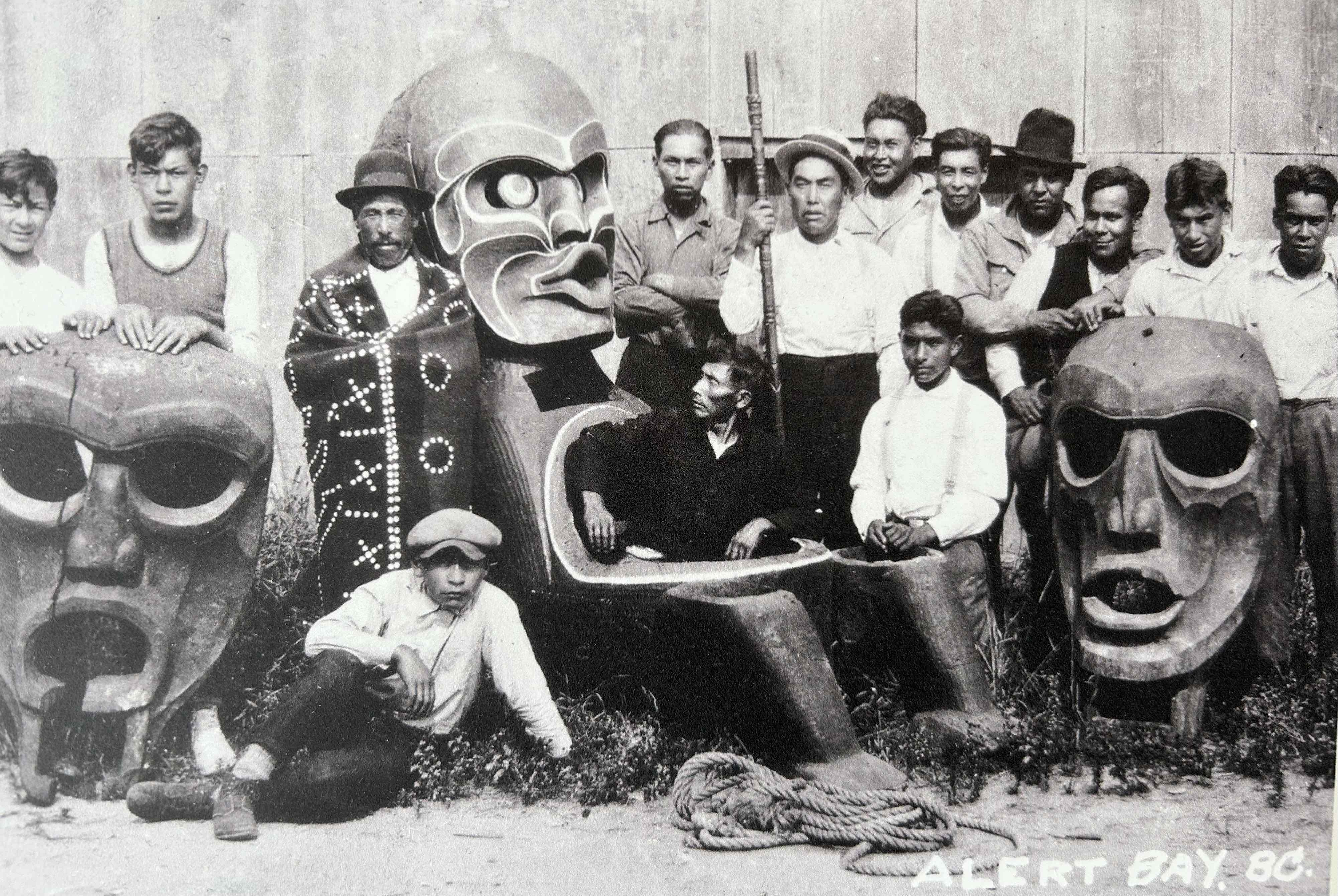
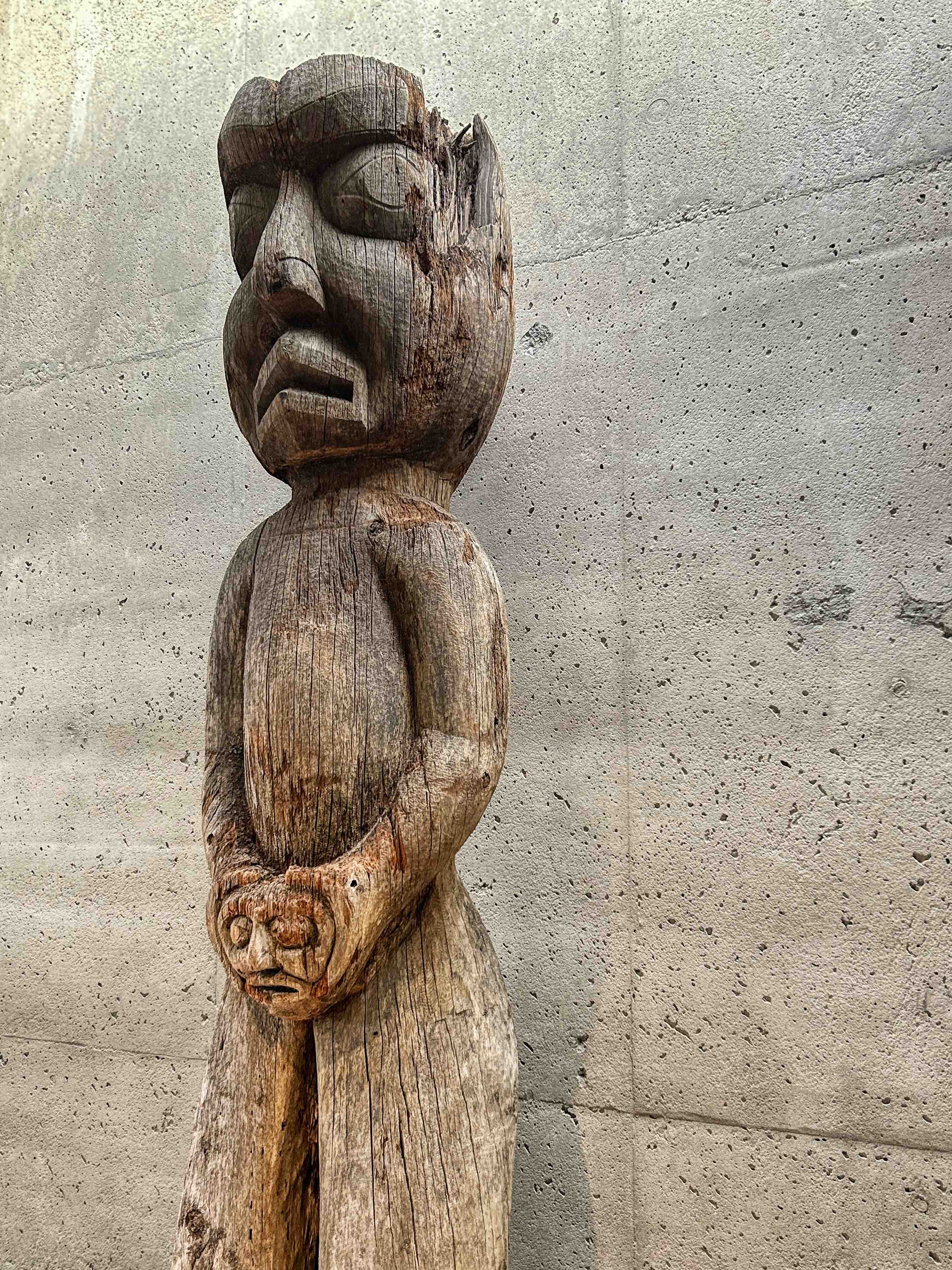
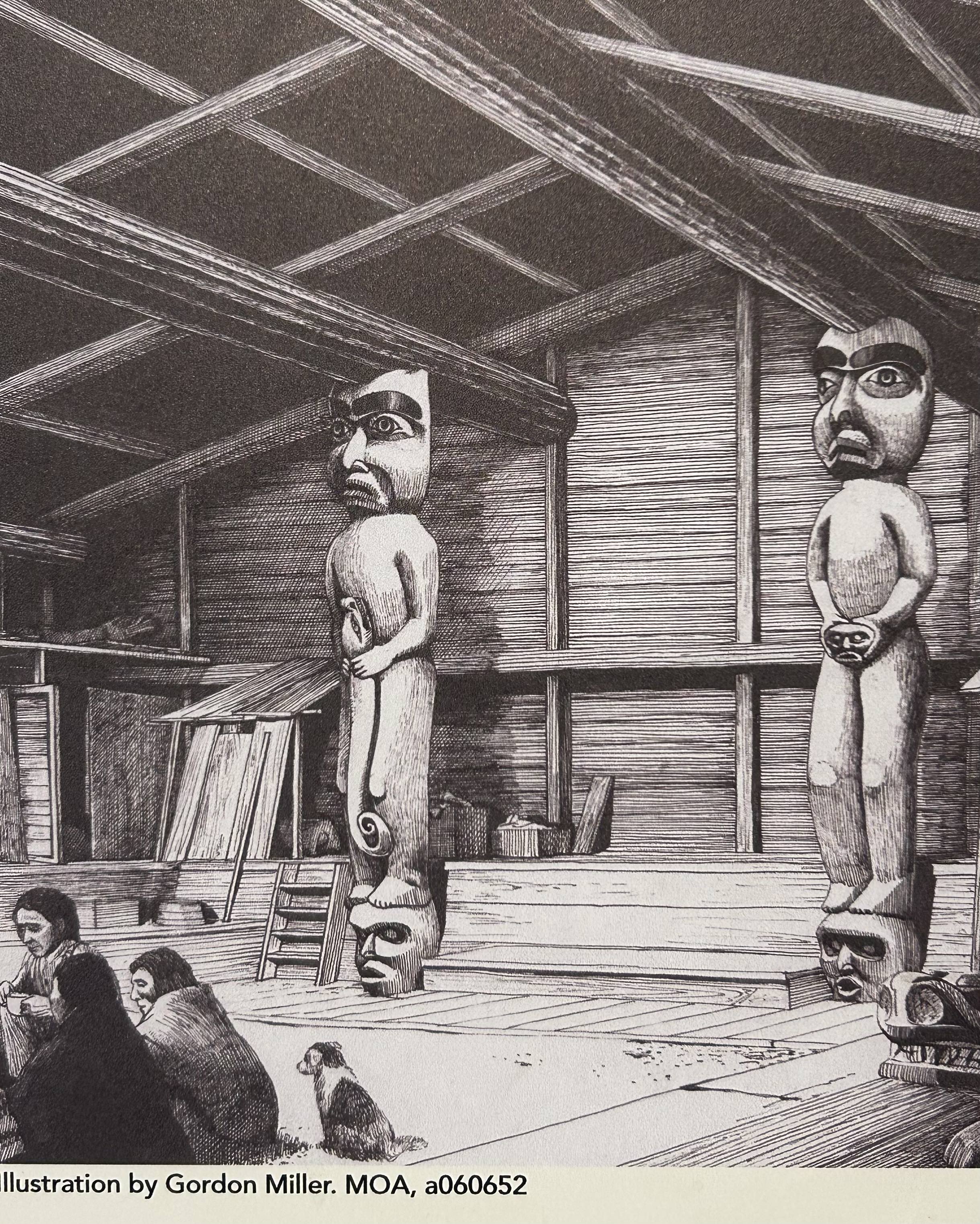
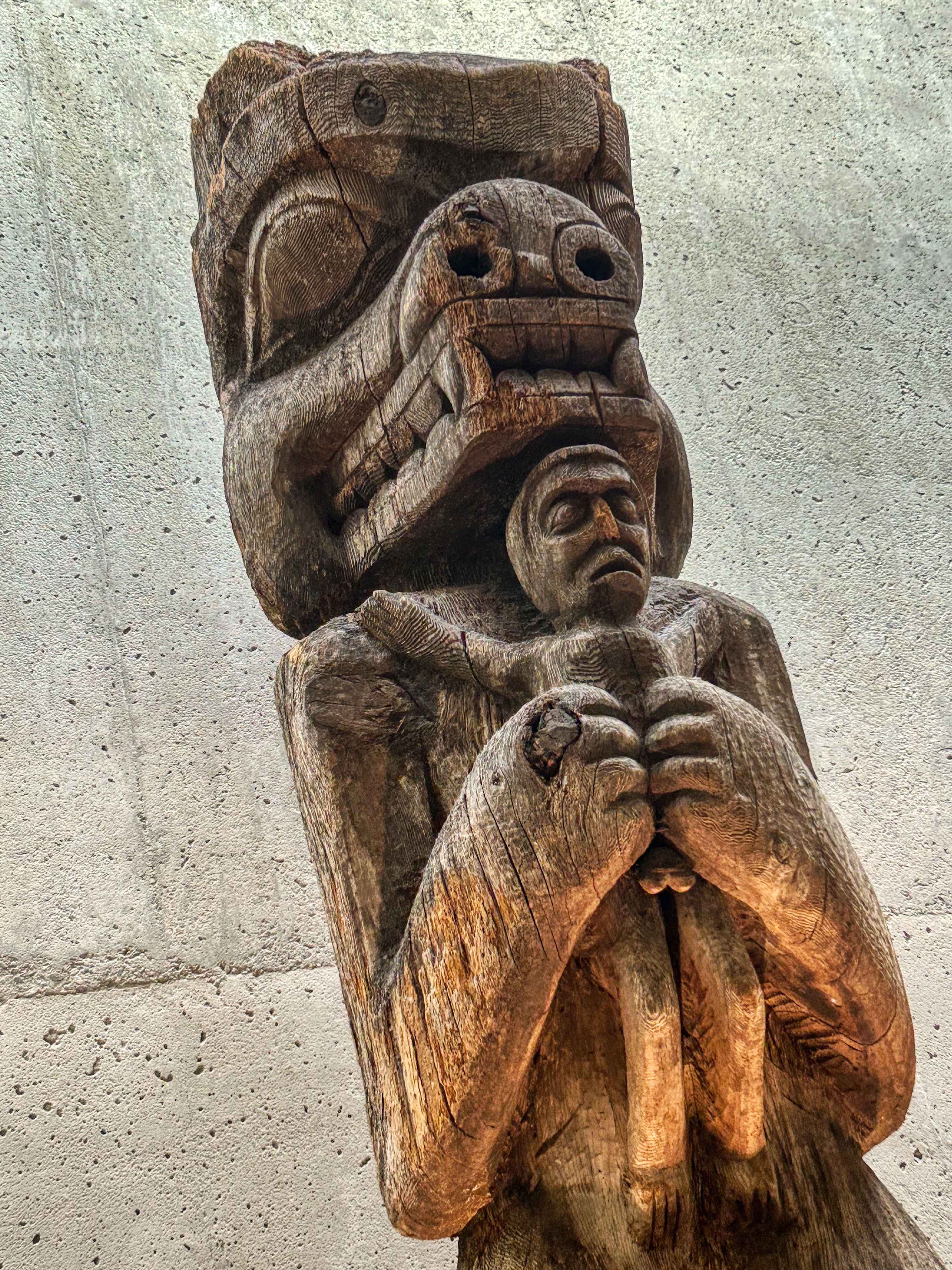
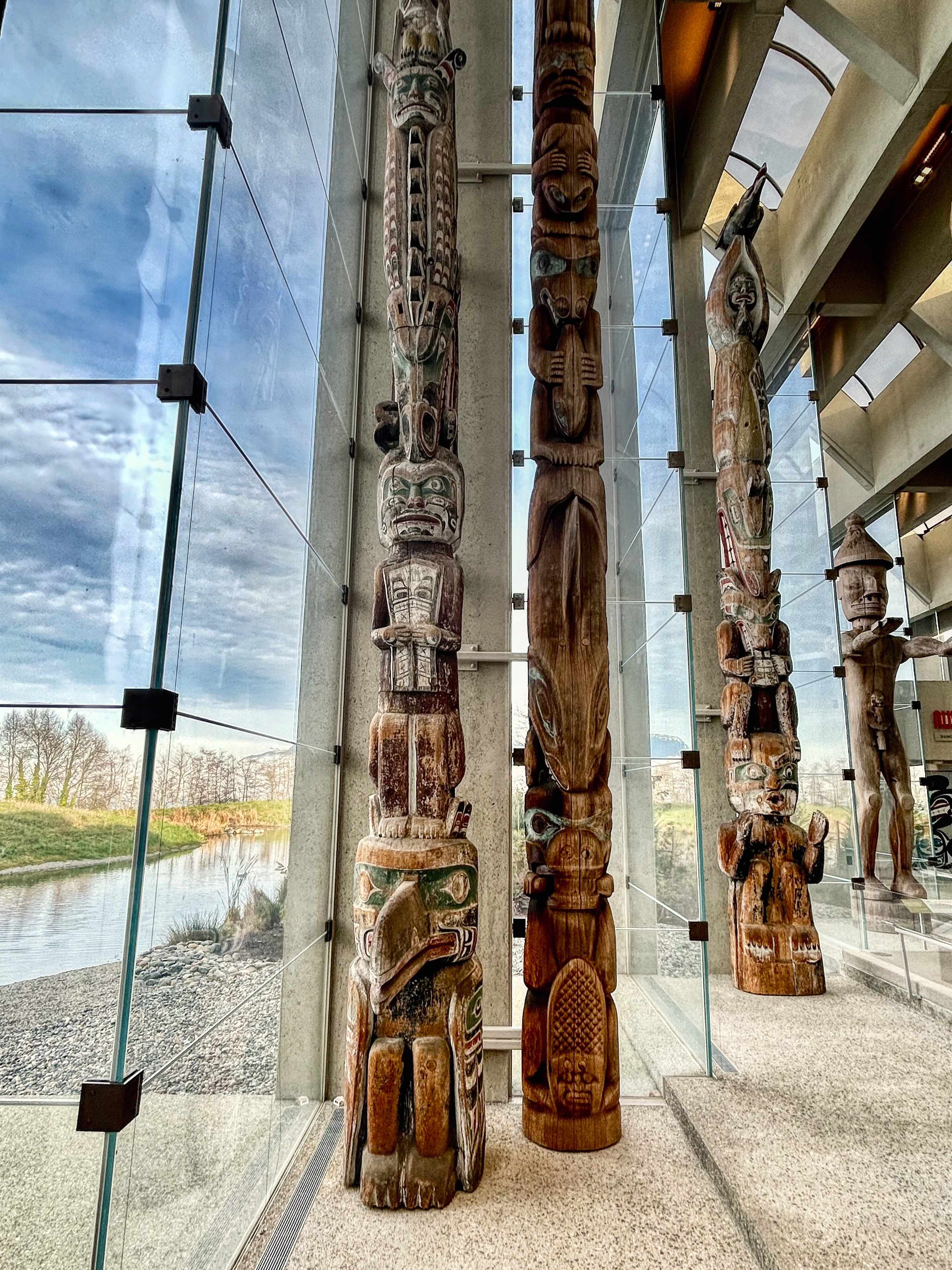
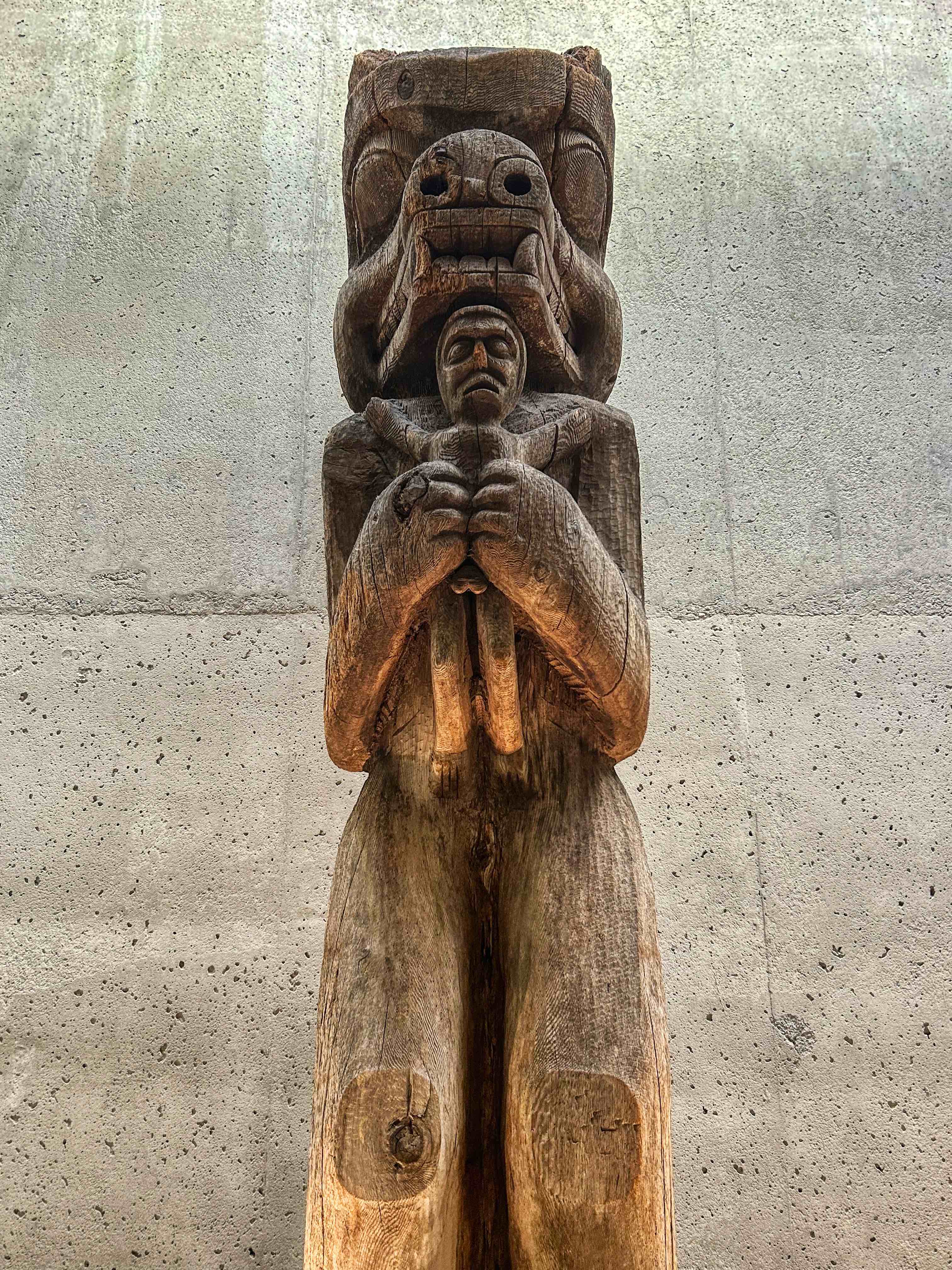
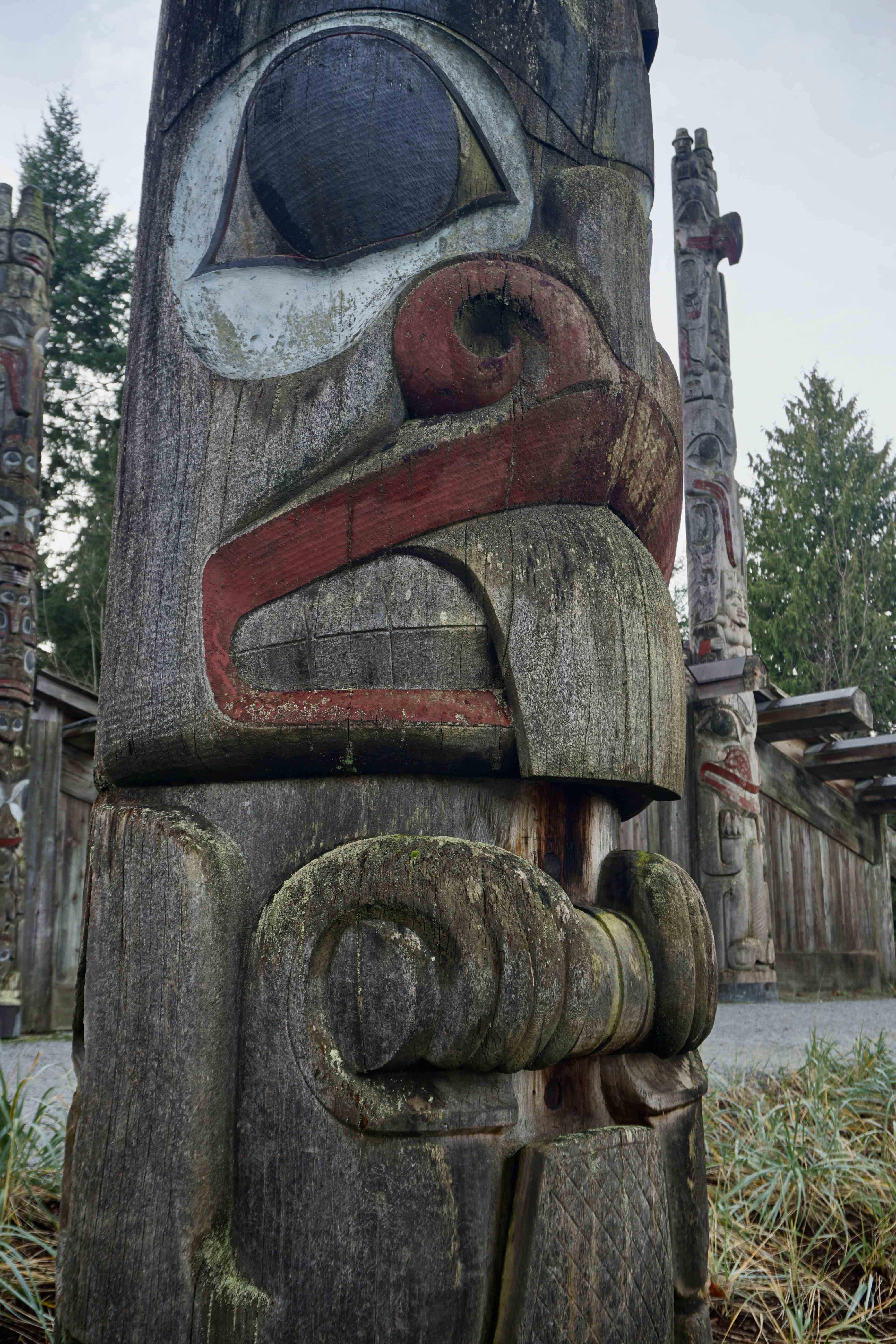
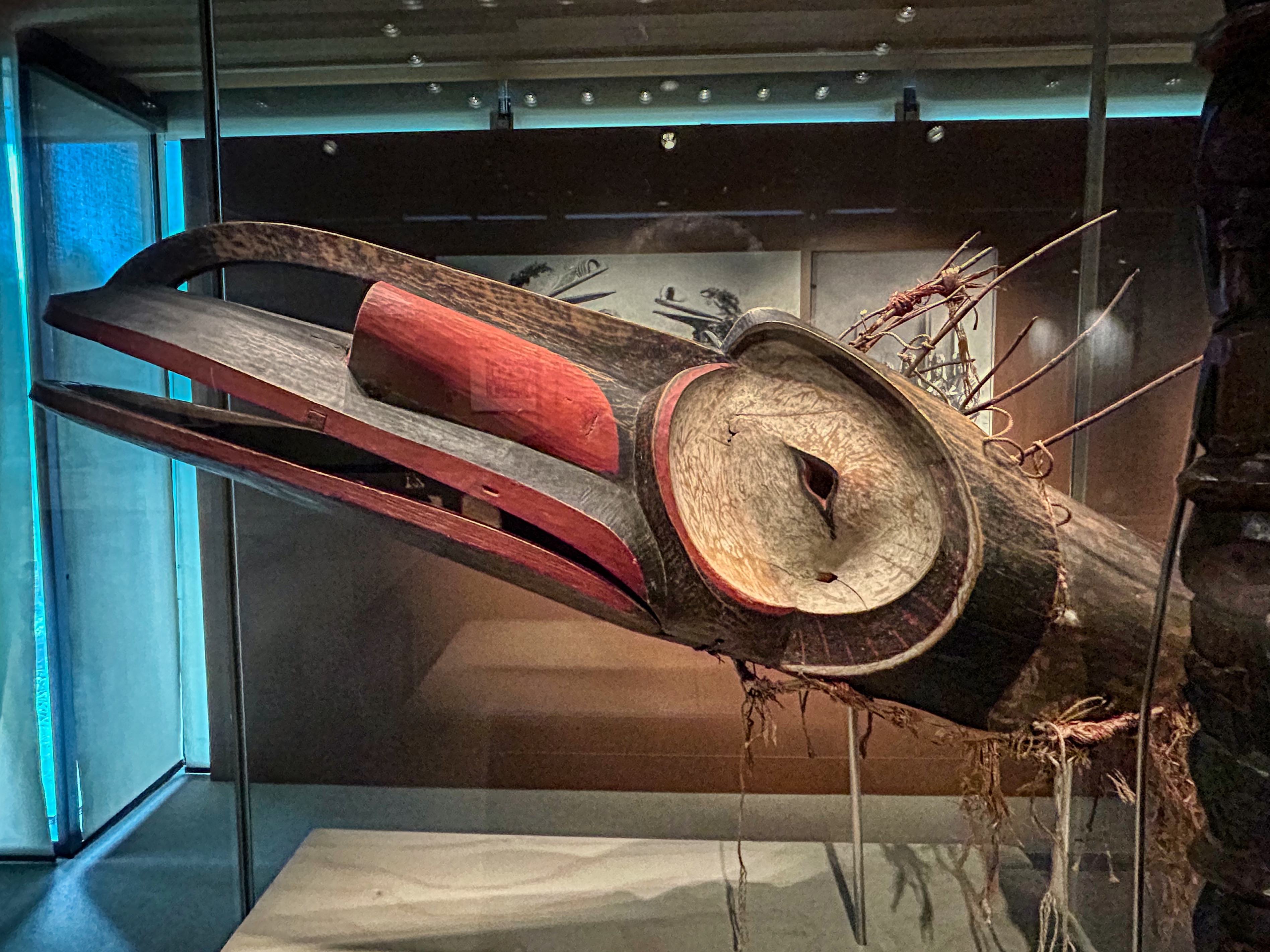
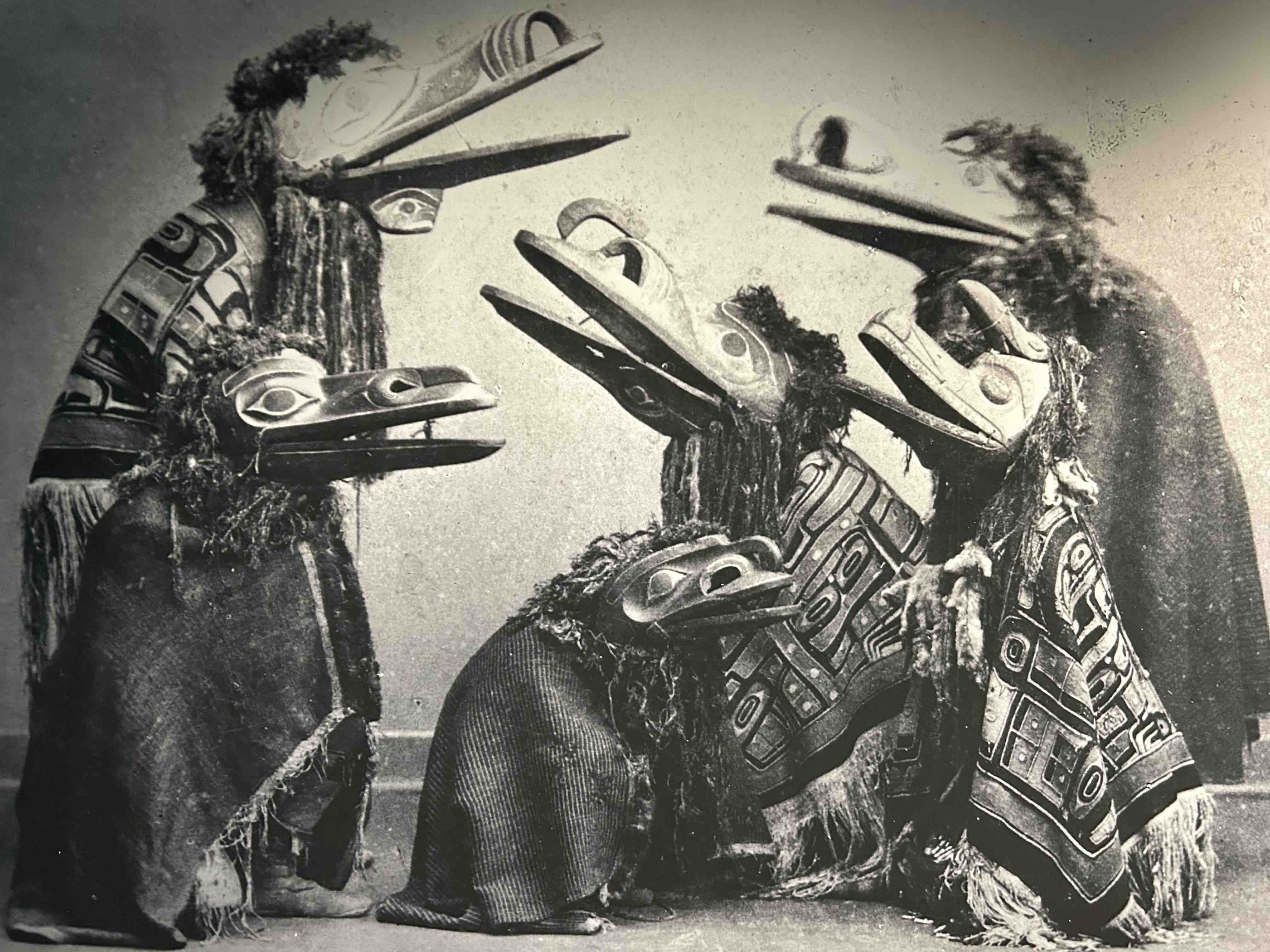
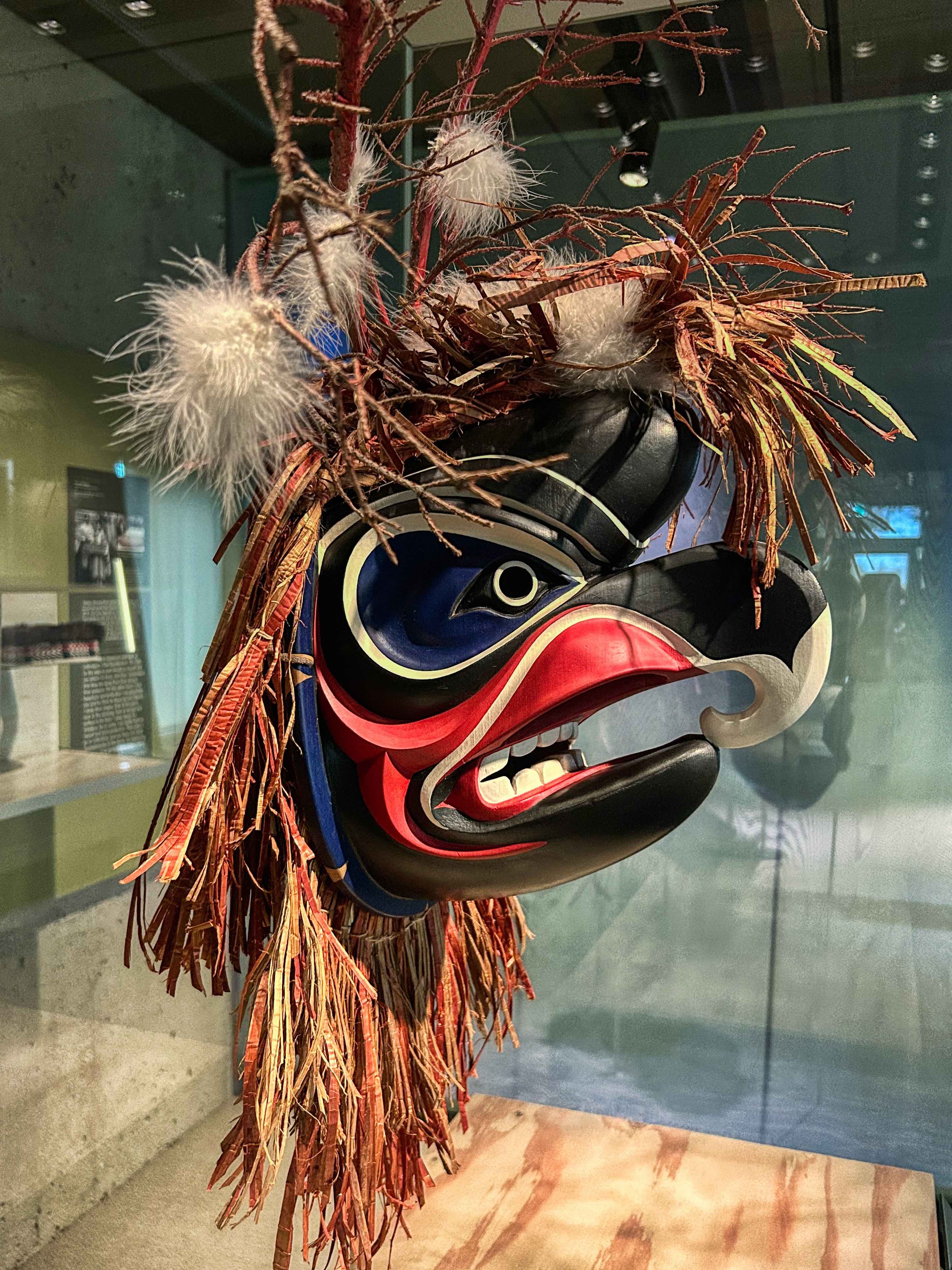
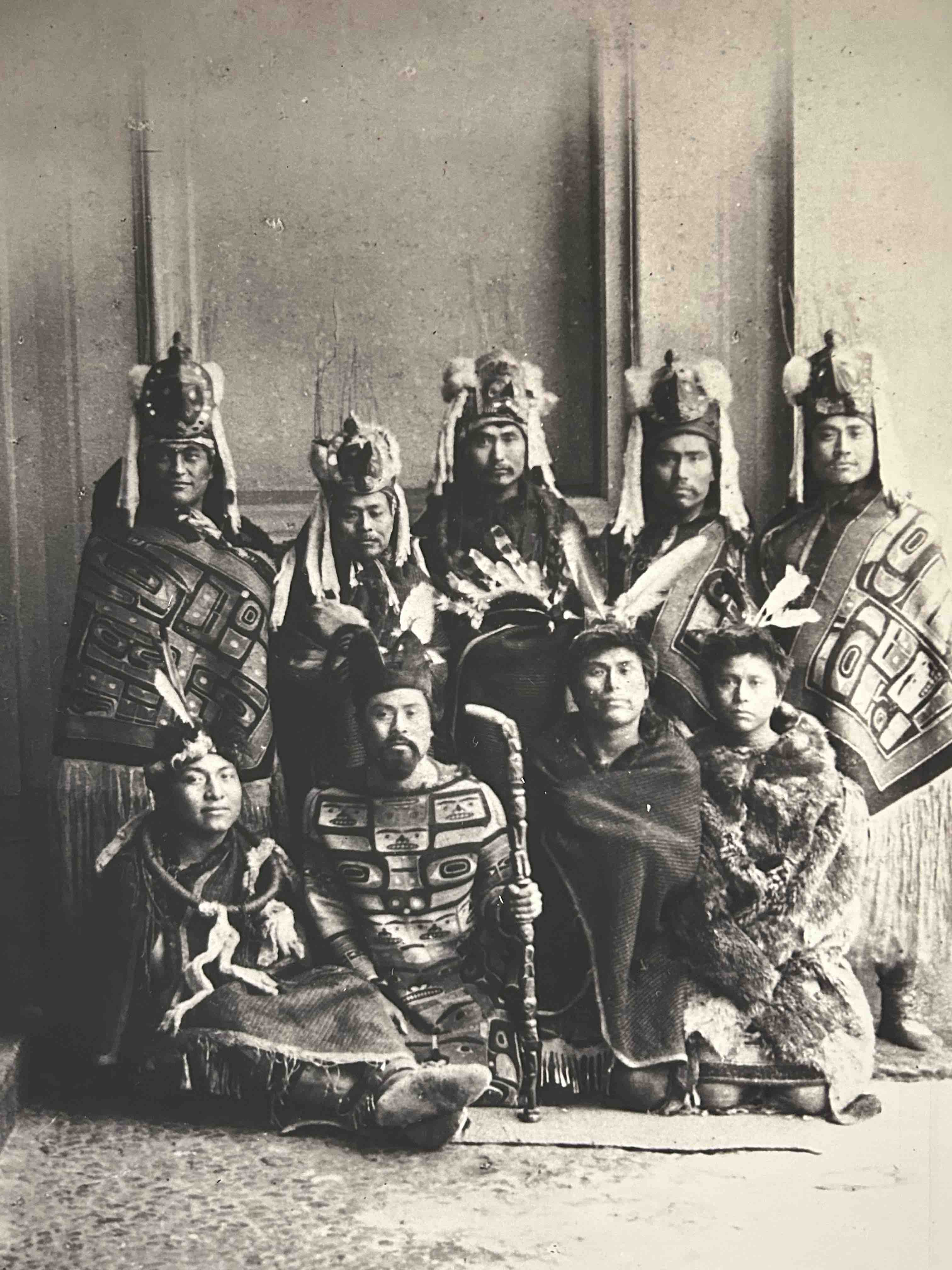
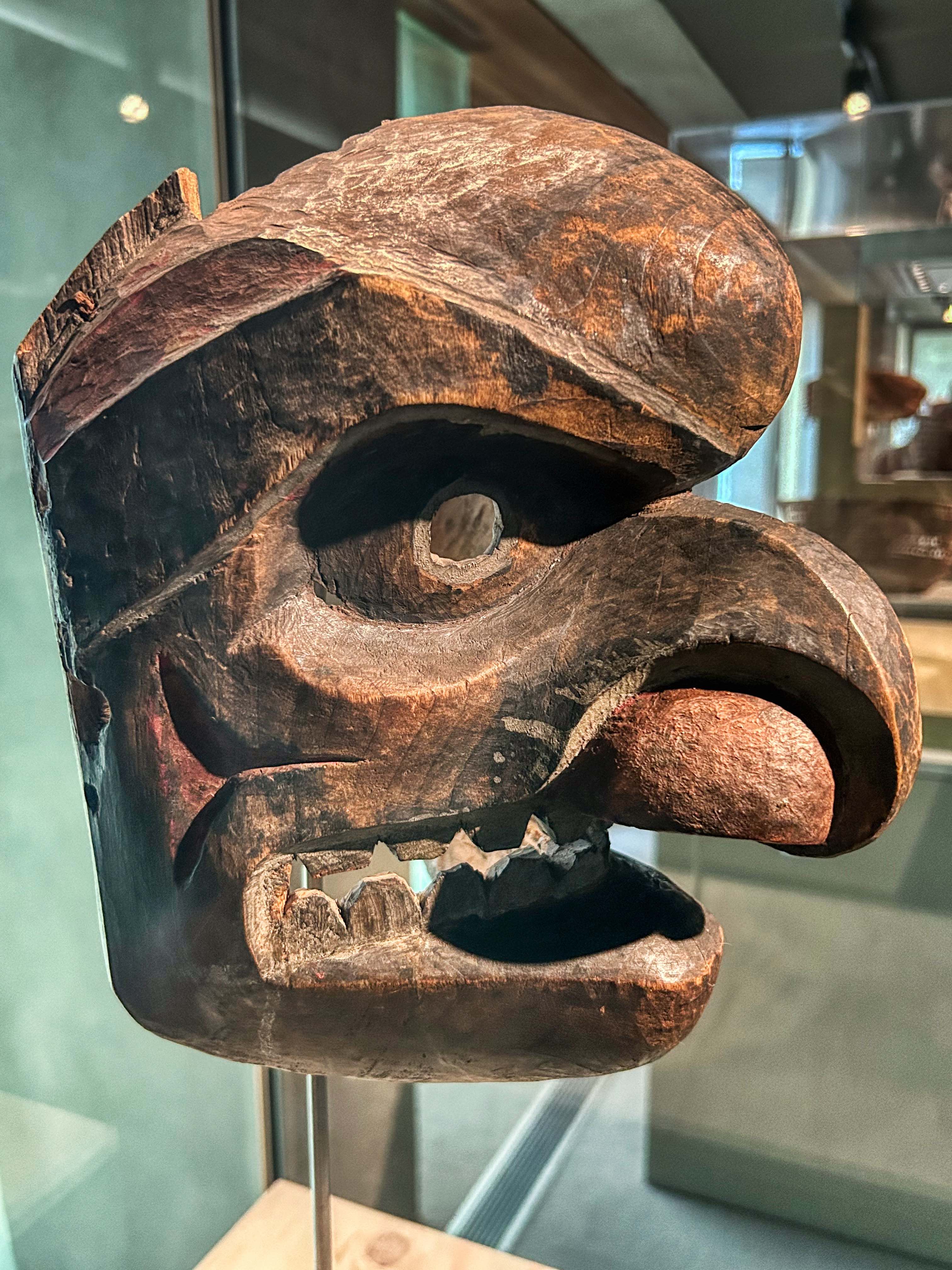
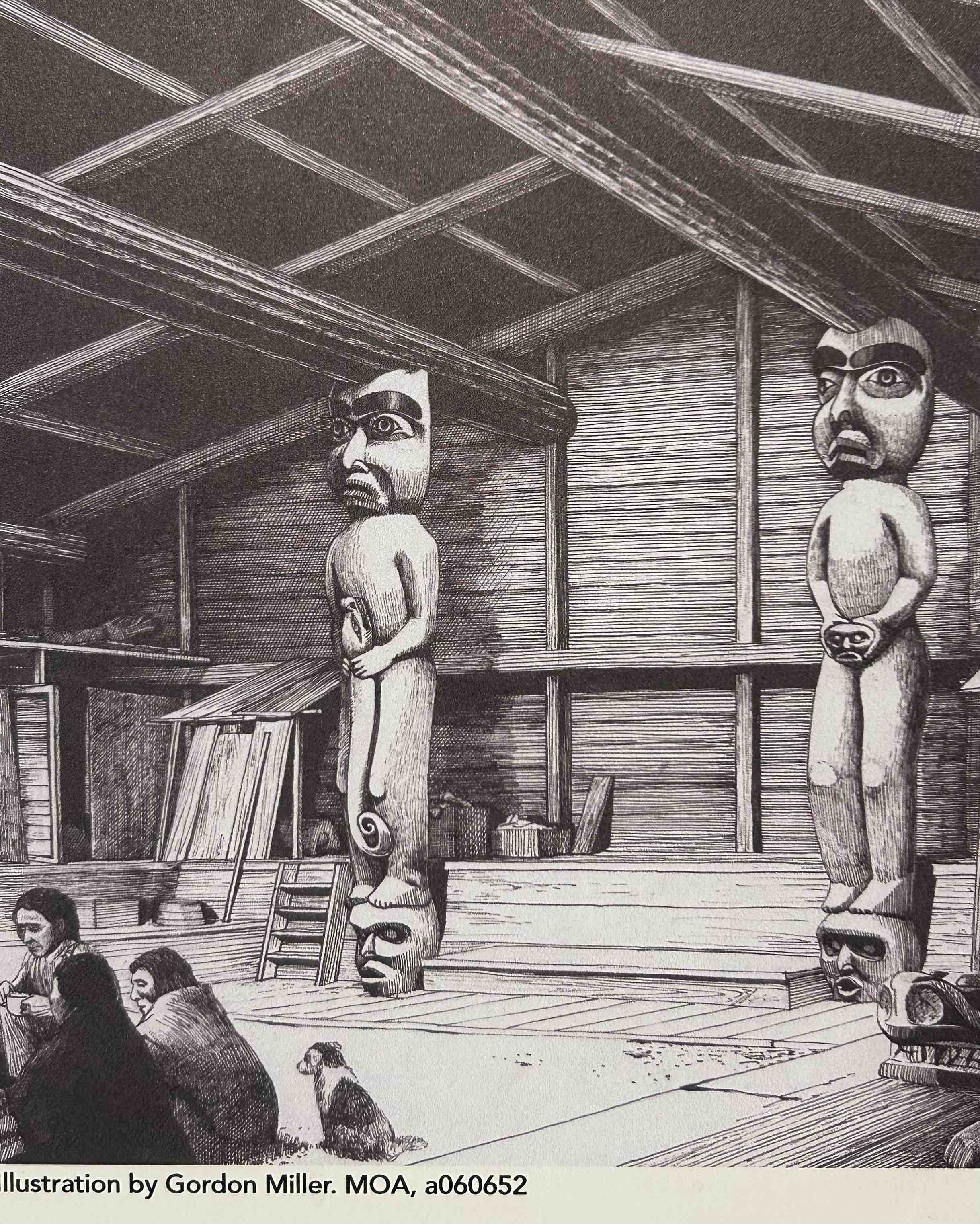
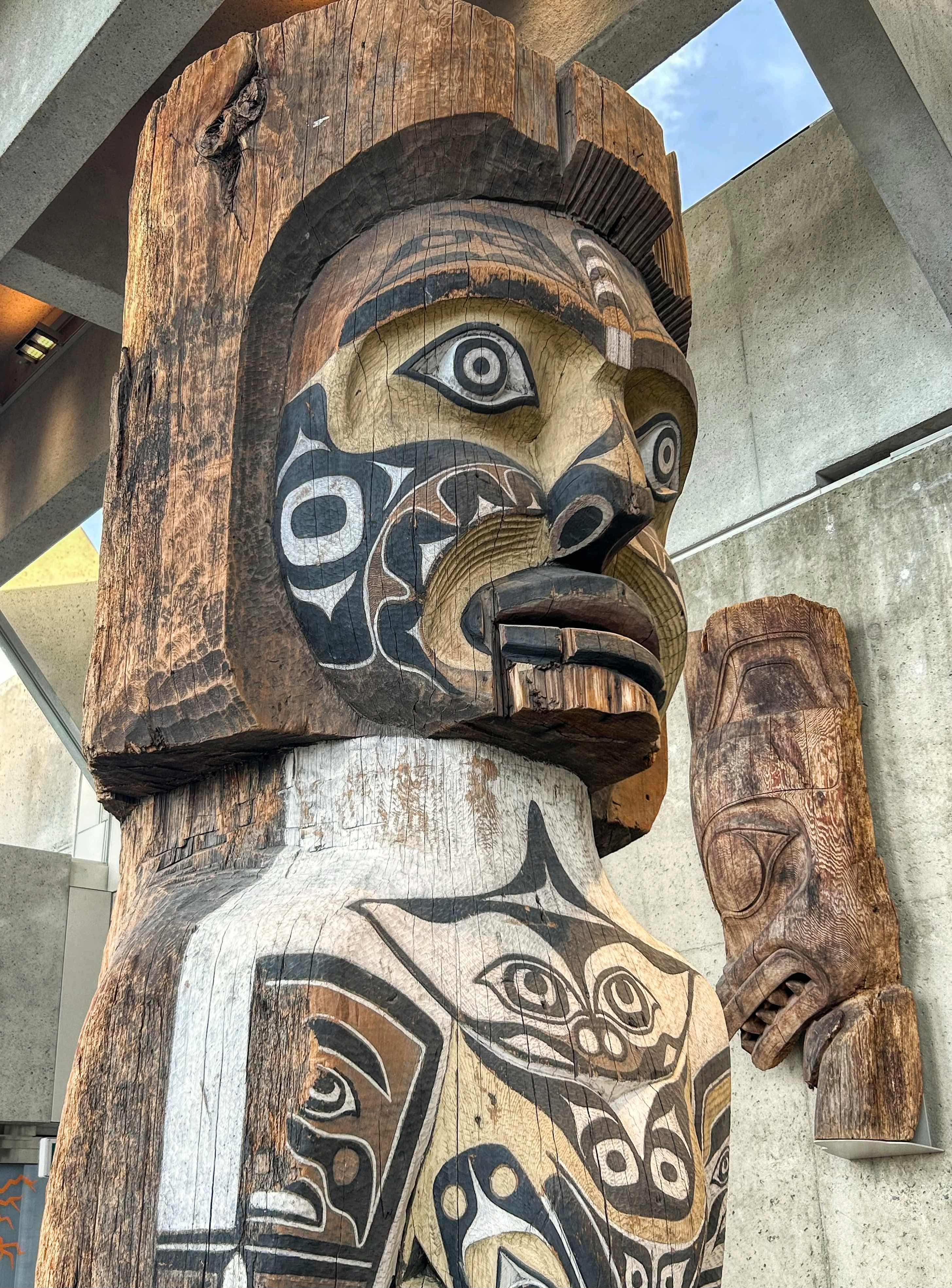
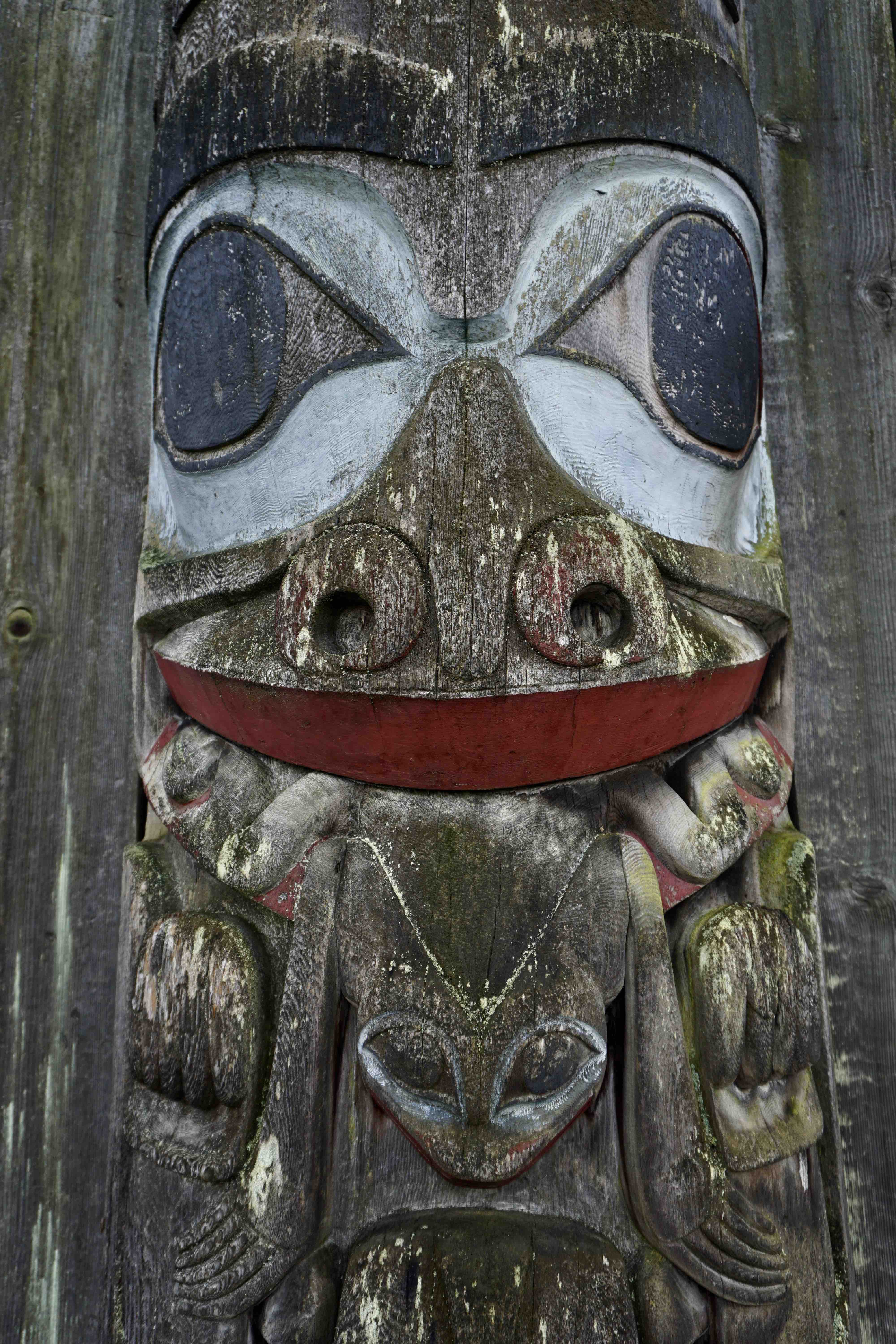
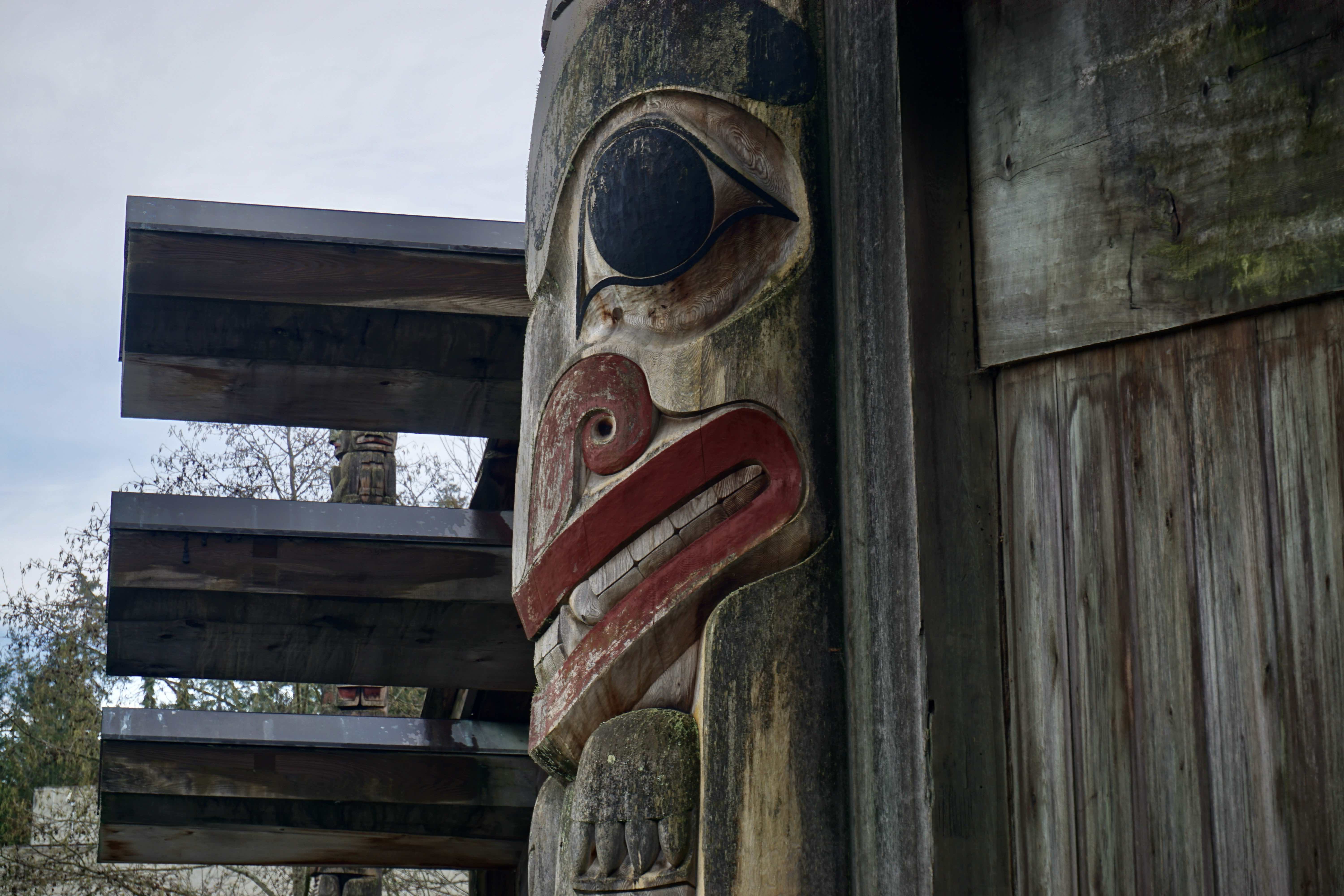
The first thing that strikes you about this museum is its unique architectural style, inspired by traditional Northwest Coast first nations longhouses with its post-and-beam construction, beautifully fused together with polished concrete and glass. The impressive soaring Great Hall with 15-metre-high glass walls houses giant Northwest Coast totem poles (some house posts, some memorials), canoes, bentwood boxes, feast dishes, carved-wood animistic objects, graphically inspired fabrics, paintings and carvings from the regional indigenous people such as the Haida and Musqueam. All of which vividly capture the visitor’s imagination but also their makers’ foundational belief that spirits and souls inhabit all natural things like animals, plants, rocks and even abstract concepts – giving the objects a sense of personality, lifeforce and presence. And I can tell you, standing in front of these totems with their cartoonish grotesque faces, is really quite arresting – as if they could speak to you. And I’m sure, in their original long house settings with the wood smoke swirling and the soft beat of drums, spoken word and song, they would have come alive. Shamans indeed would speak from concealment behind the totems to enhance this sense.
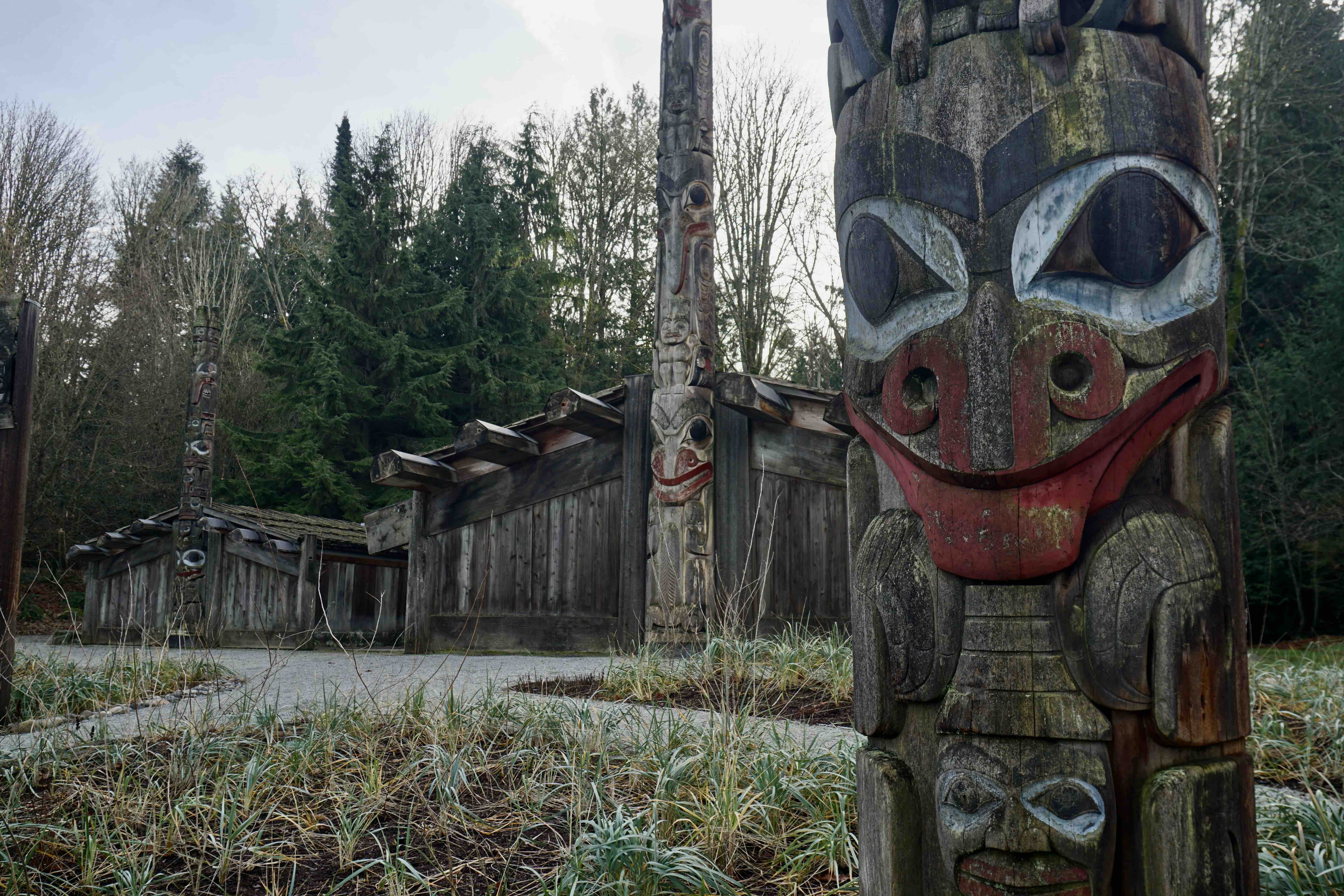
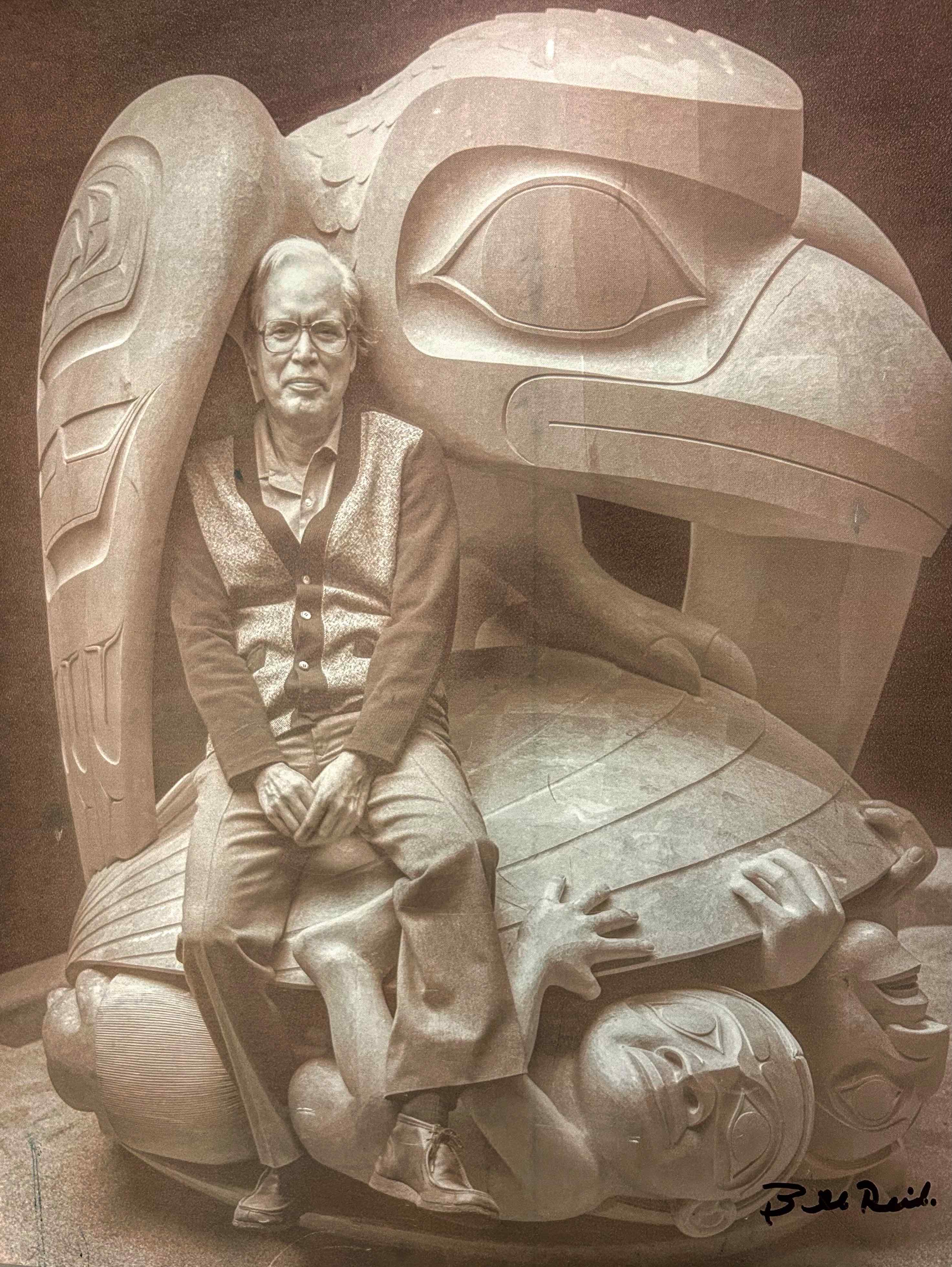
The museum is set in a beautiful landscape designed by one of the world’s greatest landscape architects and one of the few women in the field, Cornelia Hahn (1921-2021). A leader in sustainable design and a pioneer of green roofs, she has been credited with bringing people closer to their natural environment. Set within the grounds are two Haida houses constructed by Haida artist Bill Reid and modelled on traditional 19th Century Haida village dwellings along with a number of impressive wooden memorial and mortuary totem poles. So, a fitting choice of designer for a place that harmoniously fuses art and nature with a distinct spiritual essence and tribal legacy.
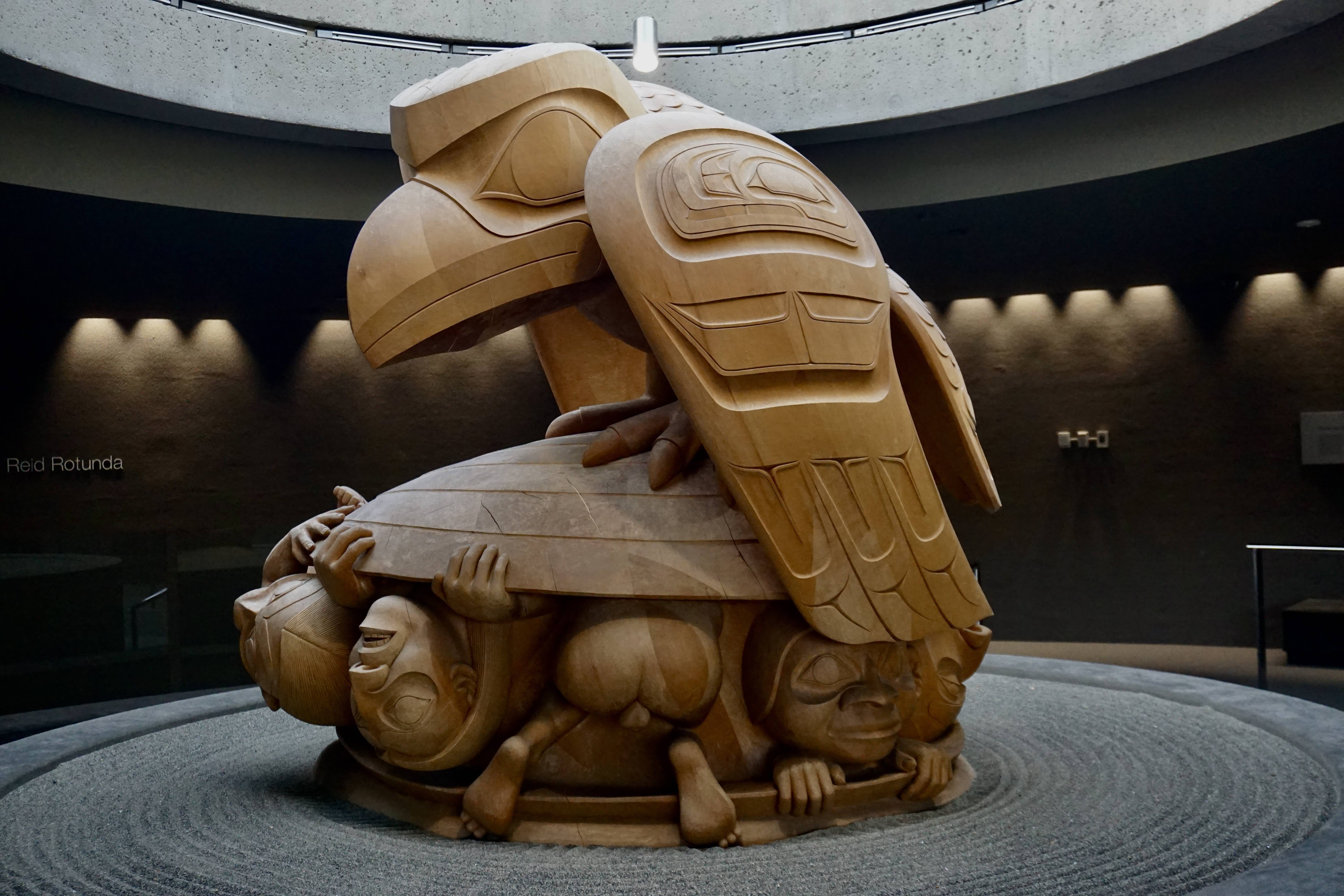
The Museum of Anthropology in fact houses the world’s largest collection of works by Bill Reid with one particular stand out piece, The Raven and the First Men, carved out of a massive piece of laminated yellow cedar.
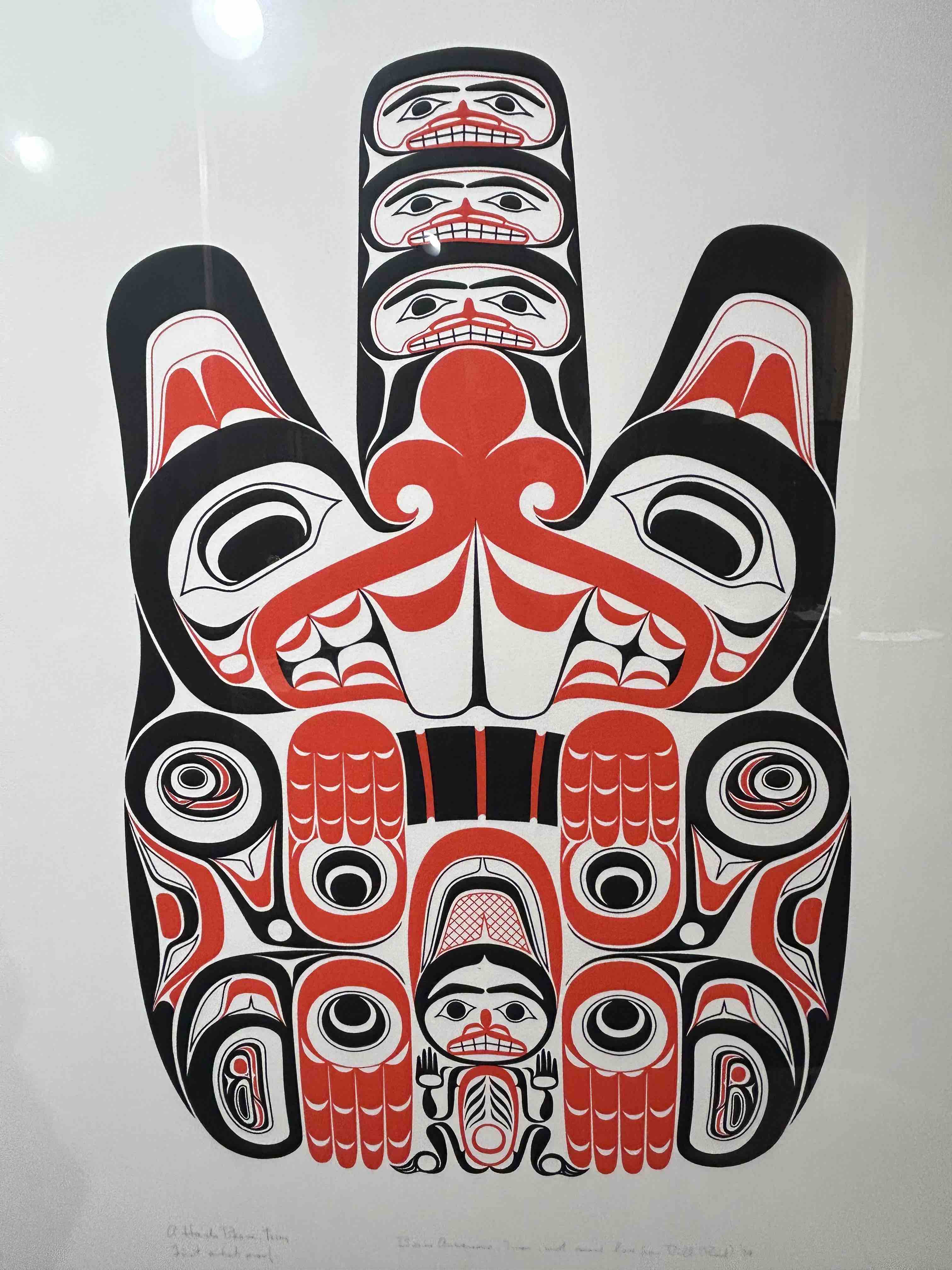
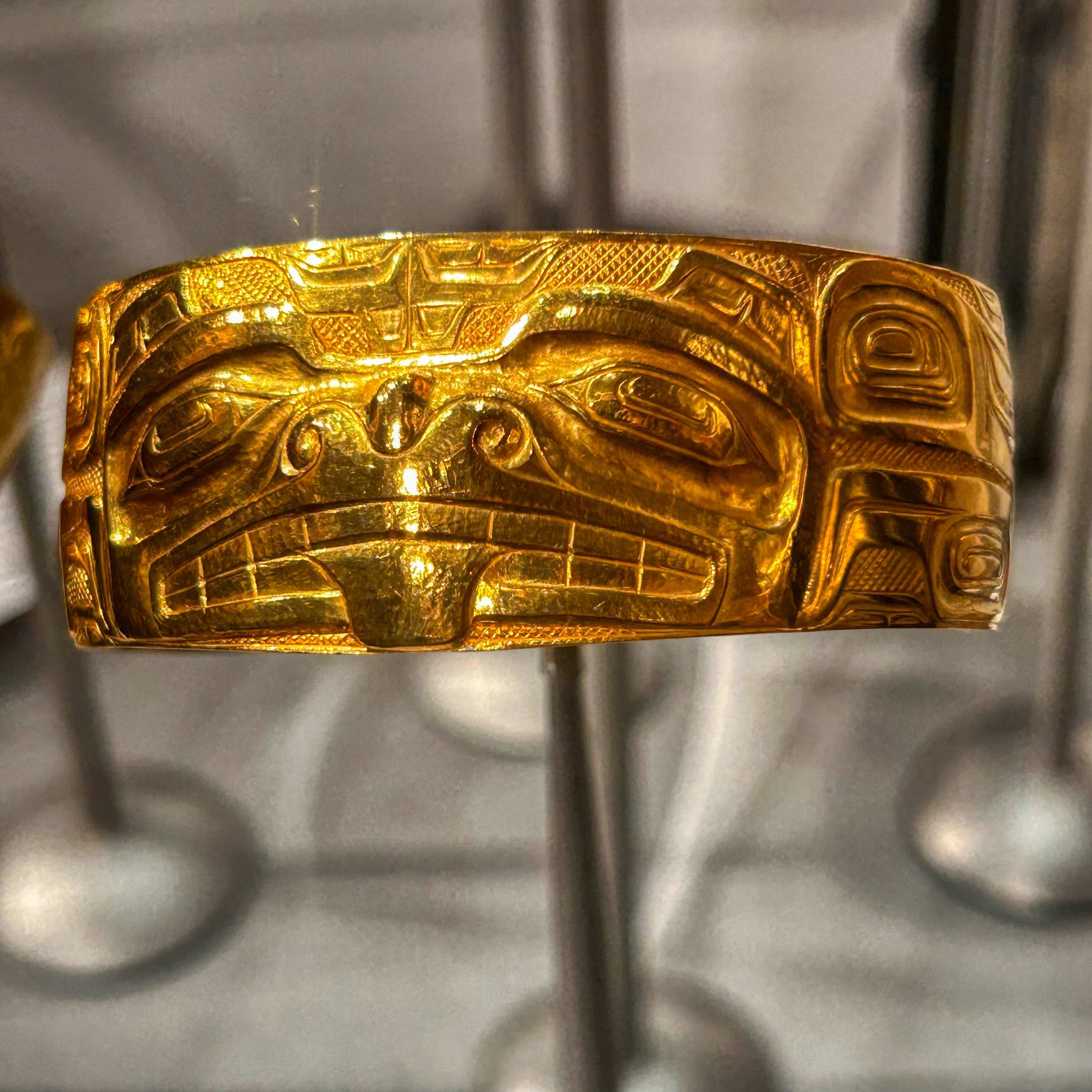
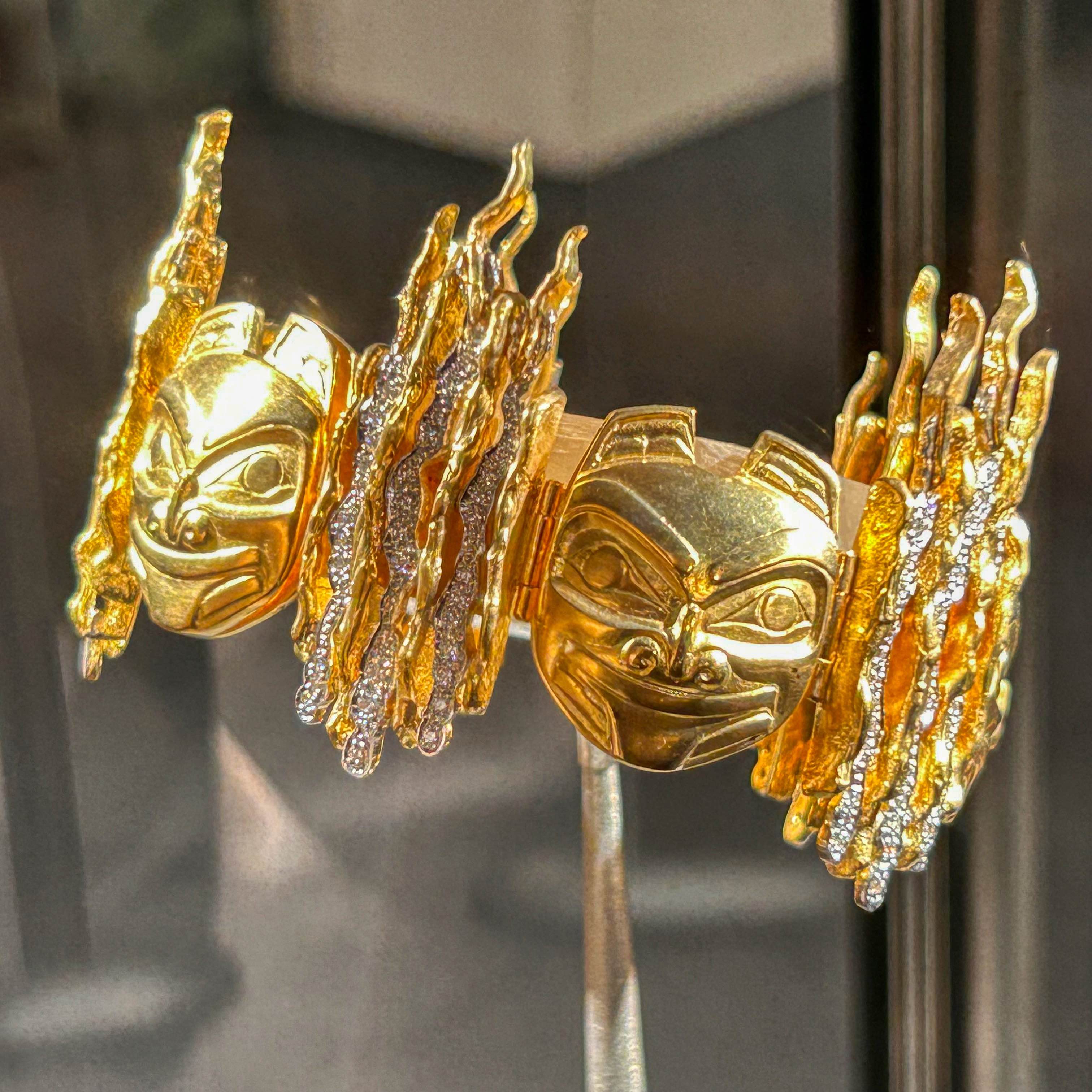
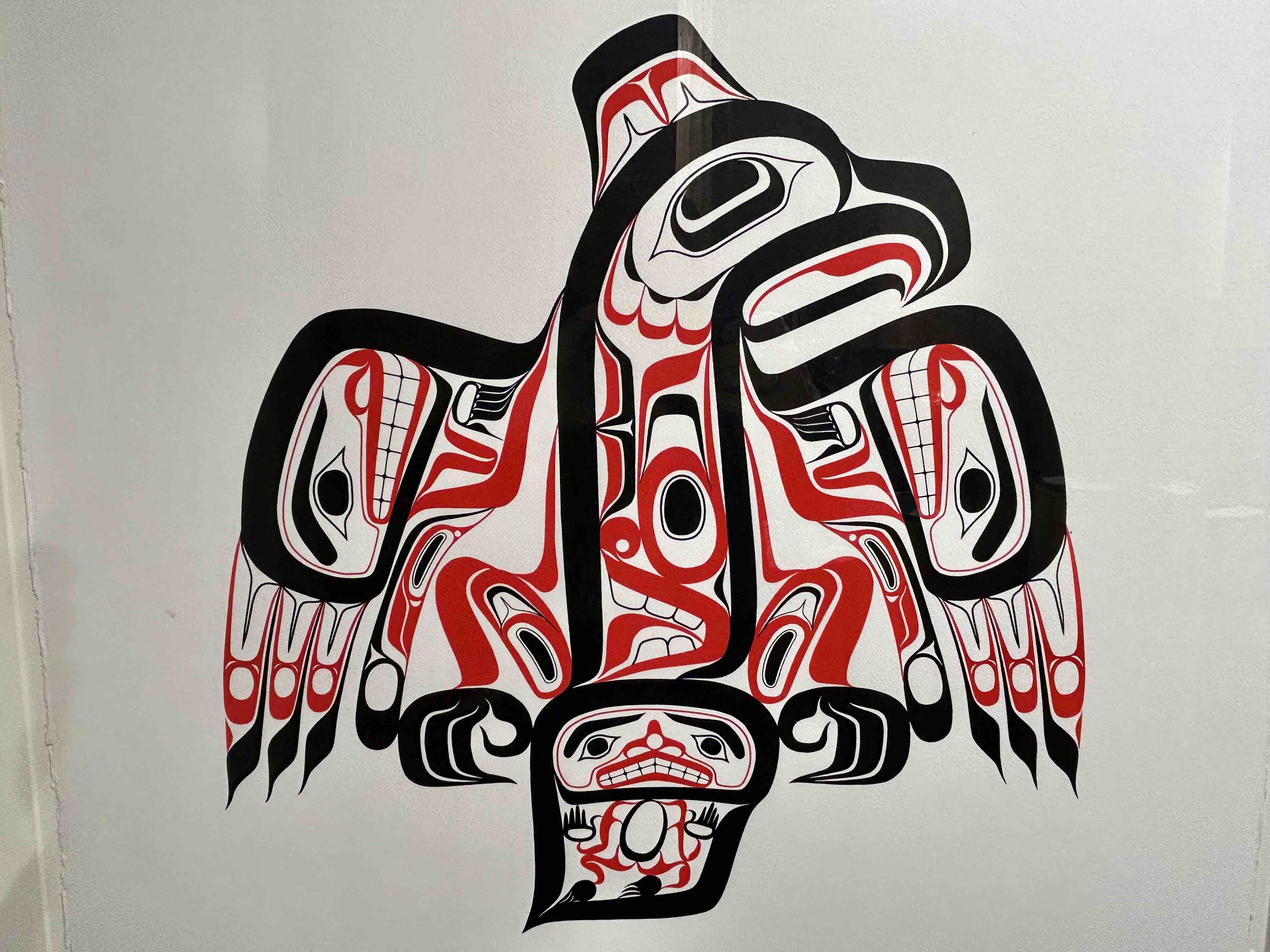
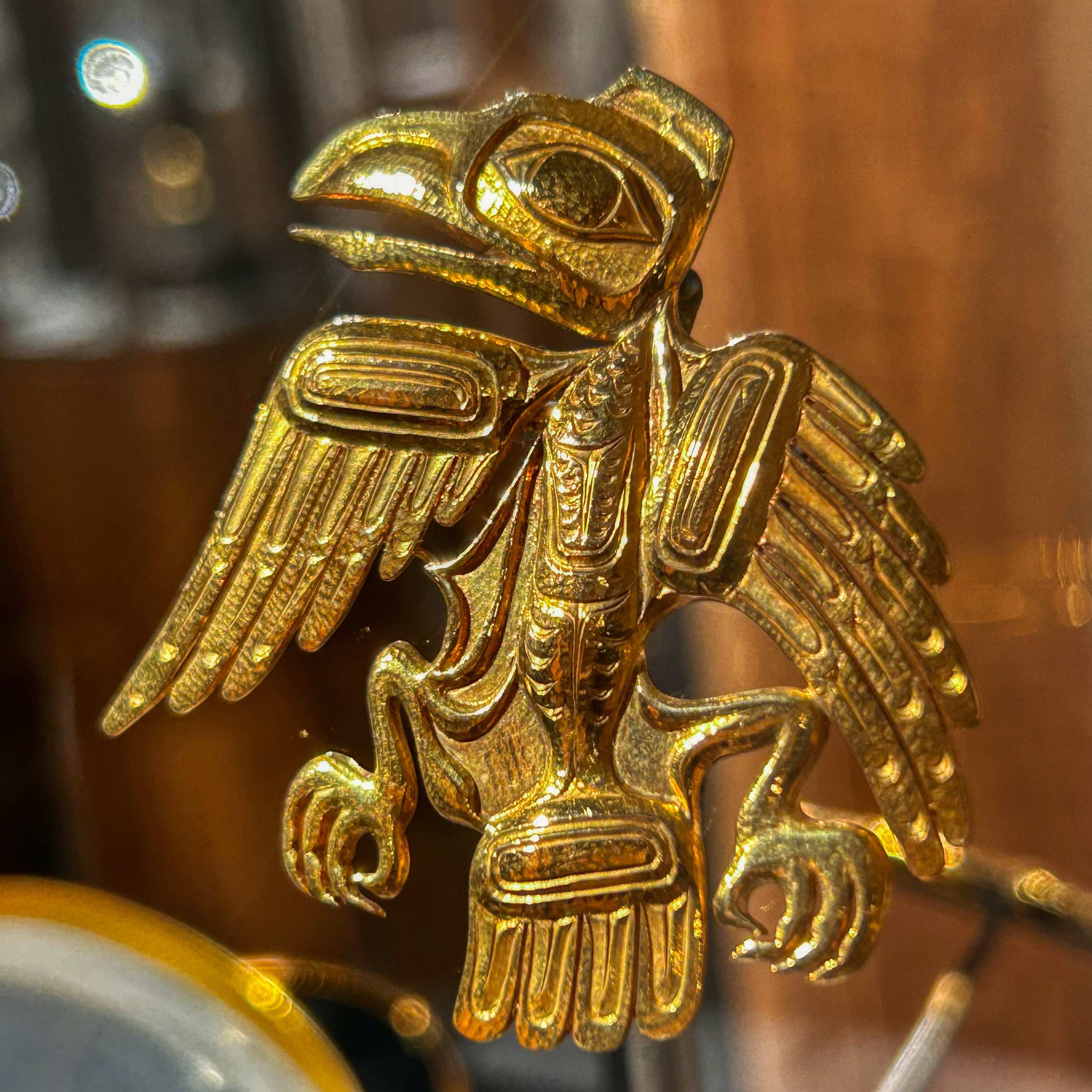
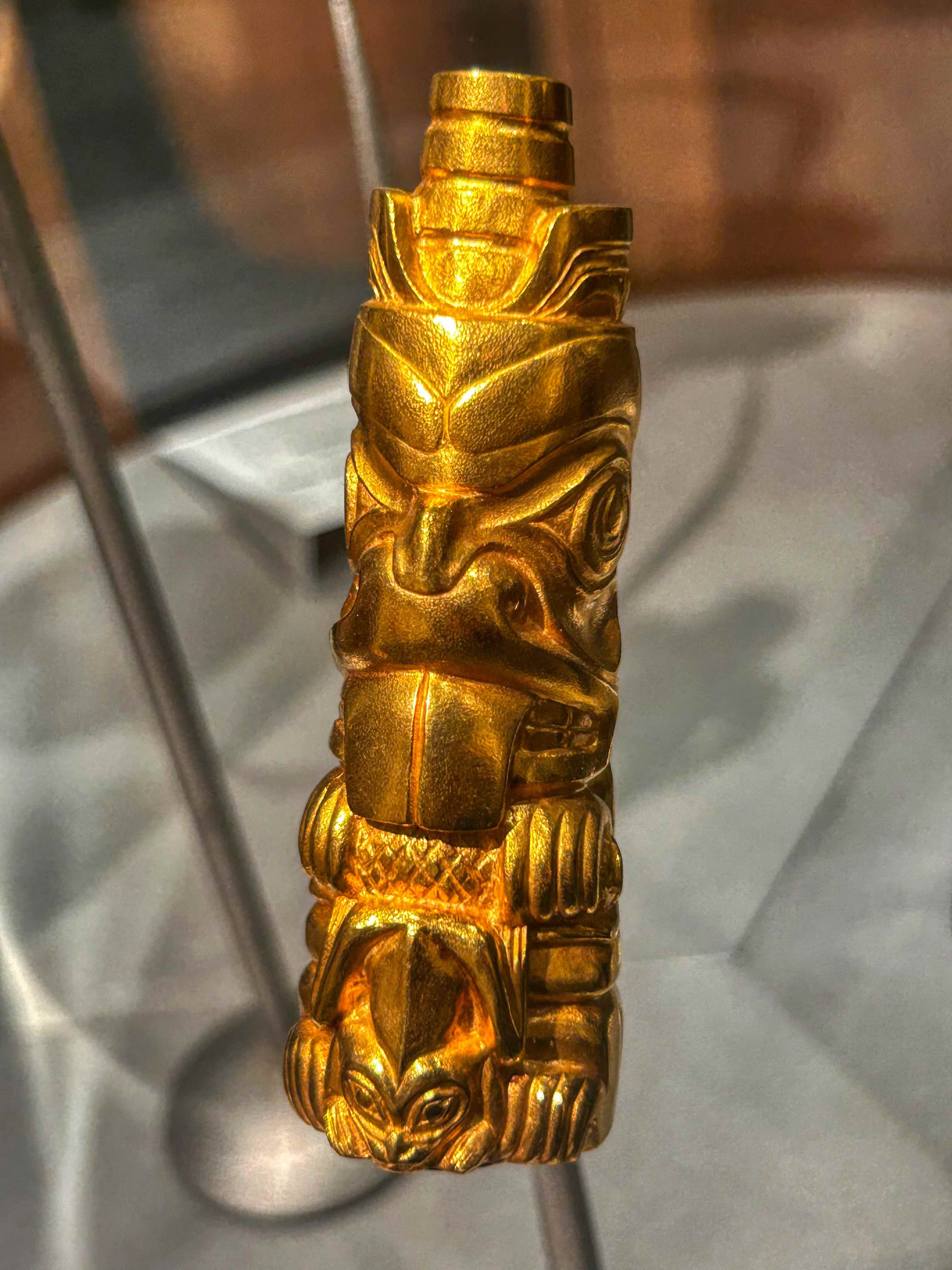
Back in town, we discovered the Bill Reid Gallery of Northwest Coast Art which stands as a tribute to this legendary master artist (1920-1998). It’s here that many further examples of his work are shown along with learning programs that help keep the Haida traditions alive in the 21st Century. Incredibly, Reid wasn’t just a master carver of Argillite (a black shale found only in the nearby Slate Chuck Mountain) and wood, but a master goldsmith – blending traditional Haida animistic carving with exquisite modern aesthetics in his solid gold and silver jewellery.
 Travels With My Ant
Those mask faces range between butt ugly, vaguely camp and sometimes sort of cheeky. Amazing stuff. The Blog continues to greatly entertain 👏 keep ‘em coming 🙏
LikeLiked by 1 person