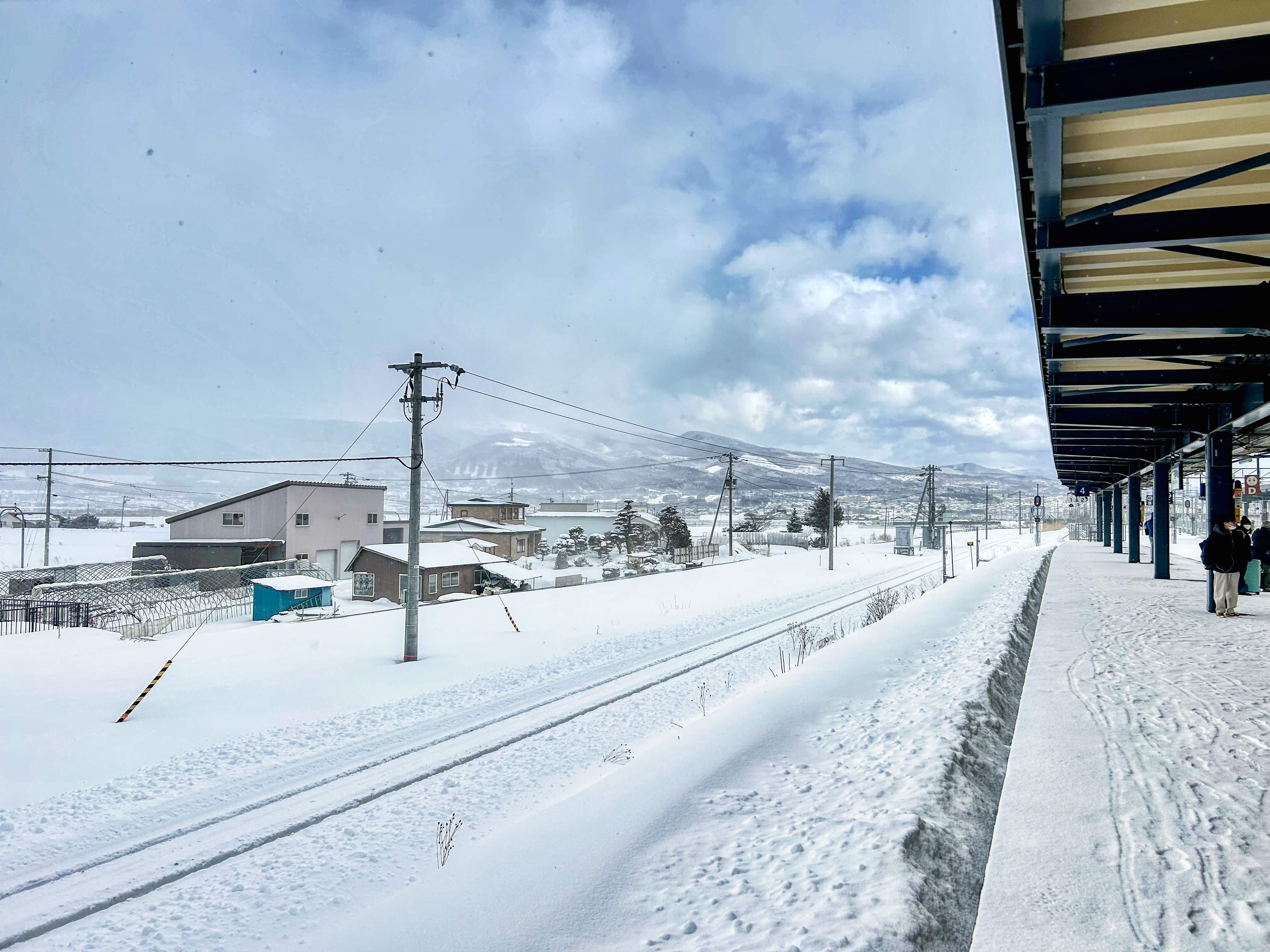















We’re here in Sapporo for the Snow Festival, a bucket list trip to Japan’s north island of Hokkaido, travelling from Tokyo on the Shinkansen to the top of Honshu then down through the Seikan Tunnel, one of the world’s longest undersea tunnels at 53.85ks and around 240m below the surface. It’s a frozen landscape up here with heavy snow battering the train as it sped along. Currently the Shinkansen only goes as far as Hakodate (with plans to extend all the way to Sapporo by 2030), so you change to the regular JR service onwards into Hokkaido. It’s standing room only for some (almost all seats were already reserved) and the train was slowed several times by the blizzards ahead, but we made it – only twenty minutes behind schedule, this is Japan – to a rather gleaming and surprisingly modern Sapporo station with outside – swirling snow. Glorious!
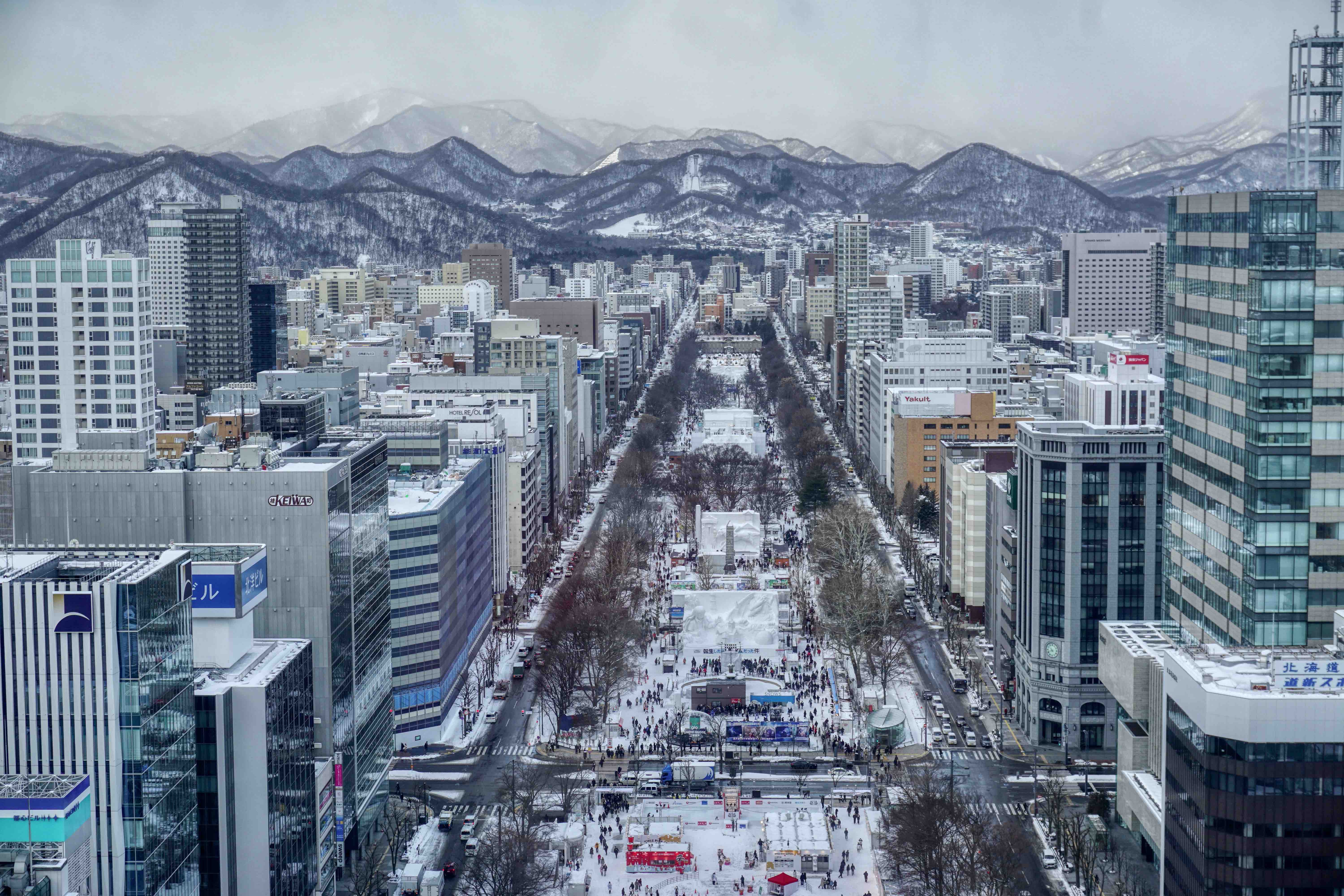
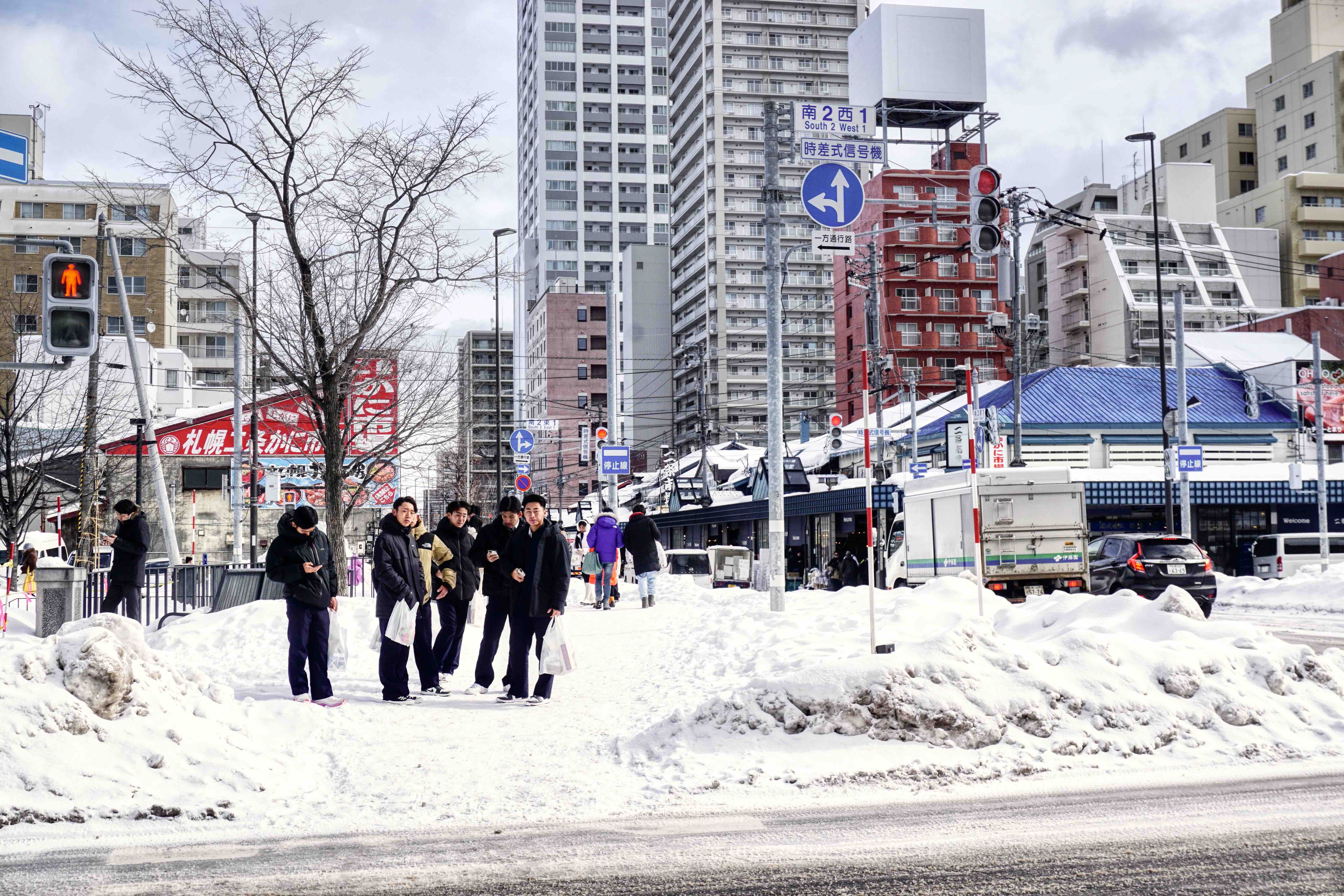
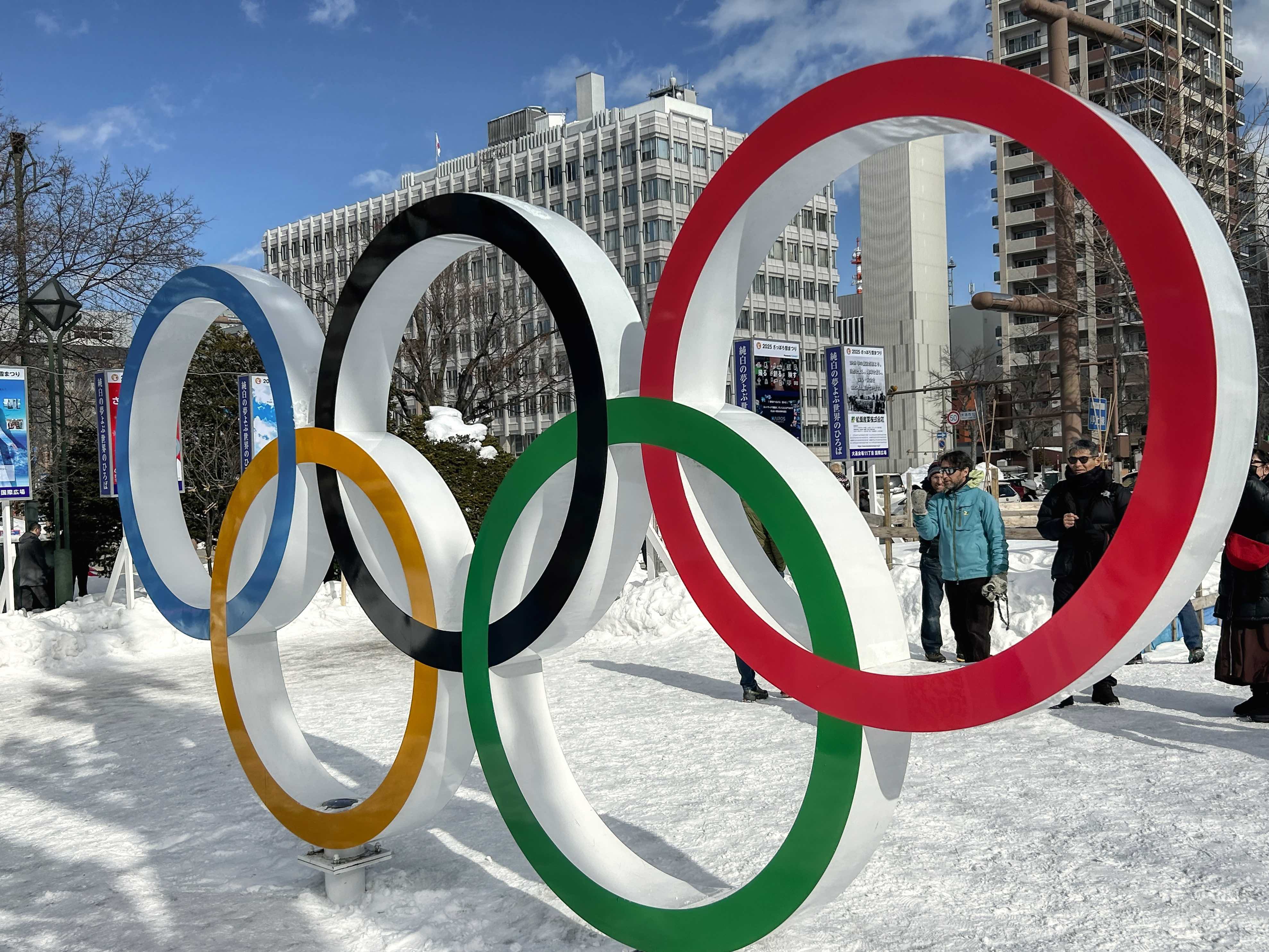
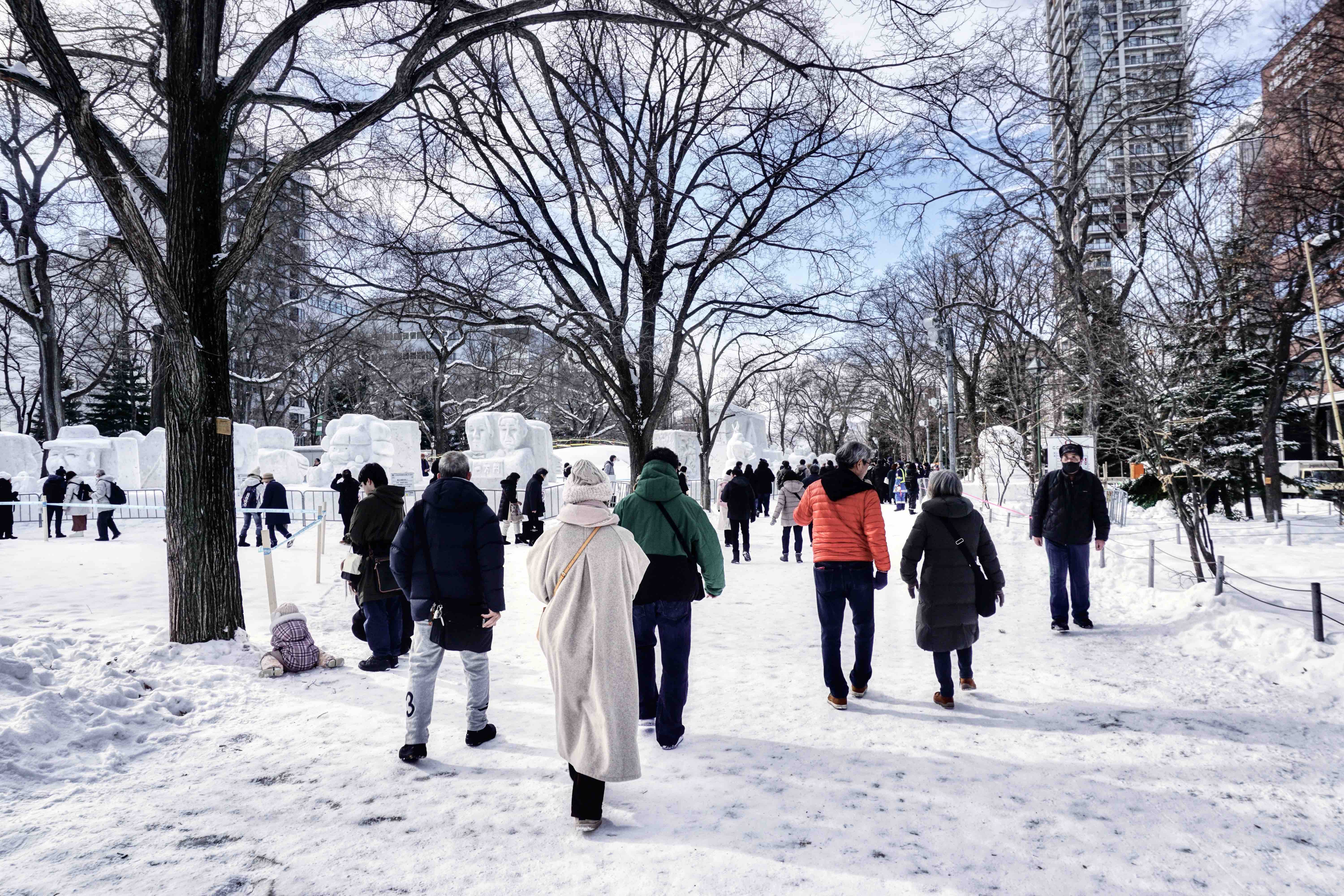
We read that the region just copped the biggest snowfall since 1972 dumping over 100cm of snow in just one day, so there’s a lot of snow around, piled high up on the sides of icy roads and sidewalks, with more snow forecast for the coming days. Over 2 million people come to the Sapporo Snow Festival that runs from the 4th to the 11th February, doubling the city’s population, so it’s busy, but not overly crowded, yet. (Though at night it’s super crowded). It’s a far cry from the festival’s humble beginnings in 1950, when local middle and high school students created six snow sculptures in Odori Park. It now boasts 200 plus snow sculptures with this year gigantic recreations of local historic buildings, some in excess of 10 metres tall.
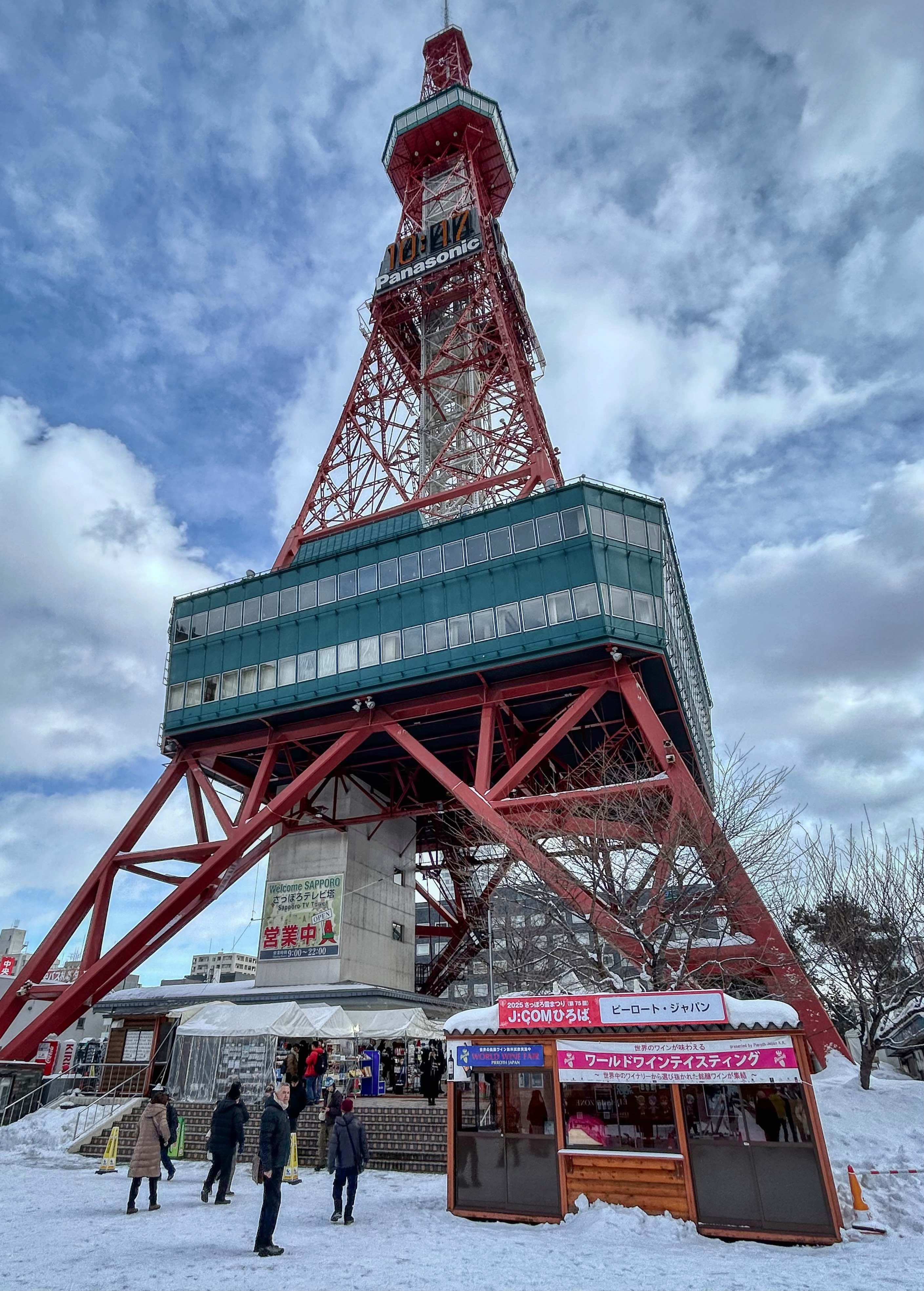
The Snow Festival runs the full length of narrow Odori Park, some 1.5ks from the Shiryokan Culture Hall through to the impressively oddball Sapporo TV Tower, Hokkaido’s answer to the Eiffel Tower, but obviously on a smaller scale. Built in 1957 it rises 147 metres with a glass-enclosed caged lift that takes you up to a viewing platform with spectacular 360-degree views across Sapporo over towards the snow-capped mountains and ski-fields. It’s a quirky, unassuming tower that has a restaurant at its first stage along with a dizzying array of tacky souvenirs selling goods featuring “TV Dad”, the tower’s popular mascot. We paid the ¥1000 (around A$10) and entered the lift ‘cage’ which chugs you up to incredible views of Sapporo, running the complete length of Odori Park. There’s a touch of ‘steam punk’ about this retro edifice that’s quite charming – nothing overly flash, just a work-horse tourist trap.
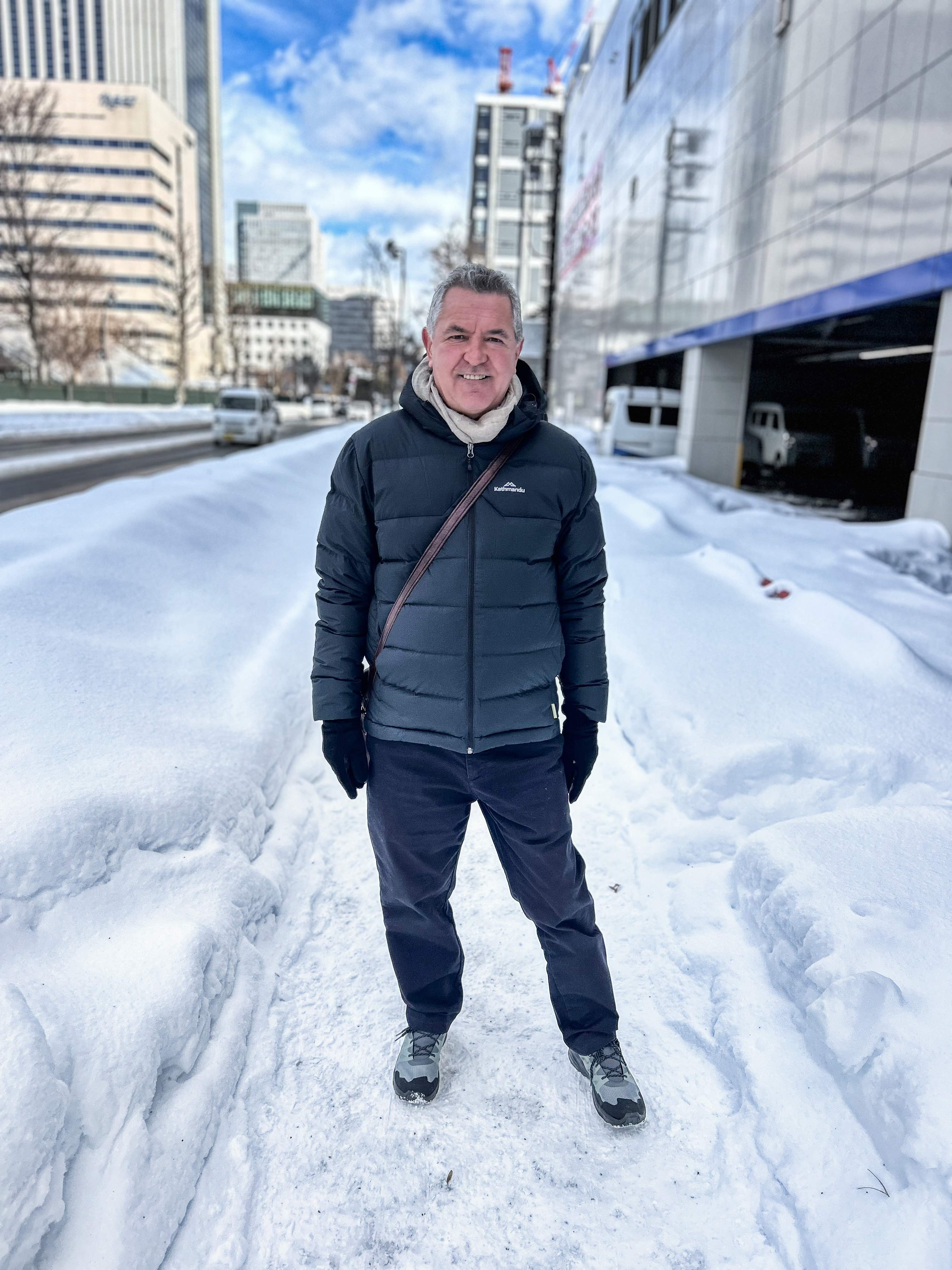
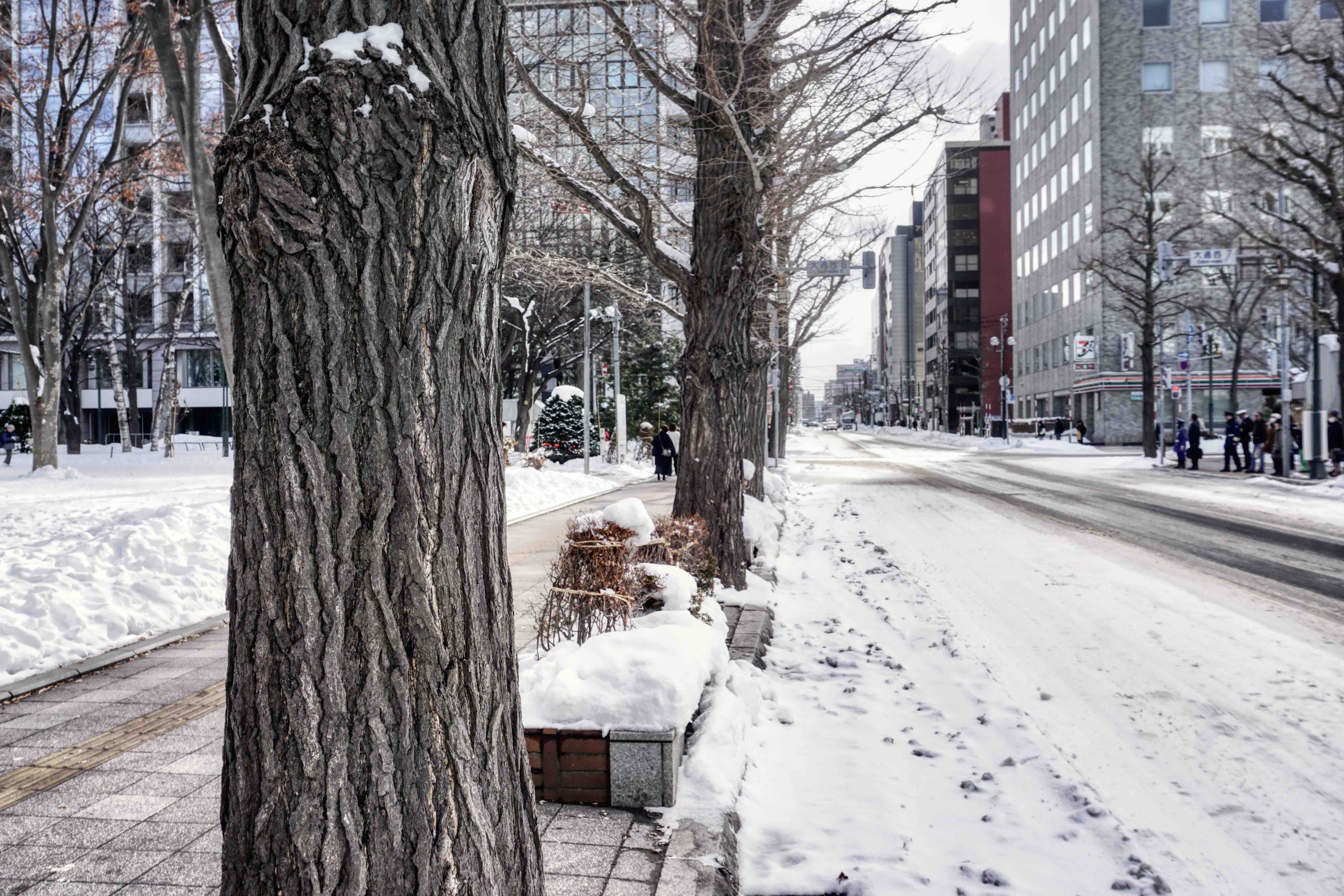
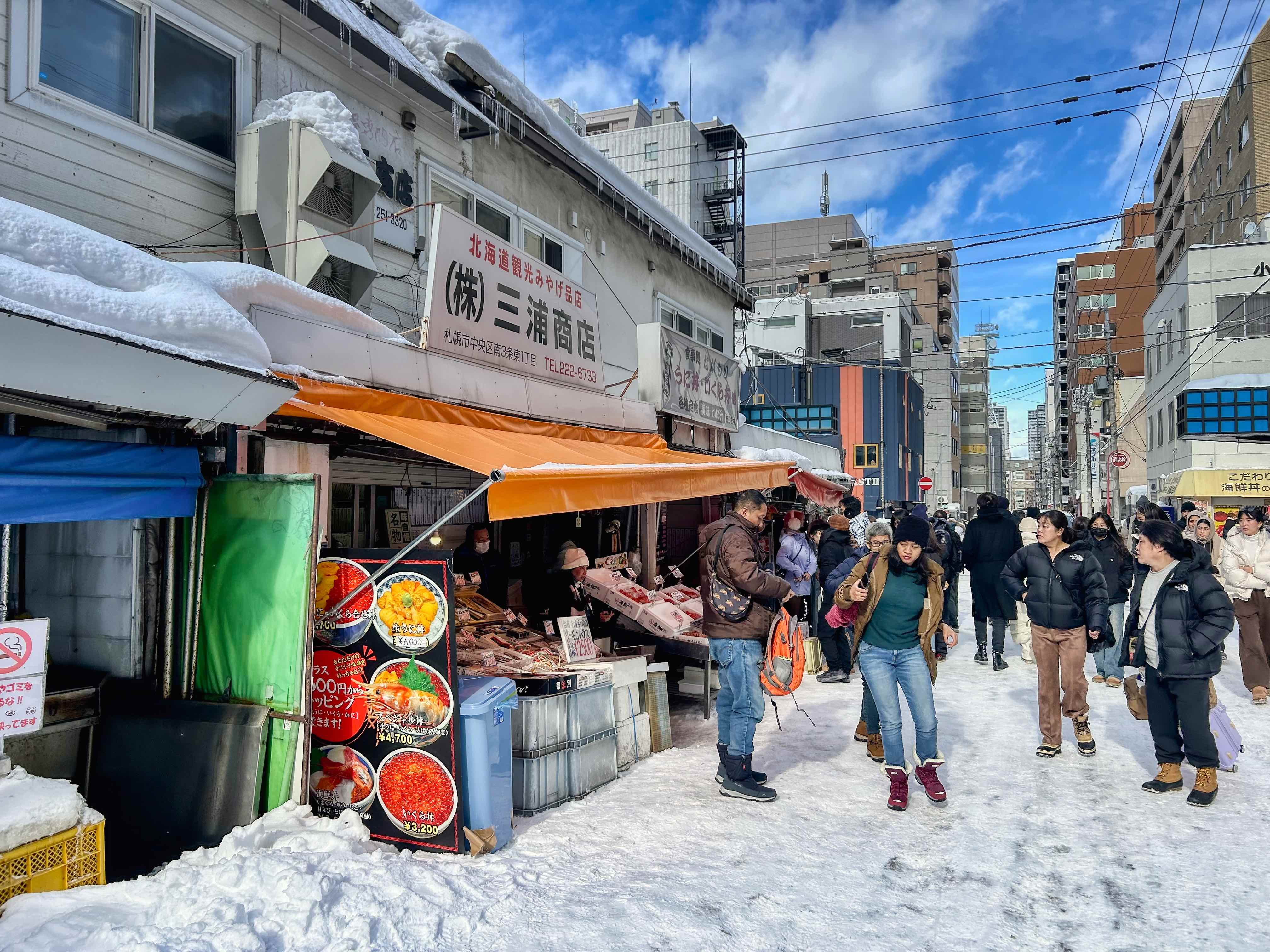
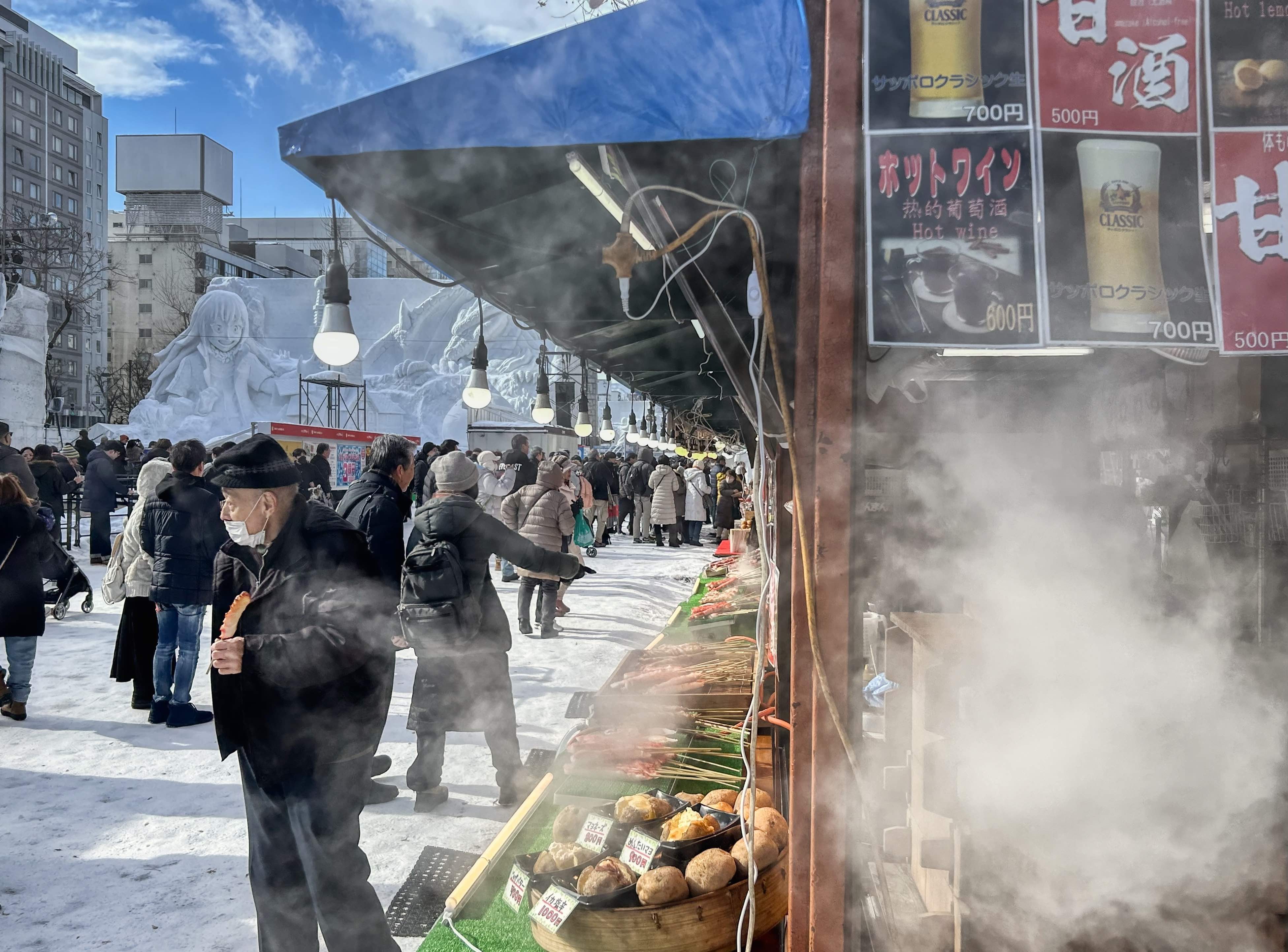
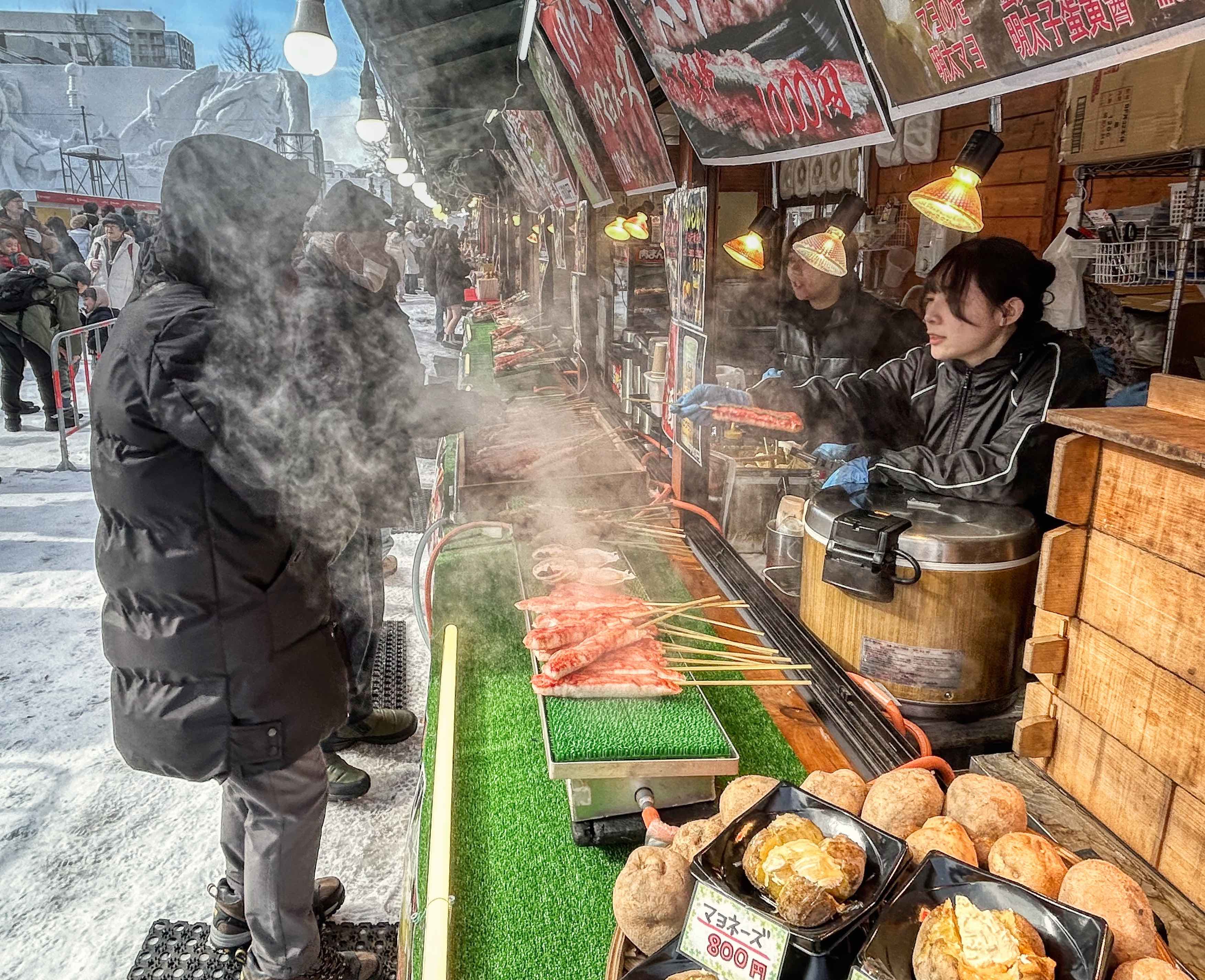
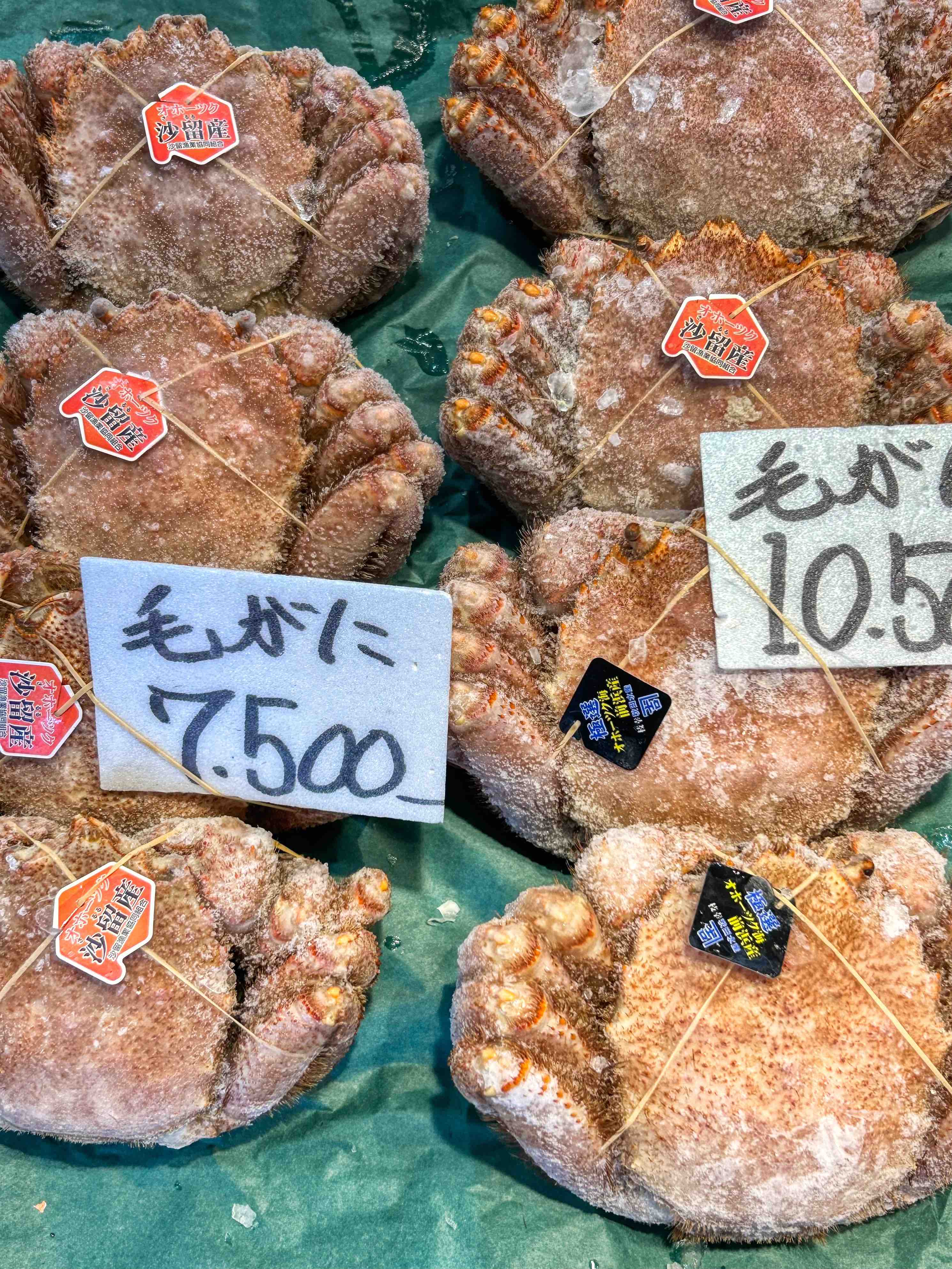
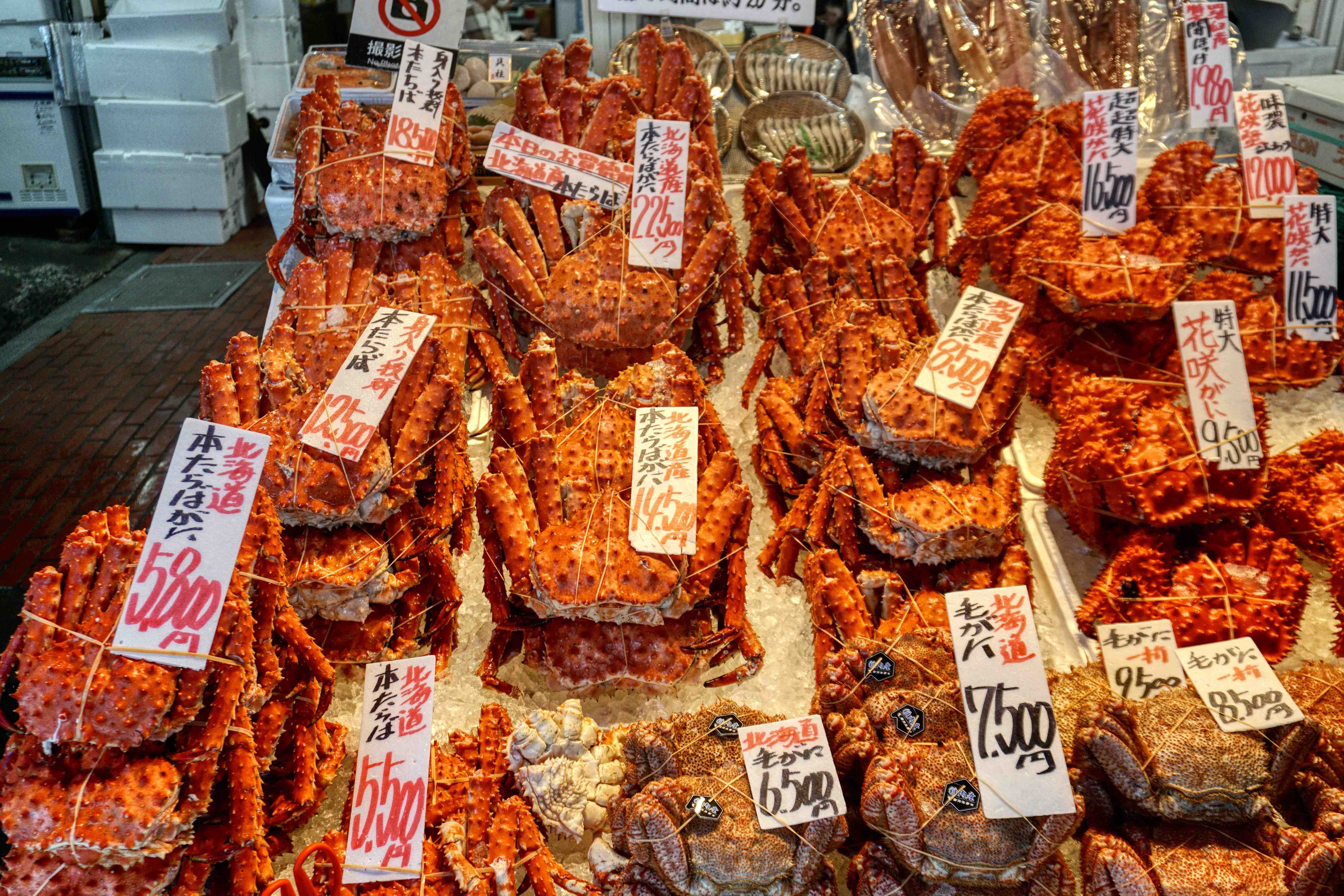
Close by to the TV Tower is the compact, crowded Nijo Fish Markets selling heaving piles of freshly caught crabs (some in excess of A$100 each), salmon, oysters, large mackerel (Hokke), scallops and dried fish and everything else of course. There are also dozens of small restaurant shacks fronted by piled up mounds of snow, with the aroma of steamed and grilled fish intoxicatingly good. However, there is a bit of argy-bargy here too, as the sellers don’t exactly like ‘gawkers’ like me taking photographs, so they’ll quite happily and forcibly push you away (we’ve had several experiences of being barged aside by old men, but mostly everyone is so polite). We didn’t stay long, just to get a flavour of this characterful place. We headed back into the Snow Festival and walked past the myriad food stalls selling an amazing array of hot steaming foods, beers and hot sake. But when I say walked, I mean tip-toed, gingerly, as the pathways throughout Sapporo and in particular in Odori Park are treacherous to say the least, especially after snowfall and especially at night, when the temperature plunges well below zero, often to -10. It’s like walking on an ice rink with fresh compacted snow on top.
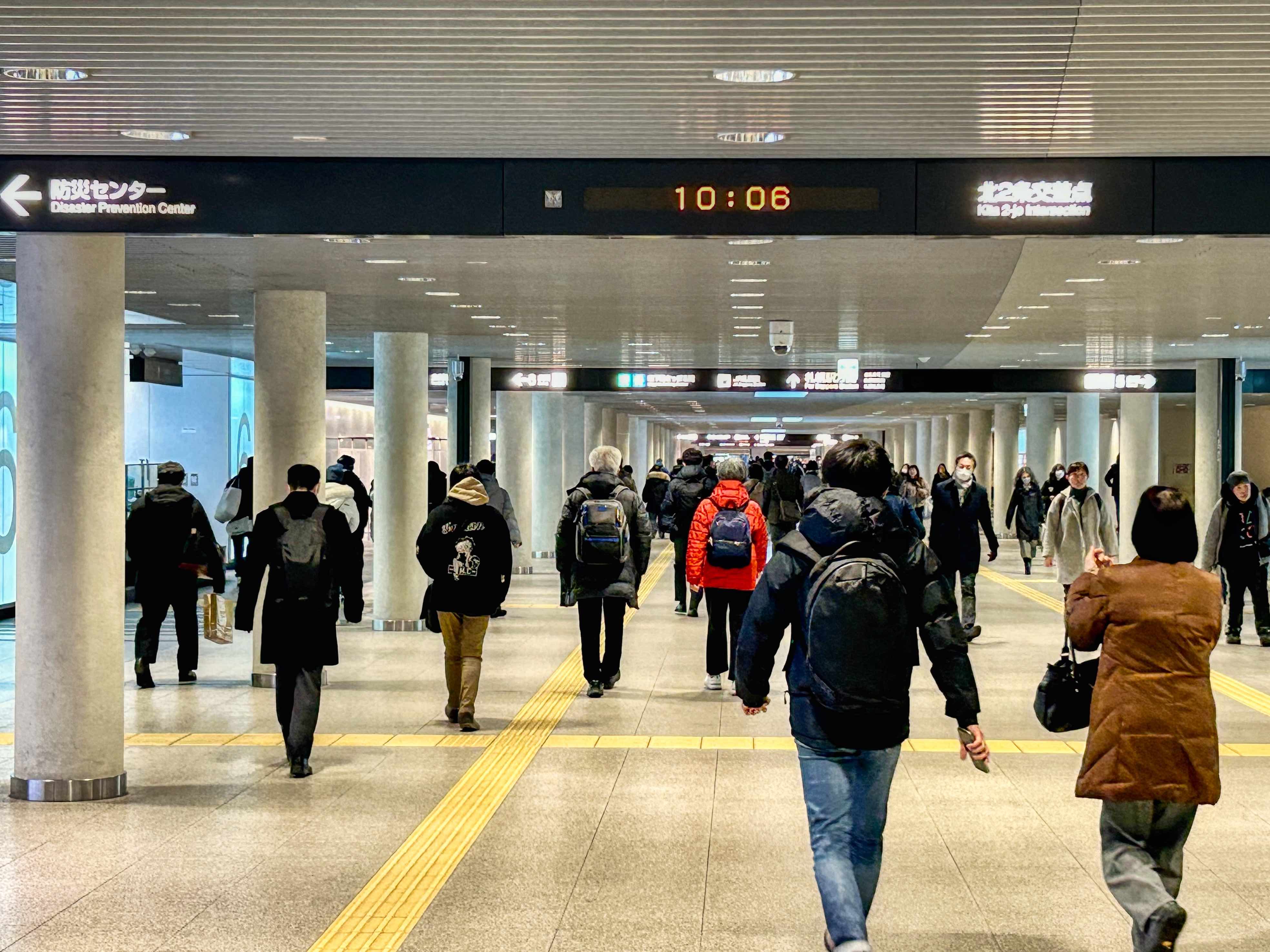
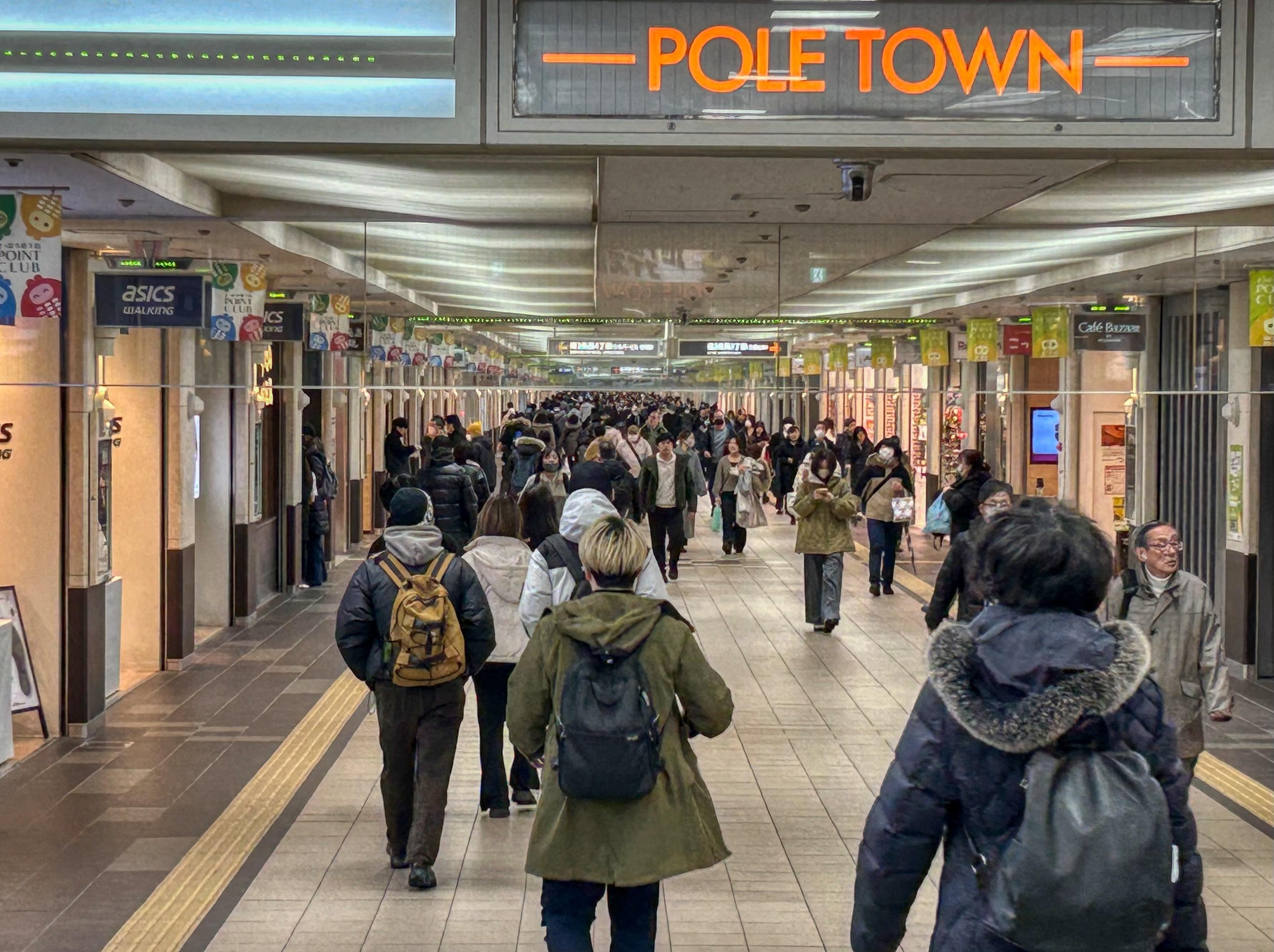
What’s so impressive about this quite elegant city of 2 million is how it’s so effectively geared up to its climate. Running underground and criss-crossing the city is a network of wide shopping streets. There are many access points above ground that lead into this warren, with simple directions (surprisingly in English) to particular points and key intersections throughout the city. Certainly beats hazarding the ice and freezing weather outside. Down below you’ll find tons of restaurants, cafés and bars; quirky shops and large well-known department stores like Daimaru, Daichi and Mitukoshi that are super modern and stylish – with terrific food-halls (great for foraging for improvised in-room meals back at the hotel). They’re busy places where locals are able to quickly move around town, so efficient in-fact that once you know about this underground city you hardly have any need to venture to the frozen surface. And, similarly, I guess, in summer, when it’s hot and sticky outside, this would be an airconditioned heaven.
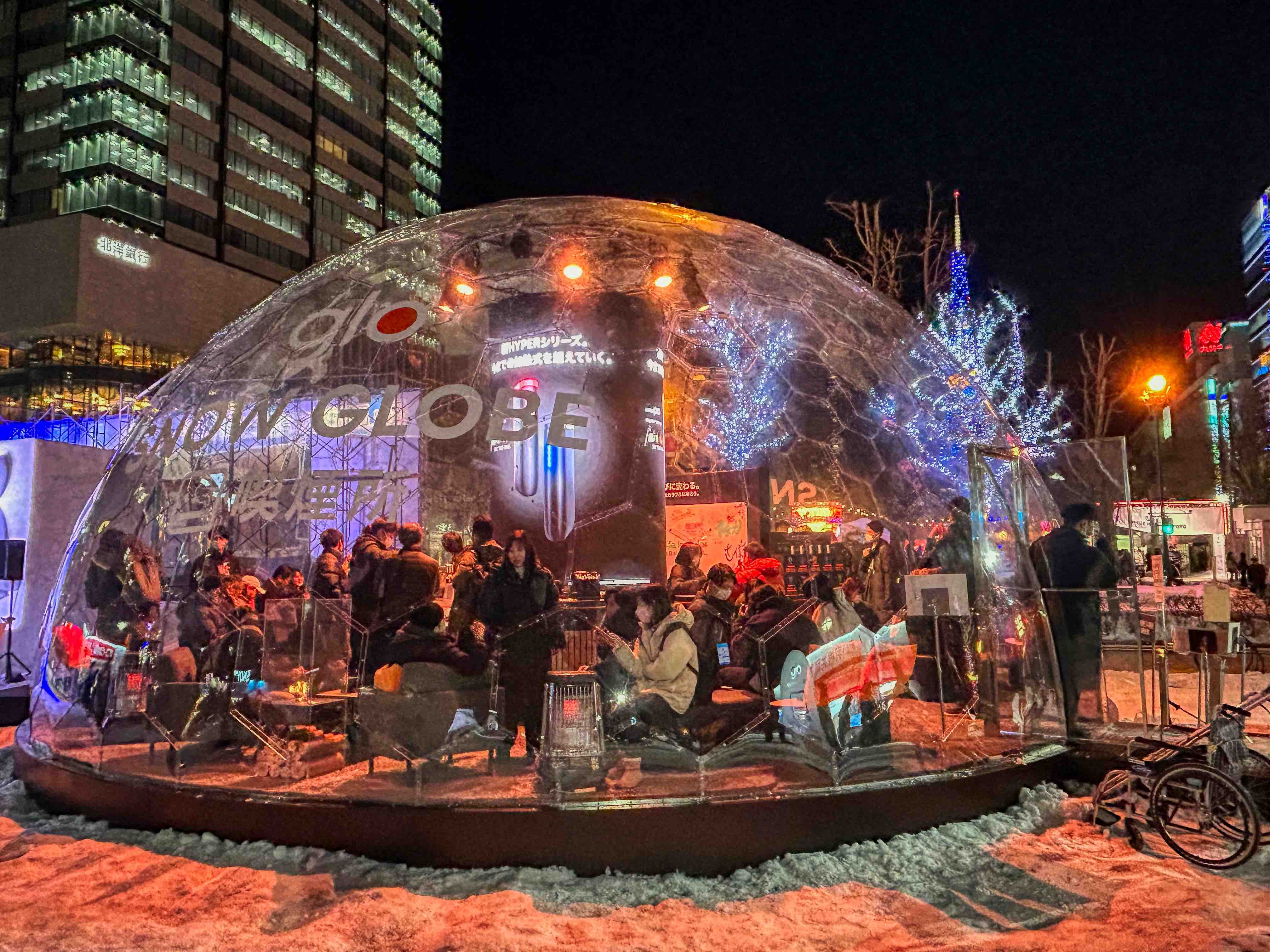
One of the many oddities we noticed here in Sapporo is the smoking in restaurants (also in Tokyo but much more here), something that hasn’t been allowed in many countries for years! And the Snow Festival certainly caters to these people too, in fact pampers them. There are dedicated glass igloos throughout the park, but these are not just places to smoke (there are plenty of glass enclosed smoking cabins dotted throughout the city), those at the Snow Festival are designer-themed with comfy ‘smoking chairs’, imitation fire pits and a bar serving Whiskey shots, red wine, sake. It looks so inviting you almost feel like taking up smoking… but I joke of course.
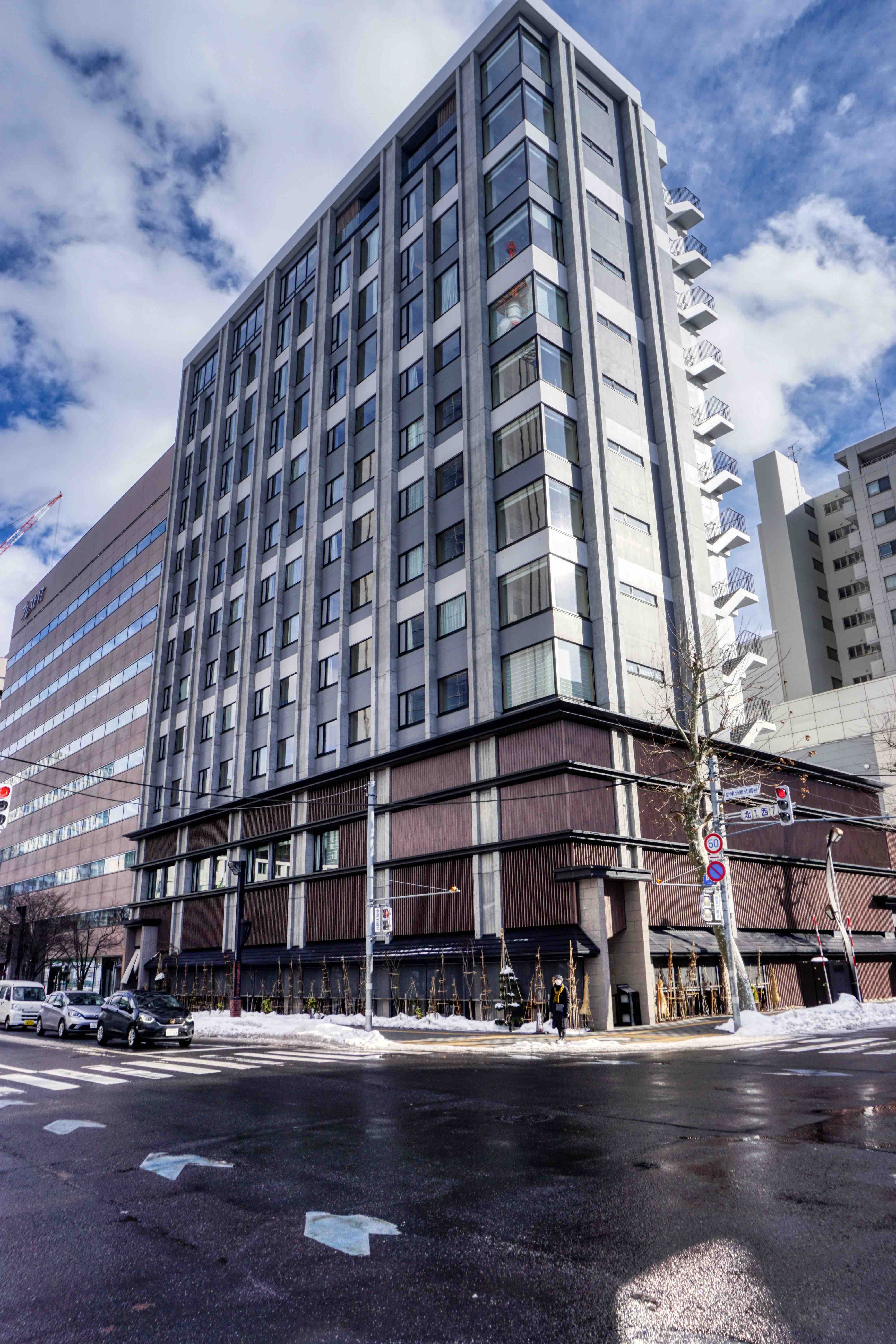
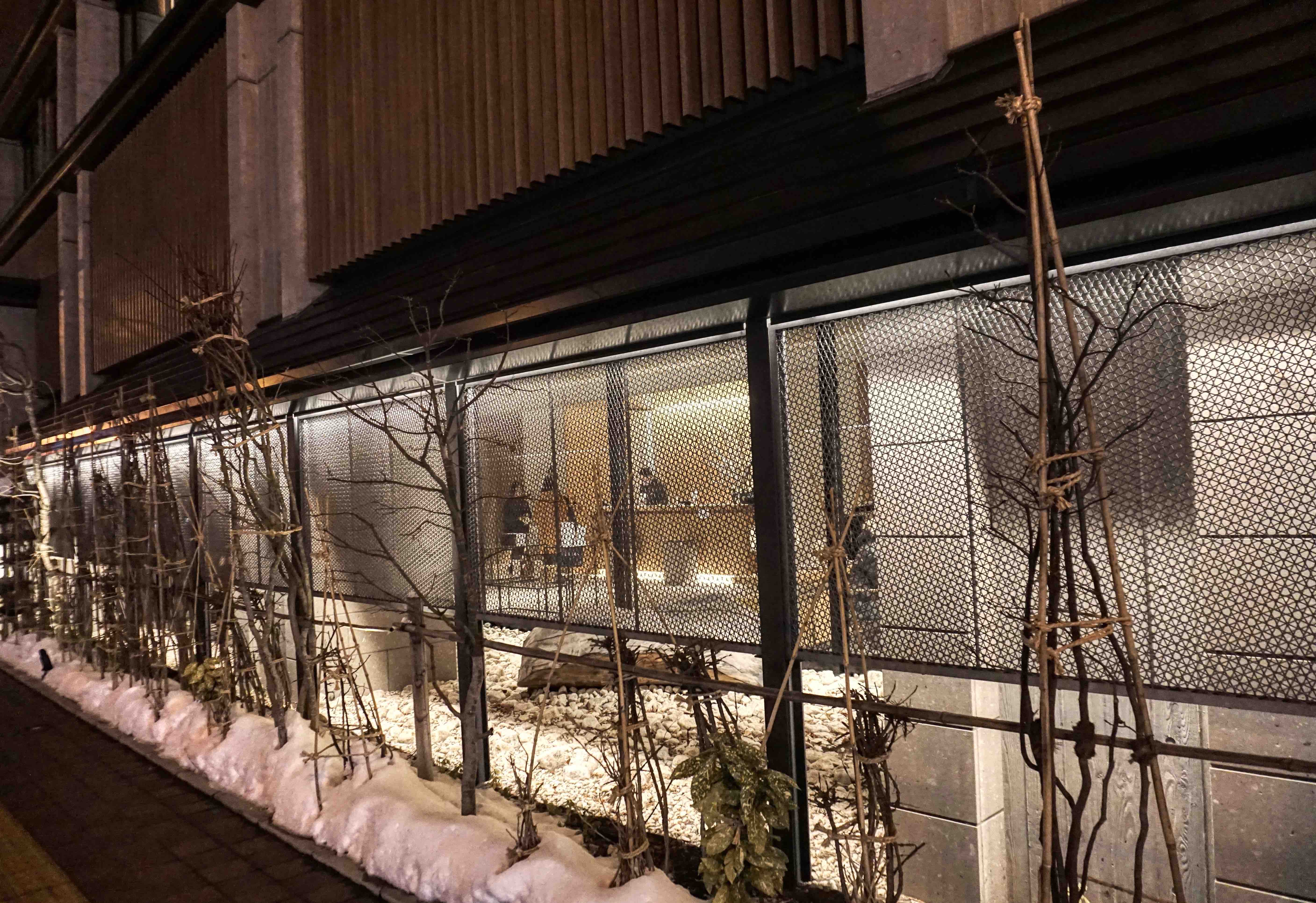
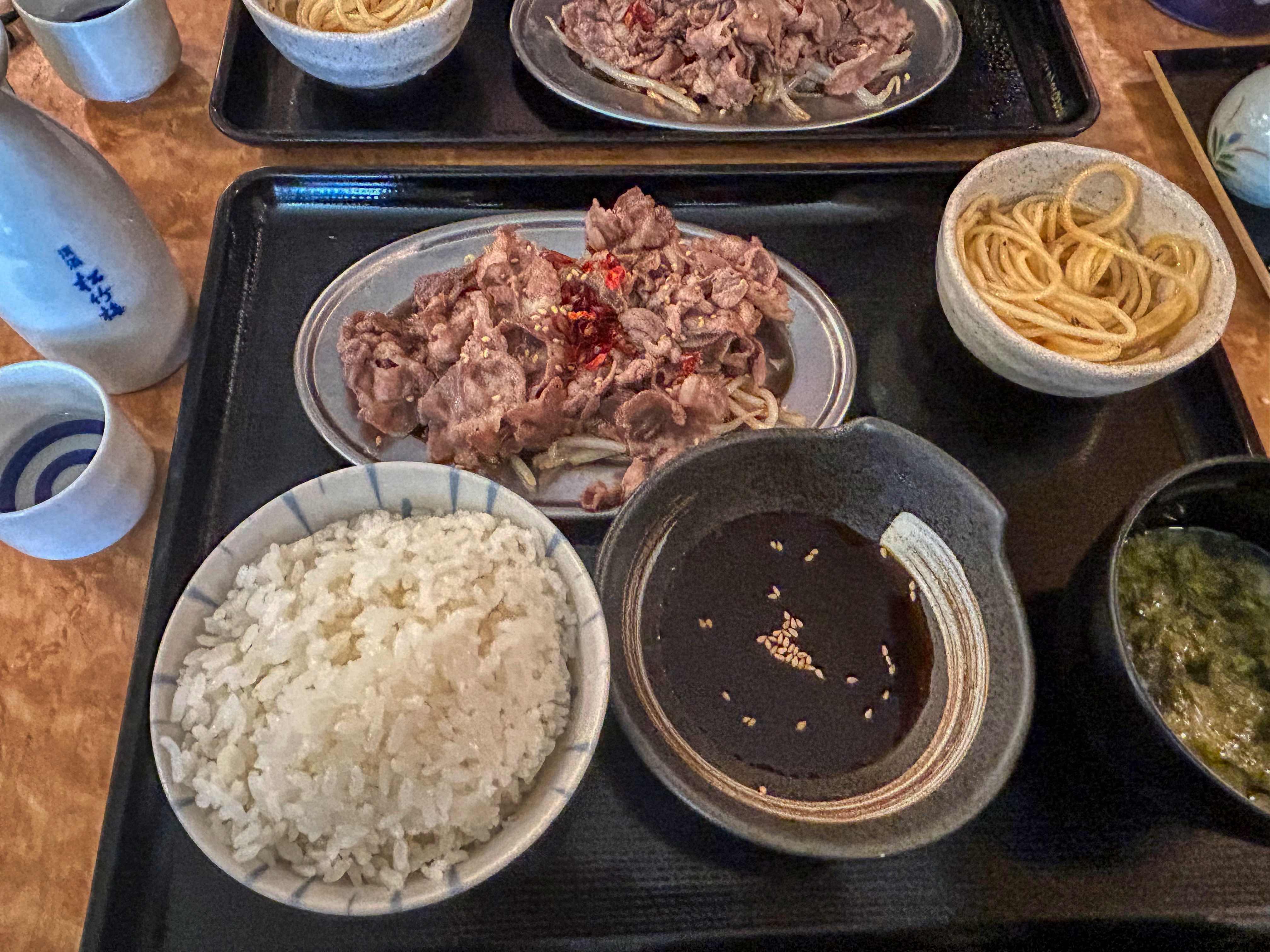
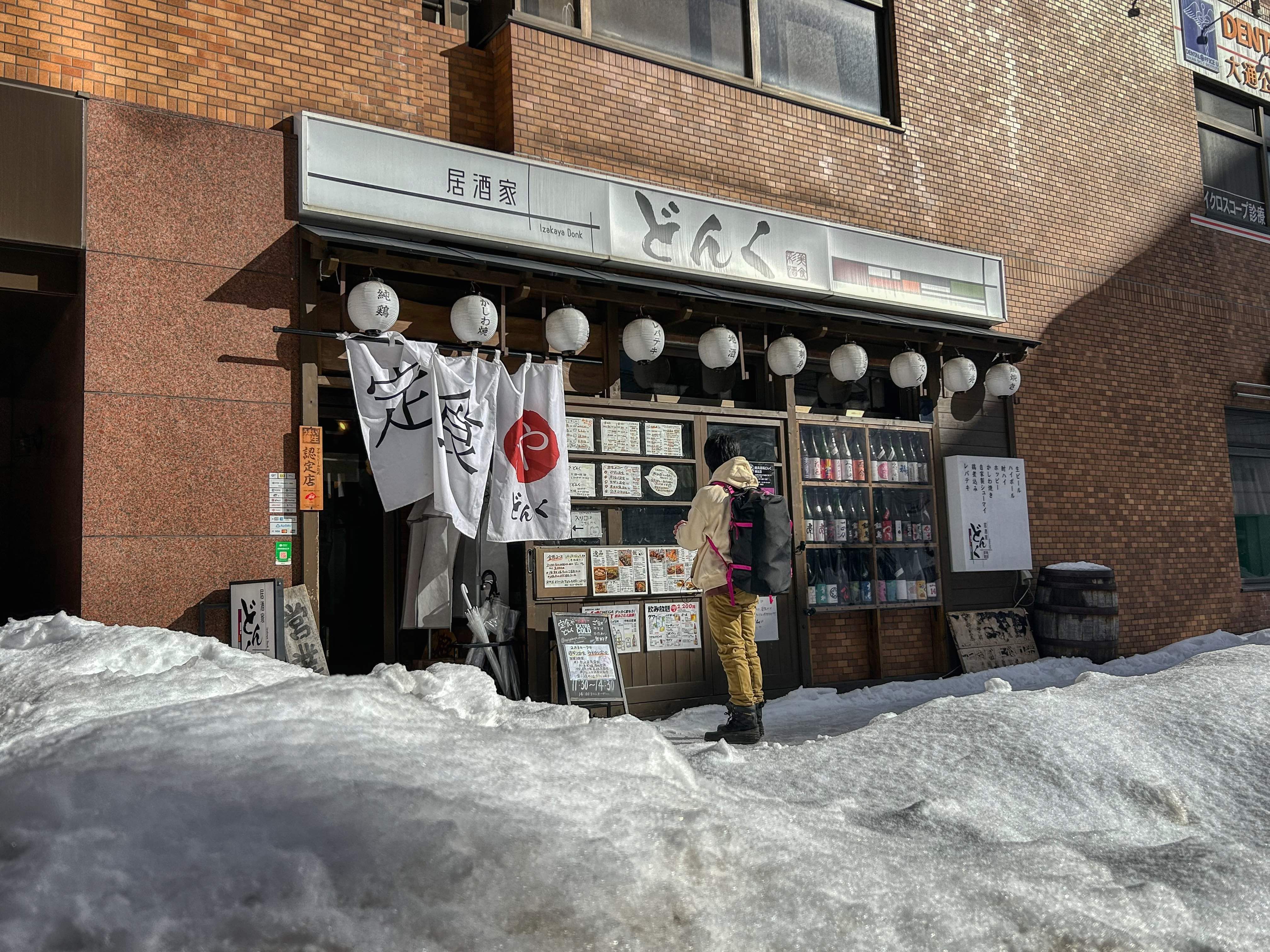
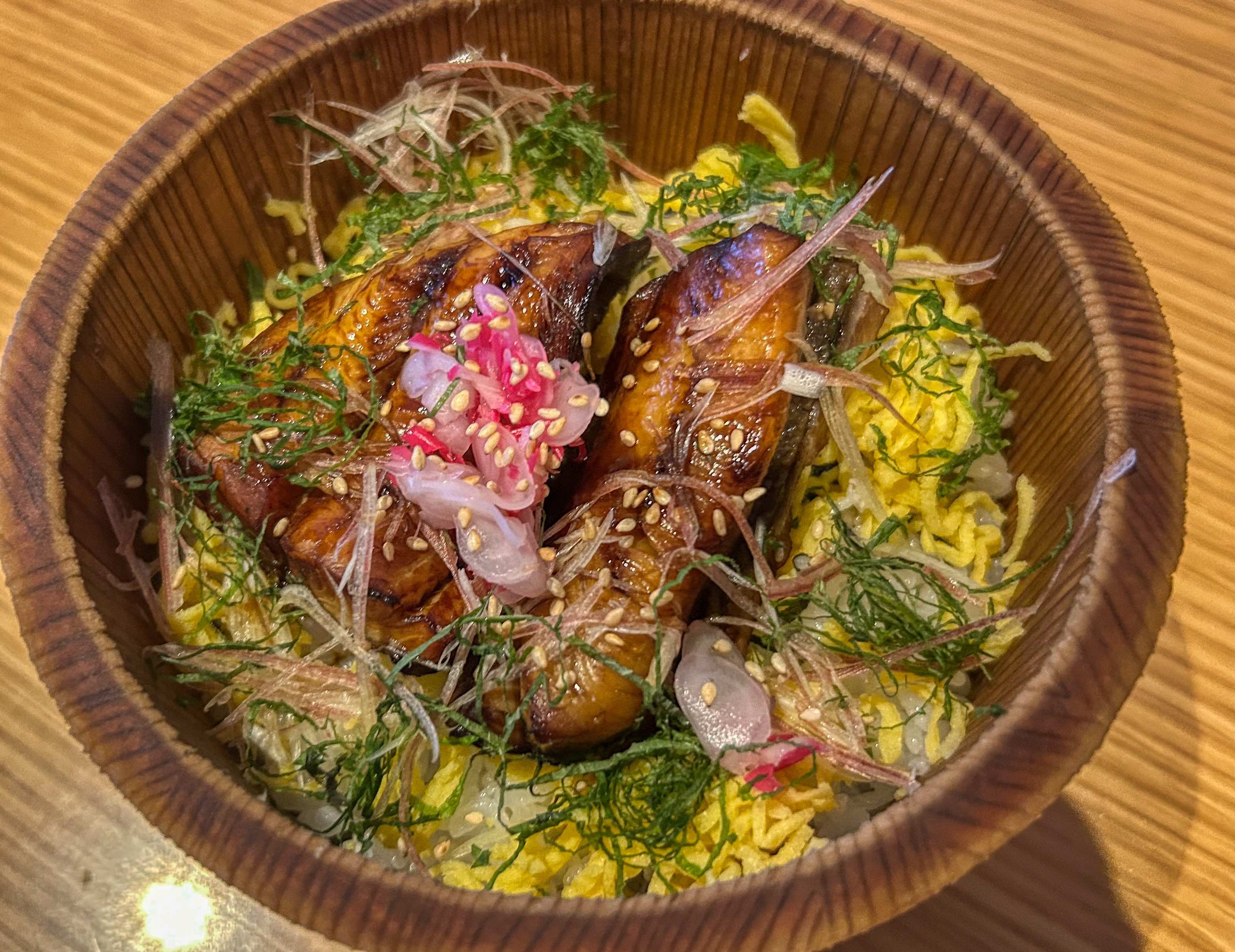
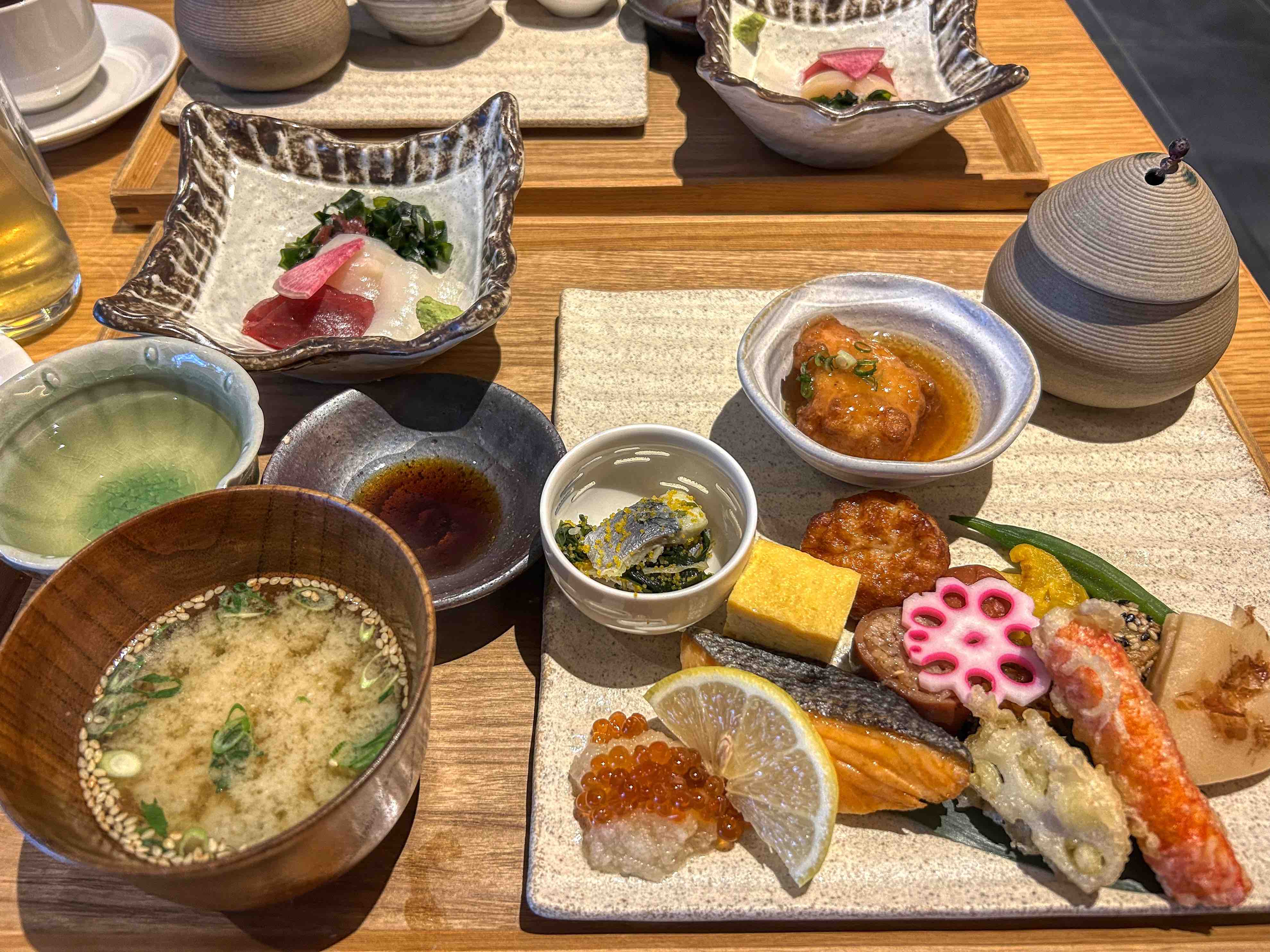
We’ve had some glorious food here in Sapporo to date, perhaps none more so than the dish this island is famous for, the Jingisukan or “Genghis Khan”. It’s a grilled mutton dish that’s prepared on a metal skillet with beansprouts, onions, mushrooms and peppers, served with a soy and sake sauce. We found a local (and I mean local, with smoking locals…) restaurant that served this dish for around A$8. Delicious beyond telling. We also had the Japanese breakfast at our gorgeous Ryokan one morning, a feast of all things Japanese – carefully curated dishes of Sushi, Tempura, Squid Rice, Spicy Cod Roe, Simmered Bamboo Shoots and Hokke no Hitsumabushi (Atka Mackeral over Rice), plus an assortment of Japanese Pickles…It’s delicious, but of course overly fishy. A meal to enjoy but perhaps not every day, for us anyway.

 Travels With My Ant
What a fabulous adjustment to weather wickedness, by living comfortably beneath it all. Those clever Japanese. Again, as ever, I thank you for all food imagery. Such mouthwatering sights that you capture, aided by the positively salivating blog prose. 🤤
LikeLiked by 1 person
Umai!
LikeLiked by 1 person