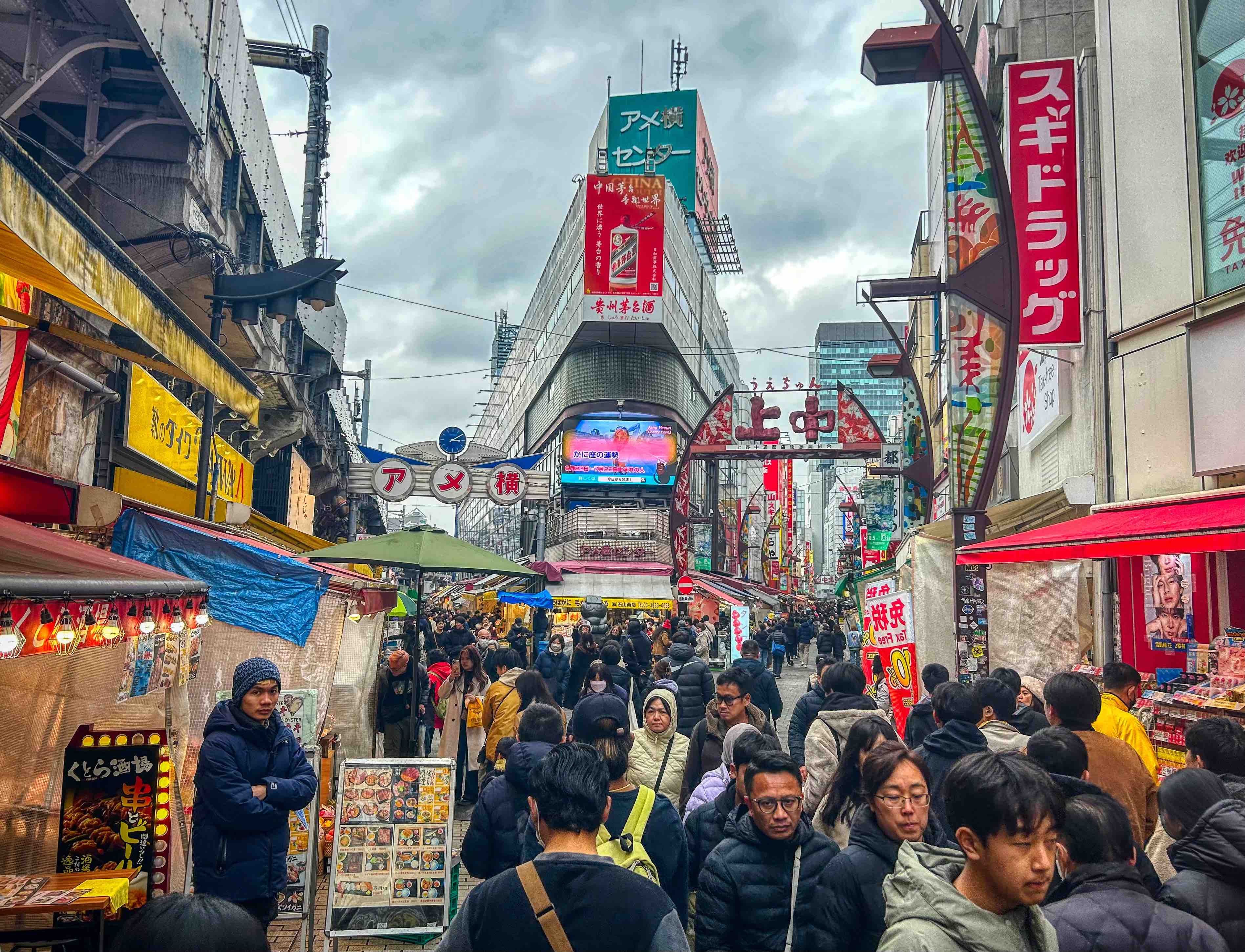

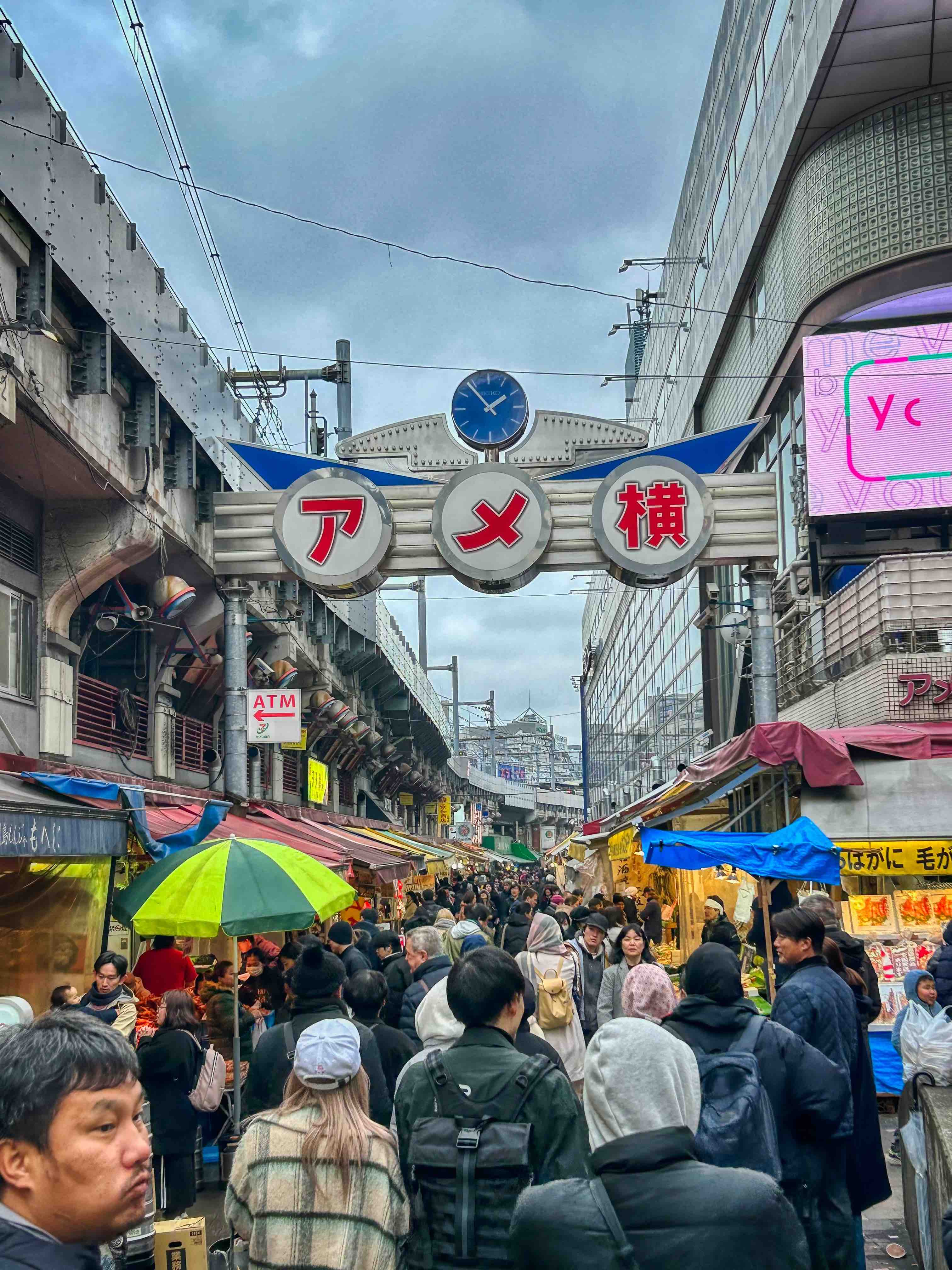

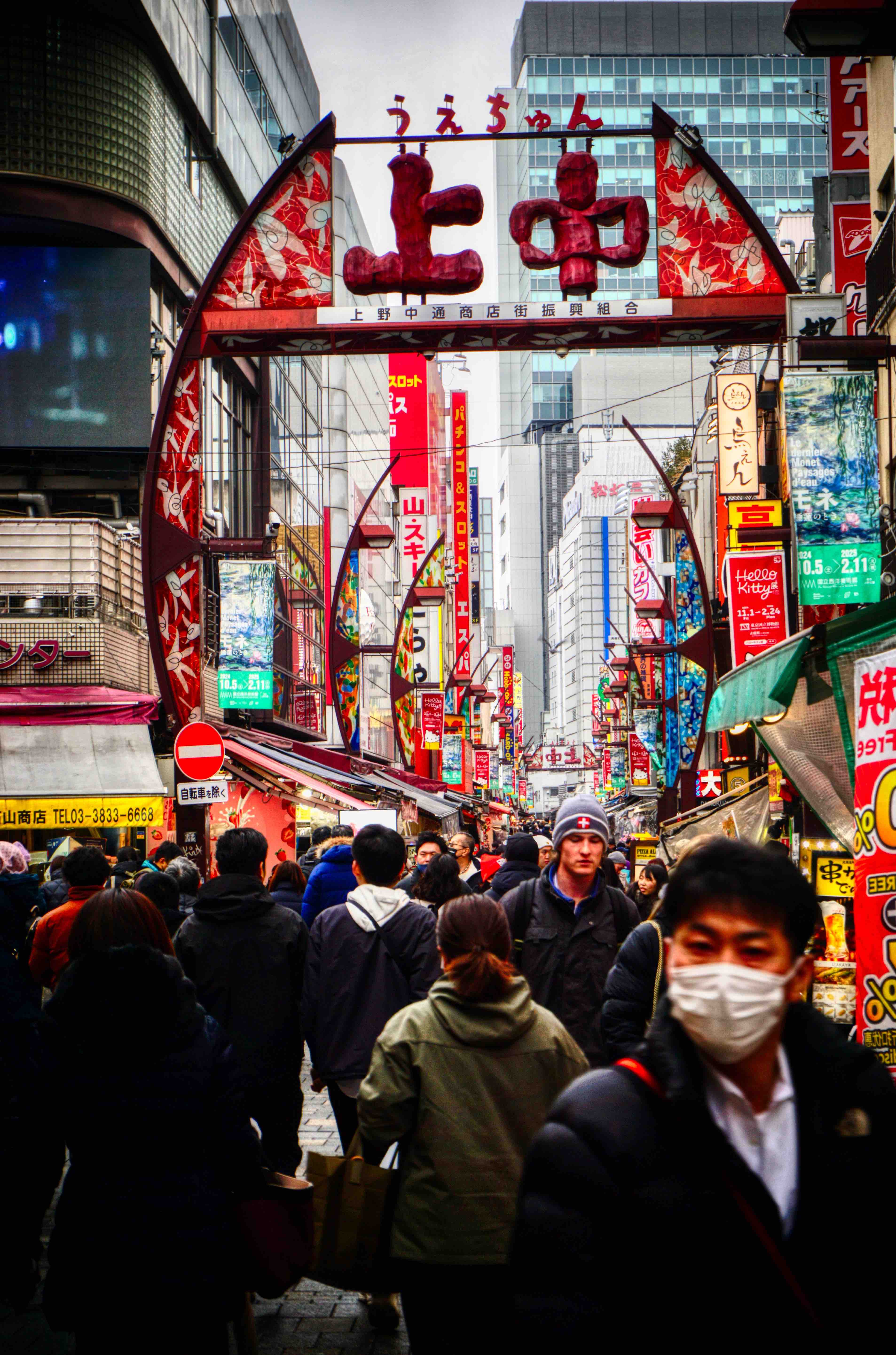


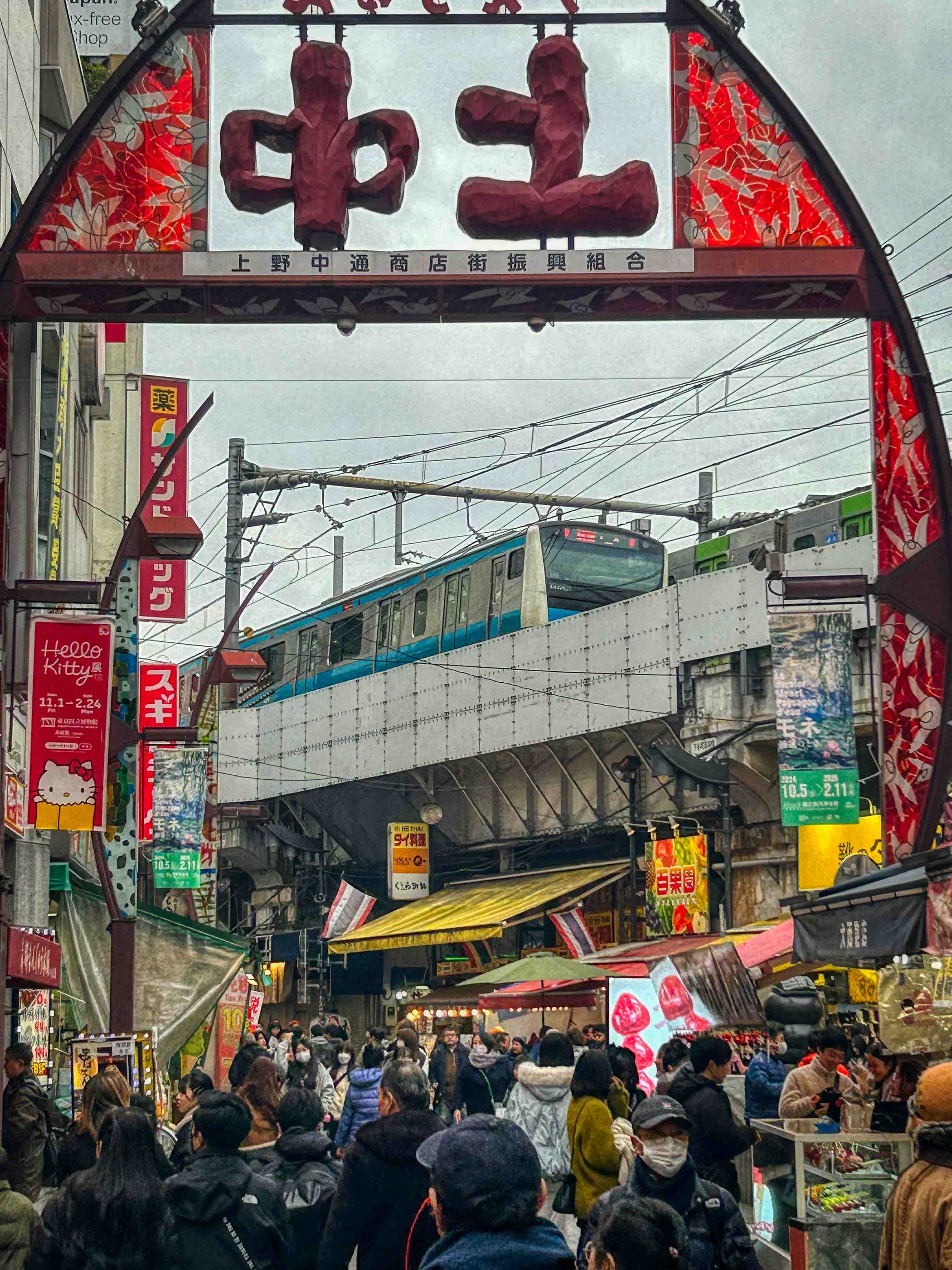
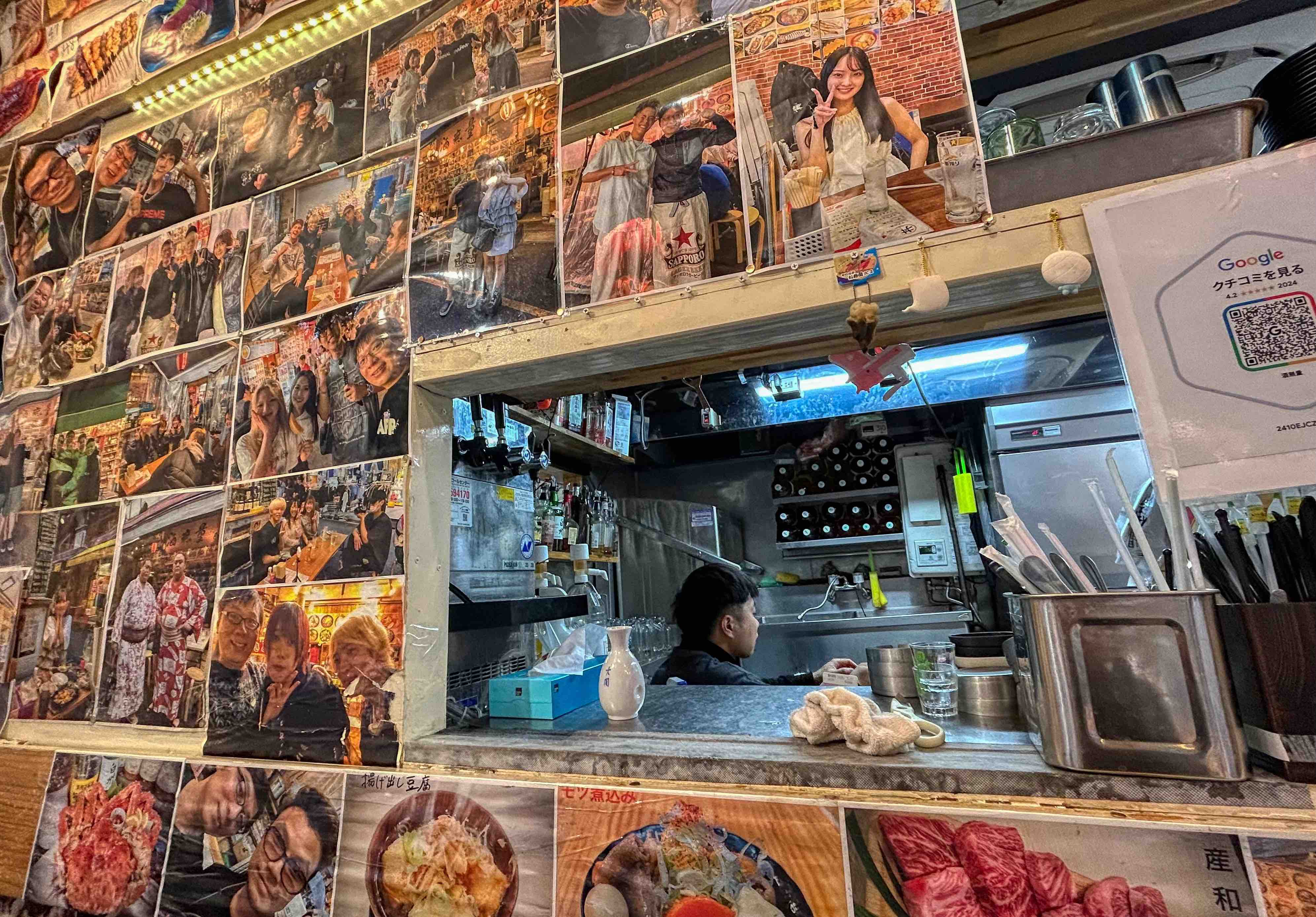
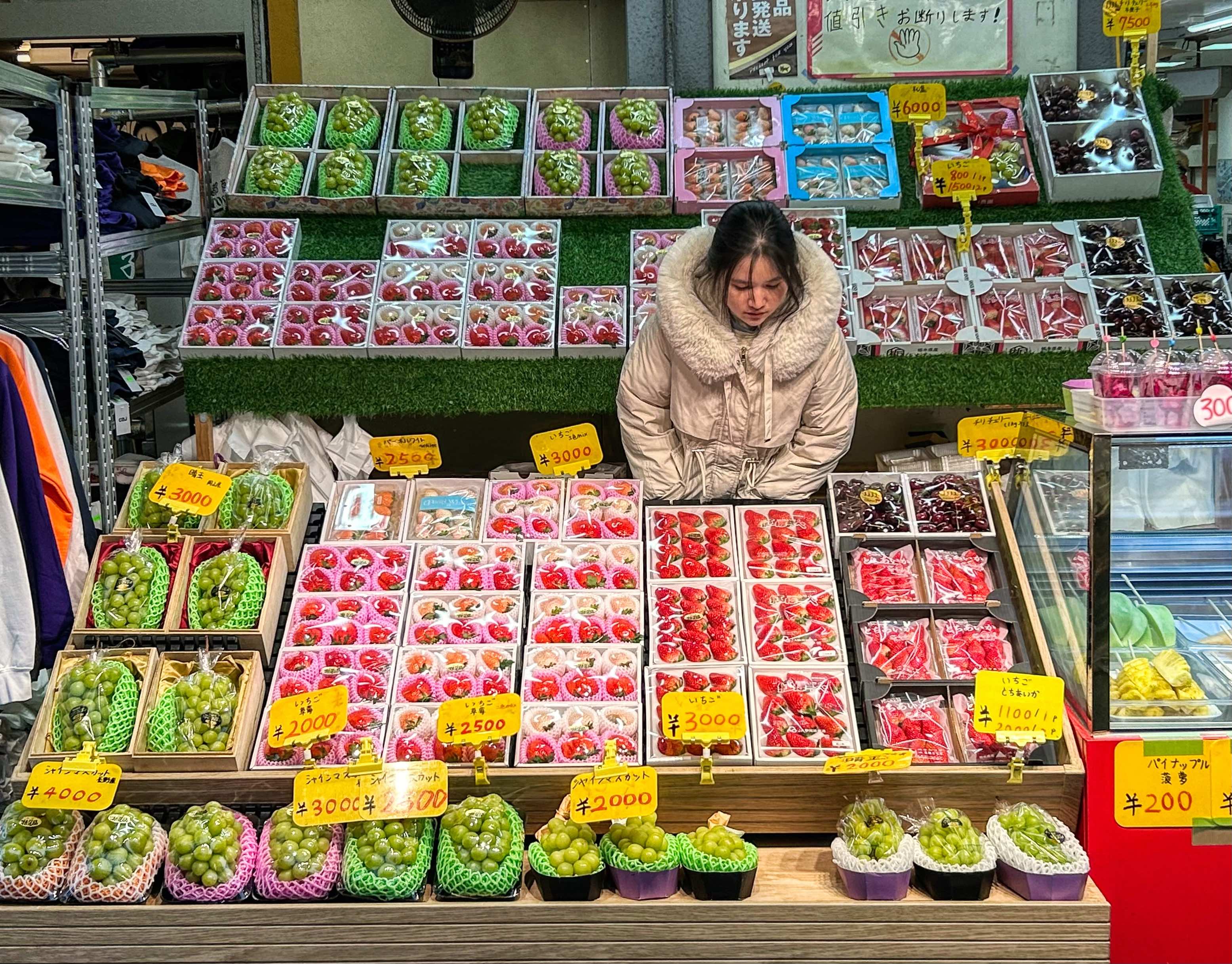


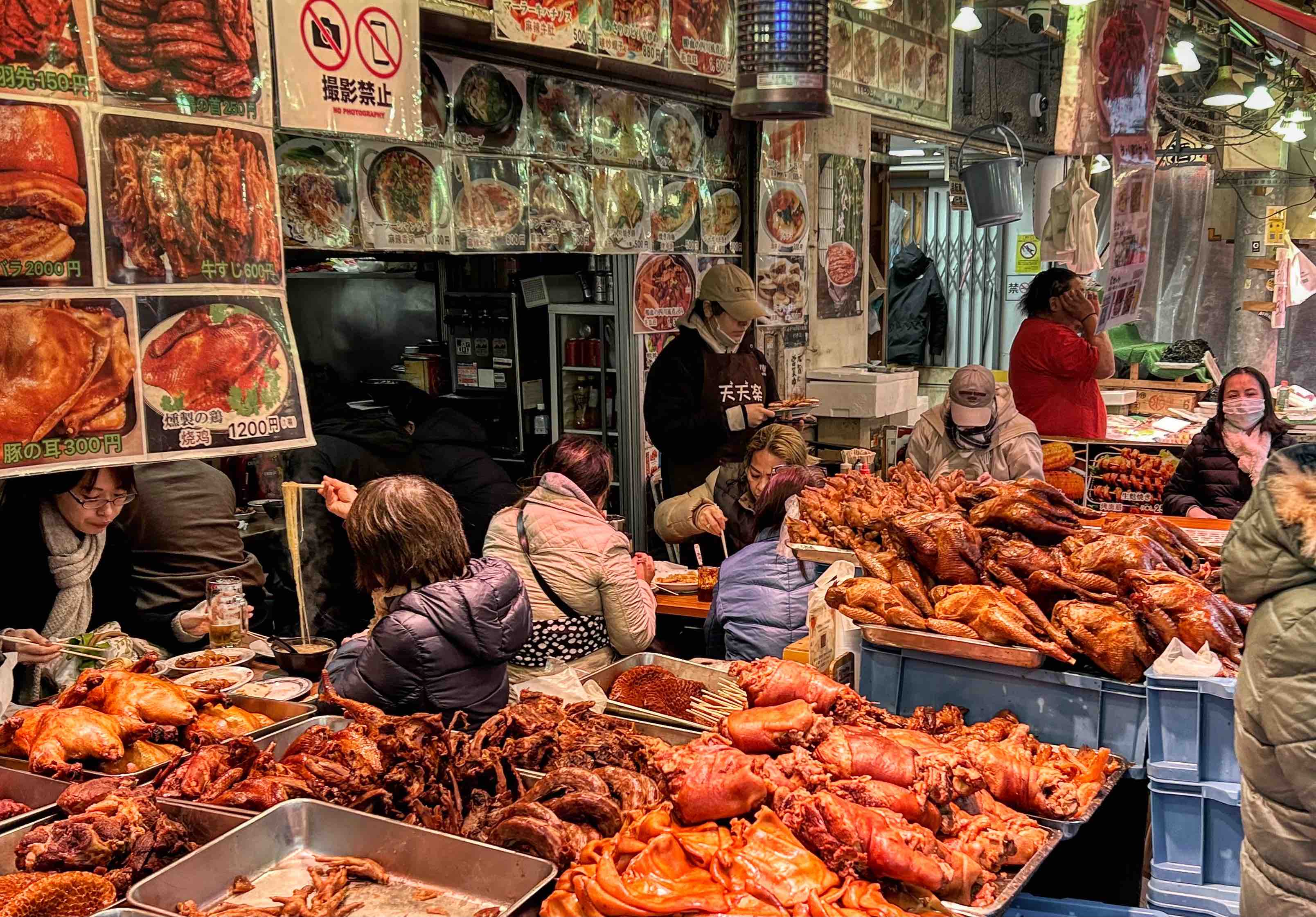

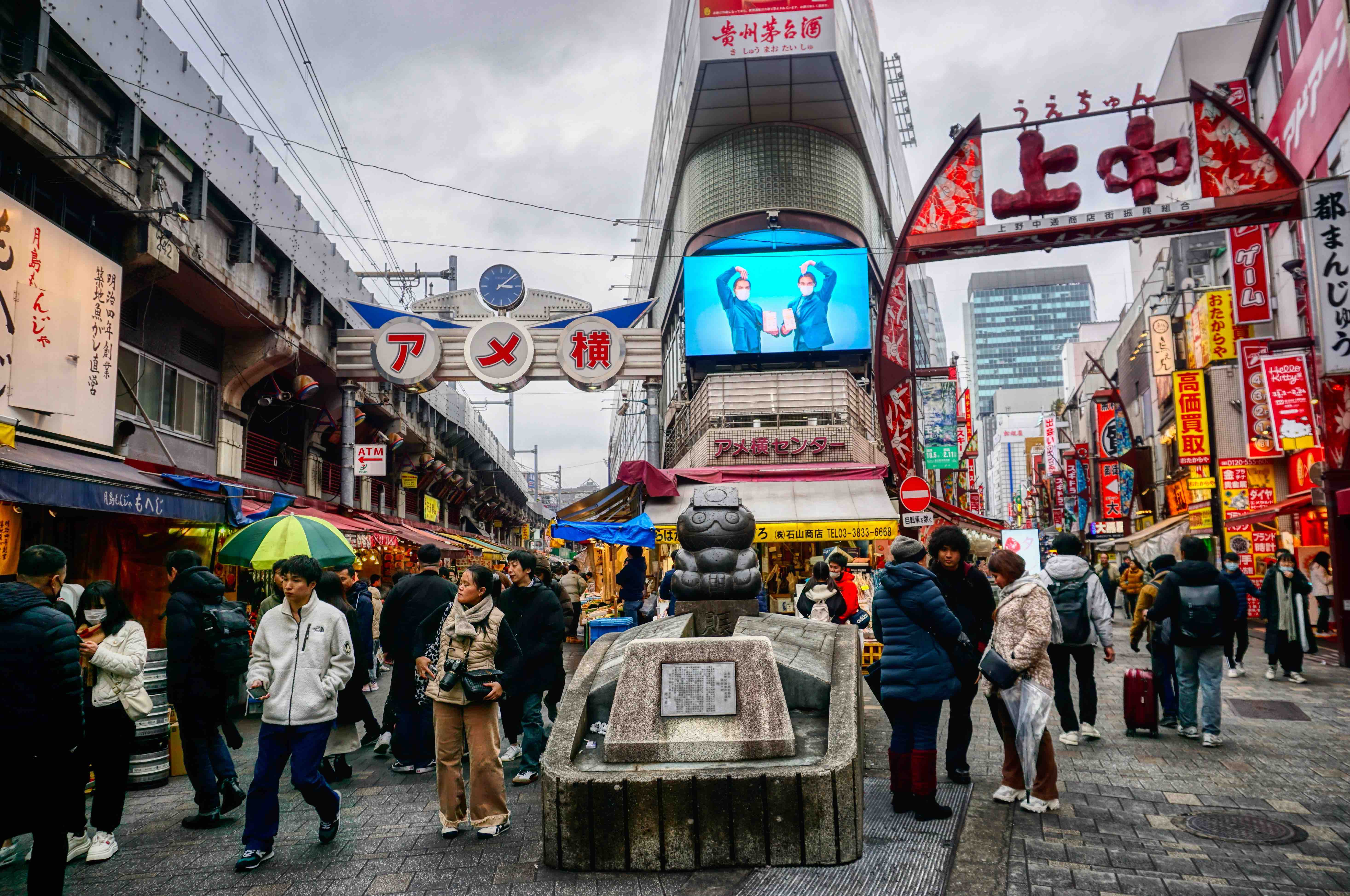









Ameya Yokochō is another of Tokyo’s lively eat streets which runs alongside the railway tracks between Ueno and Okachimachi Station. Originally this district was packed with wooden tradesmen’s homes but during WW2 the entire area was carpet-bombed and burnt to the ground. However, almost immediately after the war had ended, rebuilding began with shops and street stalls replacing homes. And, of course, with provisions in short supply, Ameya Yokochō quickly became known as the ‘Black Market’ side alley, hidden somewhat from view under the railway tracks and a place to buy goods at opportunistically inflated prices. The street has expanded over the years and morphed into a maze of narrow tightly packed passageways that still, to this day, have a distinct ‘black market’ feel about them, and of course it’s packed anytime of the day or night.
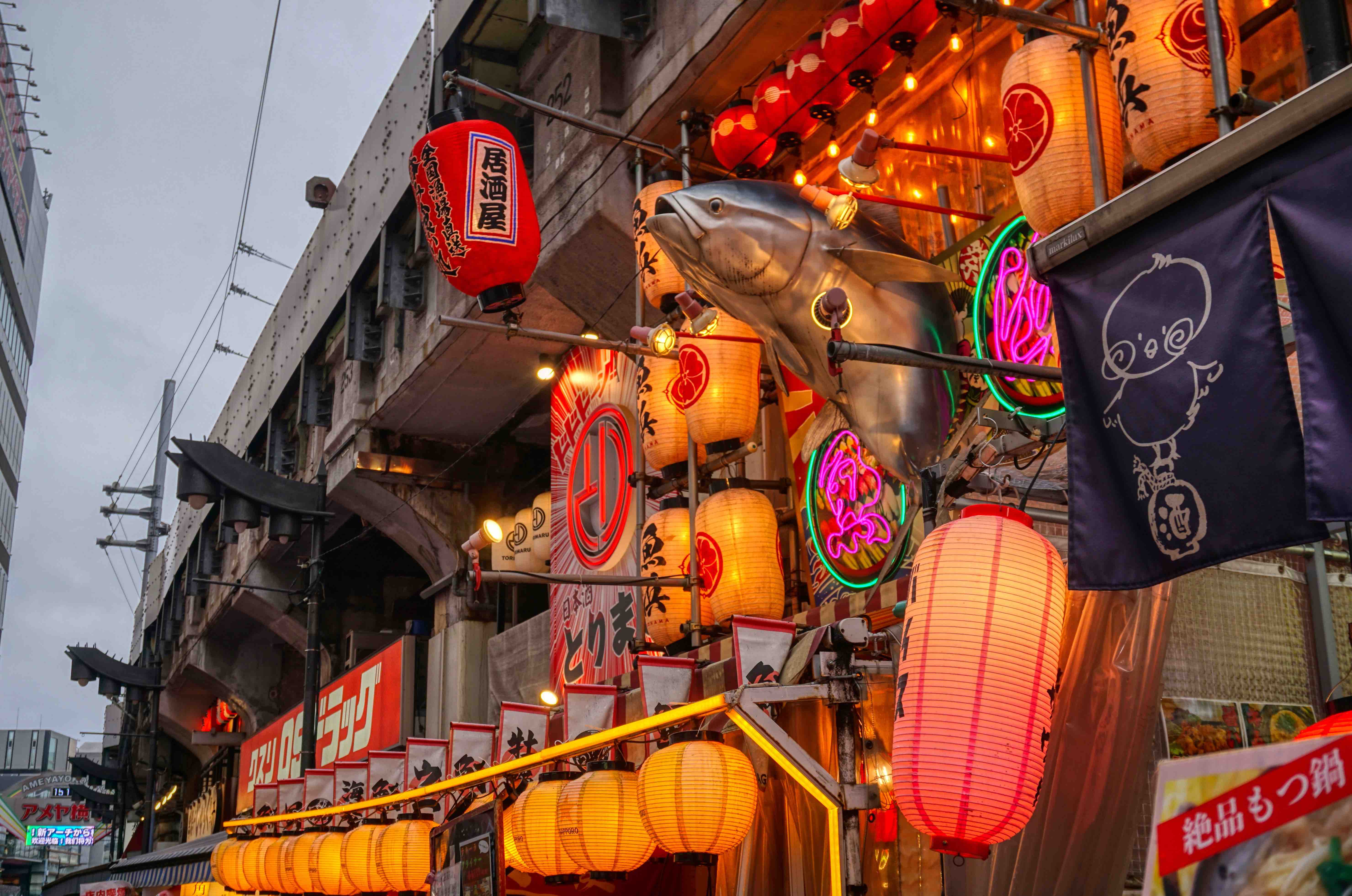
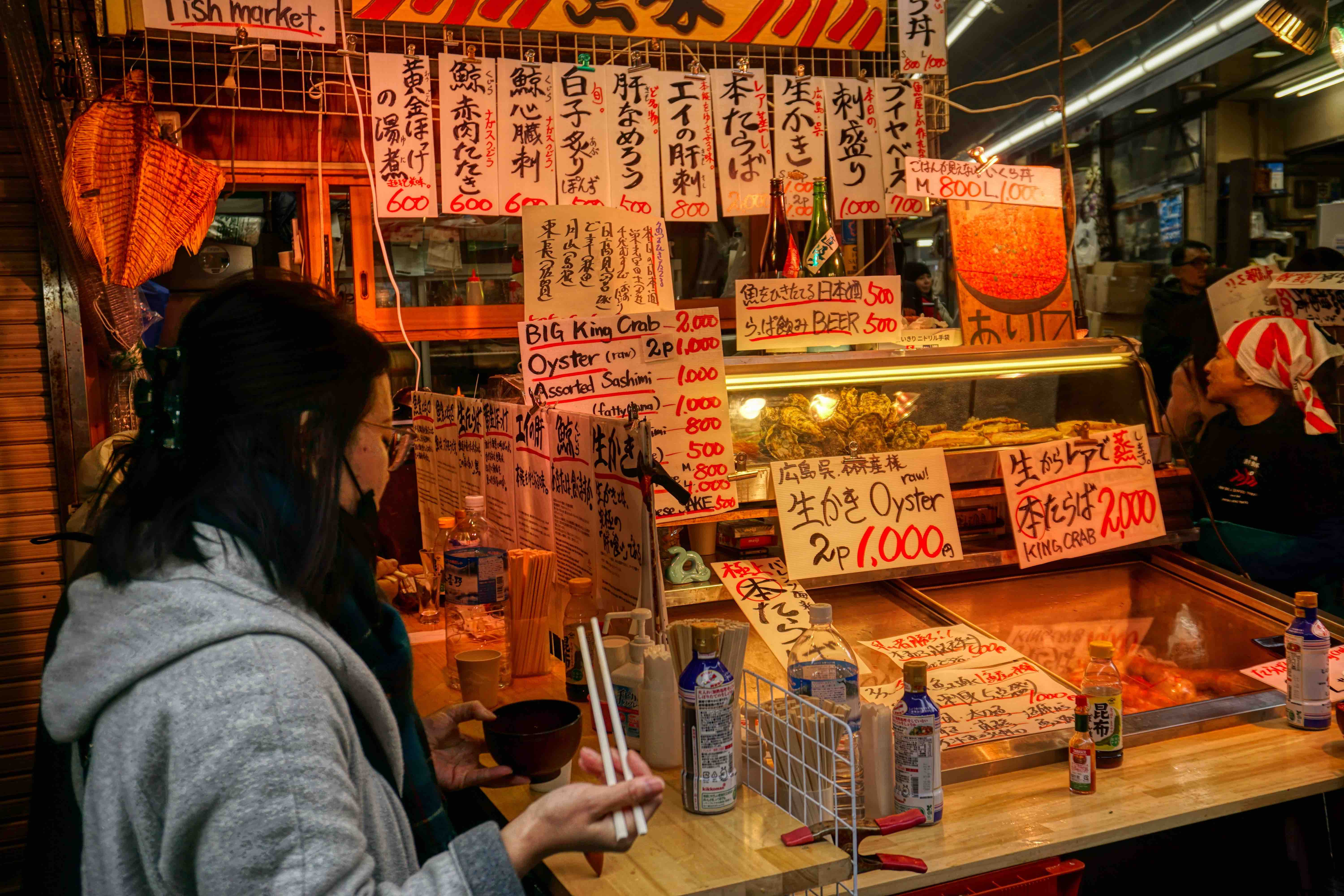
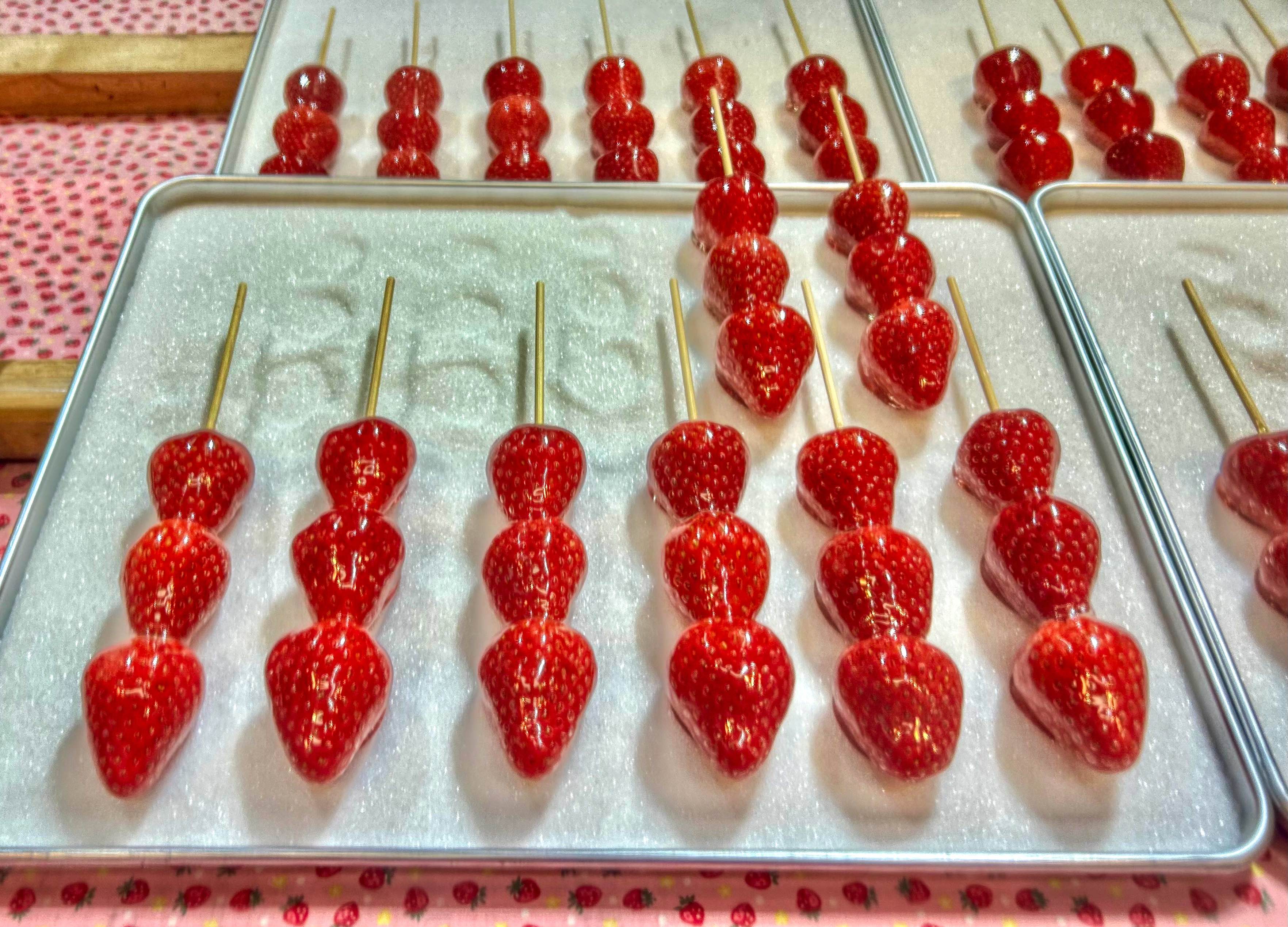
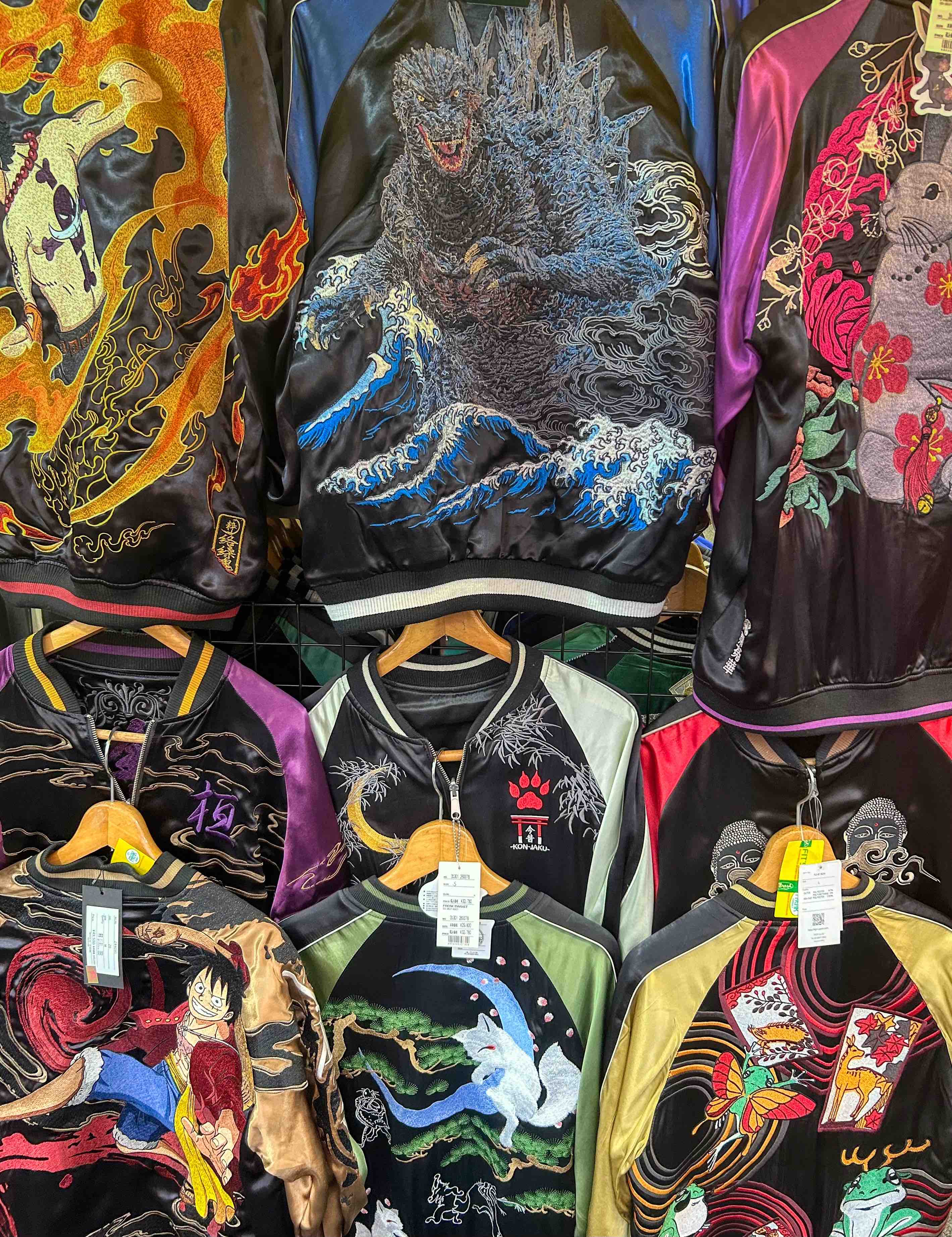
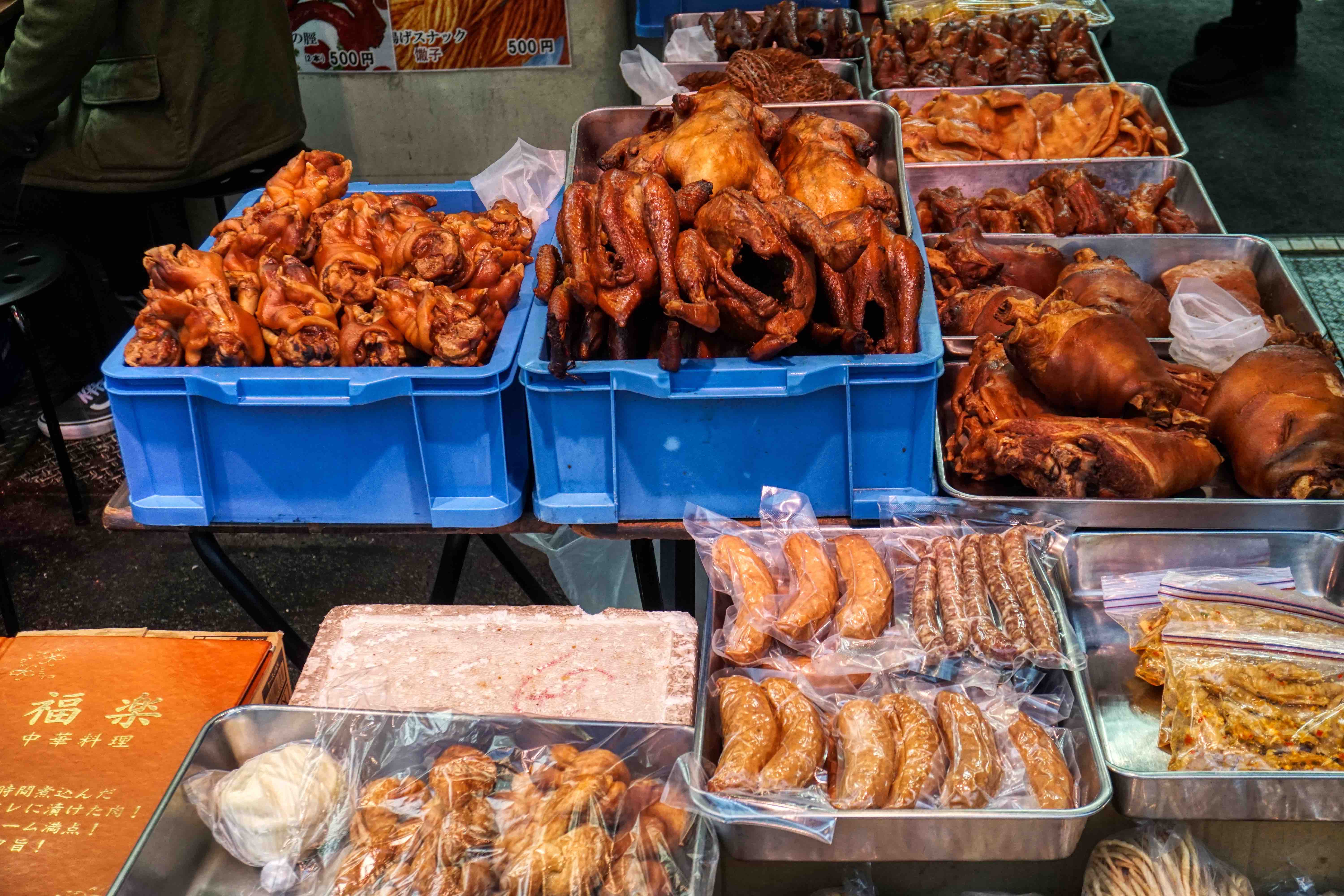
There’s a touch of Blade Runner about this area, probably due to the incessant rain we had all day, the maze of rain-grimy streets awash with blazing coloured neon lights, gaudy bright flashing signs, strings of bare bulbs and red lanterns. It feels closed in despite being outside, but you don’t really get a sense of sky here. It’s noisy too, with the food vendors doing their best to lure you into their patch, brandishing menus, samples of food on plates, and even a free sake. There’s a dizzying array of food on offer – market-fresh sea food of all types such as Crab Claws at a whopping A$50 per claw; abundant street snacks; fruit and veg stands and make-shift stalls selling Ramen, Takoyaki, Karaage, Sashimi, Yakitori skewers, Candied fruits, Steaming Ramen… I mean, anything and everything including some very dubious dried animals. In the small tightly packed restaurants meals are displayed as vivid plastic replicas with faded photographs of dishes. Not exactly appetising to be honest, so you just have to wing it, but when using the translator app I have, it reveals some truly interesting and, for me, things I’m glad I didn’t order such as Dried Shark Cartilage with Dried Plum, Boiled Pork Stomach, Offal Stew with Miso and Raw Horse Meat. Nope, we went for the Pork Katsu – a safe as ever bet and one of our favourites.
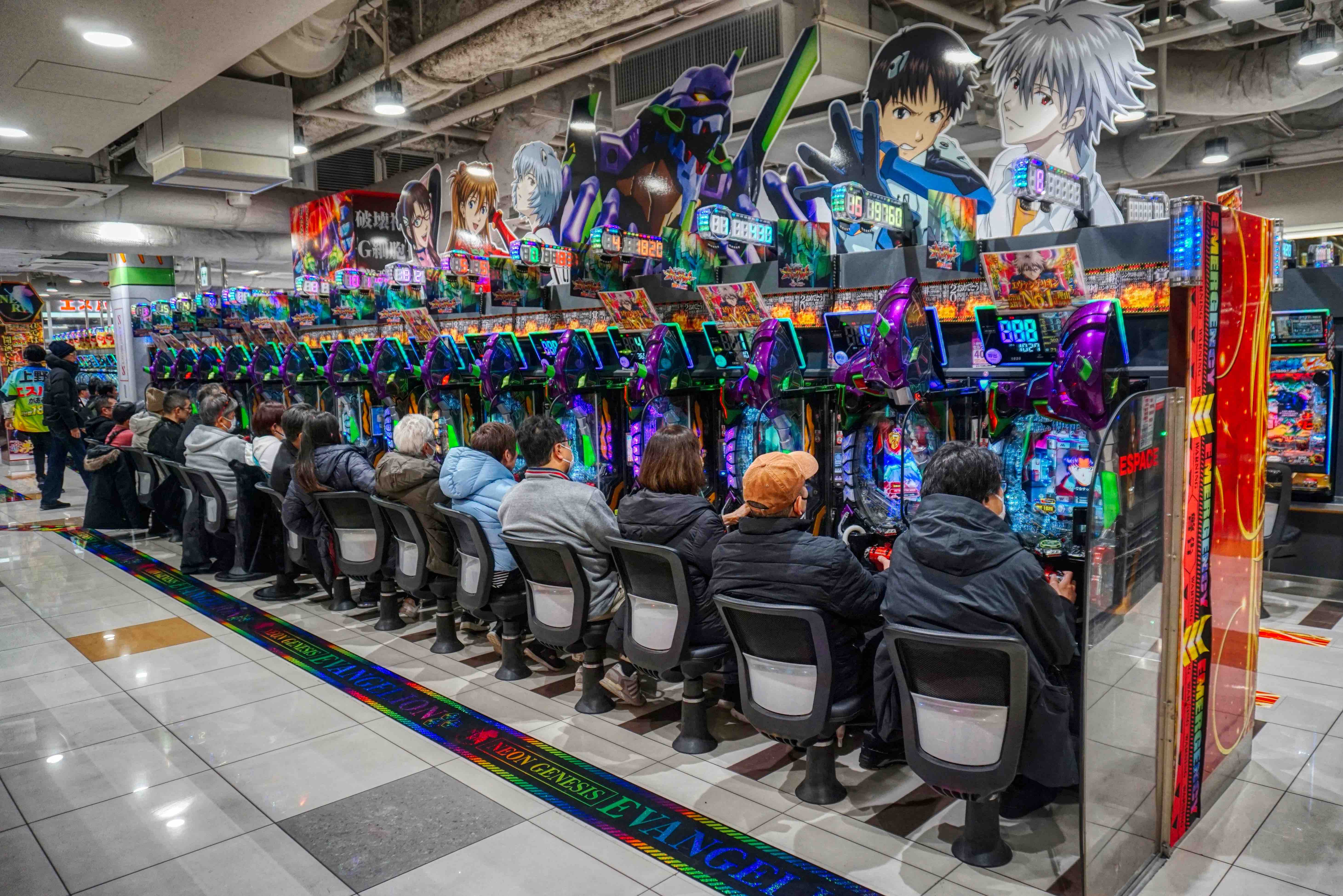
Ameya Yokochō is a noisy boisterous place and perhaps made more so by the many Pachinko Parlours dotted throughout the area. We stepped into one of them which was packed with mostly men glued to their individual Pachinko Machine – a mixture of slot machine and pinball. The men are quite passive and quiet as they sit riveted by their addiction to random fortune, much like devotes to Pokies are at home I suppose, but on a much grander industrial scale. The noise of the small metal balls spinning in the machine is quite deafening and the money that’s being poured into these machines is something else. Gambling is largely illegal in Japan, aside from horse racing and certain motor sports along with Pachinko – they couldn’t make this illegal, it’d break Japan, there’d be riots!
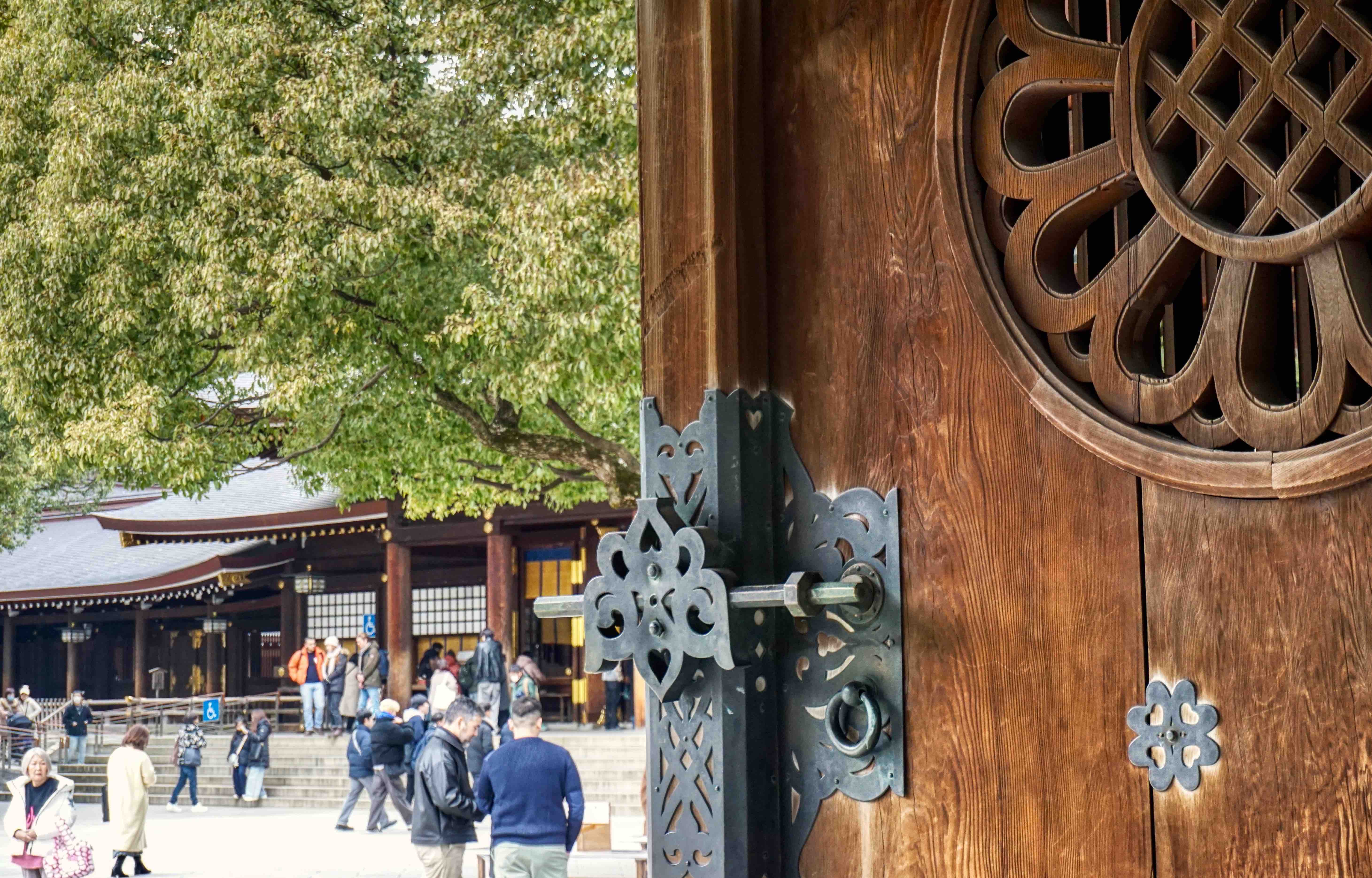
Just as an aside, we did attempt to go to Shibuya, one of Tokyo’s most bustling districts and home to the world-famous Scramble Crossing. But there is so much construction going on here, a hangover from Olympic projects delayed by Covid, that it’s creating an absolute dog’s breakfast of this place – I mean, it’s bad enough getting completely confused and often misguided in the subway at this vast station, but try getting outside. Signs are confusing, pointing in one direction then reversing. Signs leading you to landmark sites such as the Hachikō statue, then dropping out altogether, rendering you lost and confused. Nope, too much for us. Another day perhaps. Instead we headed one stop further on for Harajuku and the peace and tranquillity (albeit briefly) of the Meiji-Jingū Temple, the 100-year-old spiritual home of the souls of Emperor Meiji (restored in 1868) and his Empress Shoken. It’s Tokyo’s largest shrine and set in a gorgeous sprawling forest and gardens, reflecting the core beliefs of Shintō, Japan’s indigenous religion – that all natural elements are sacred. It’s wonderful to be in the relative peace and quiet of a place like this, far from the crowds of the city outside, but of course, being the dead of winter, there wasn’t much on show, unlike in Summer time when this place becomes a lush tranquil haven. Still, lovely enough for a stroll in the fresh crisp winter air. The Meiji-Jingū Temple itself is impressive in size, but for us, lacking somewhat in character – made even more pertinent I suppose by the money-making enterprise the monks have set up here. I mean, there are stands and shops by the dozen selling all kinds of trinkets and ‘make-a-wish’ tokens that you’re encouraged to buy and leave in the temple, or wooden plates to scribble prayers on, always with suggested offerings, often in excess of ¥1000.
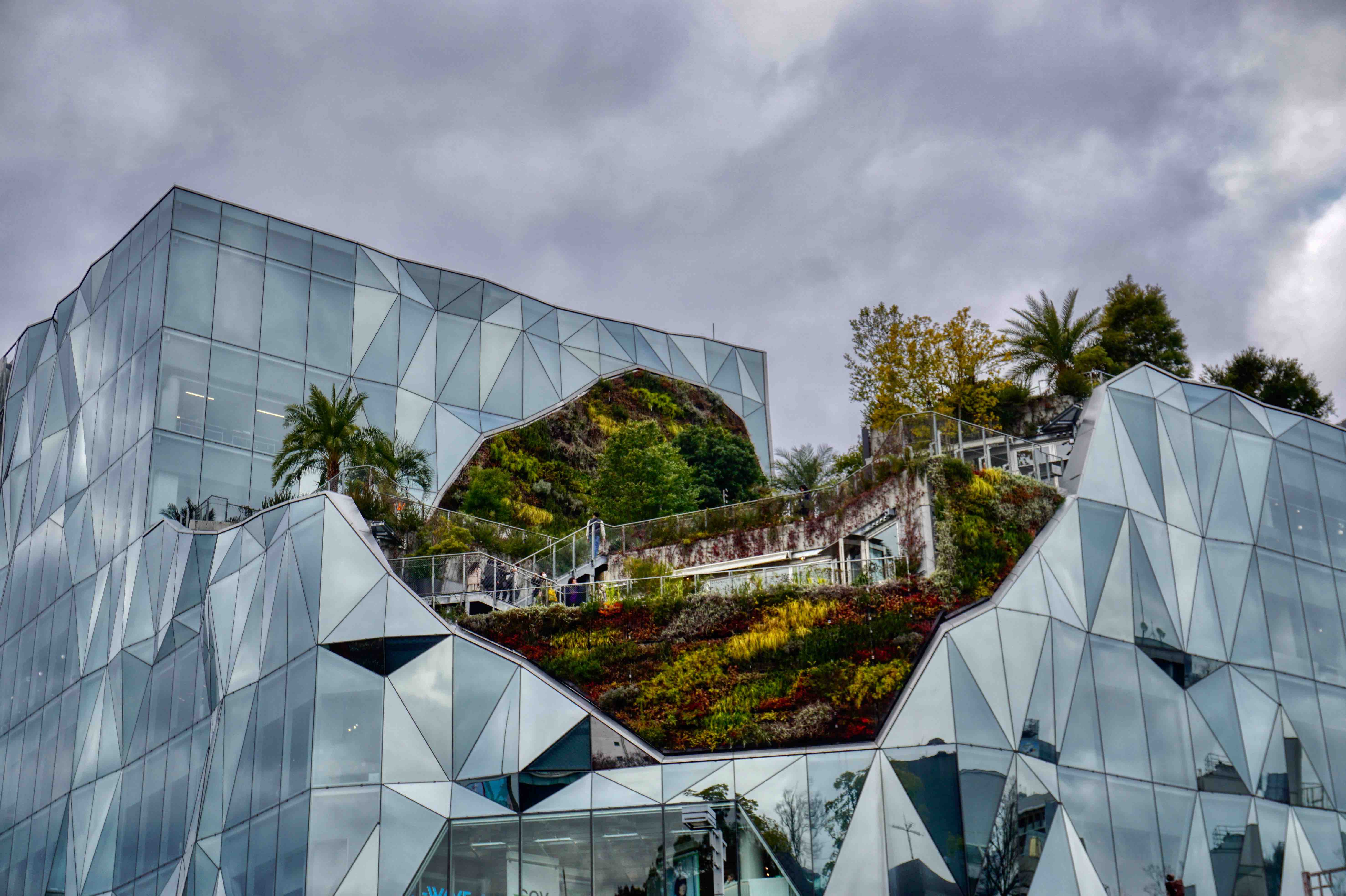
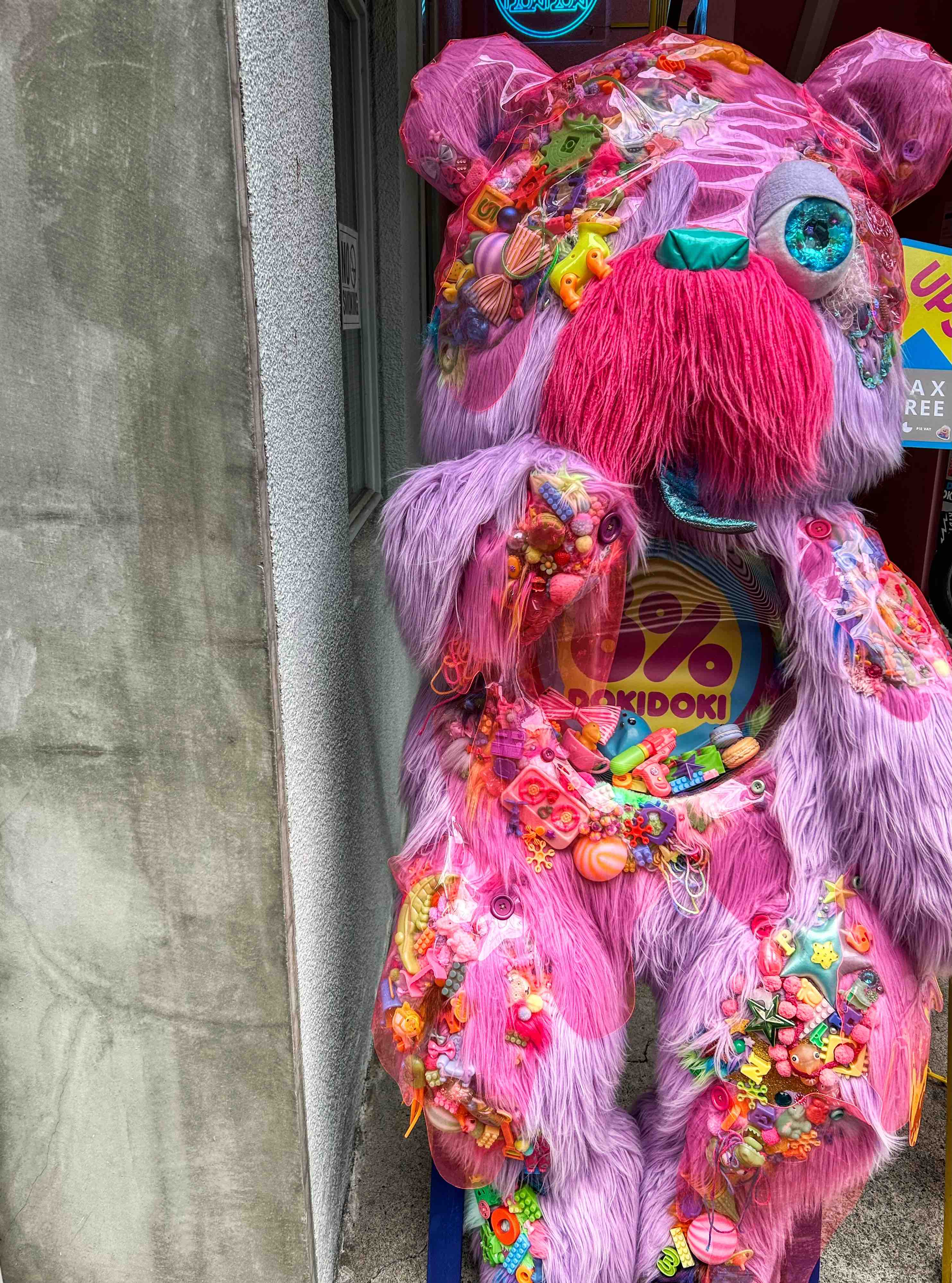
Outside sprawls the uber-trendy district of Harajuku, one of Tokyo’s most fashionable areas, and the peace and tranquillity quickly come to an end. Harajuku comes alive at weekends with Rockabillies and Cosplay Kids posing amongst themselves, which we’ve seen before, but on this early week foray into the back streets of Harajuku we were struck by just how many people were out and about – I mean, these streets were packed and it’s a Monday! There’s one particular area called Omohara that has a maze of narrow backstreets that you could easily get lost in, full of small local designer brand boutiques, independent quirky stores, bars, cafes and cool restaurants. This place deserves more attention, so I reckon we’ll be back here next week when we return to Tokyo.

 Travels With My Ant
The Japanese sure know how to splash a riot of colours, in between vistas of urban grey and rich green dominated foliage dominated spaces. It certainly seems a nation that’s a great study in contrasts
LikeLiked by 1 person