


Eastwards along the south coast from Hastings lies the old sea port of Rye, founded in 1289 and a member of the Cinque Ports, a confederation of English Channel ports (Hastings, New Romney, Hythe, Dover and Sandwich) dating back to around 1350. Rye, a royal dockyard and shipyard provided half of the ships and mariners of the ports. So important was Rye that in 1573 the title of ‘Rye Royale’ was bestowed upon the town by Queen Elizabeth 1 after a three day stay.
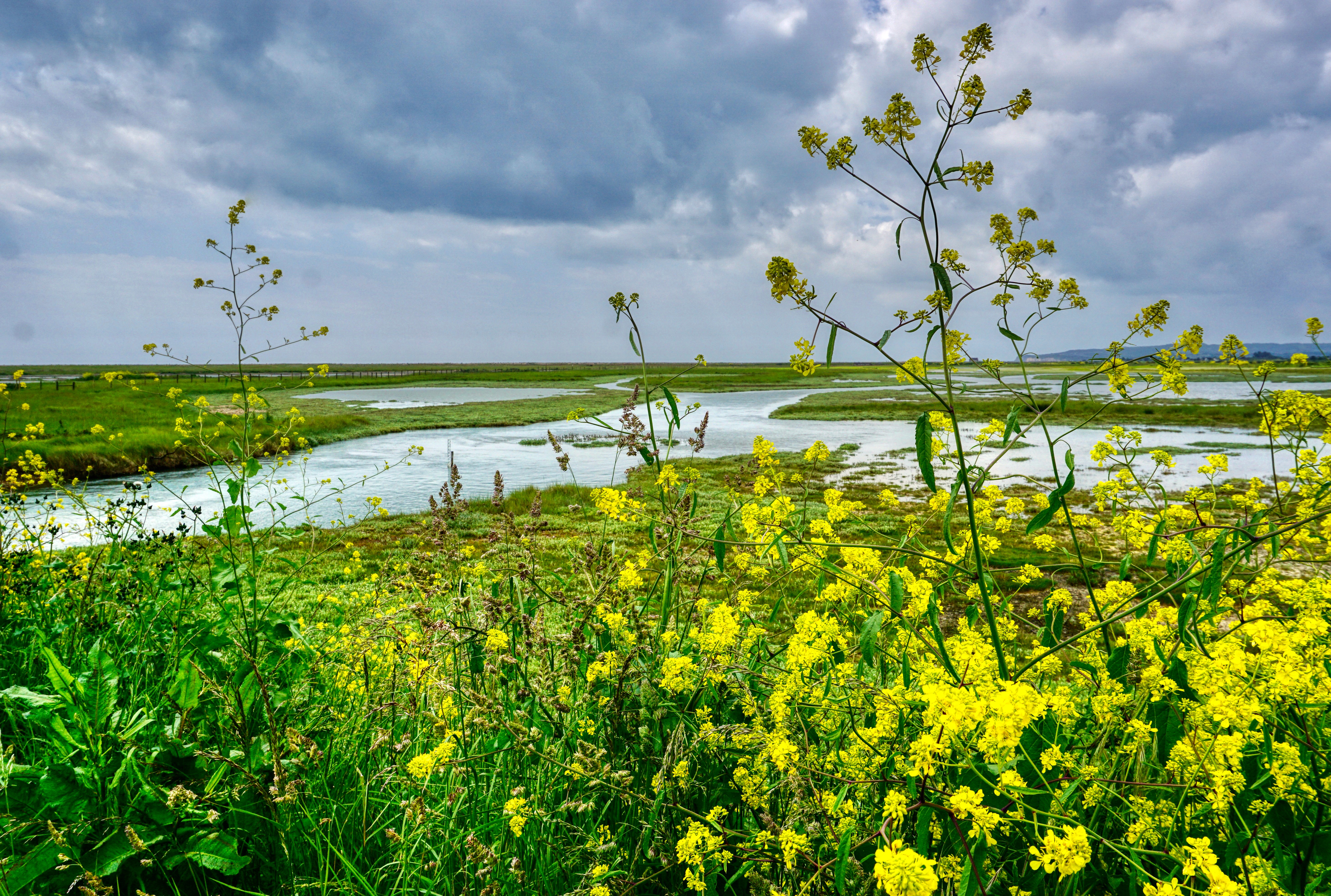
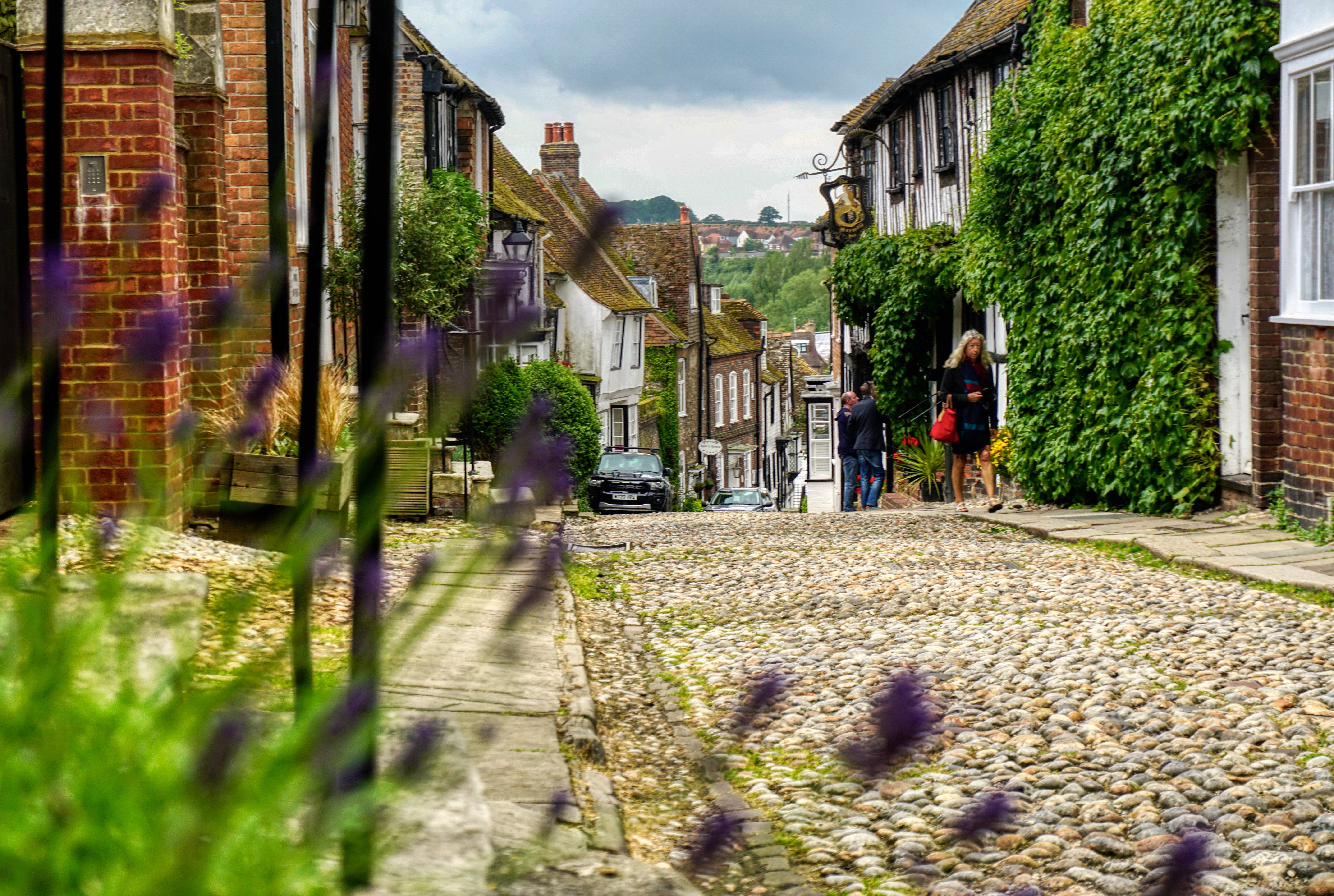
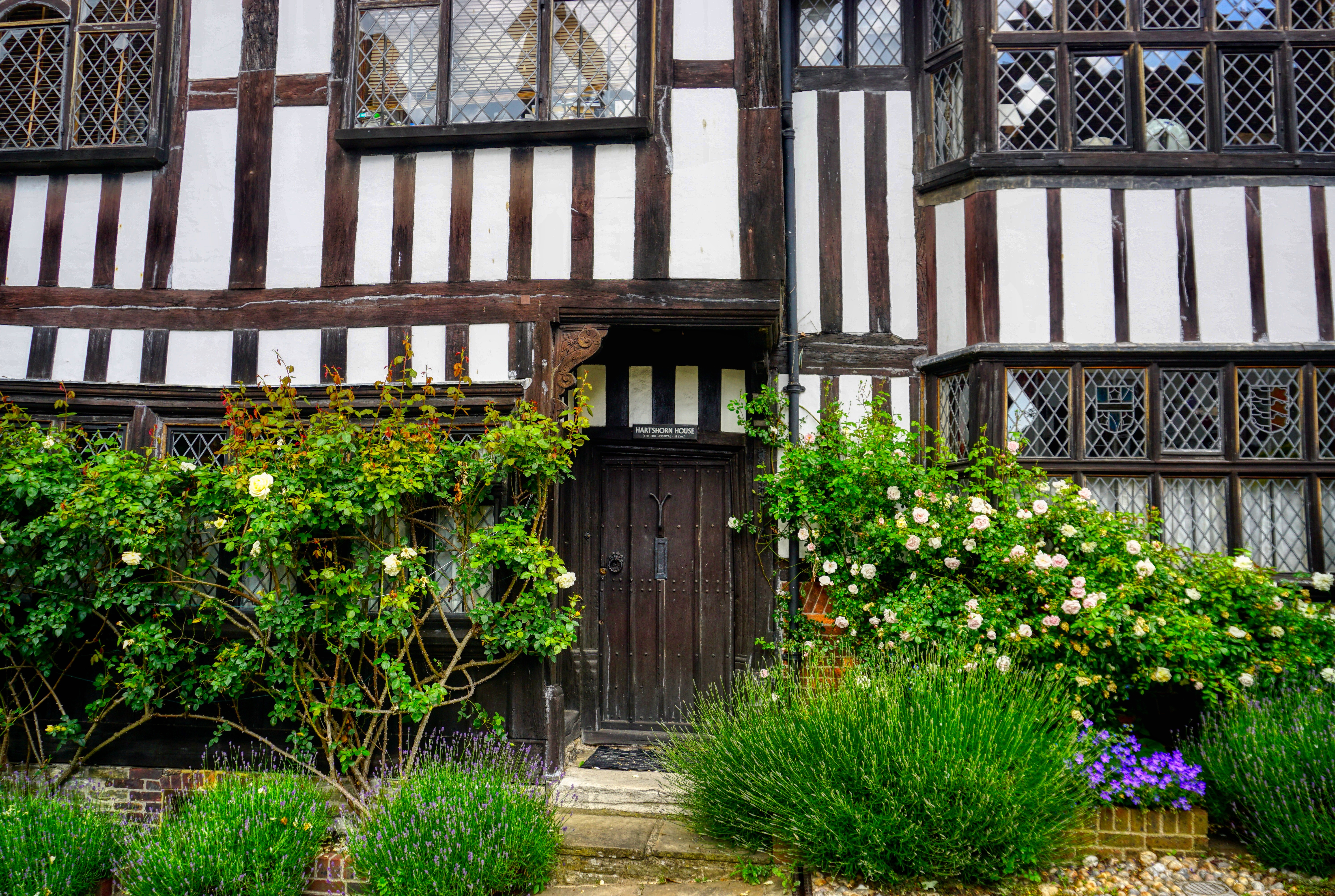
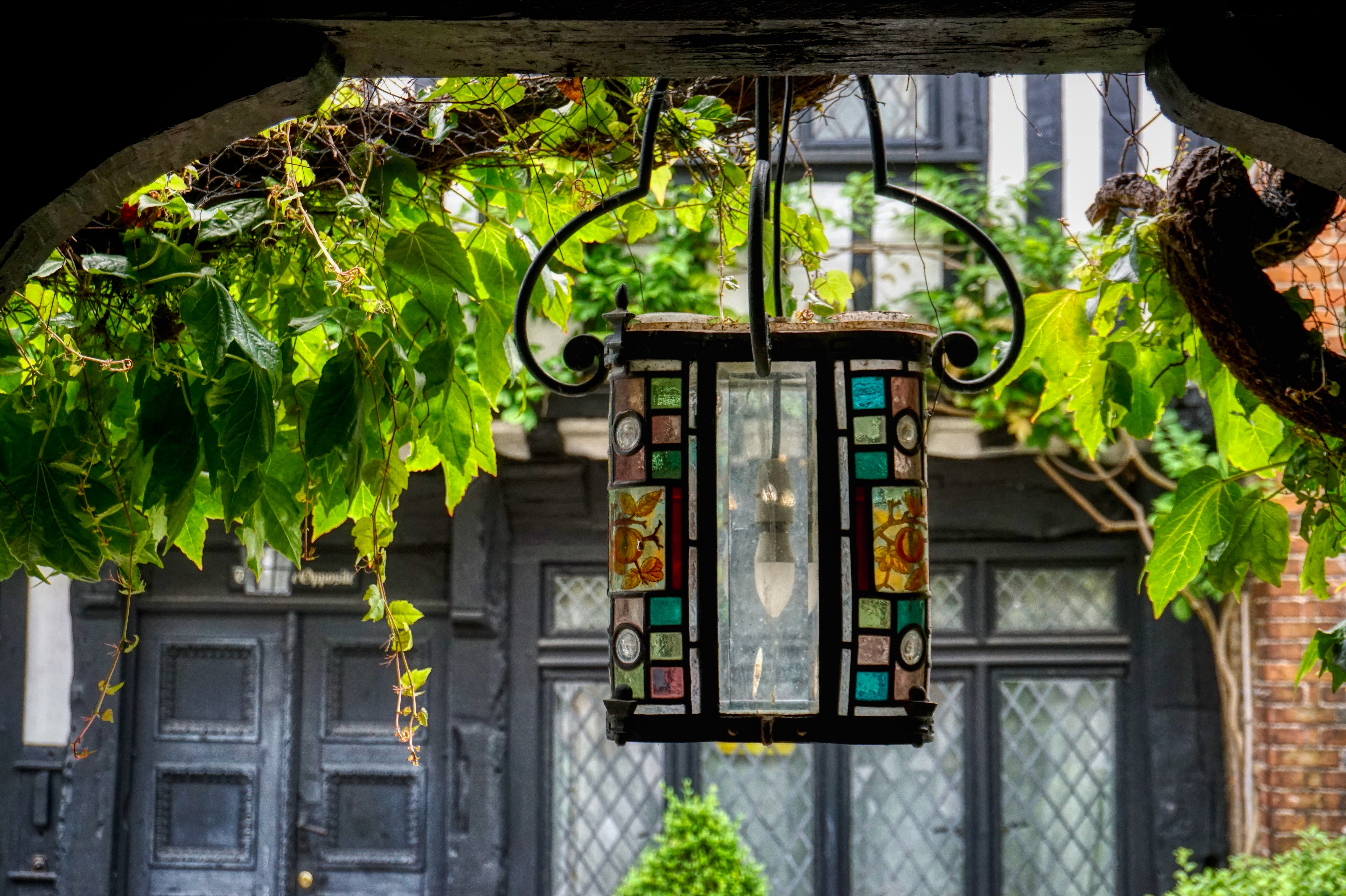
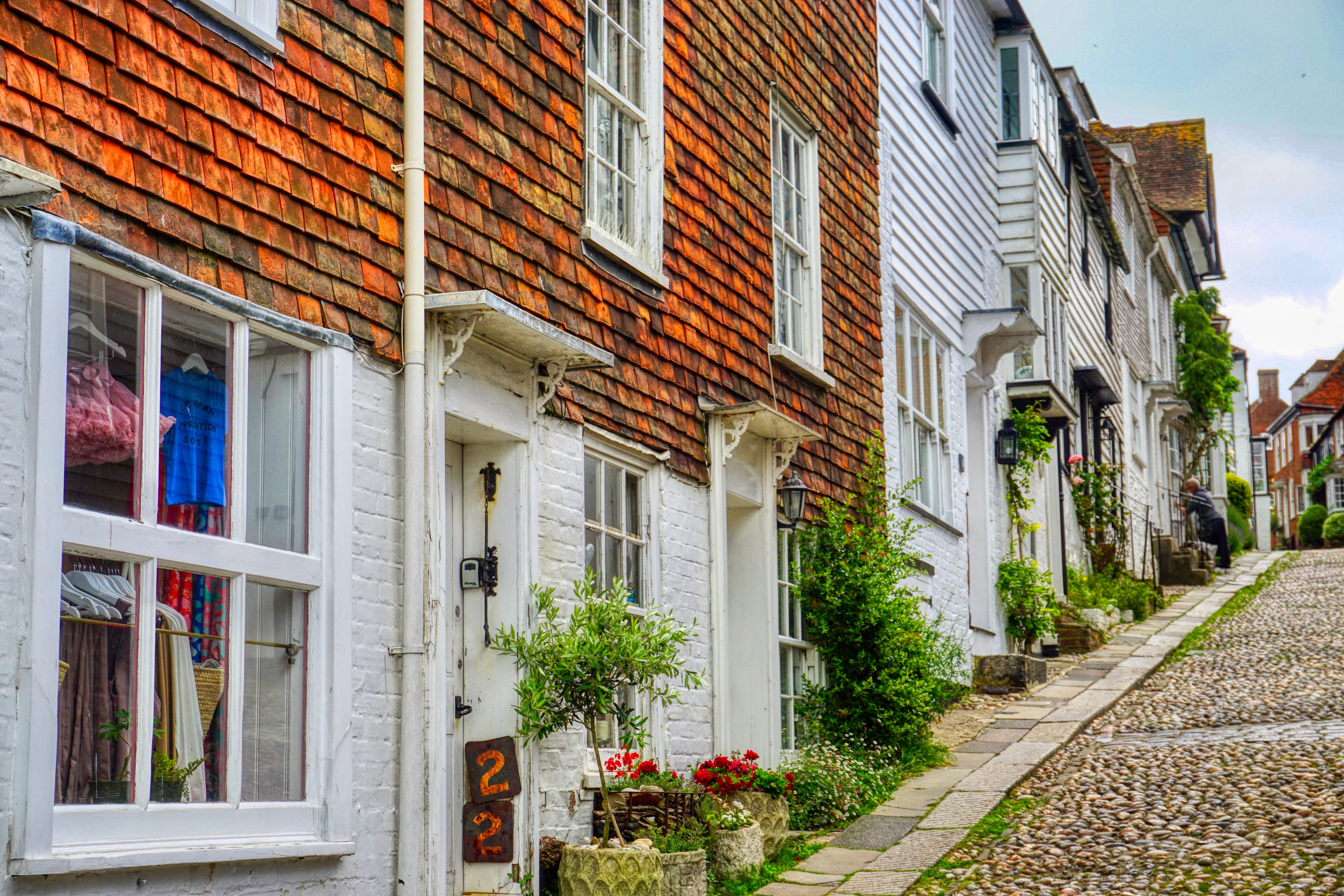
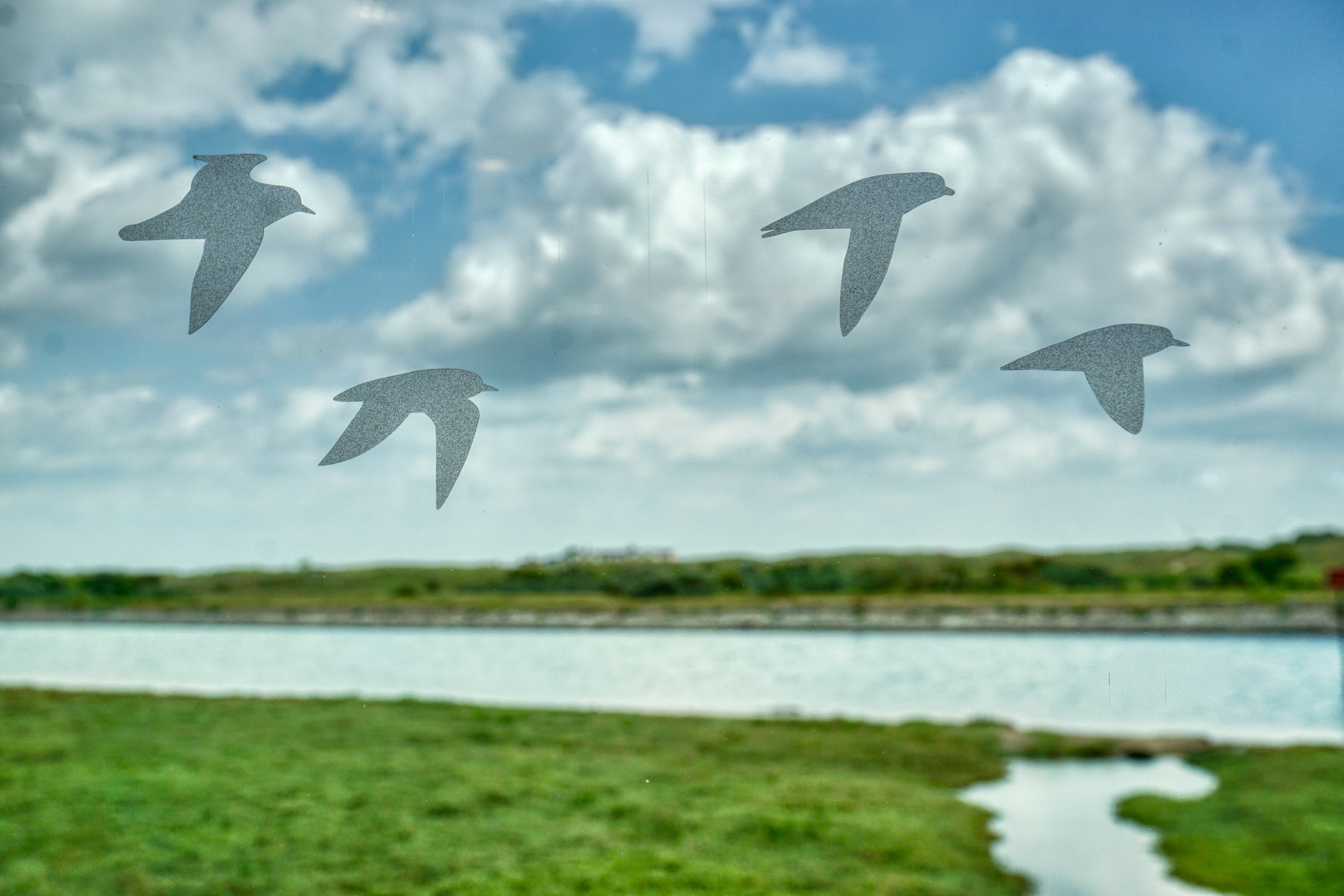
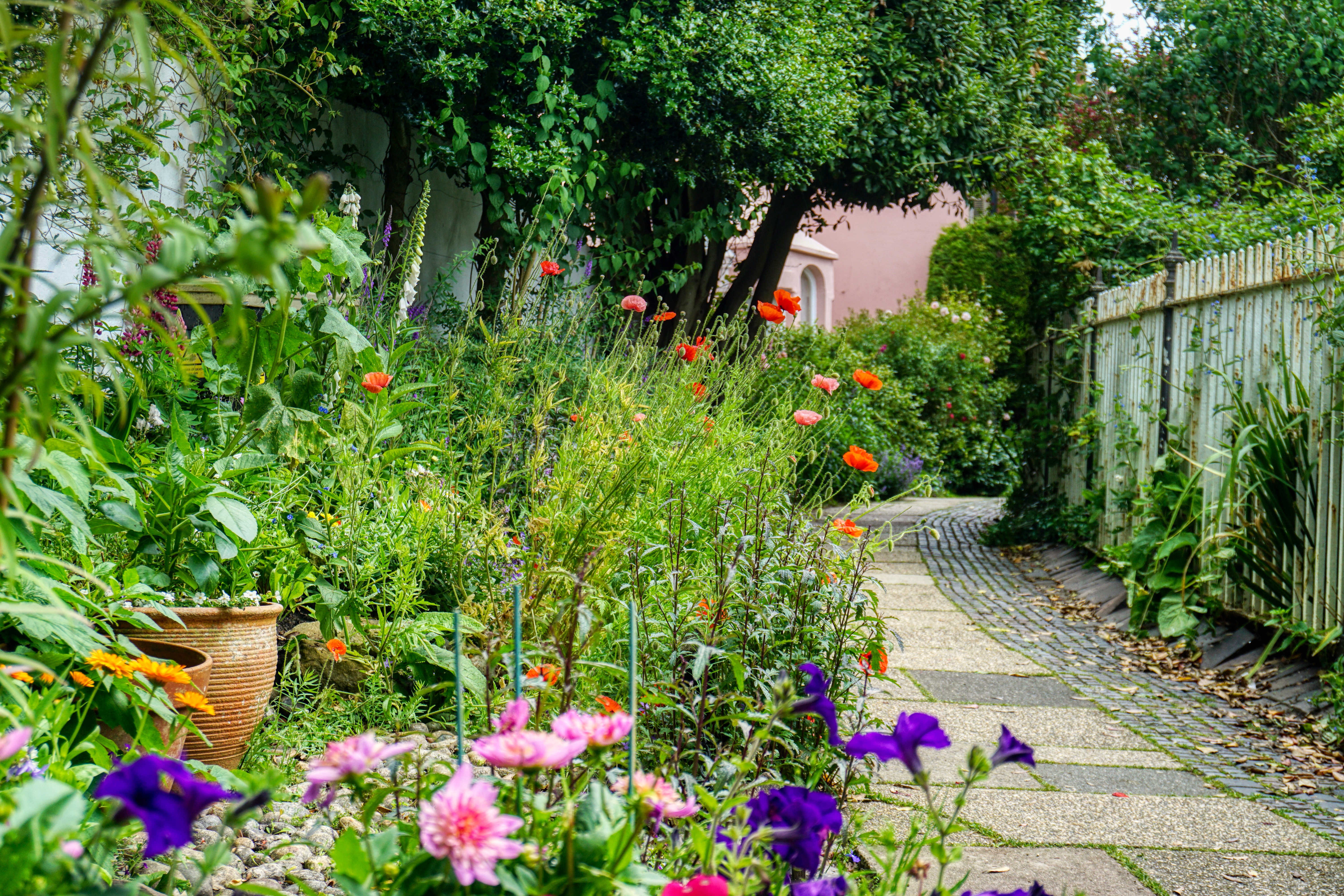
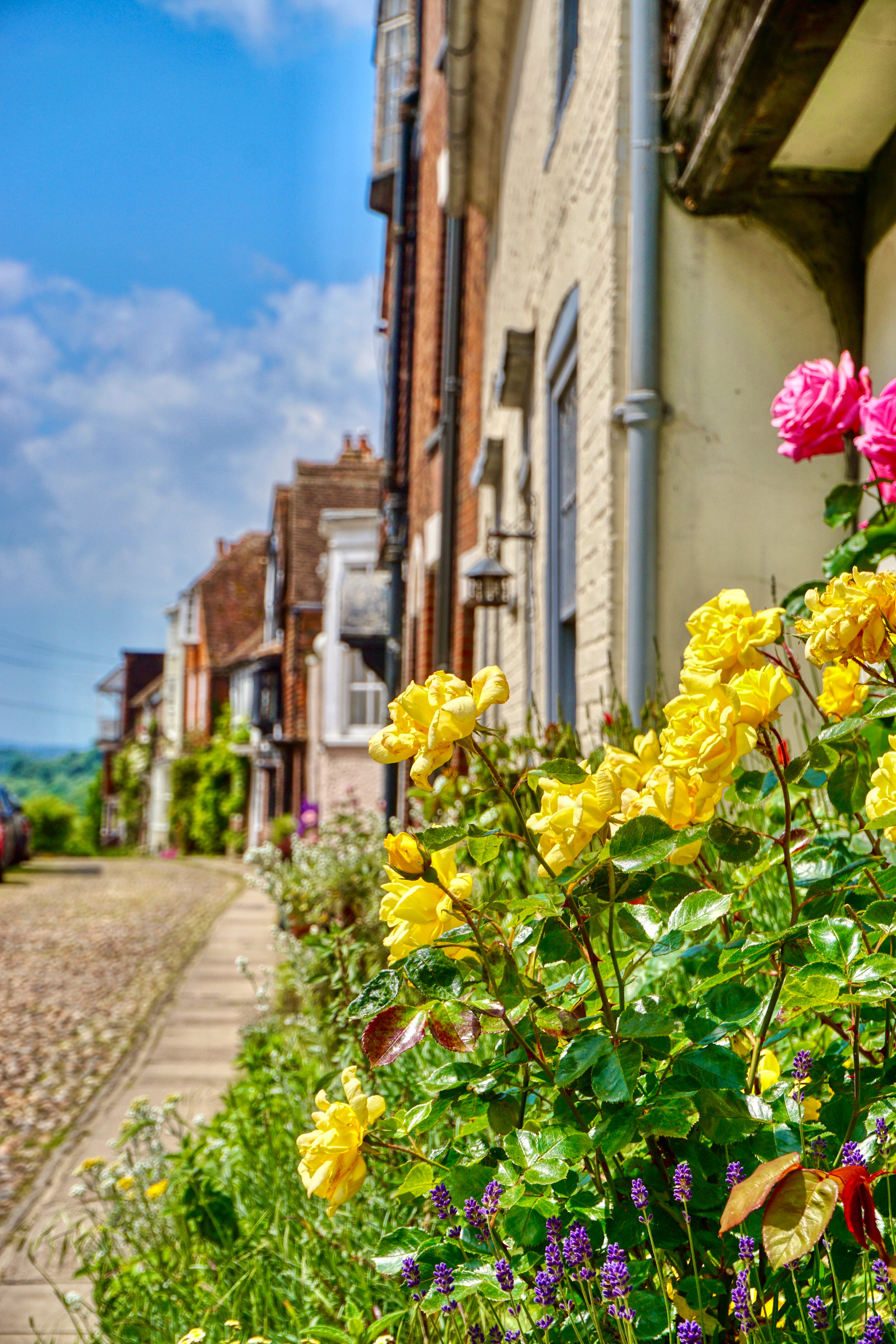
Once surrounded by sea and essentially an island fortress, today Rye is no longer by the sea, but surrounded by extensive wetlands and marsh. It’s a gorgeous little town, seemingly stuck in time in its medieval past. There are narrow steep cobbled streets, secret passages, winding paths through impossibly beautiful gardens, precariously leaning black and white timbered buildings and some quaint olde-worlde pubs, such as the Mermaid Inn dating to 1420.
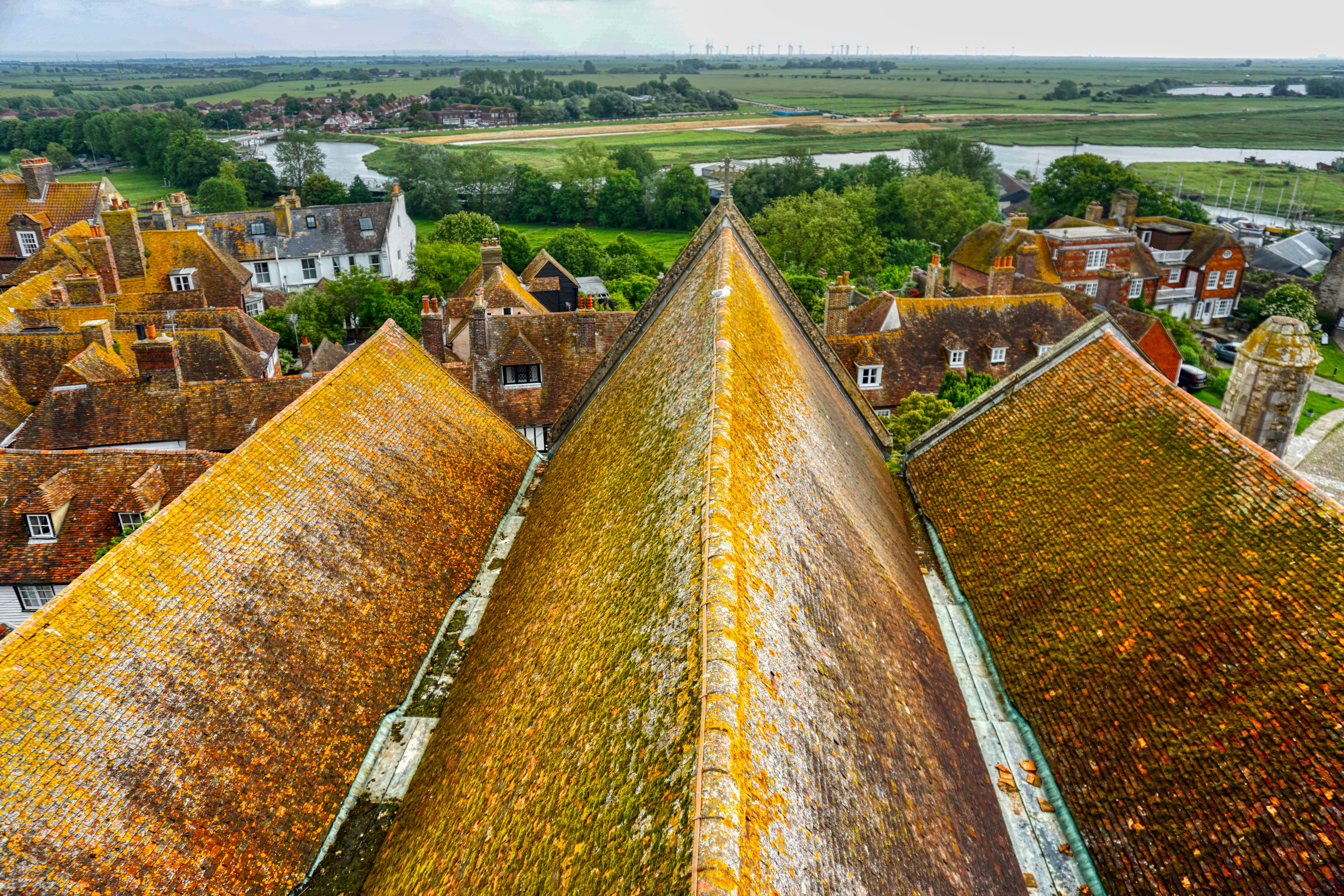
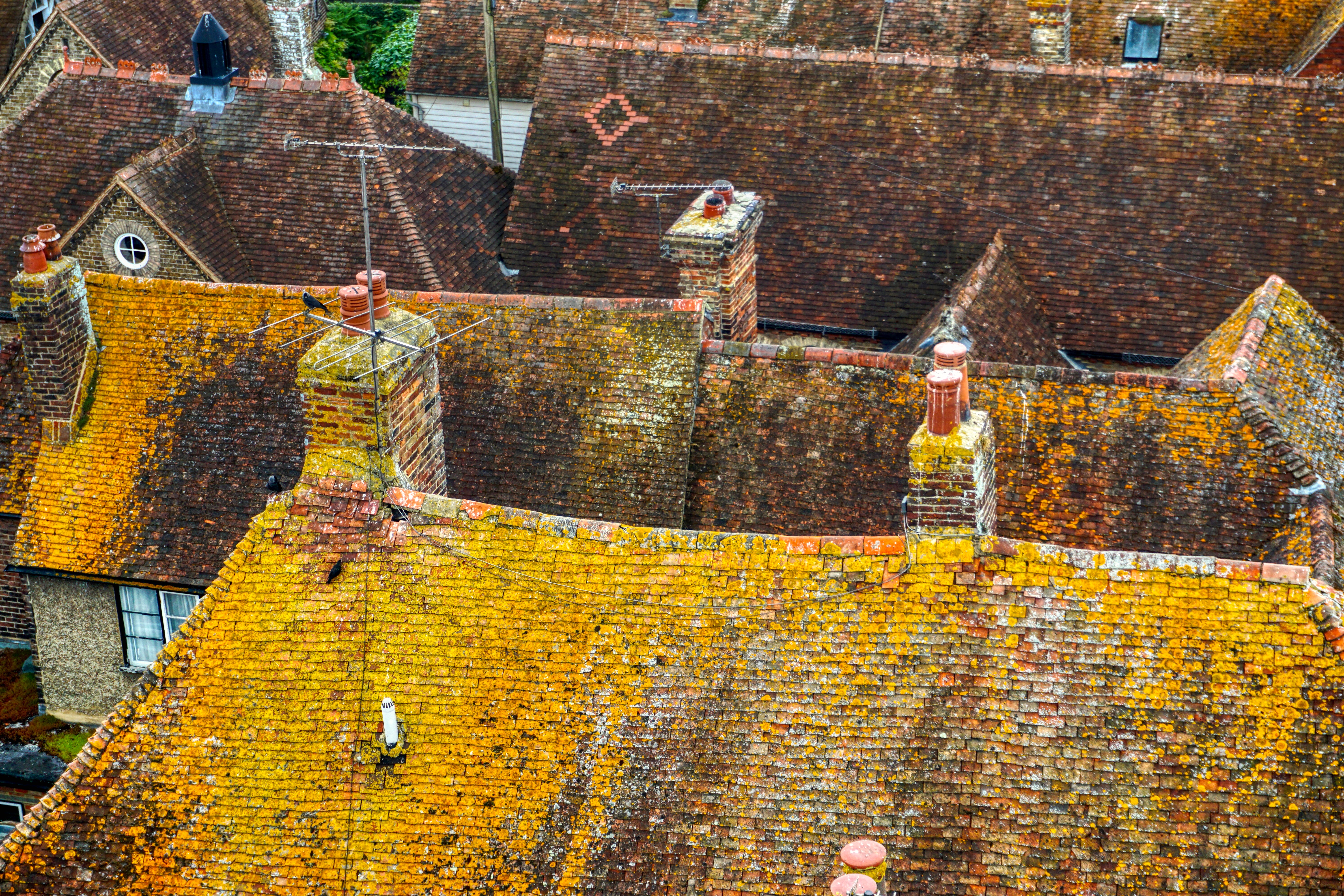
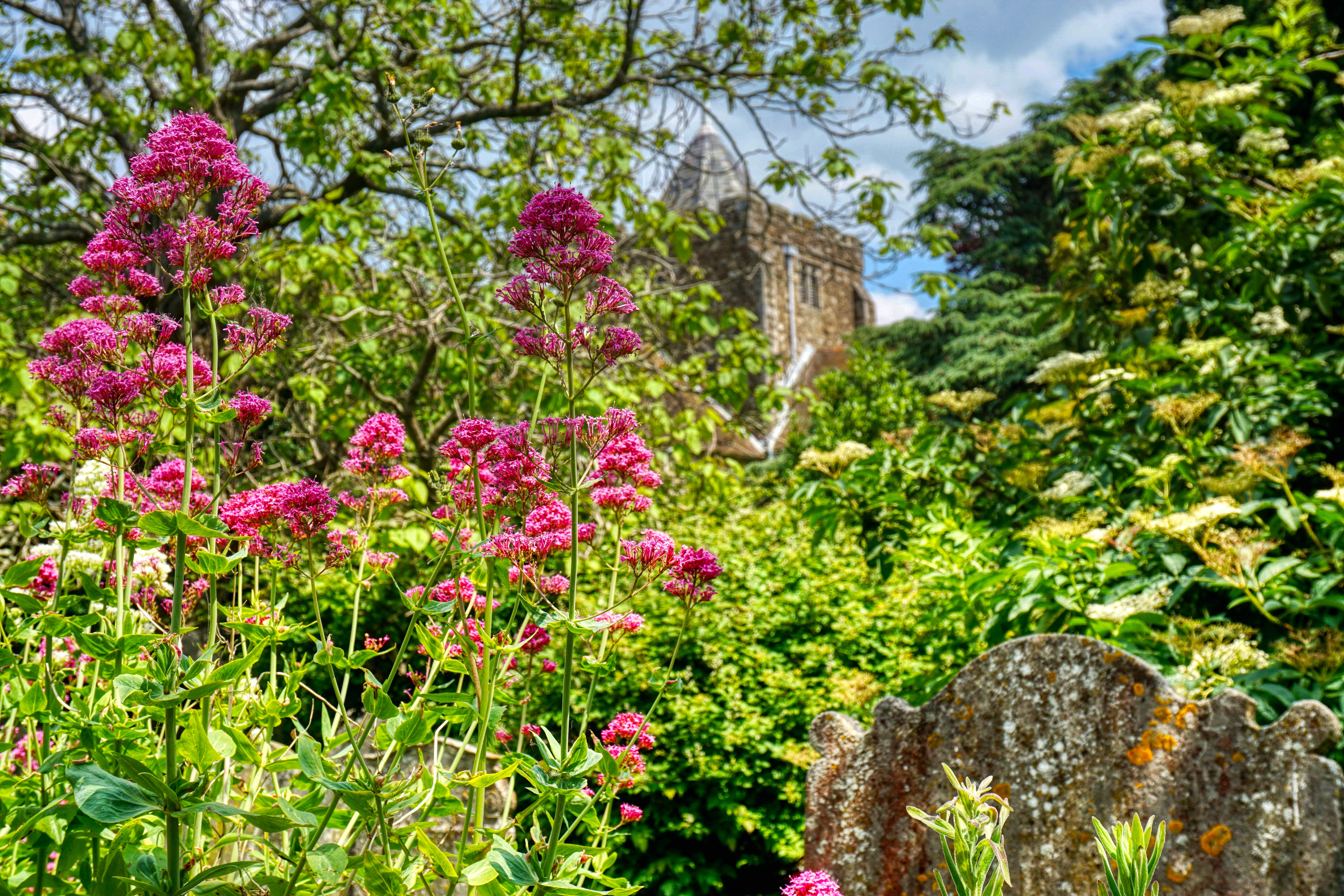
Dominating Rye for over 900 hundred years is the Church of St Mary’s with the oldest working church tower in England, accessed by clambering up the narrow stairs into the bell chamber and up again out to the roof space, with breathtaking views over the terracotta roofs and timbered houses of Rye and beyond across the marshes and beaches of Camber Sands.
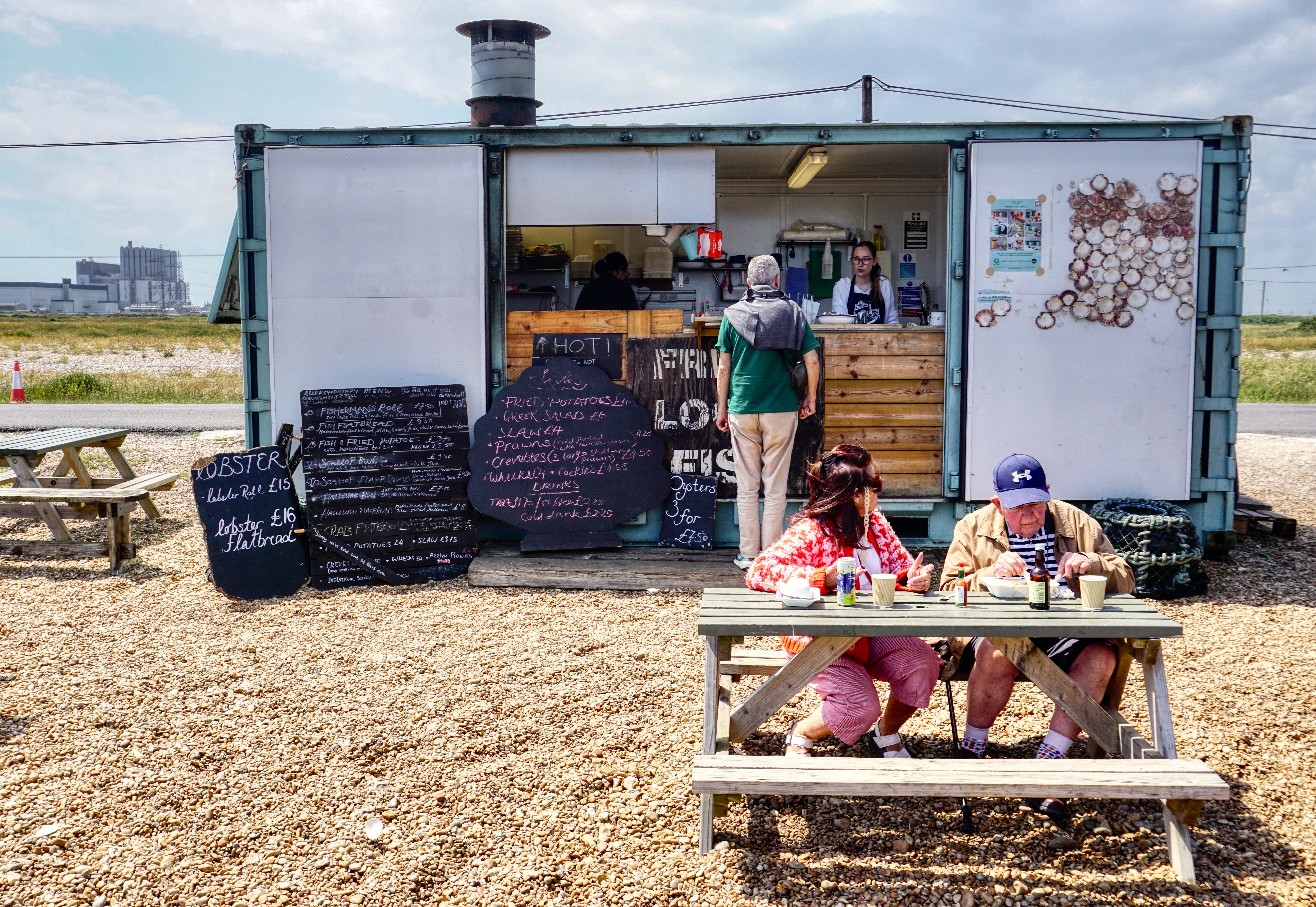
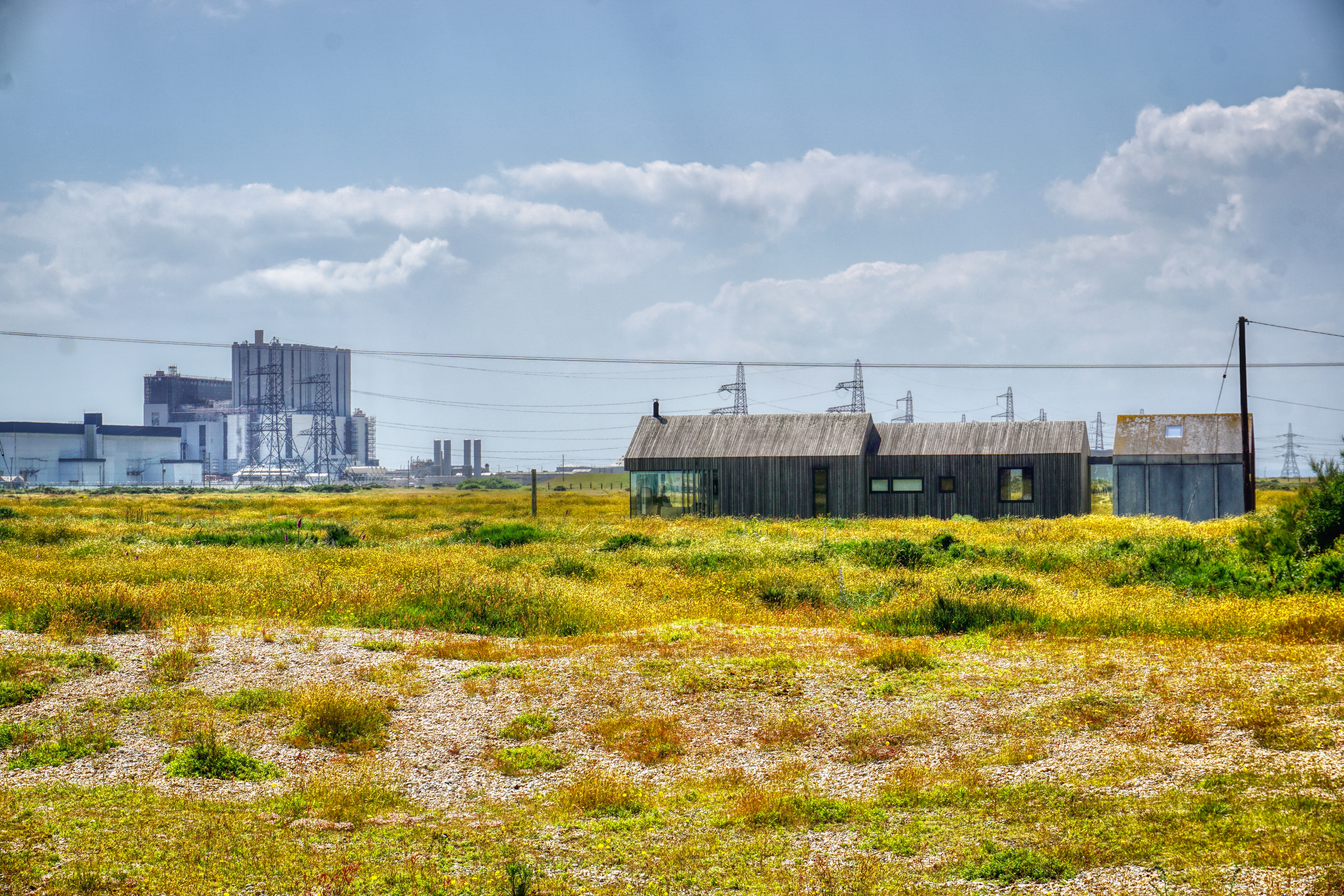
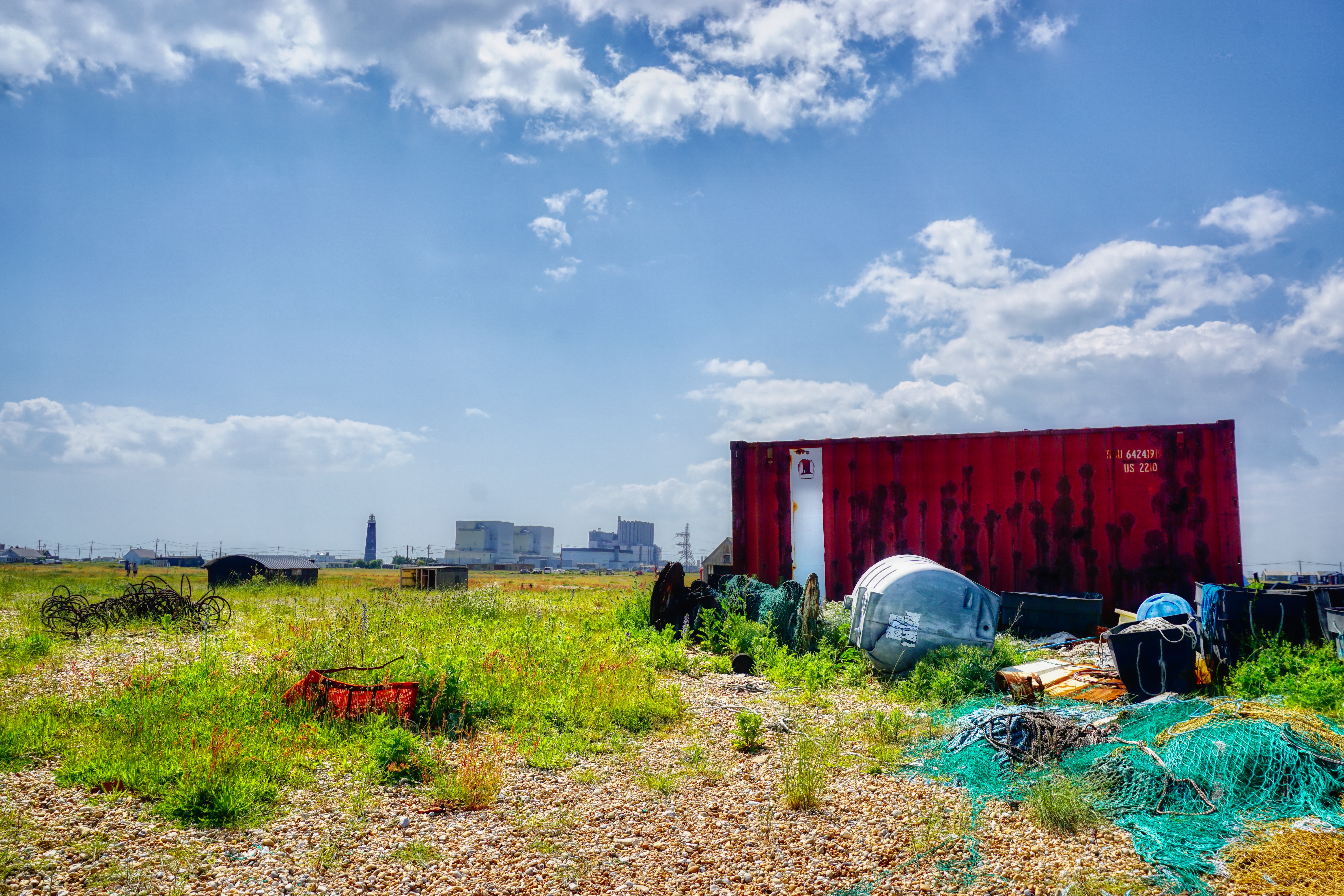
In the far distance, the menacing hulk of the Dungeness B Nuclear Power Station looms. Built in 1983, it’s now in a defuelling phase of its lifecycle. Back in its day, the power station generated enough low carbon electricity to power 38.2 million homes, avoiding 49.8m tonnes of CO2 emissions – the equivalent of taking 22.8 million cars off UK roads for a year.
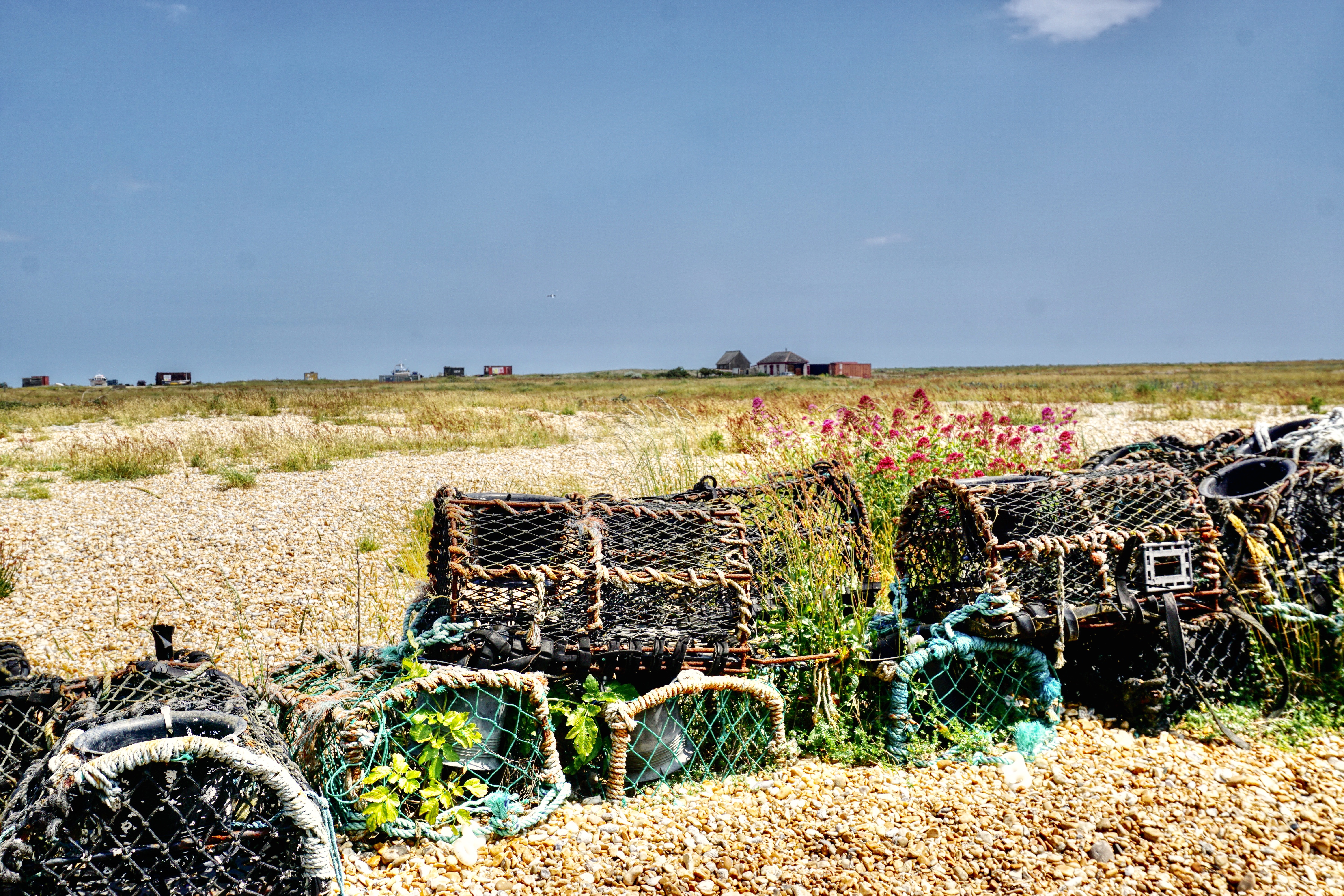
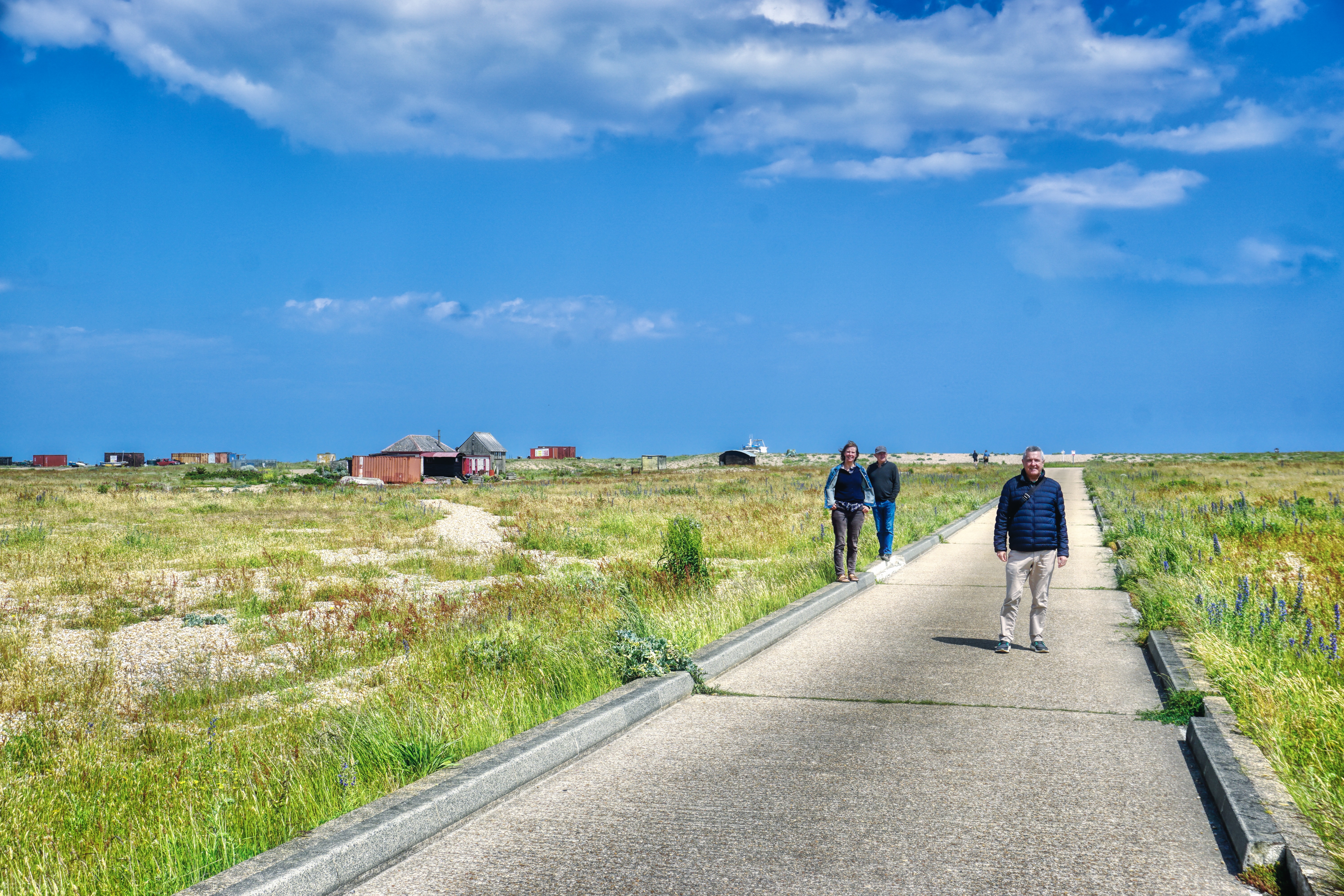
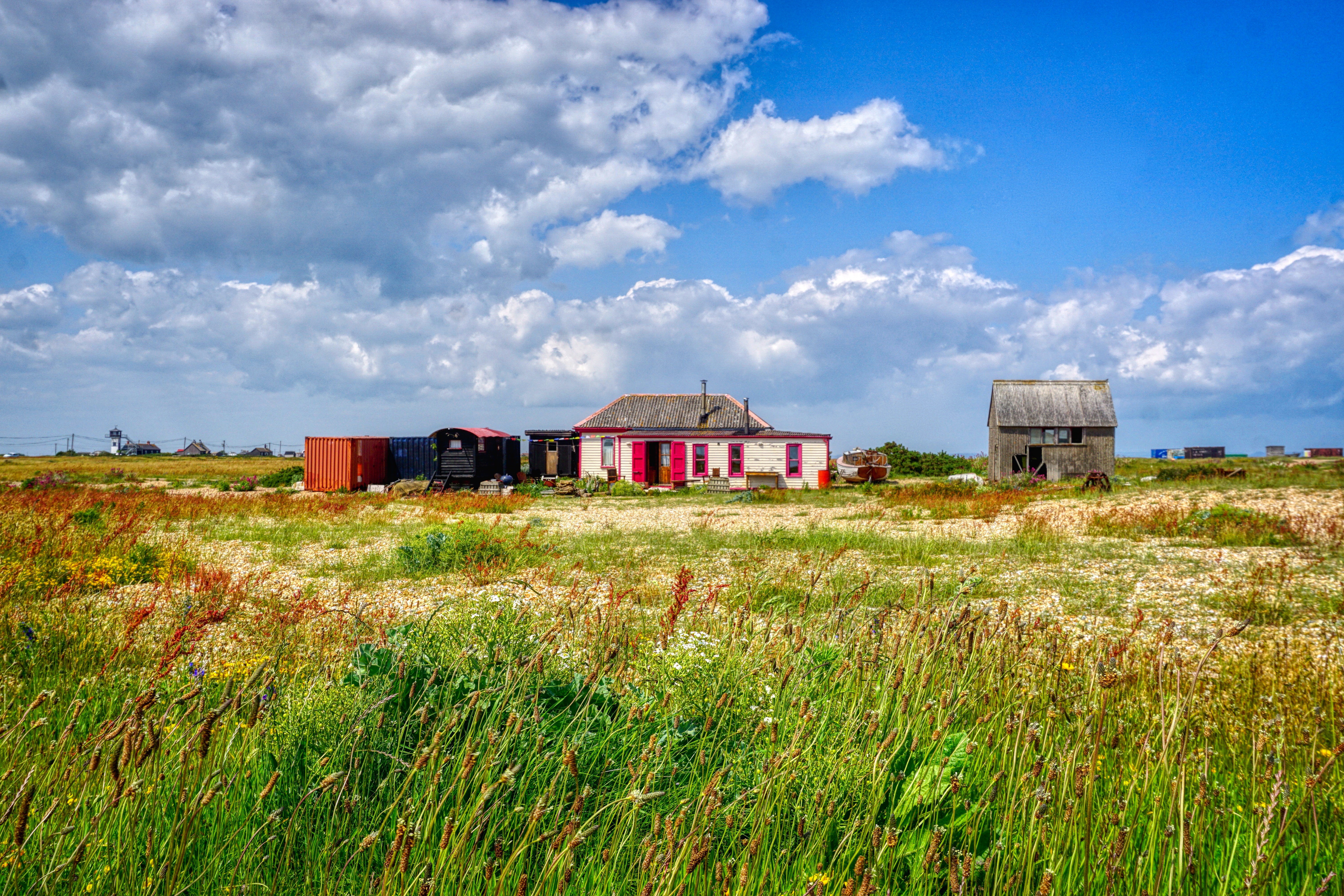
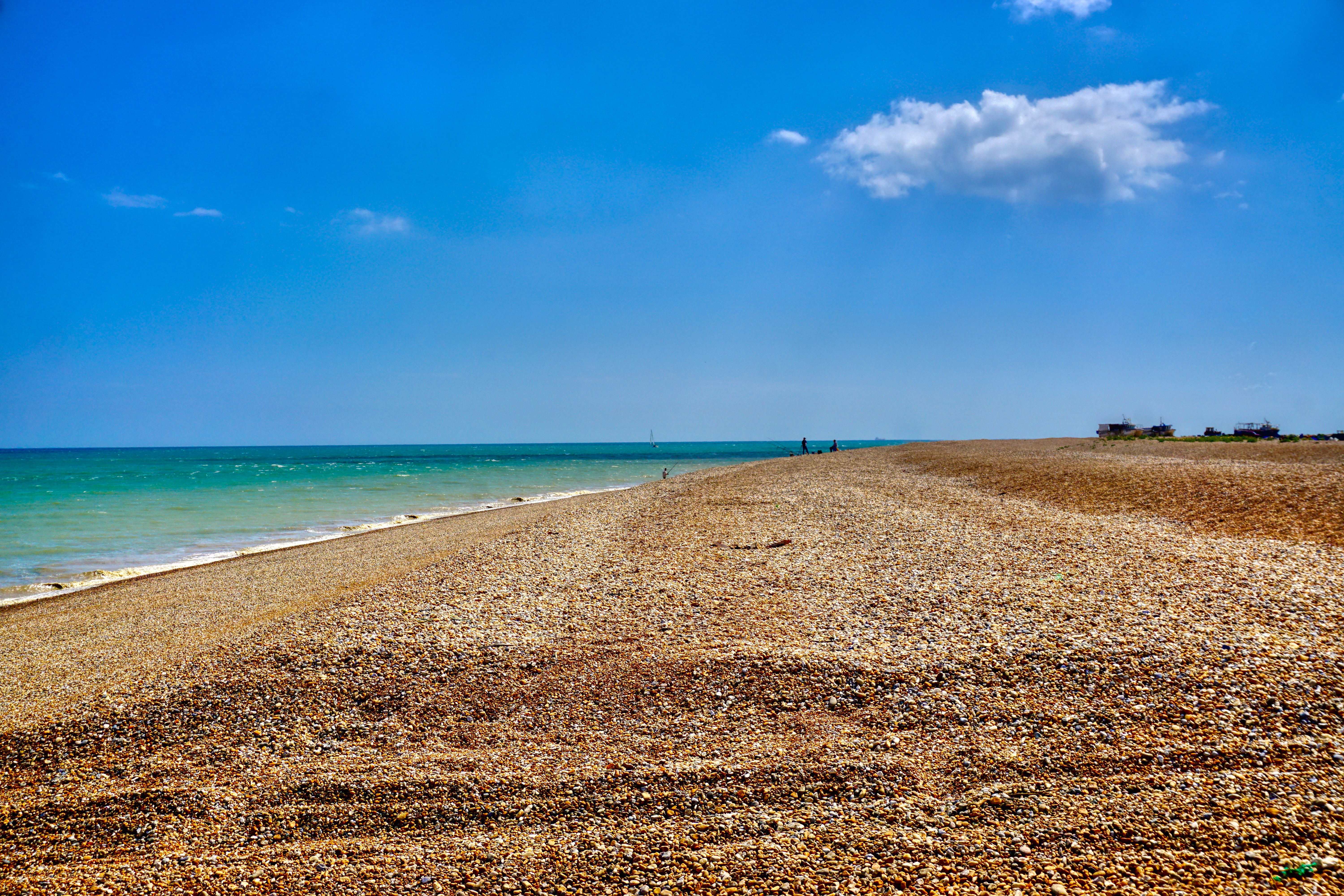
The power station stands sentinel – the most dominating structure for miles in the Dungeness National Nature Reserve, a Special Protection Area and a Special Area of Conservation, a vast, coast-hugging, oddly flat, stony desert-like landscape that’s home to many unique plants, animals and birds. Incredibly, one third of all UK plant species are found here.
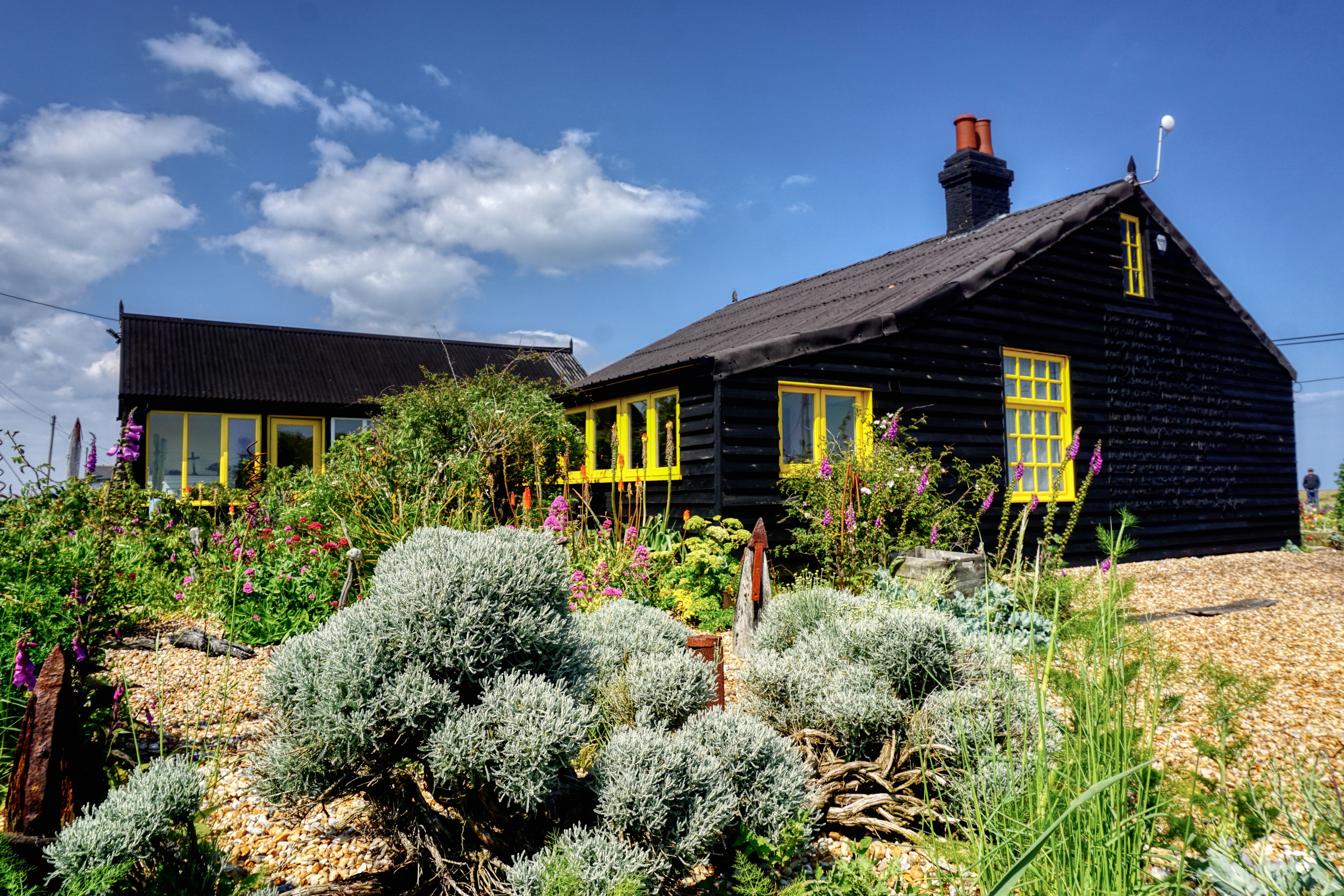
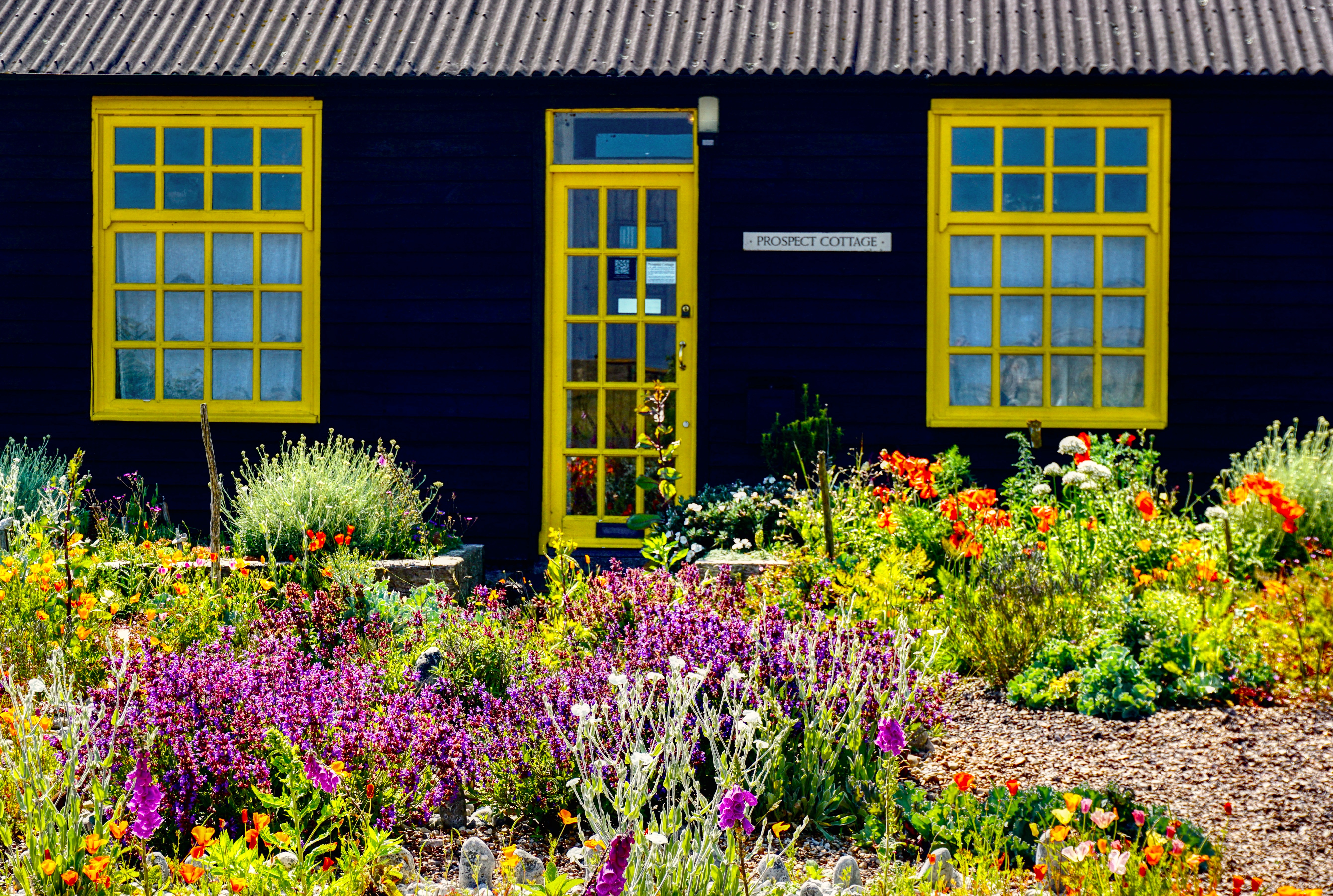
We’re here principally to see a house and garden we’ve longed to visit for many years, Prospect Cottage, the former home and sanctuary of Derek Jarman (1942-1994), artist, film maker, gay rights activist and gardener. Prospect Cottage is a simple enough small wooden cottage with bright yellow window frames and black pitch timber walls. Originally a Victorian fisherman’s hut, it was purchased by Jarman in 1987 and his home until his death in 1994.
There’s a John Donne poem, The Sun Rising, in large black relief letters on one side of the cottage that reads in part, ‘Busy old fool, unruly sun, Why dost thou thus, Through windows, and through curtains, call on us?’
Writing of his early months at Prospect Cottage, Jarman said that initially “people thought I was building a garden for magical purposes, a white witch out to get the Nuclear Power Station”, describing his garden as “a therapy and a pharmacopoeia…there are no walls or fences, my garden’s boundaries are the horizon”.

 Travels With My Ant
Love those big skies.
LikeLiked by 1 person
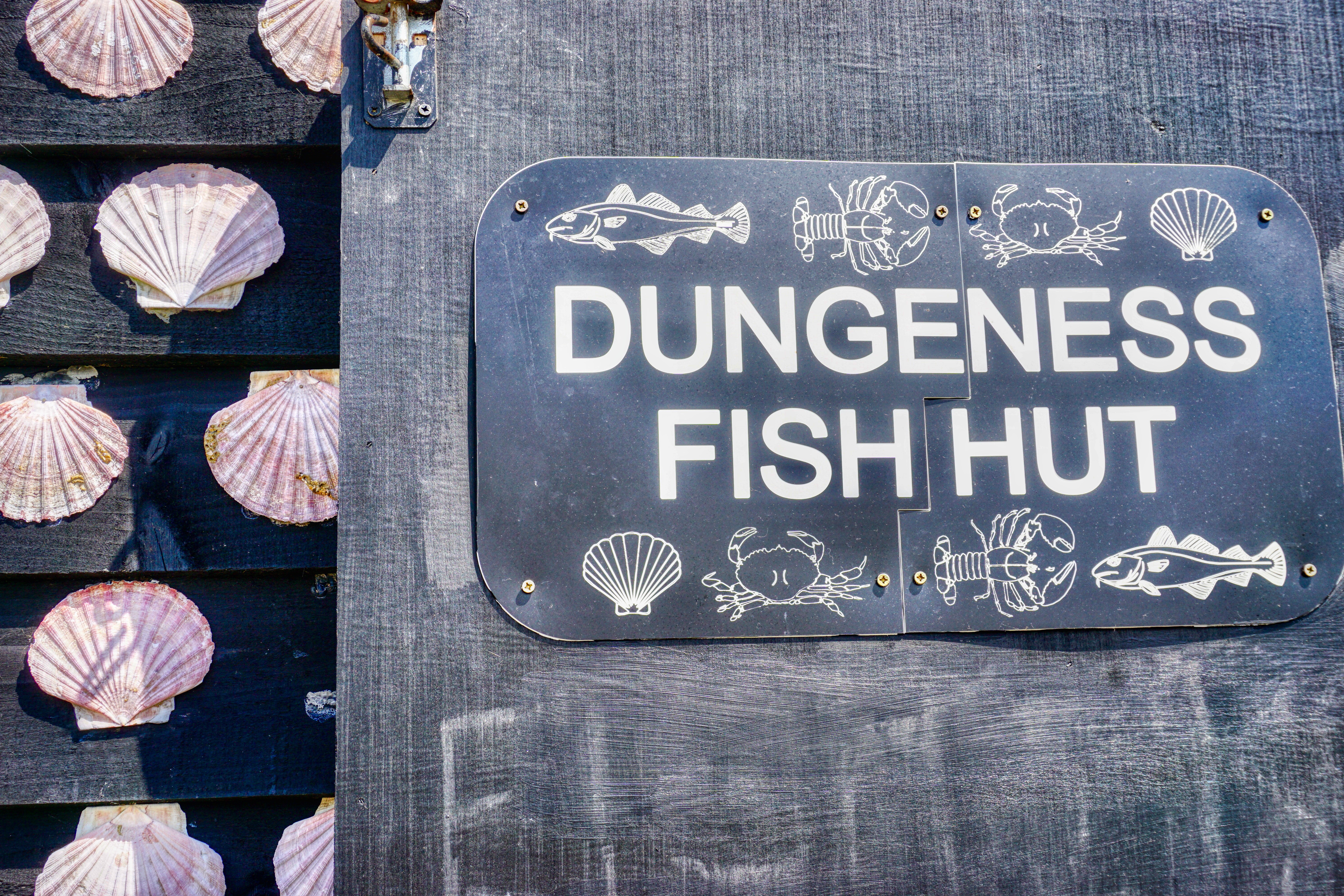
The Fish Hut looks like a fabulous place, in a beautiful locale, for local gastronomic delights. A glass of whisky and ancient rye to wash it down methinks 😍
LikeLiked by 1 person
Great trip , great photos , and interesting post. Isn’t Deal one of the cinque ports? Stay safe and warm . xx
LikeLiked by 1 person