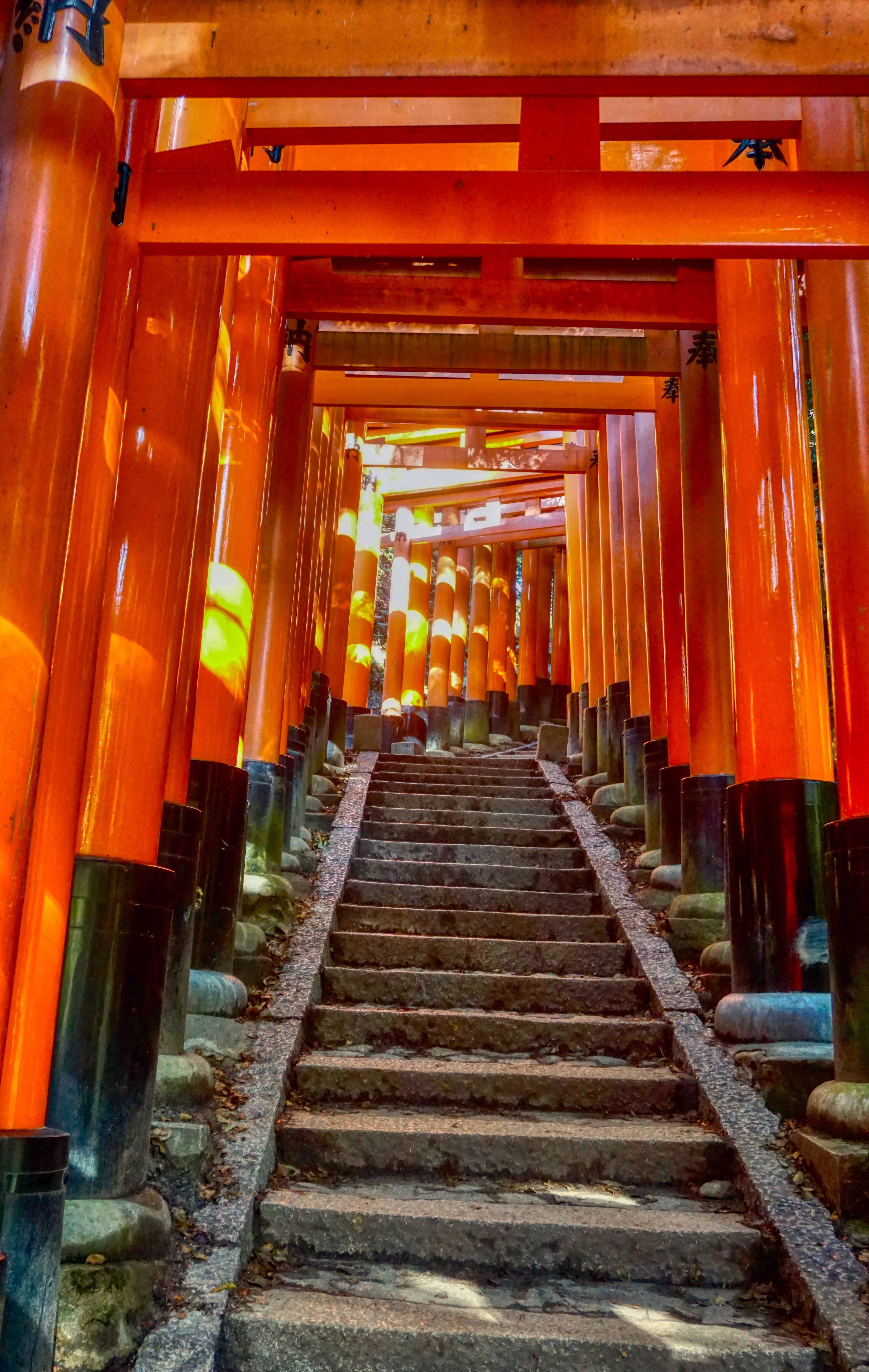

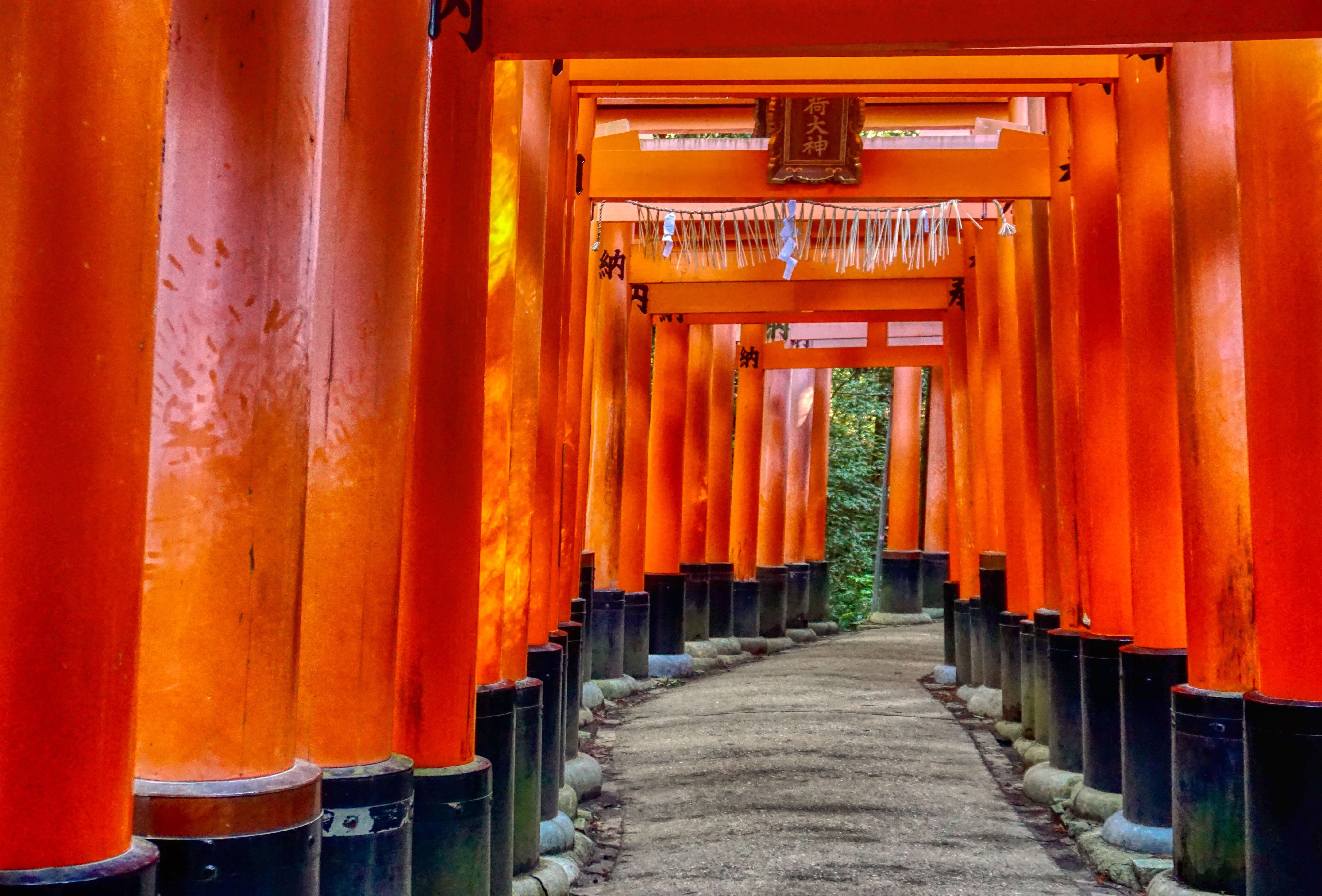

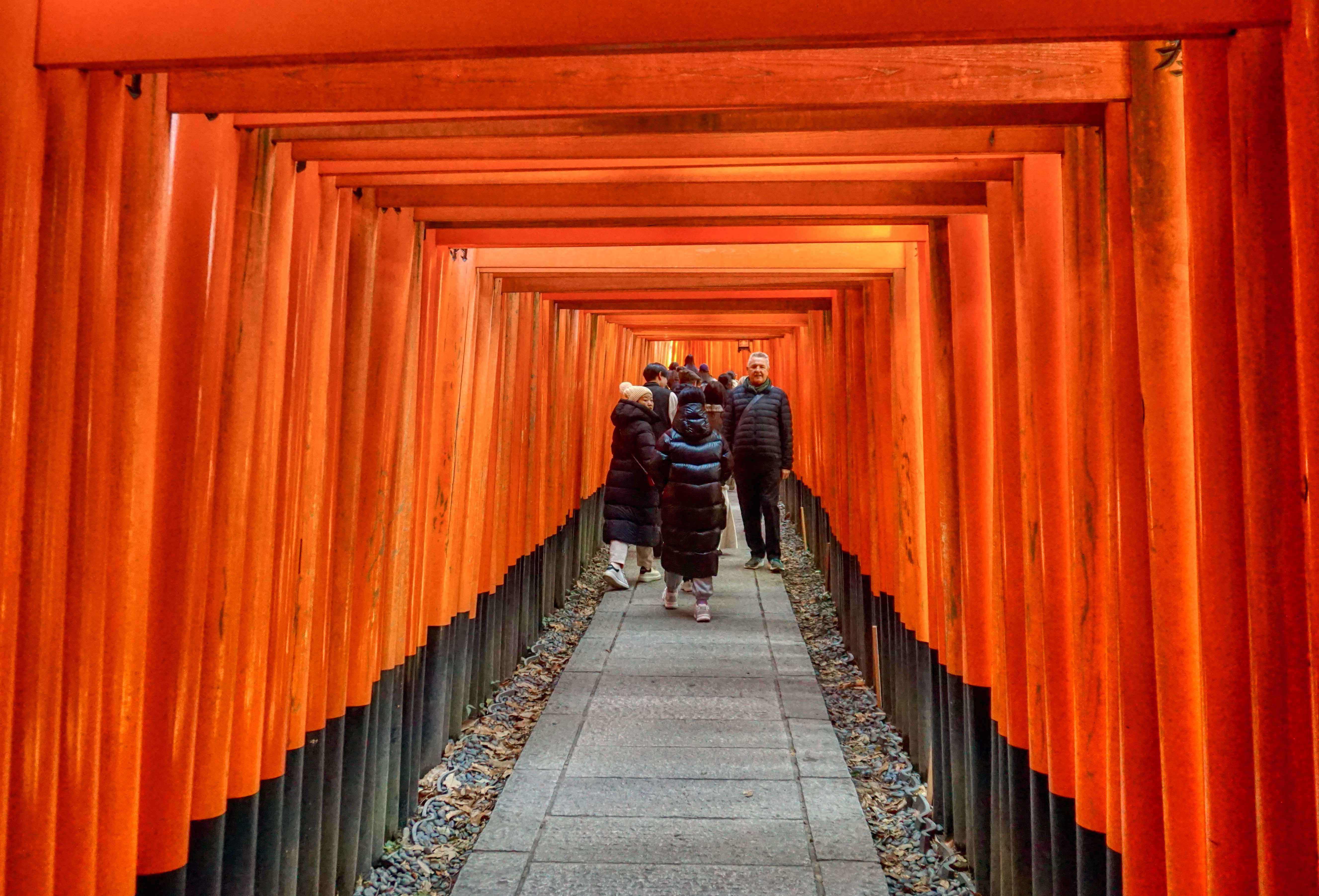
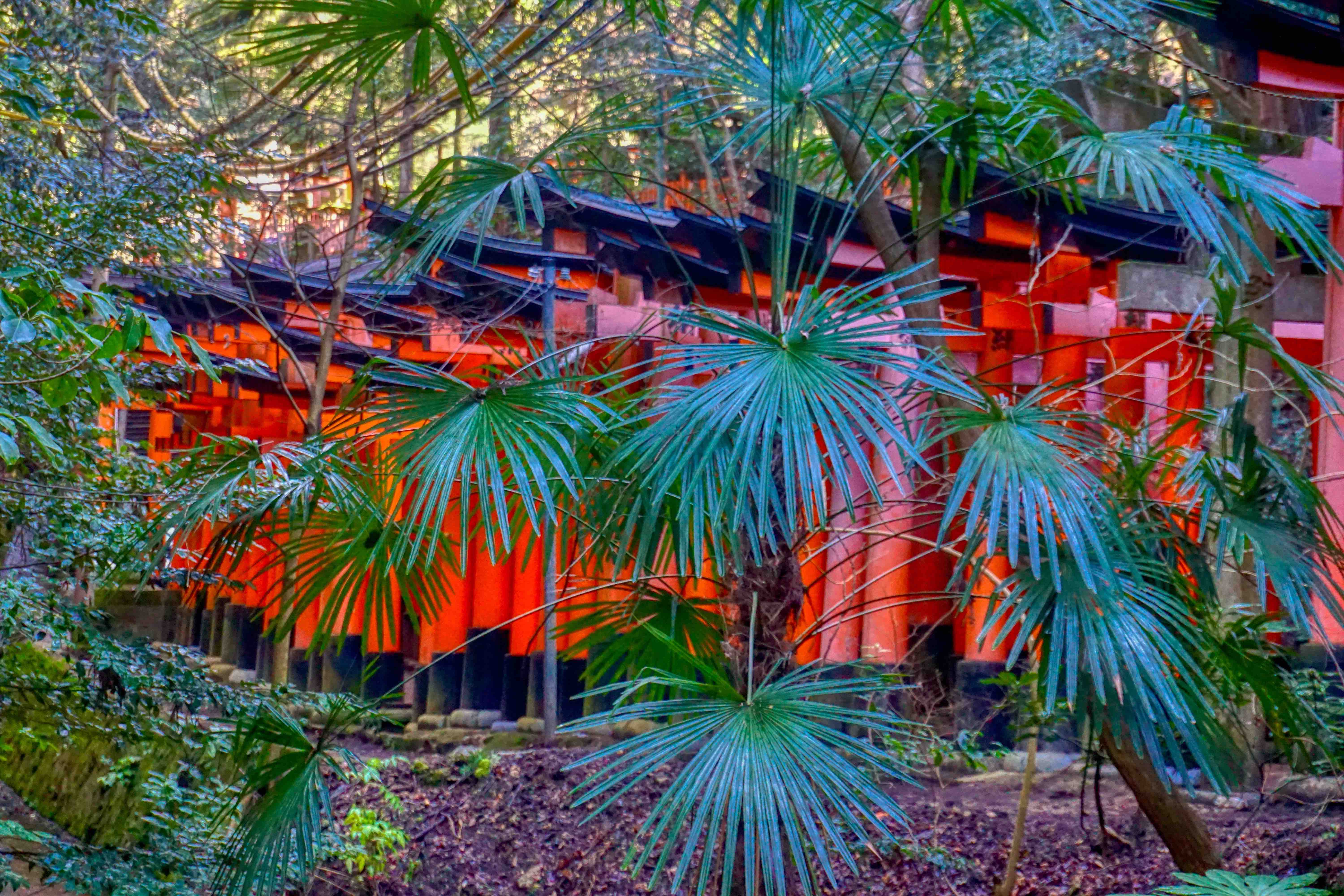
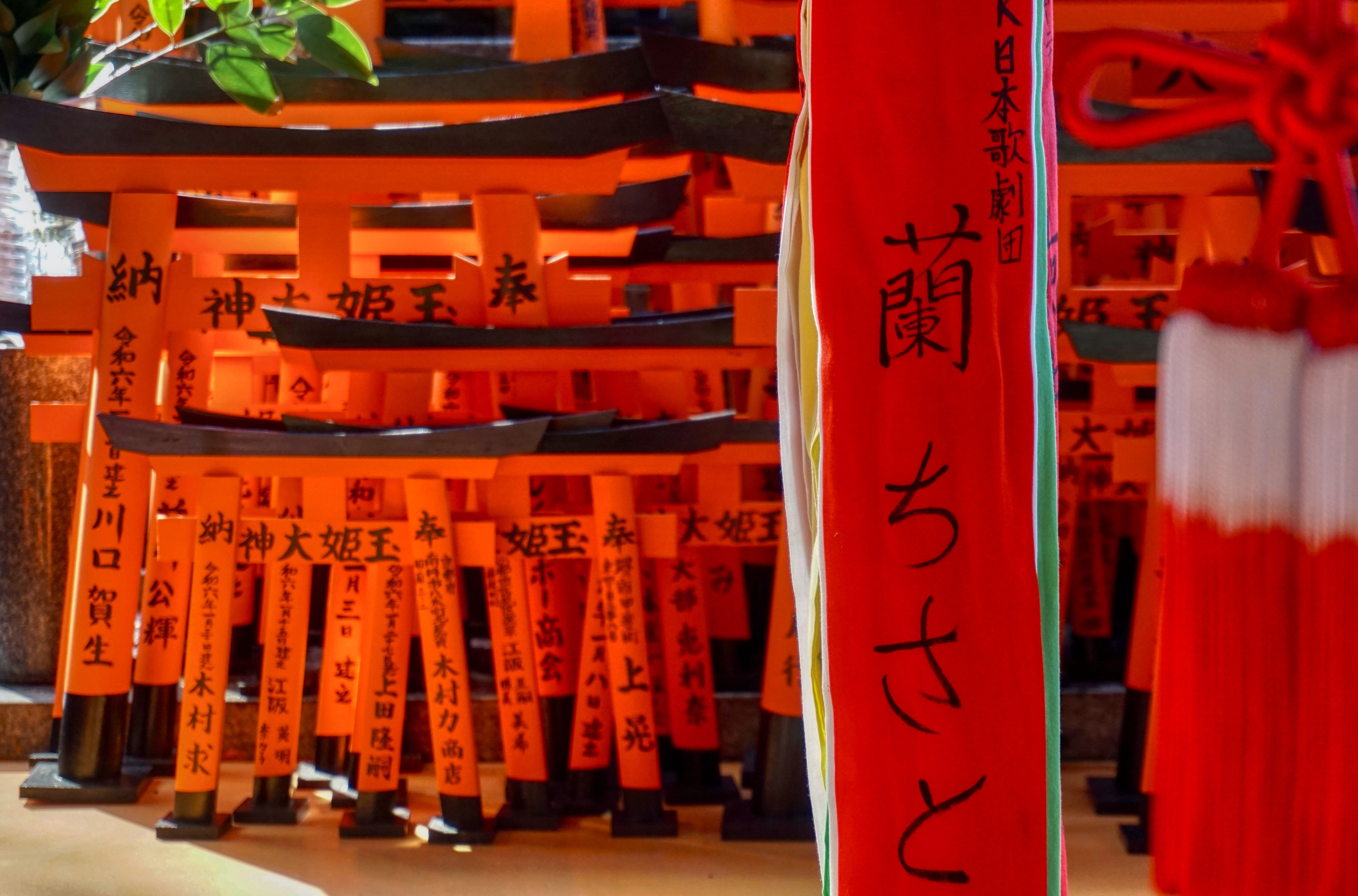
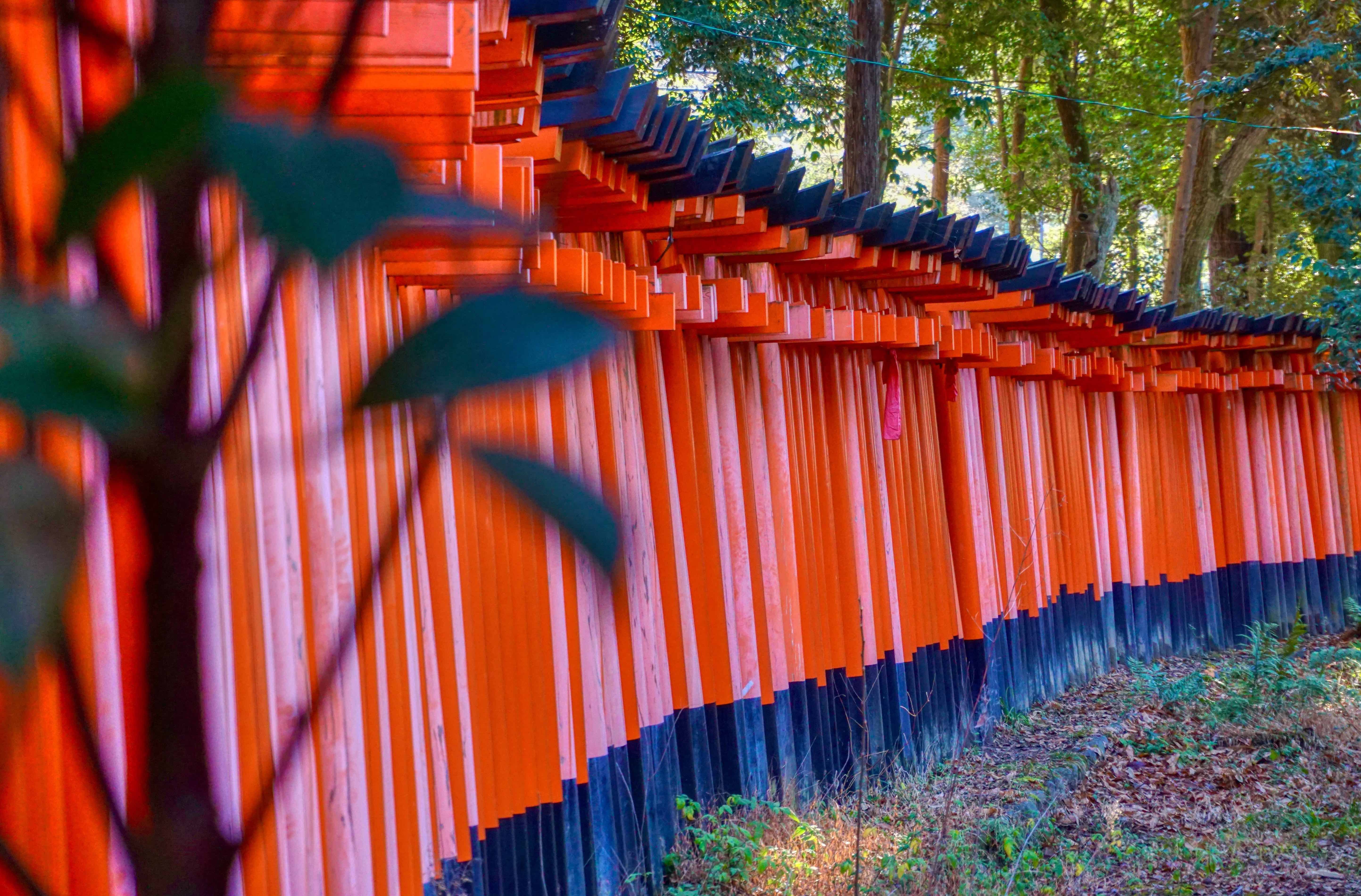

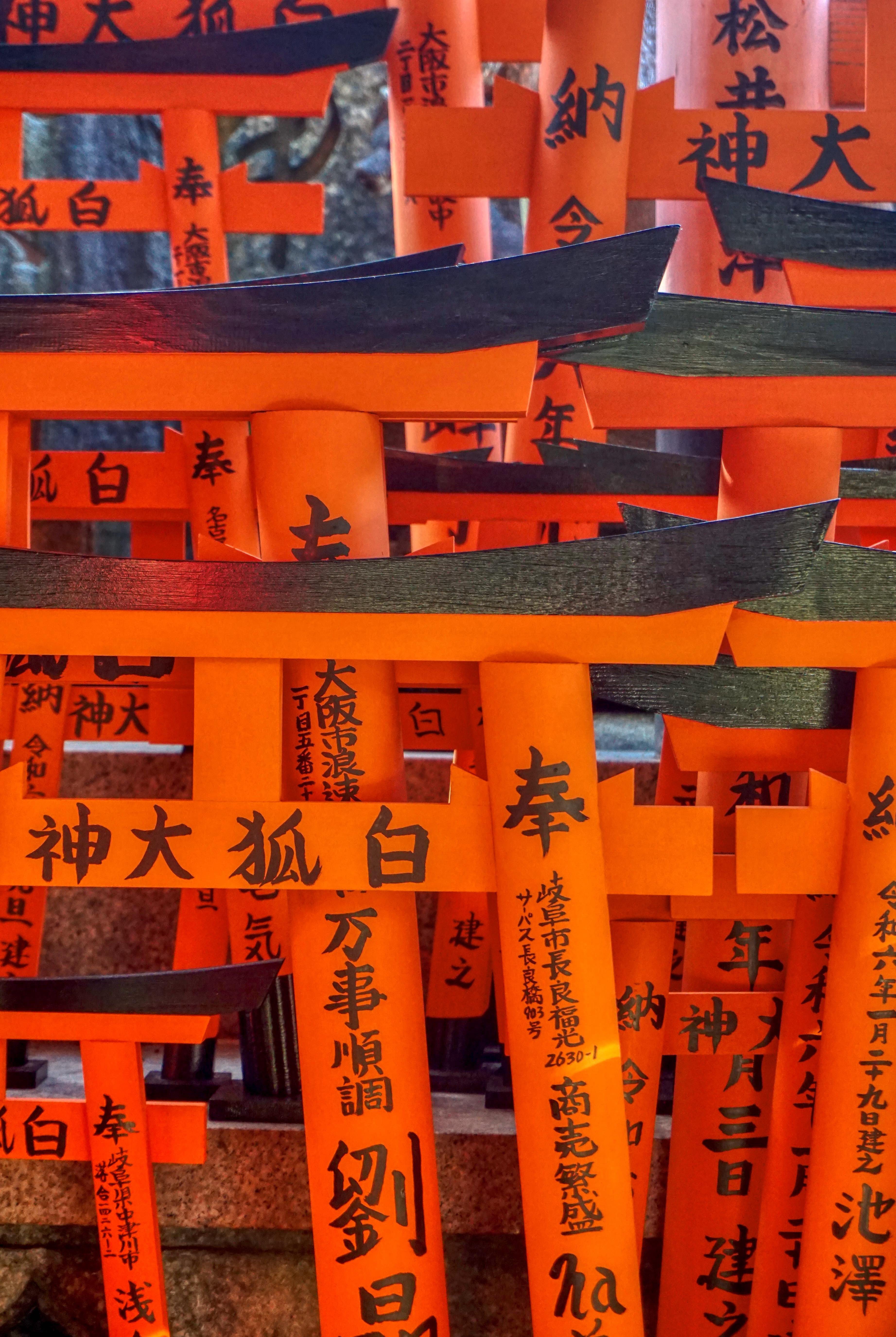
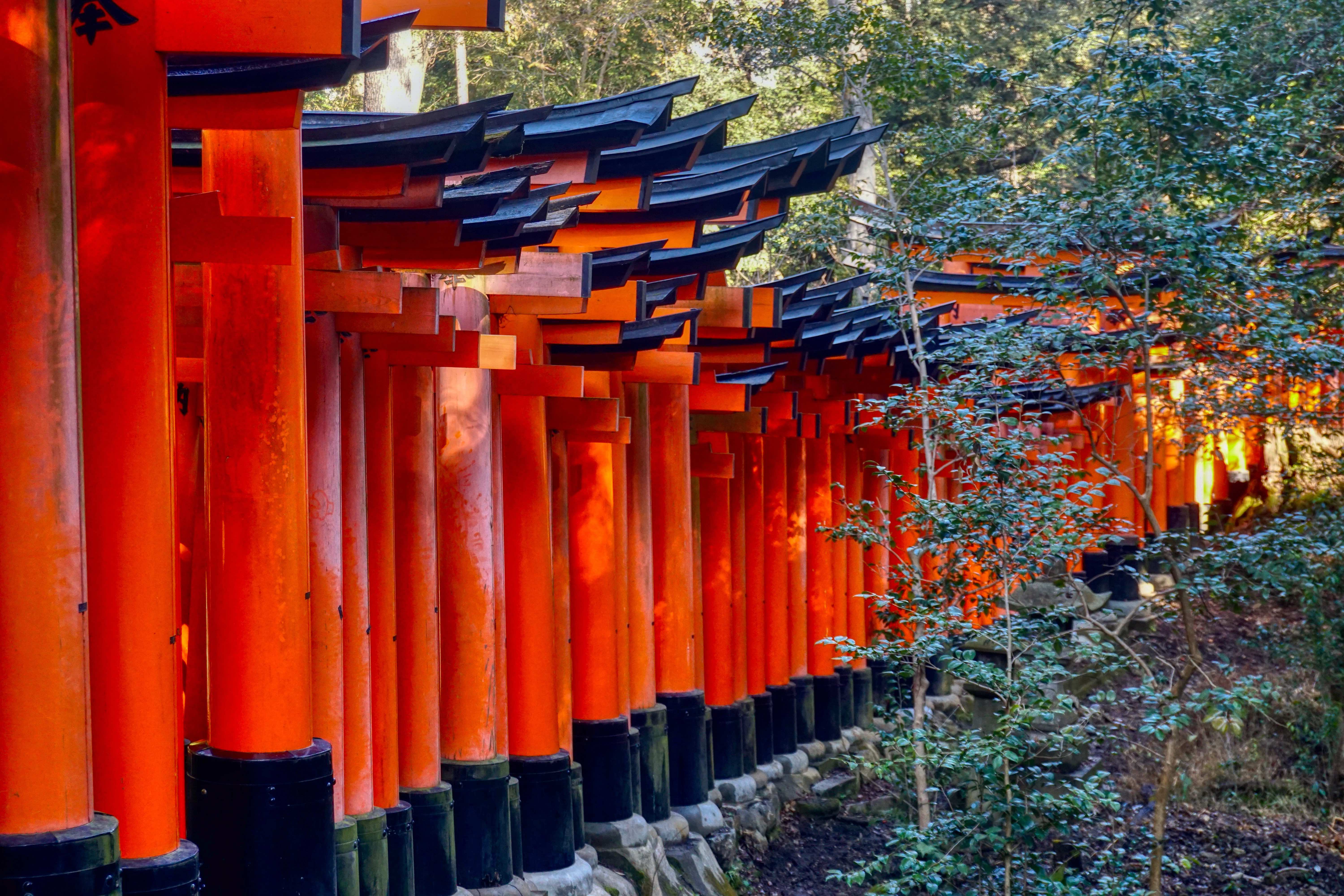




It’s an easy ten or so minute local train ride out of Kyoto station to Inari and a gentle walk up to the Fushimi Inari Shrine, ‘the ultimate Torii gate experience’, famous for its 10,000 vermilion Torii gates that snake up Mount Inari some 233 metres.
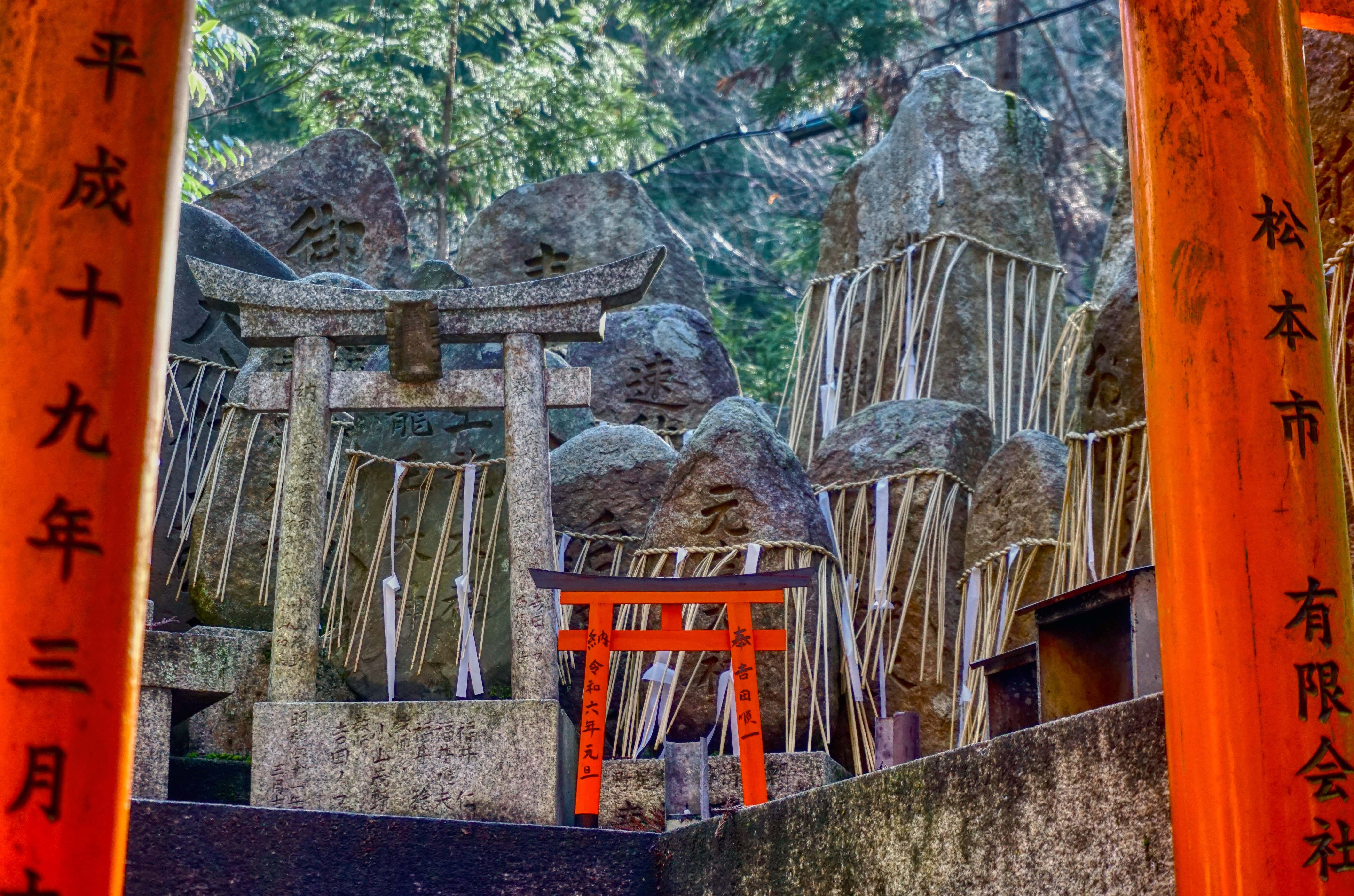
Ok, so the train out of Kyoto station was packed – and I mean squeezed in. And looking around, a lot of western faces, so this place is popular with tourists. And it became even more ‘popular’ as we got off the train and began the climb towards the main shrine and the start of the Torii gates. Frustratingly (and annoyingly), it was very hard to take a picture of the gates without people ambushing the shot – even more annoying when, clearly you were framing a shot, they walked cavalierly right in front of your camera, but hey, it was that crowded that I was possibly guilty of the same crime. If you ever find yourself here do as we did and just hang back a bit – wander off to the small shrines that dot the path to left and right up the mountain and you’ll be rewarded with not only peace and quiet, but some sublime moments of reflection on what this amazing shrine actually means for the local people.
A Torii is a gate that indicates the entrance to the holy precinct of a Shinto shrine. The Torii of Inariyama are donated by believers as offerings of gratitude for wishes that have come true, a custom that began in the Edo period, around 250 years ago. The lifespan of a wooden Torii is around 20 years and the older ones are regularly replaced, as we witnessed on the winding walk up to the summit.
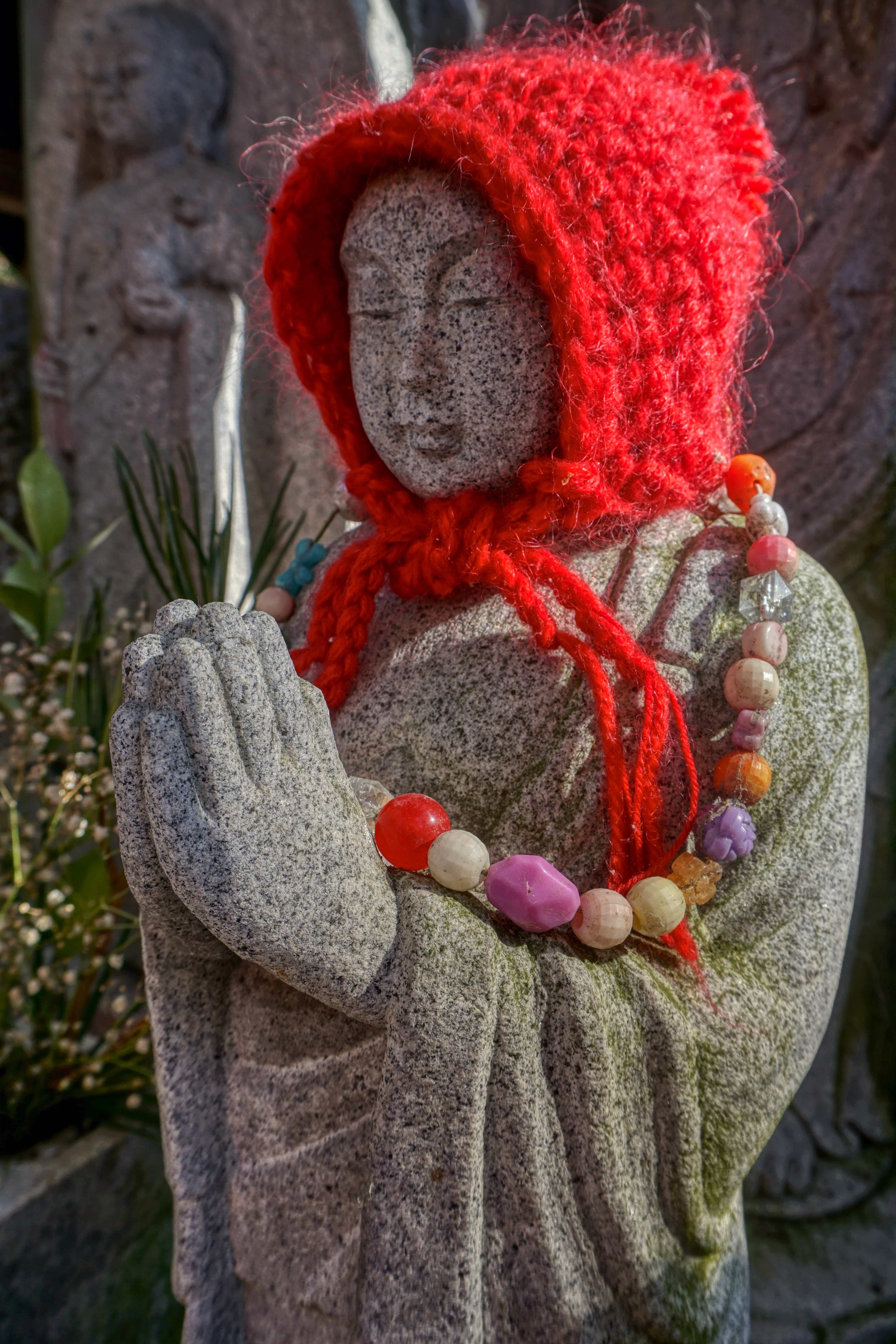
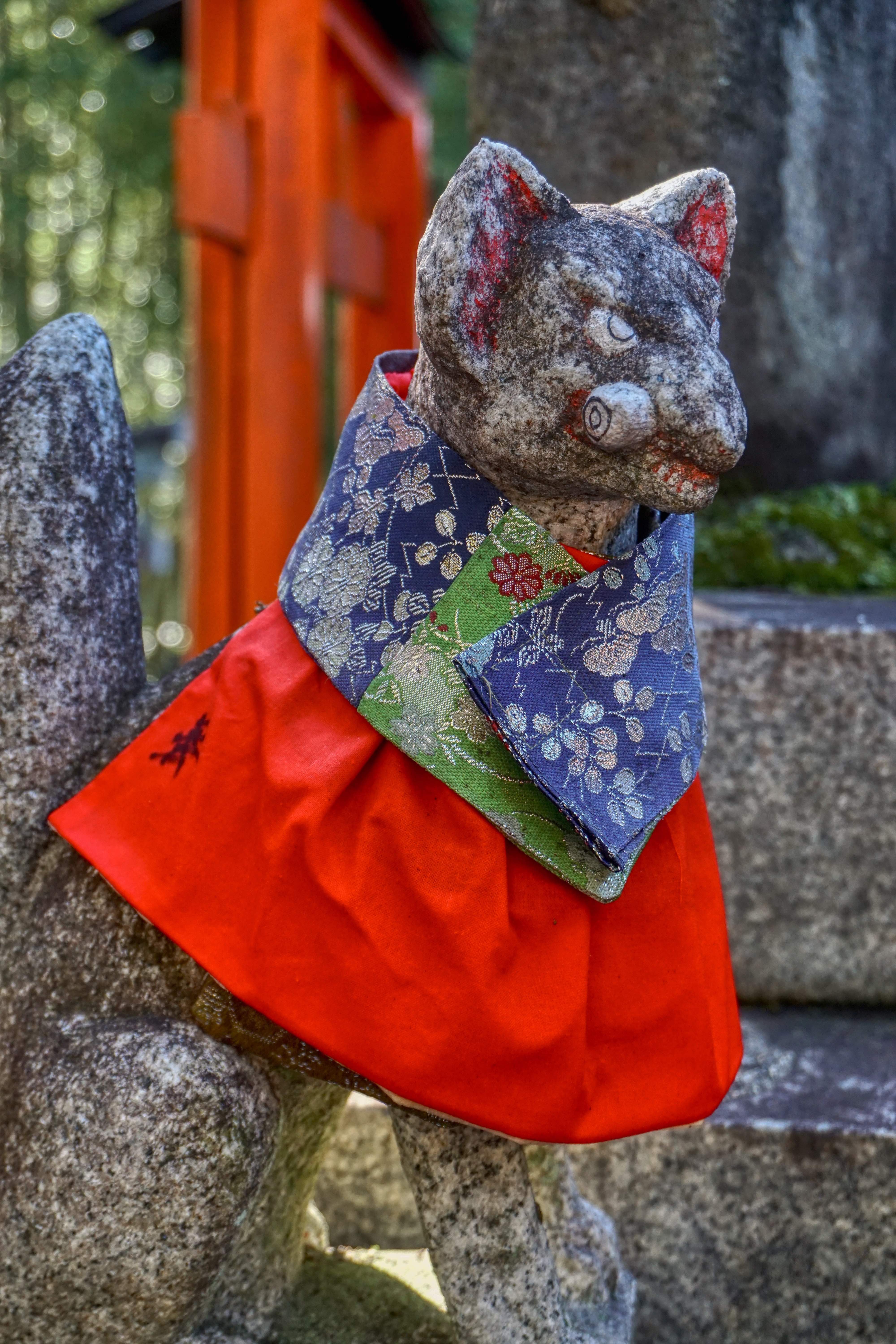
In amongst the 10,000 vermilion gates are hundreds, perhaps thousands of spirit effigies, of spirits that have taken the form of an animal. In the Fushimi Inari Shrine, the most common animal is a white fox with a red bib, the bib symbolising a prayer for the health and long life of children. And, for the return of wealth, fortune and money lost, it’s frogs which are the talisman and so you see stone frogs of all shapes and sizes placed in the shrines.
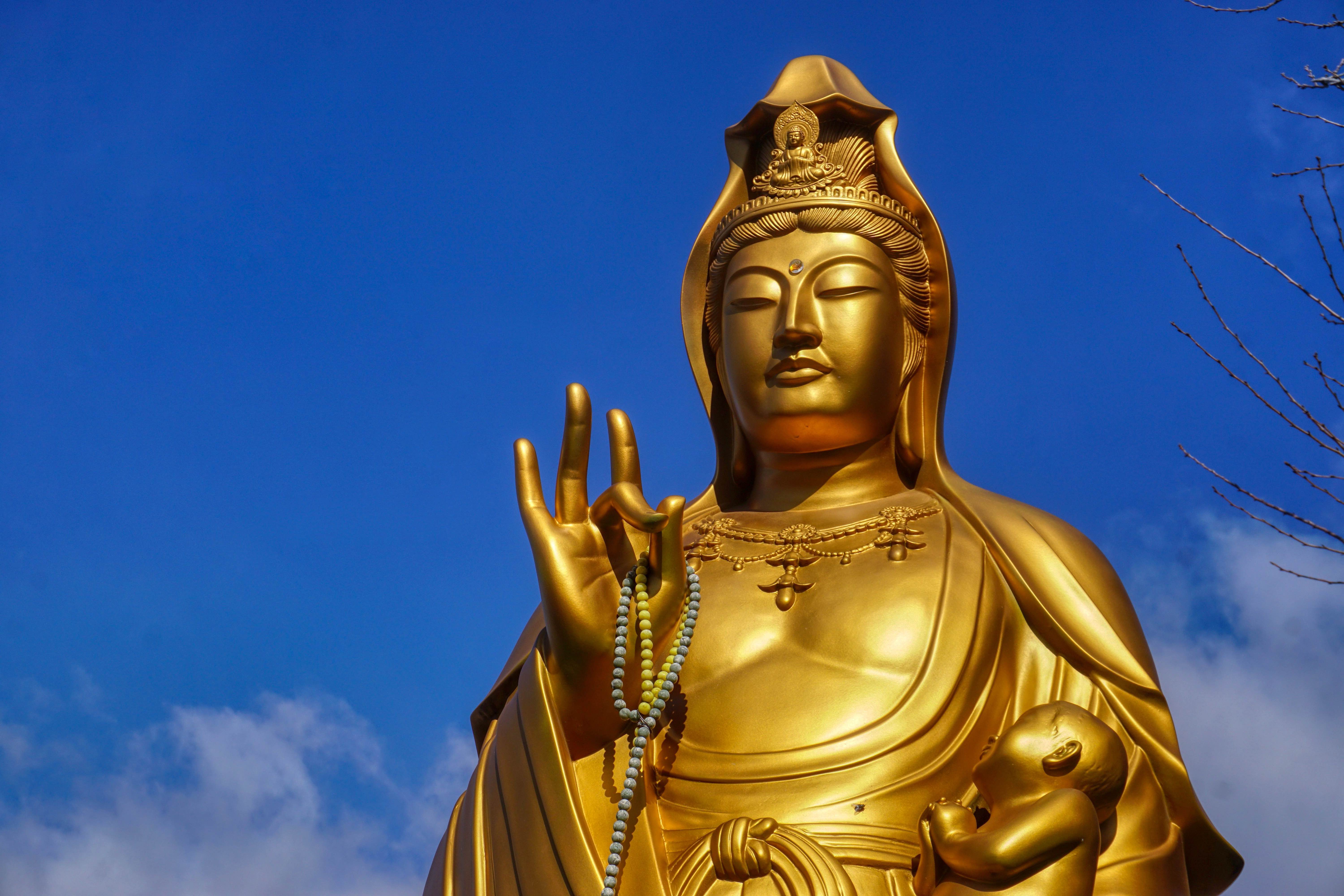
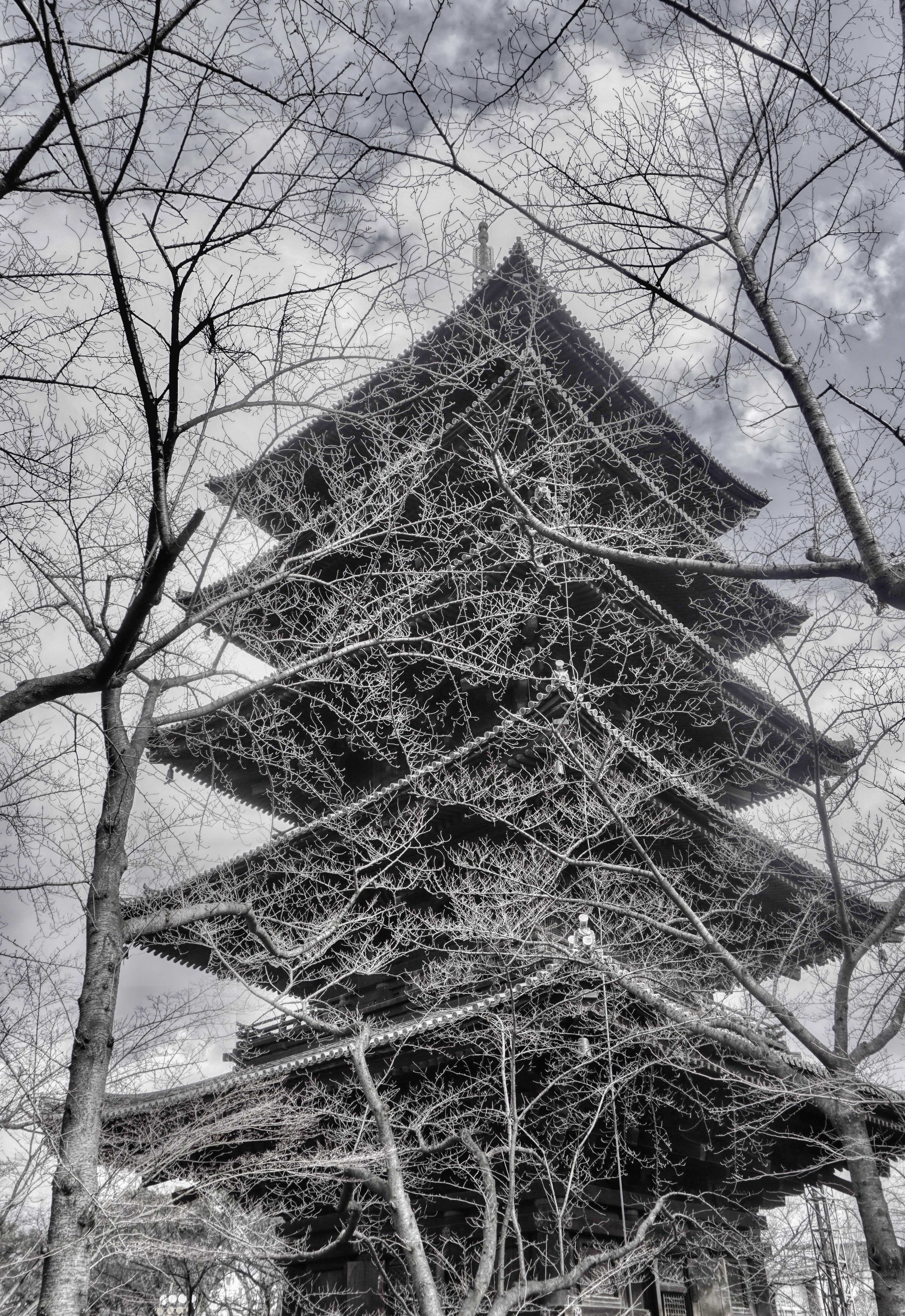
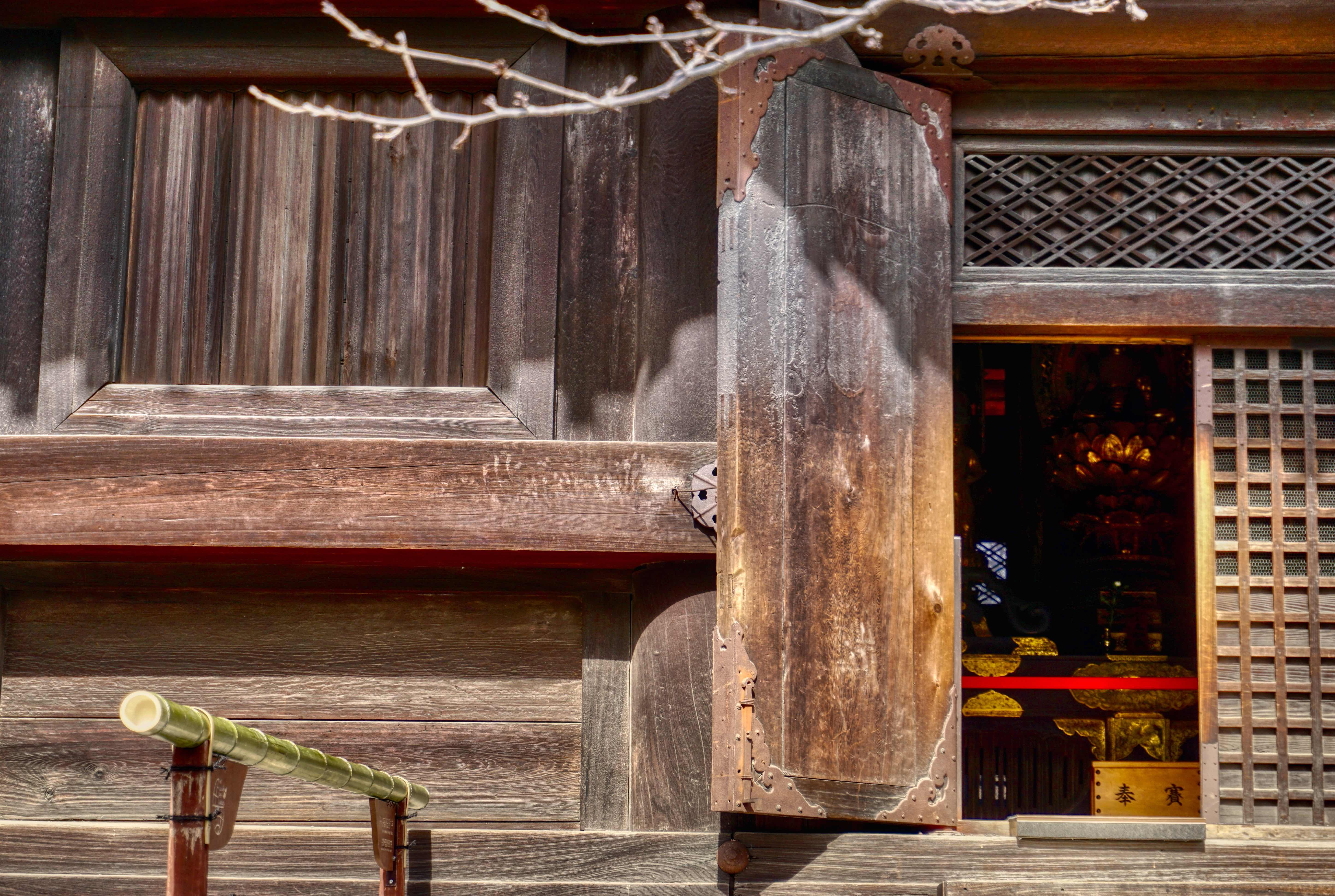
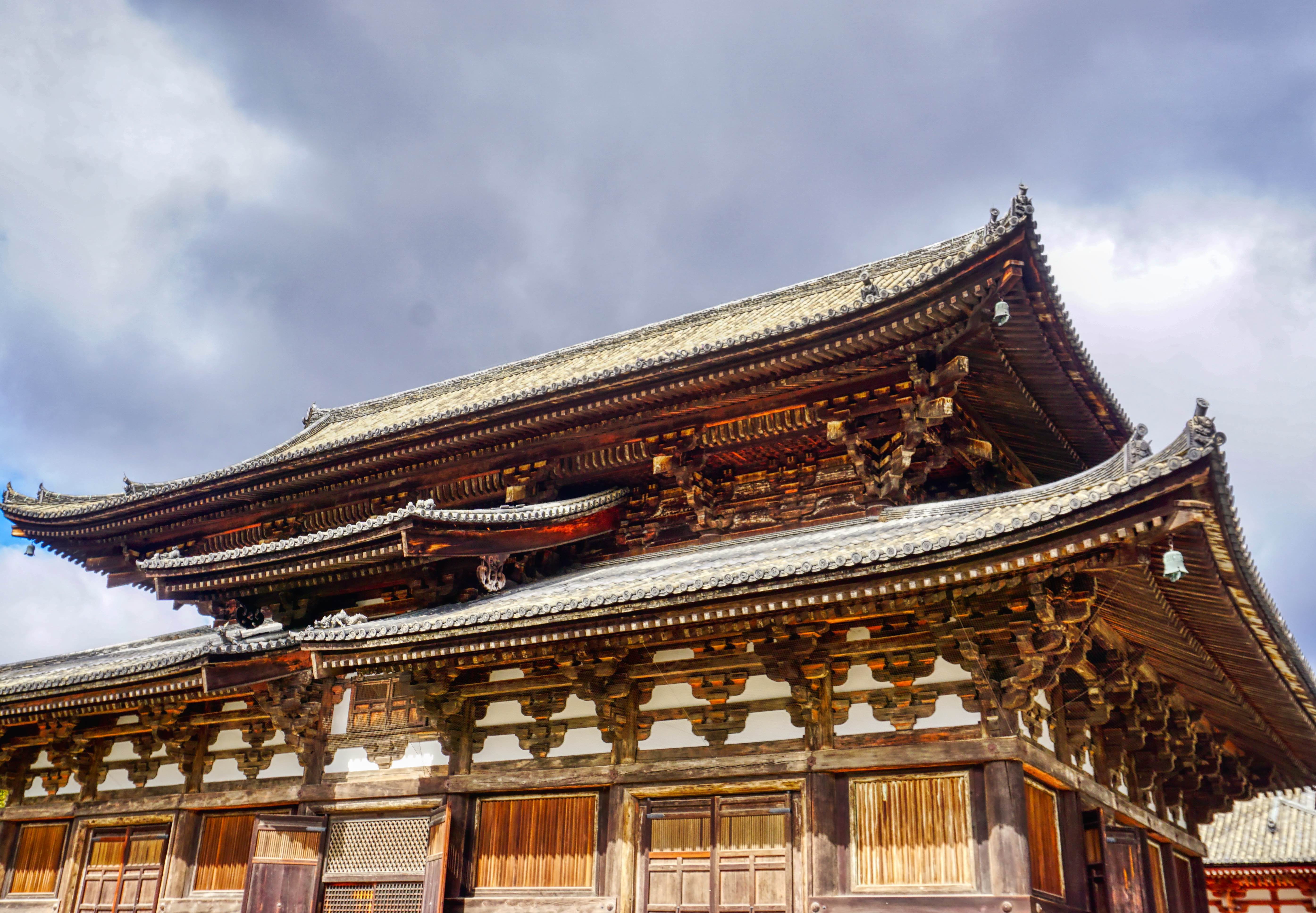
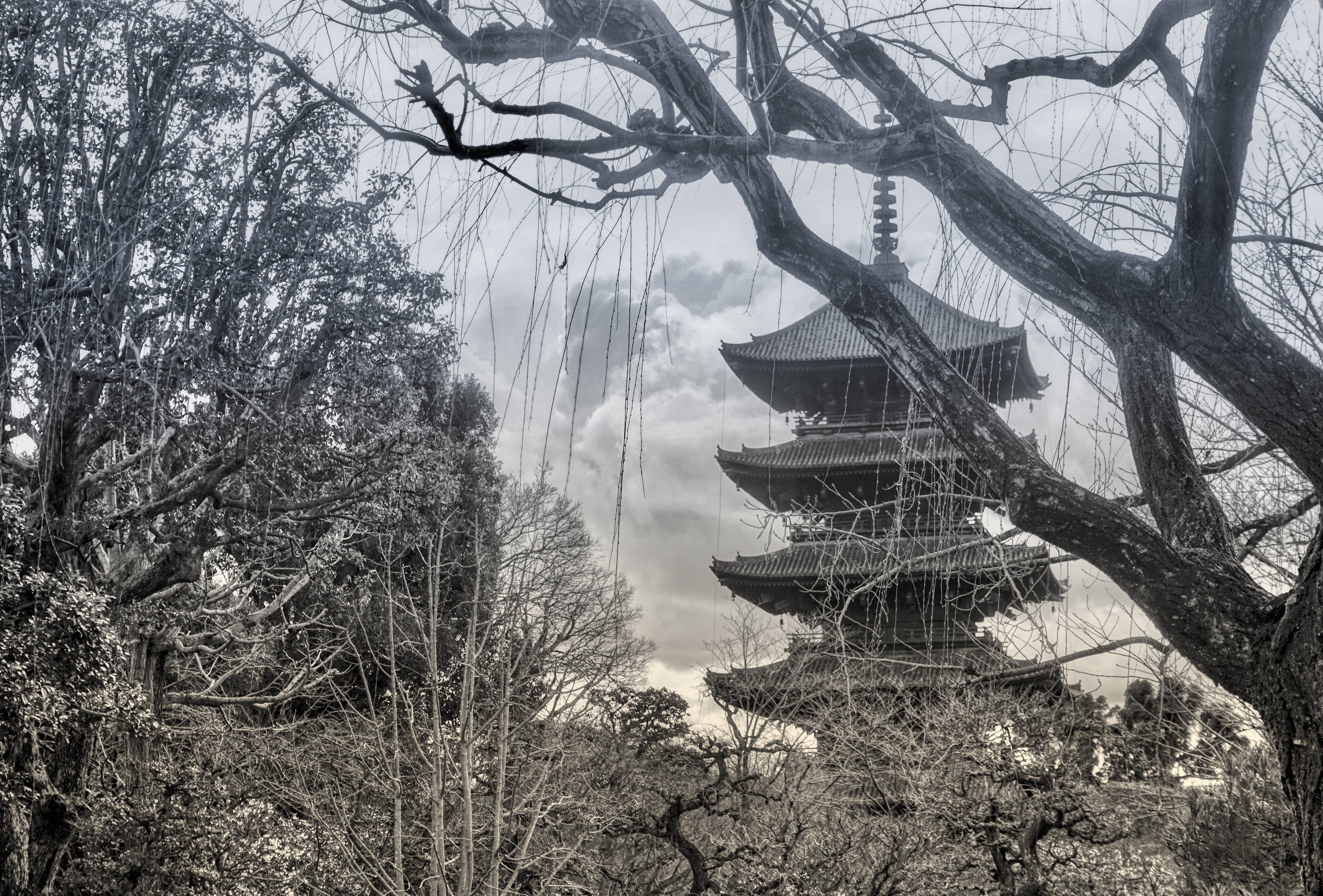
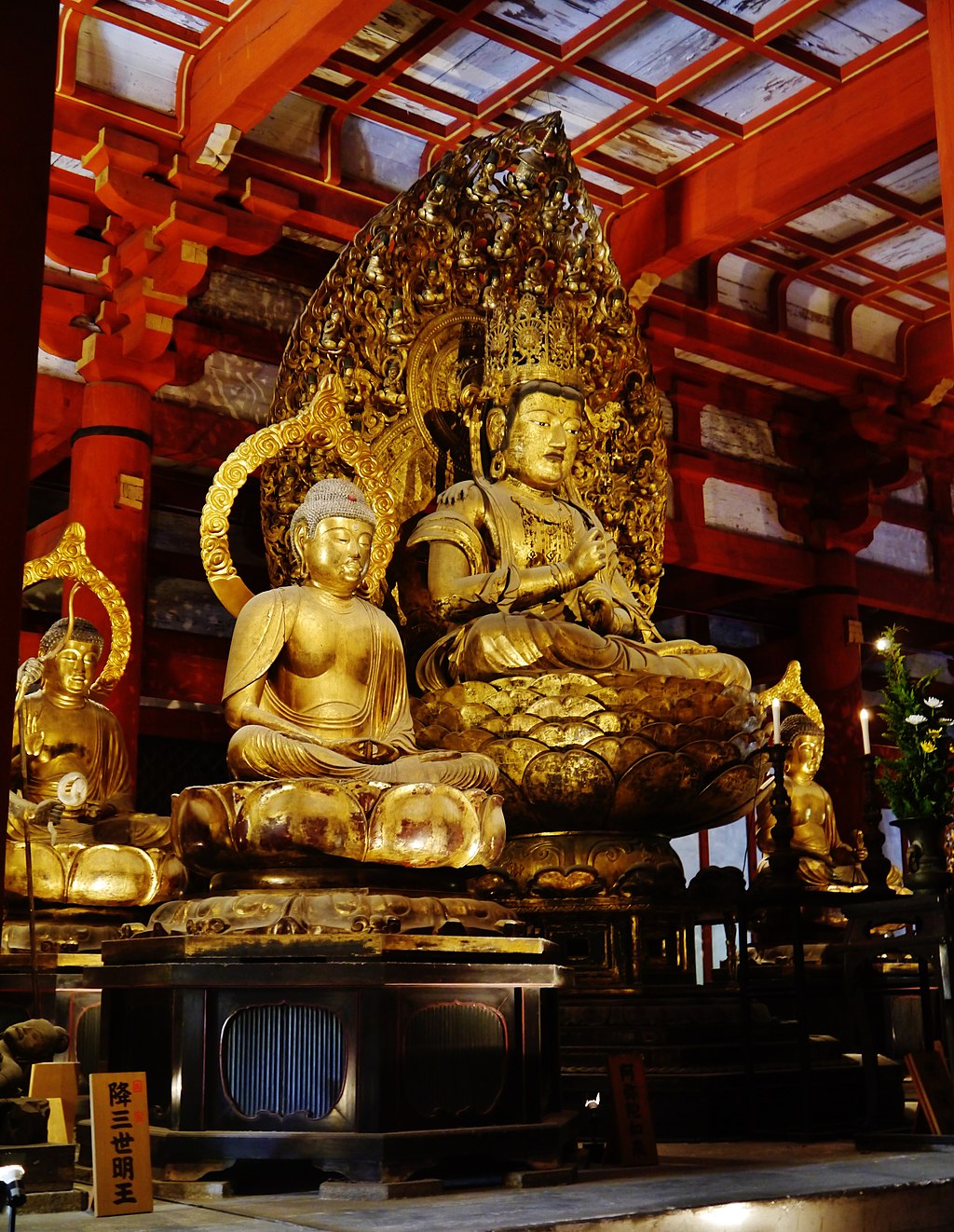
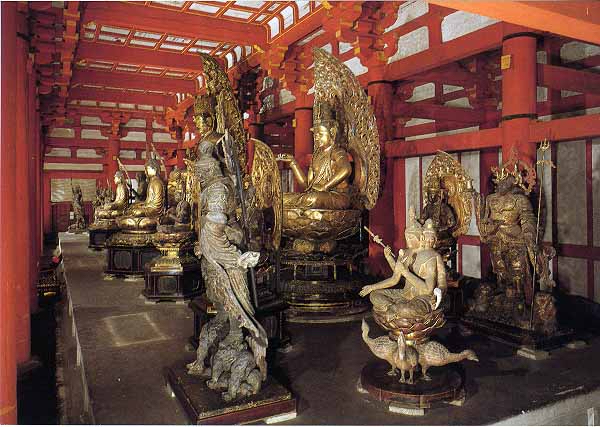
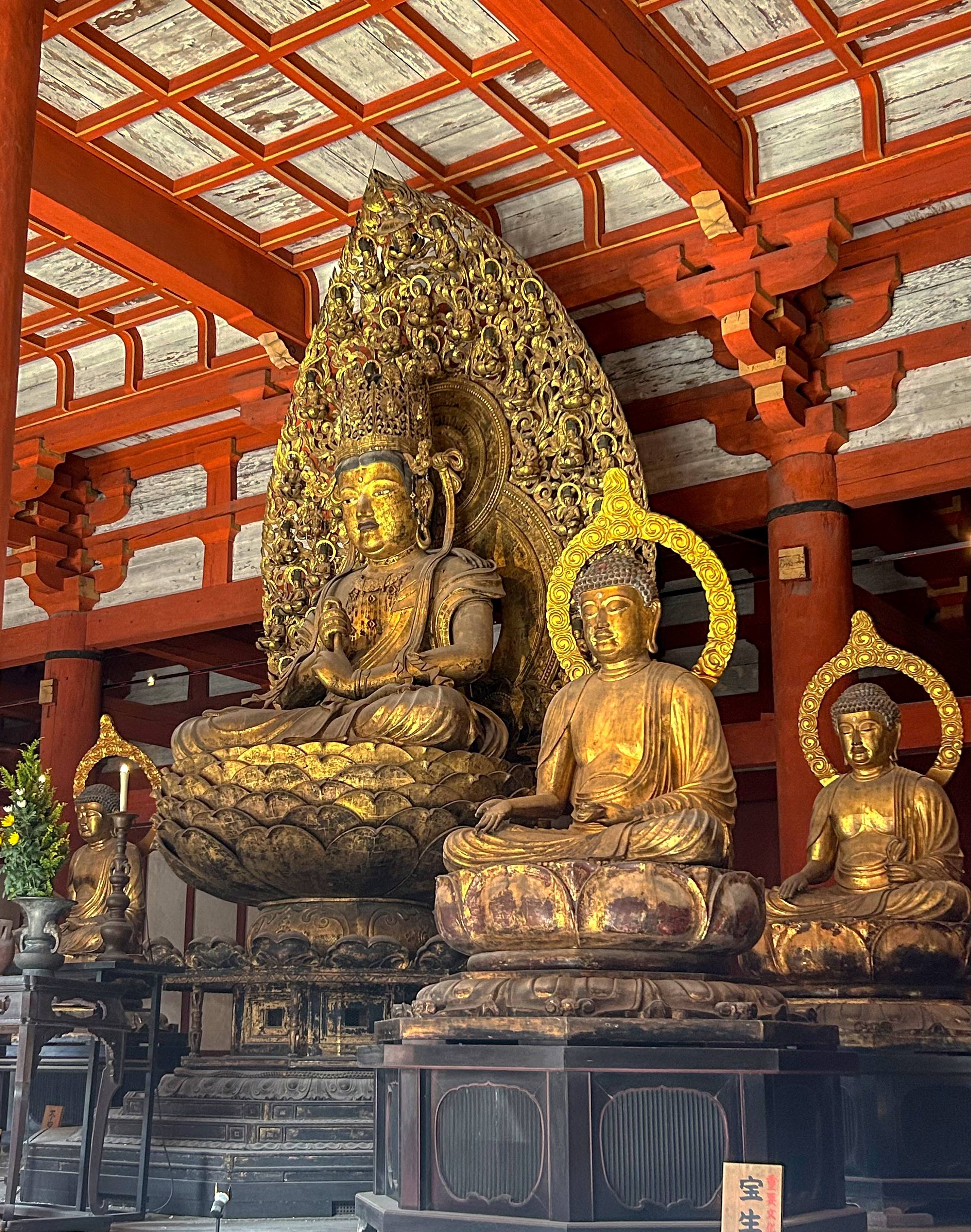
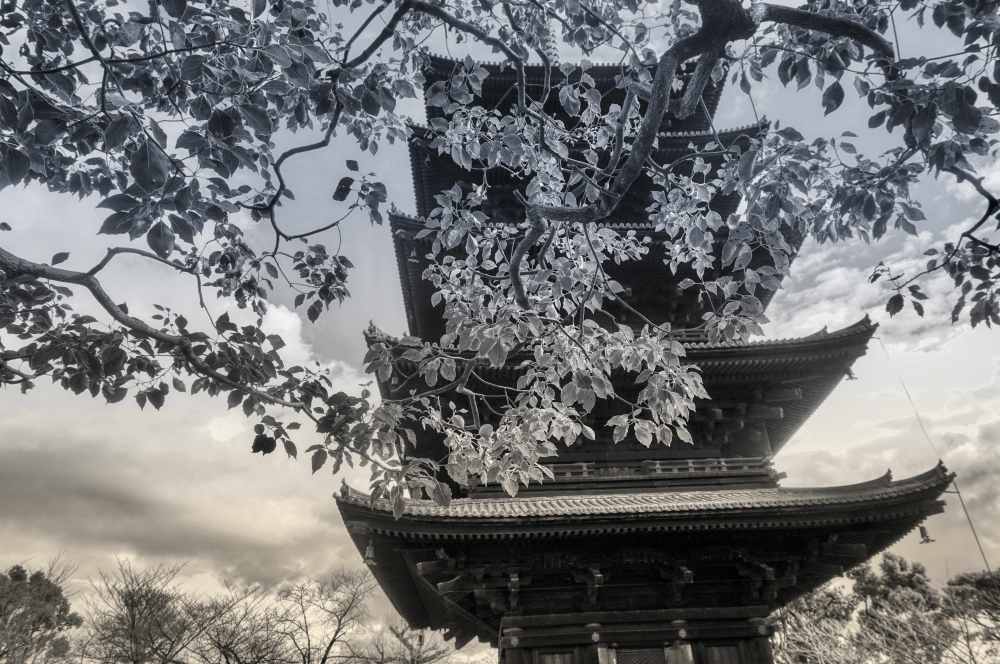
Back to Kyoto Station and a short walk via local streets to the imposing To-ji Temple, with the five-storied Pagoda dominating the local area. The Pagoda is Japan’s tallest at 55m and built in 1644, with the first Pagoda erected in the 9thCentury – burning down four times over its lifetime. It’s also been struck by lightning and many earthquakes over the centuries, but due to its wooden interlocking construction, the earthquake vibrations are gradually dampened as they move up the structure. In addition, each interlocking level moves independently of the others, in a motion known as the ‘snake dance’. The Pagoda is just one building in the large To-ji temple complex which includes the huge double-roofed ‘irimoya’ style Kondo Hall which was originally built in the 8th Century, burnt down in 1486 and reconstructed in its present form in 1603. The interior houses some spectacular golden Buddhist statues that represent the cosmology of Buddhism.
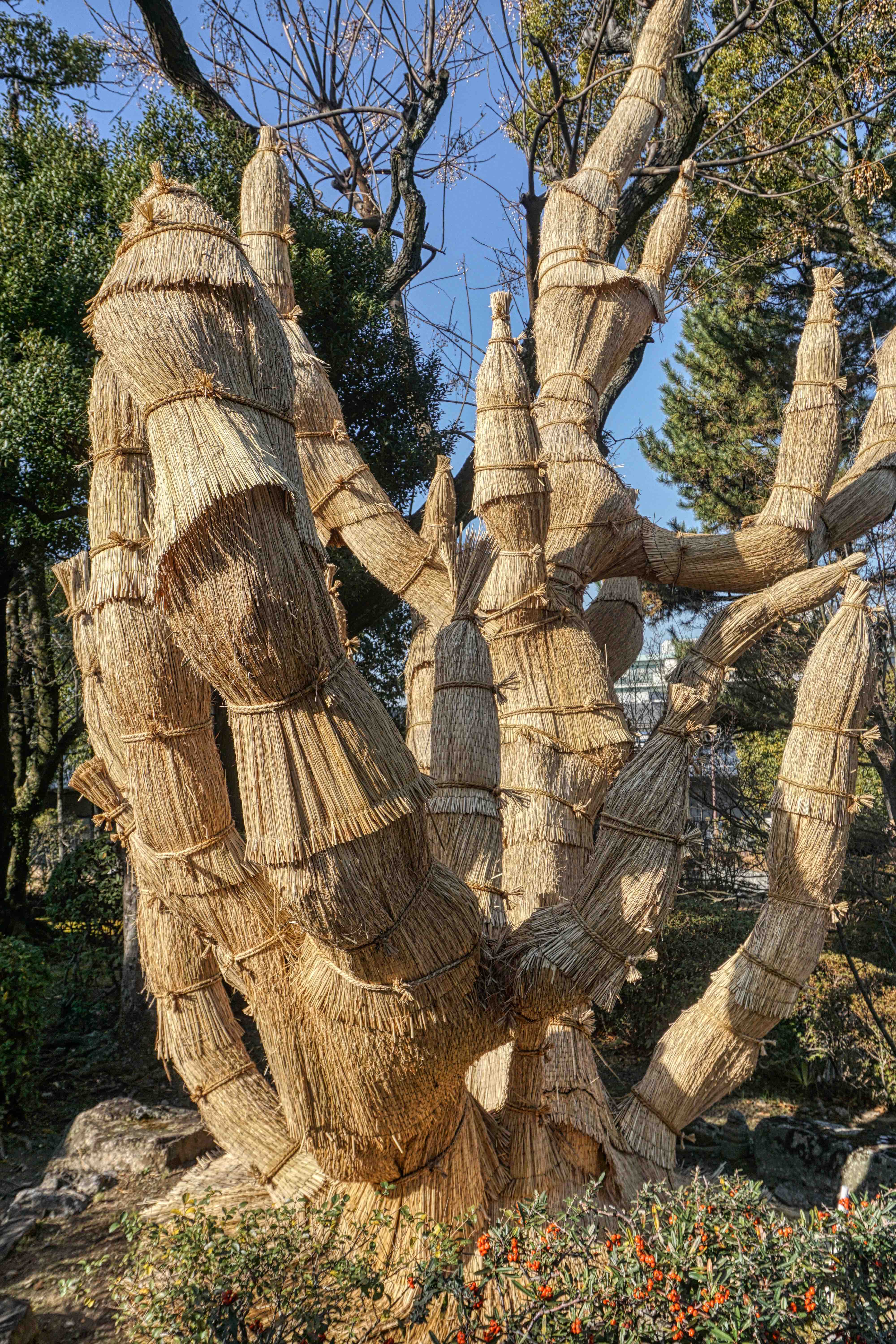
There are some gorgeous old trees in the To-ji temple gardens with the Sakura Cherry tree primed for its Spring awakening. Blossom time in Kyoto is towards the end of March, early April, so I can only imagine how packed this place will become. The grounds of the To-ji are designated as a historical site and cannot be excavated, so all the trees here were planted by piling up earth, with their growth and branches being supported by wooden struts and trellises. They also wrap the trunks of the trees – sometimes the entire tree – in bound straw to protect them from the winter sub-zero chills – beautifully done of course, very Japanese!
 Travels With My Ant
The beauty continues. Tourism is the most irritating ism of the century, the photo bombing creatures you encounter bring exemplars of this fact. You two are of course NOT tourists, but cultural visitors. Nothing so vulgar as the t word for you. 😜🤗
LikeLiked by 1 person