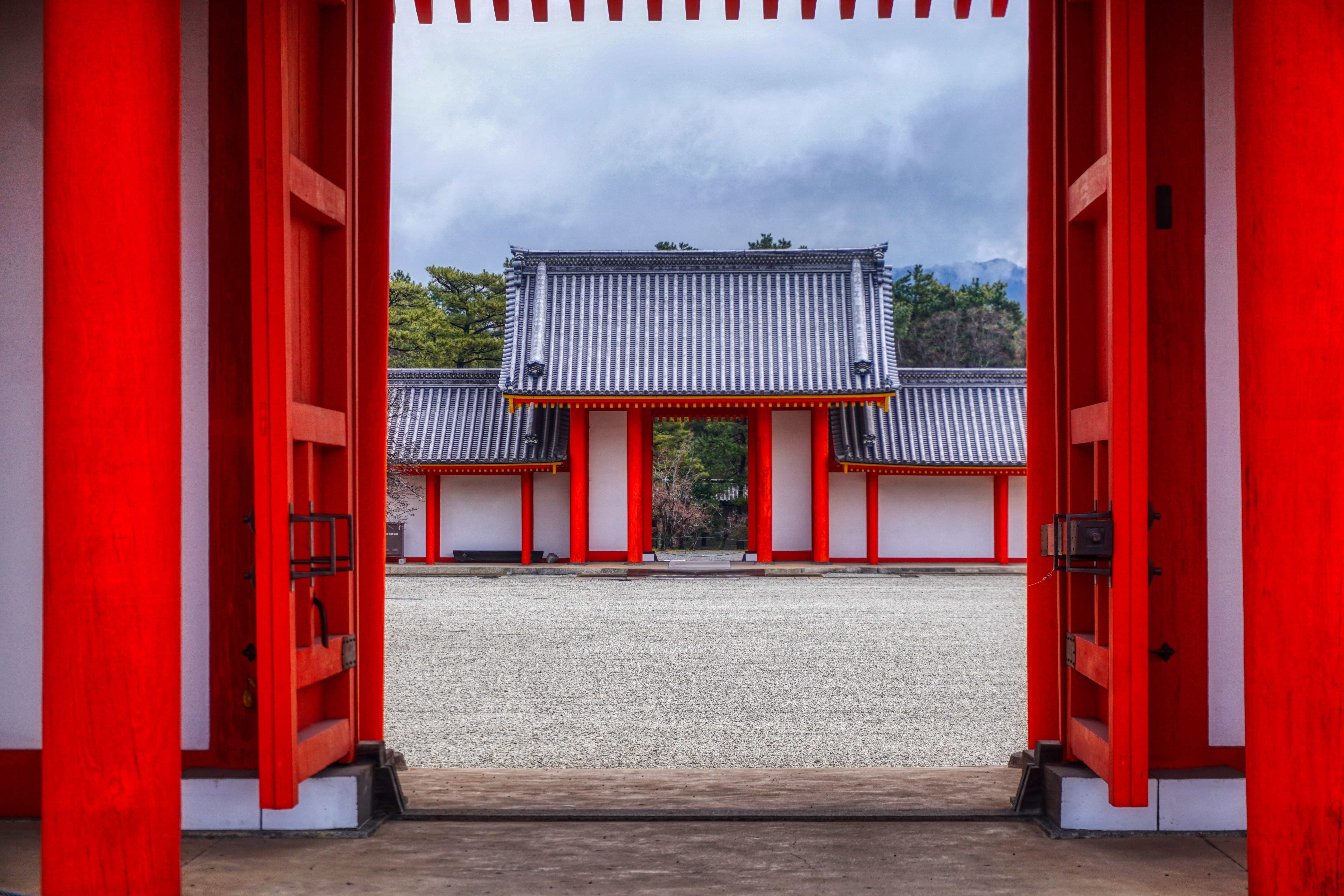
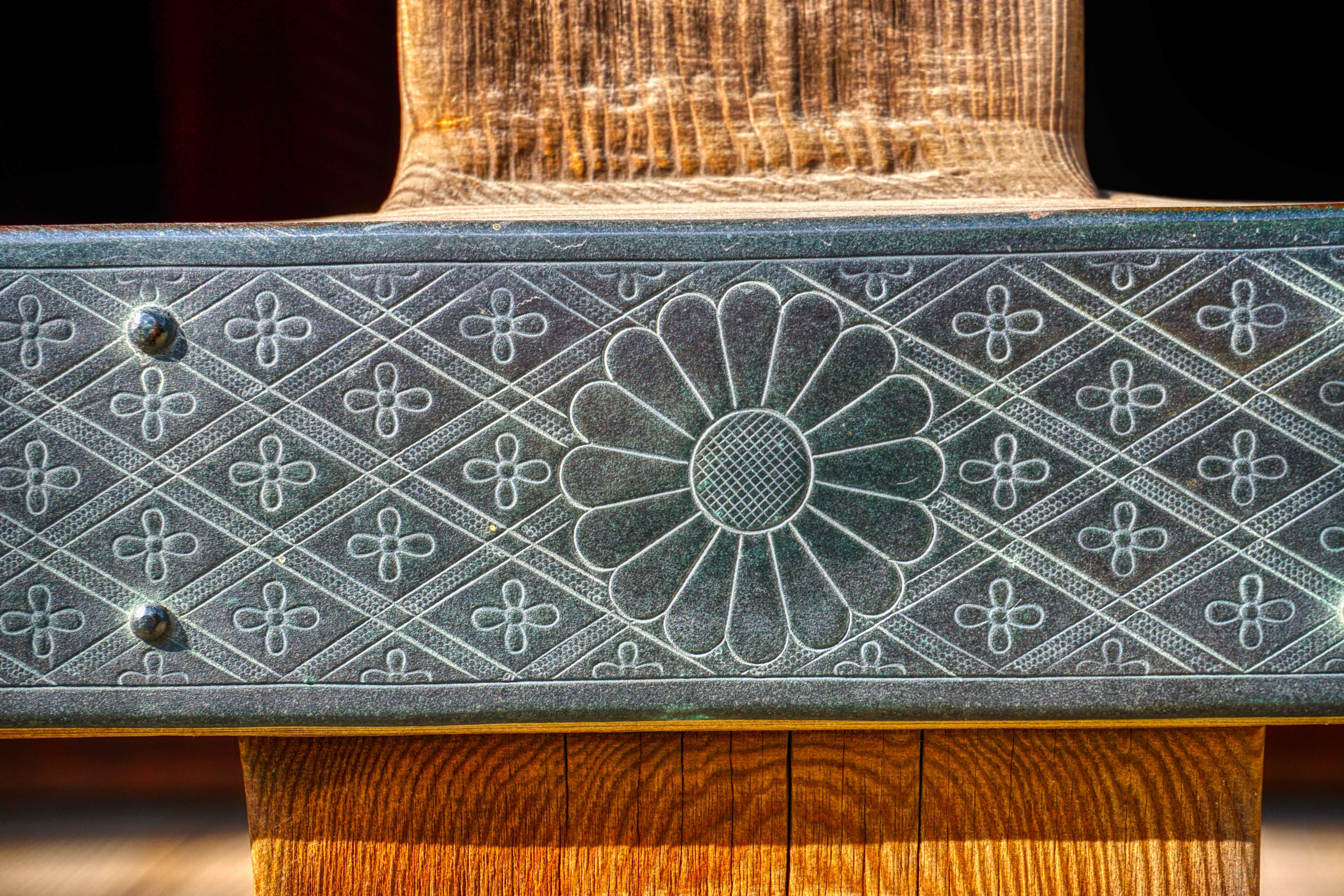
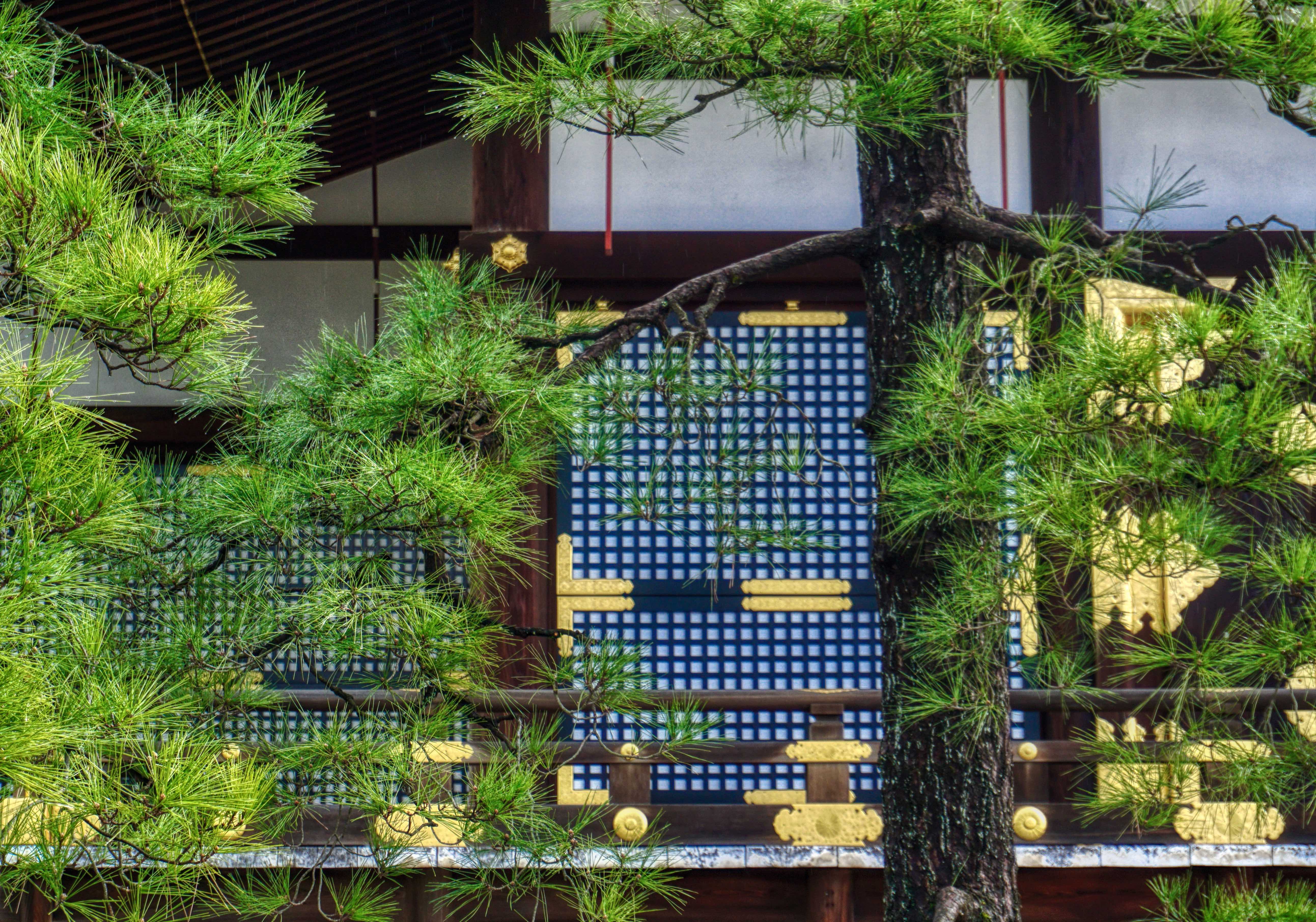
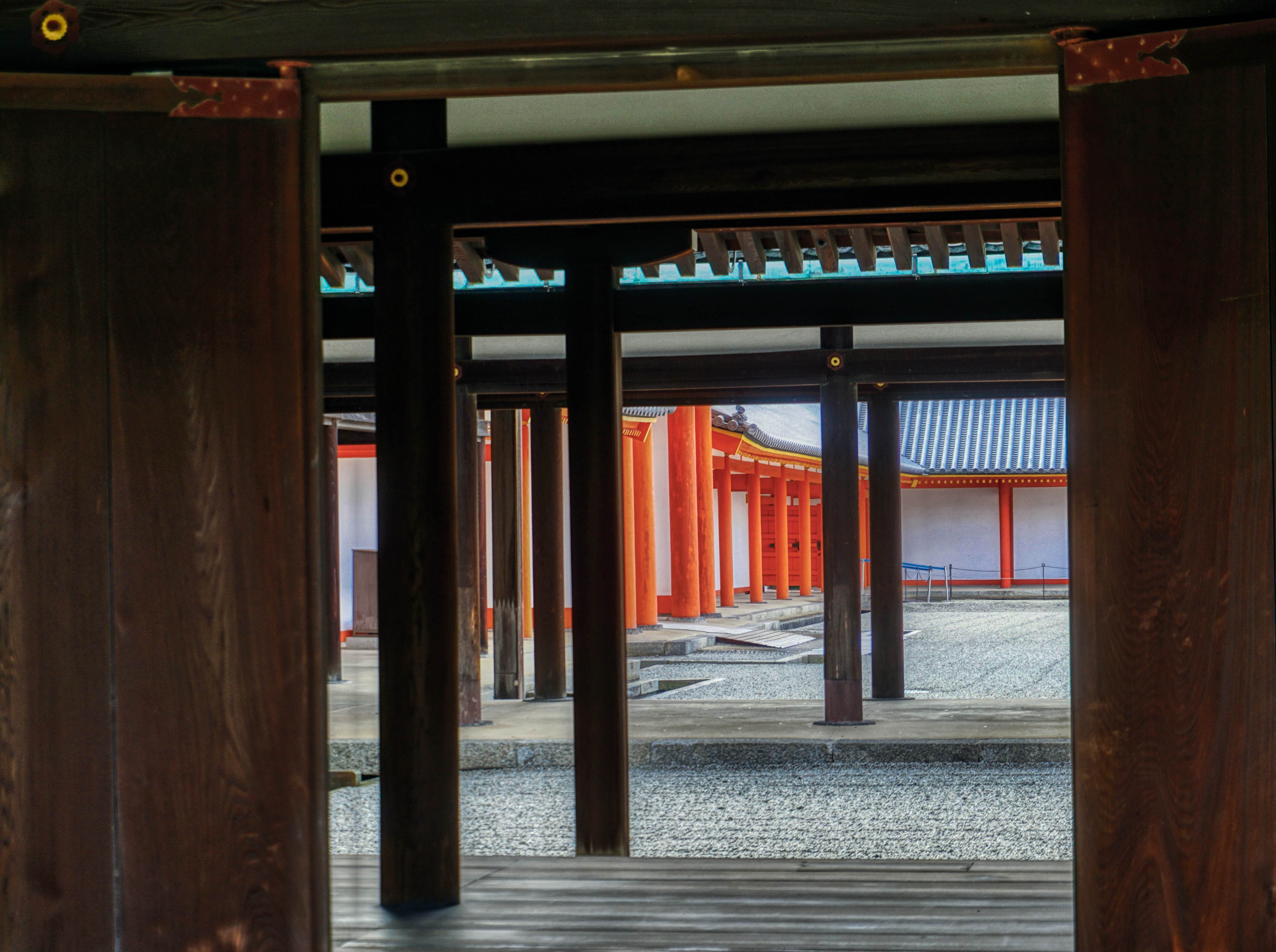
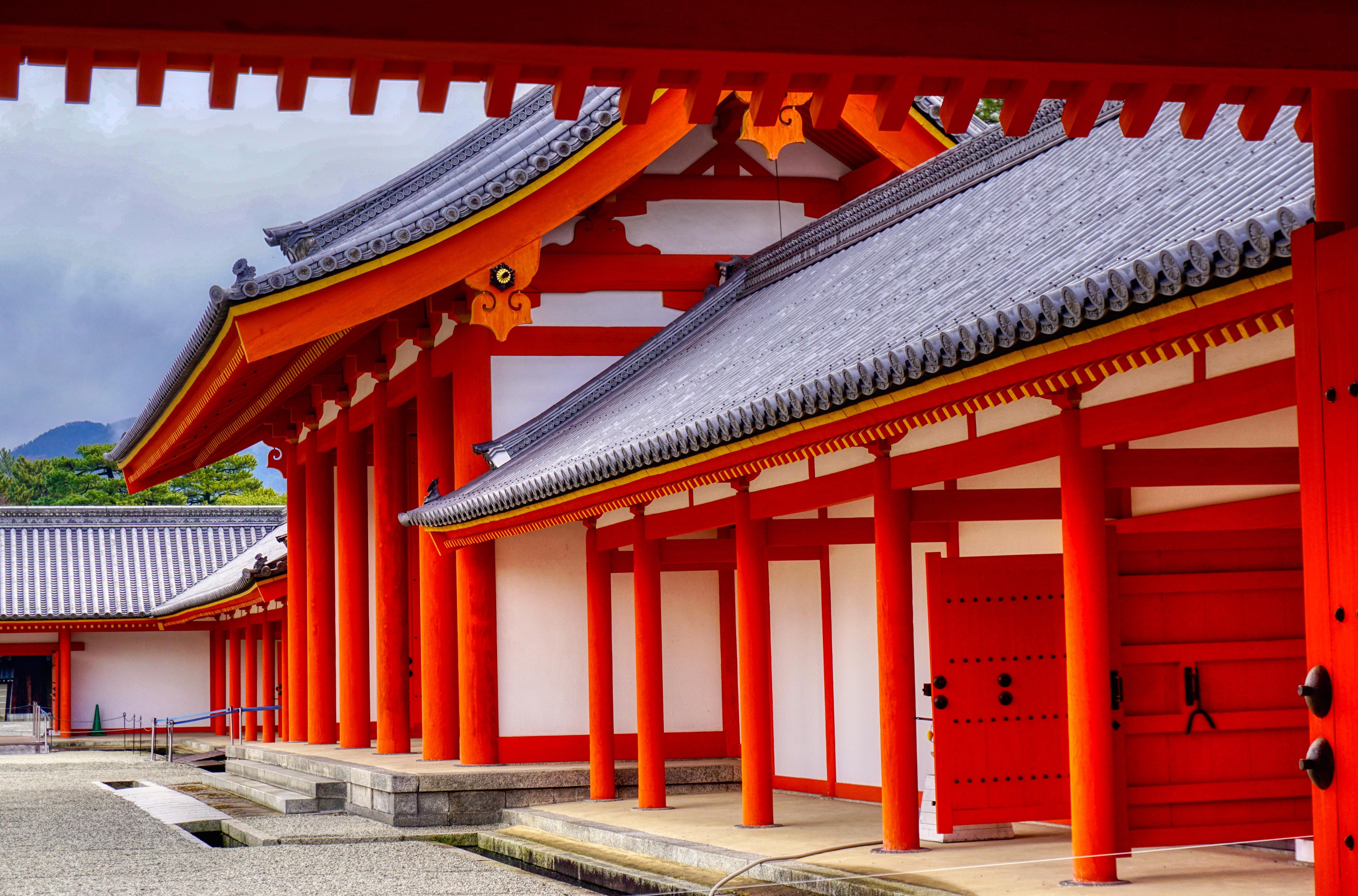










Kyoto had been the capital of Japan and the site of its Emperor’s residence since 794 with the surviving Imperial Palace the Emperor’s home from 1331. In 1869 the capital moved from Kyoto to Tokyo during the Meiji restoration when the Tokugawa Shogun whose ancestors had ruled Japan in the feudal period relinquished power back to the Emperor.
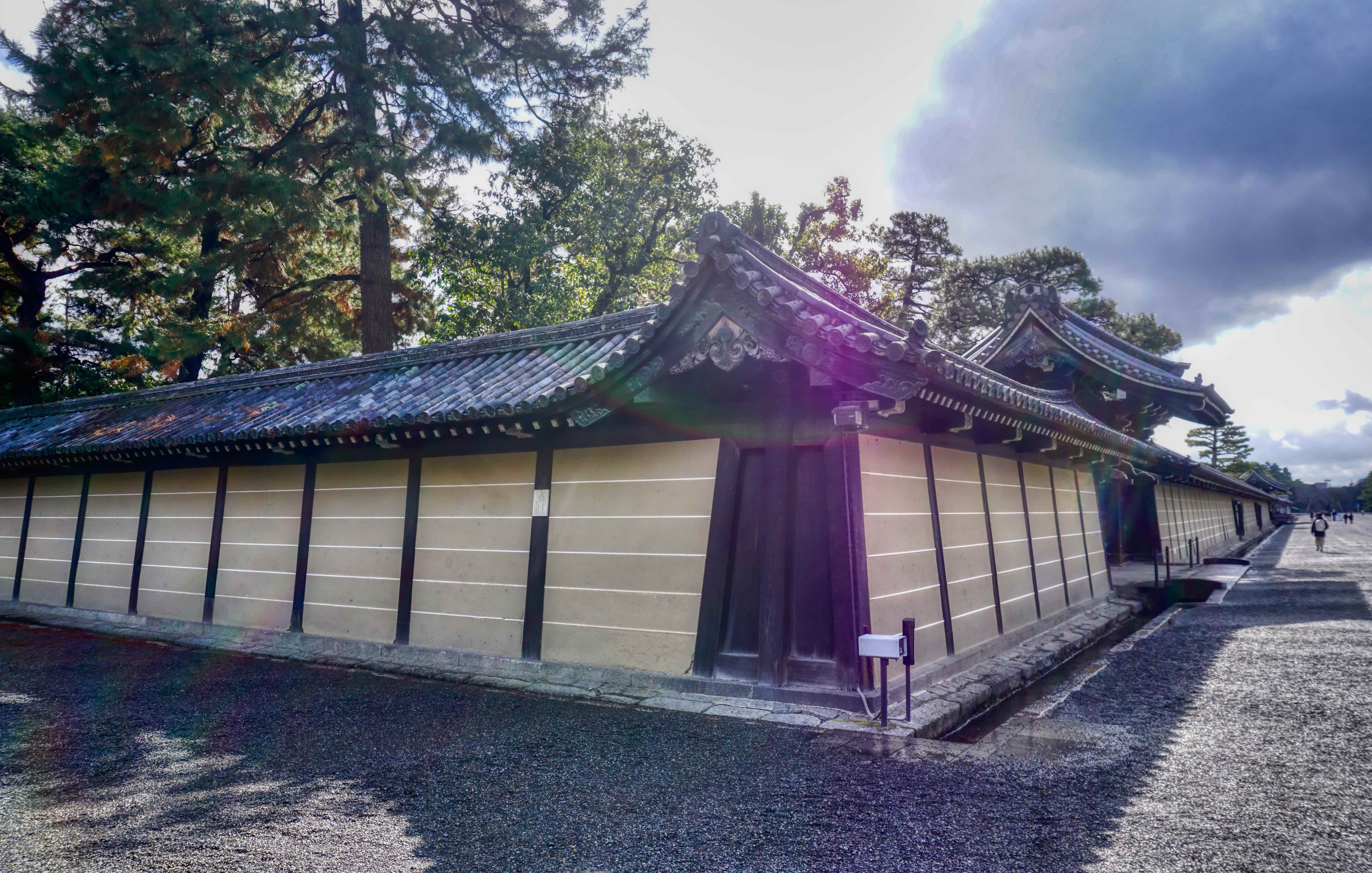
The Imperial Palace is a huge site set smack bang in the middle of downtown Kyoto. The original boundaries of the ancient capital formed a rectangle measuring 5.2 km from north to south and 4.5 km from east to west. The present Imperial Palace measures 1,3 km from north to south and 700m from east to west – a large proportion of the ancient city, a more modest proportion of modern Kyoto. it’s still packed with some 50,000 trees, gorgeous intimate shrines and Zen-like gardens and ponds. One of the shrines within the palace gardens has a large piece of ancient wood that states “This monument is a bark of a big Camphor that was more than 600 years old in Munakata
Jinjya. We think that gods exist in all things in nature. We think that gods exist in this bark too.” – I love that.
The interior of the Imperial Palace is largely closed to the public as it’s still an operating royal residence (the Sandringham of Japan?) and frequently visited by the current royal family, so only the gardens and inner palace grounds are open.
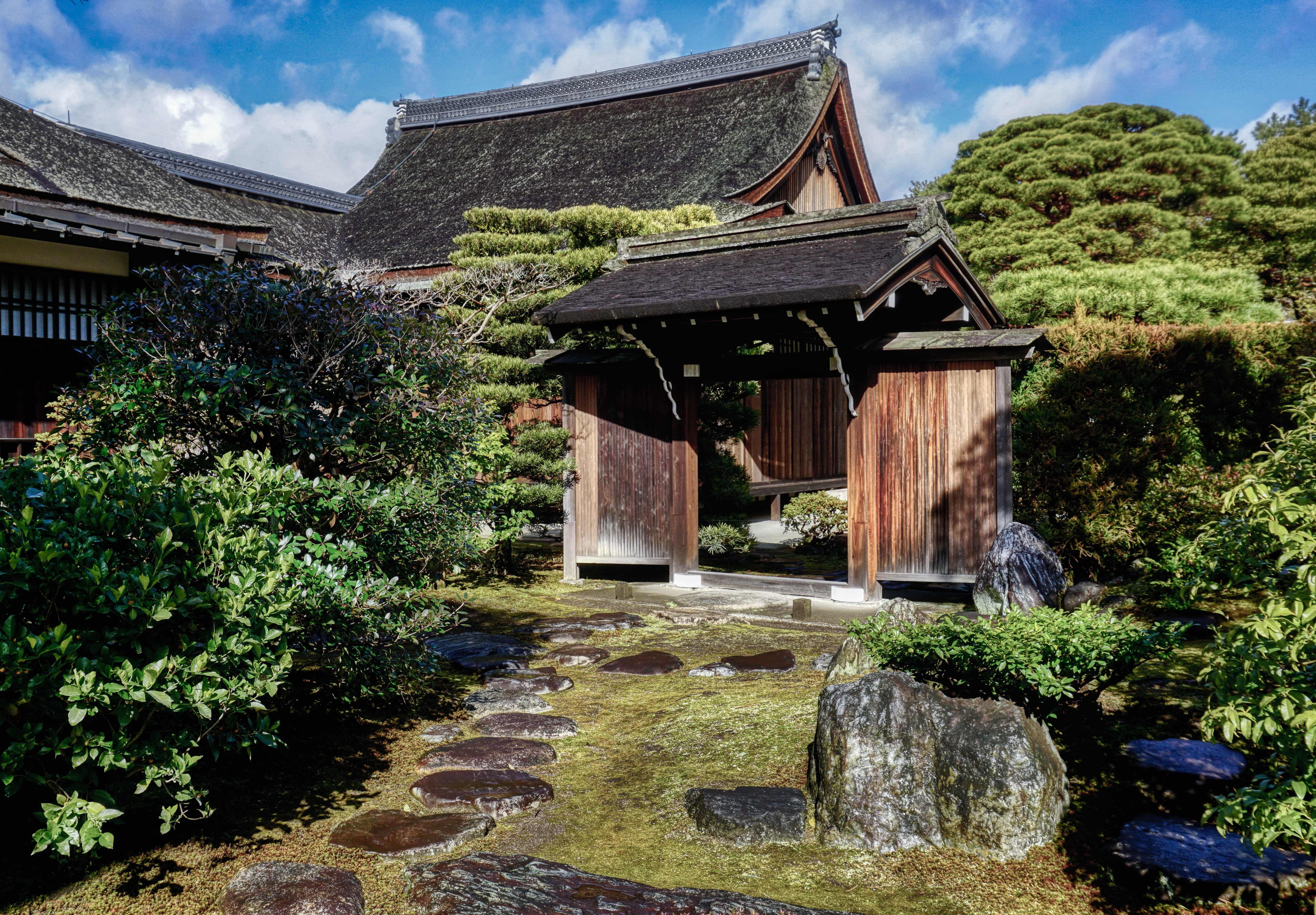
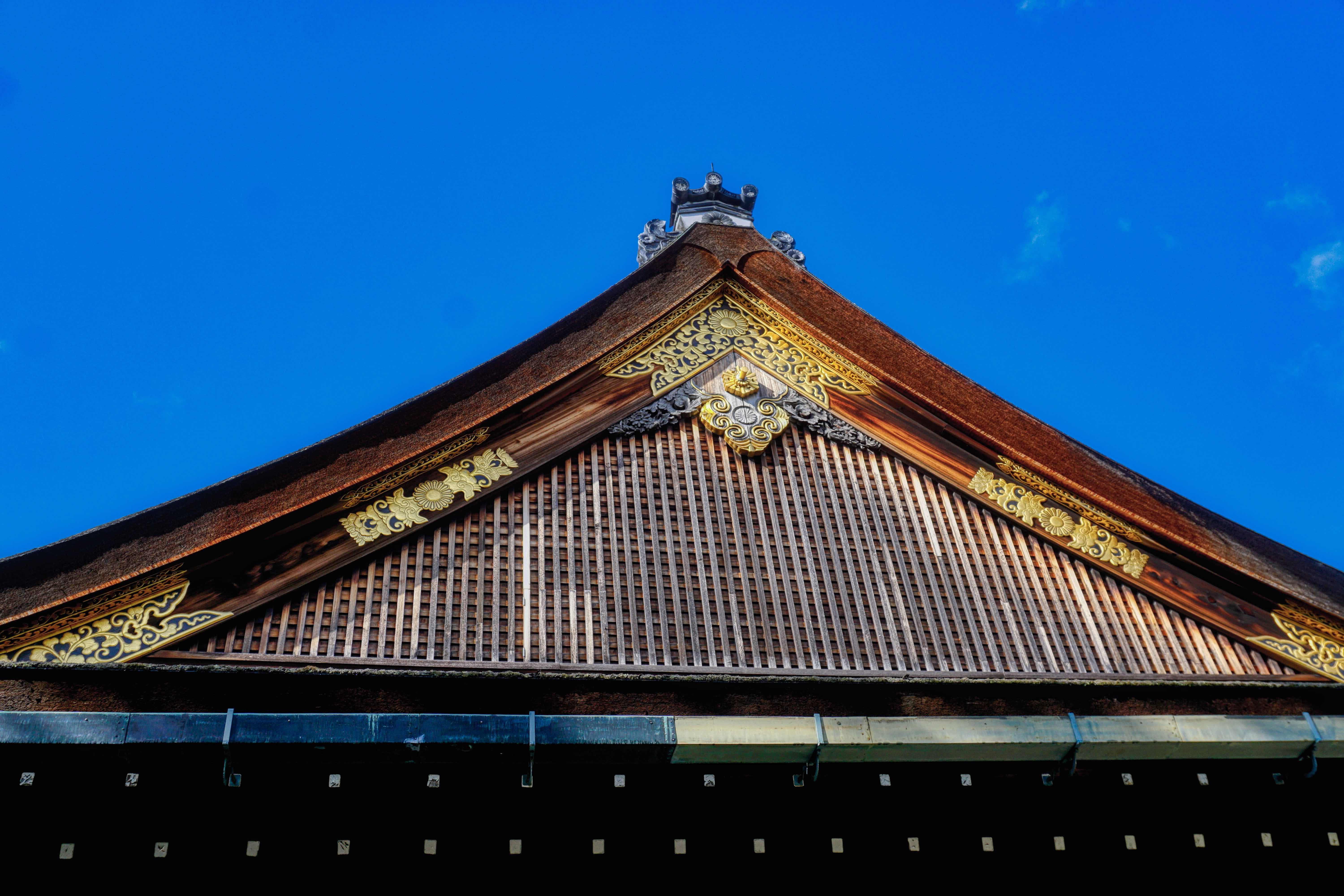
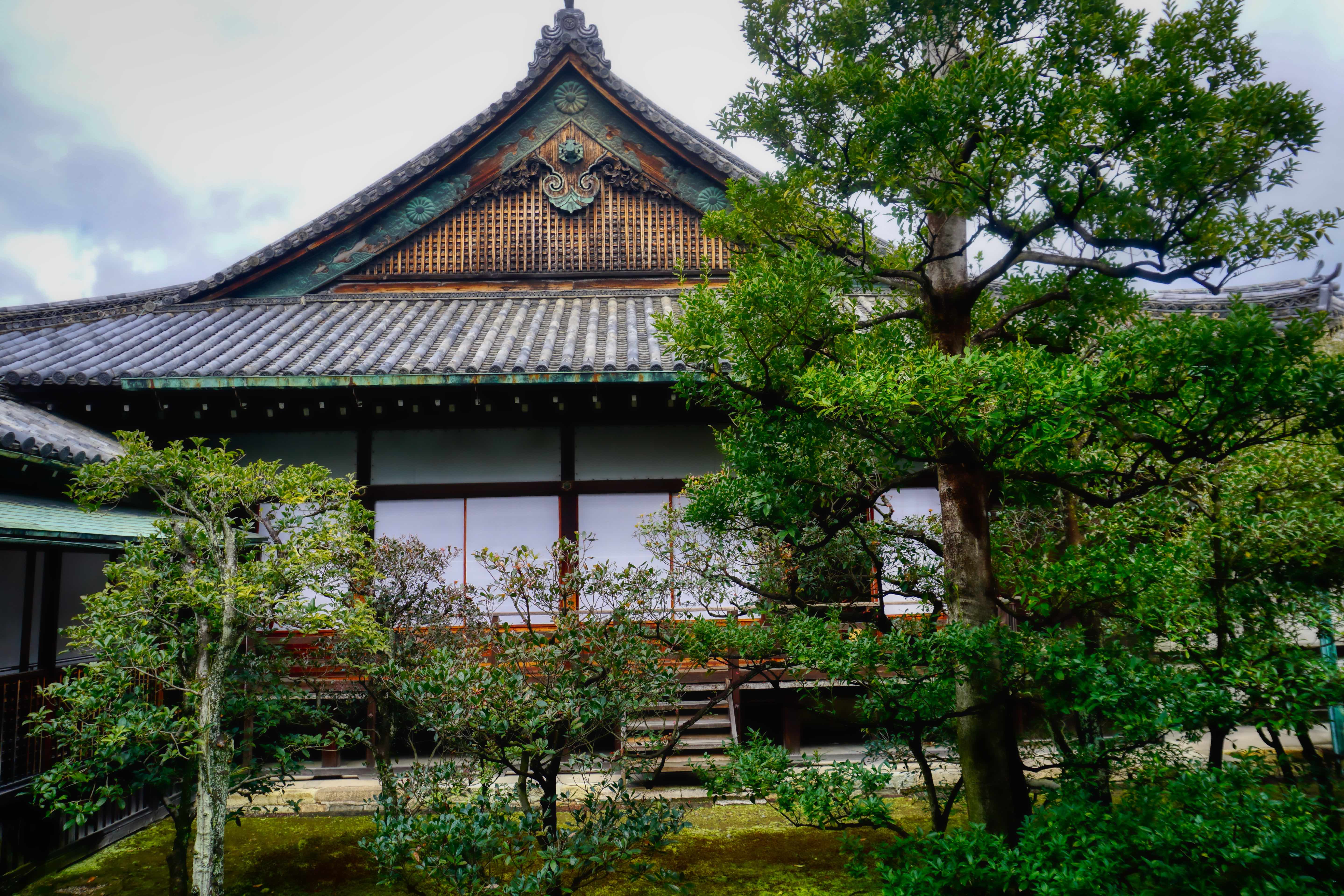
The present-day Imperial Palace is a relatively modern reconstruction, rebuilt in 1855 after multiple devastating fires over the centuries, due to its wooden construction, but it preserves the look and ambiance of the original palace as it had been in the time of the earlier Imperial dynasties.
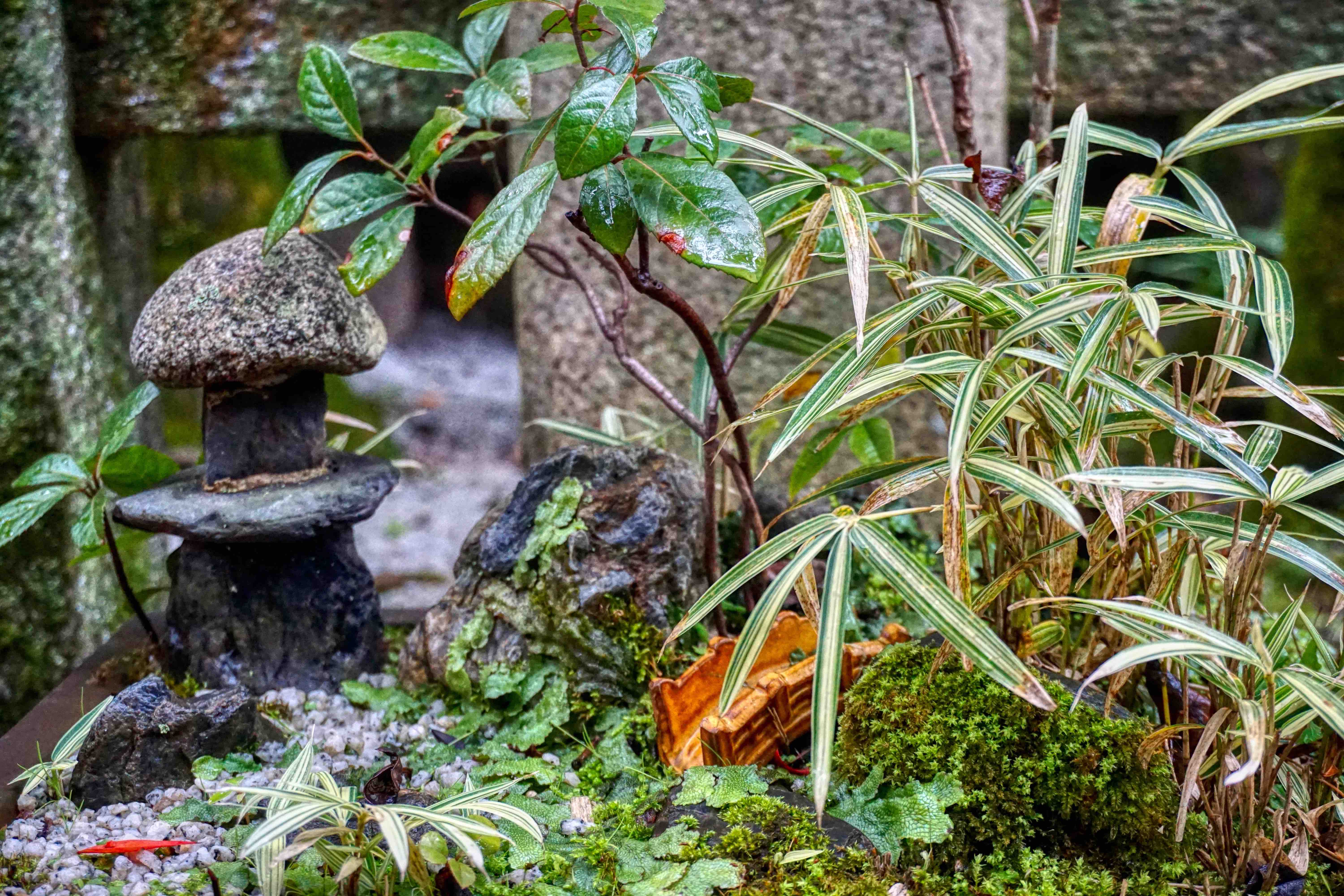
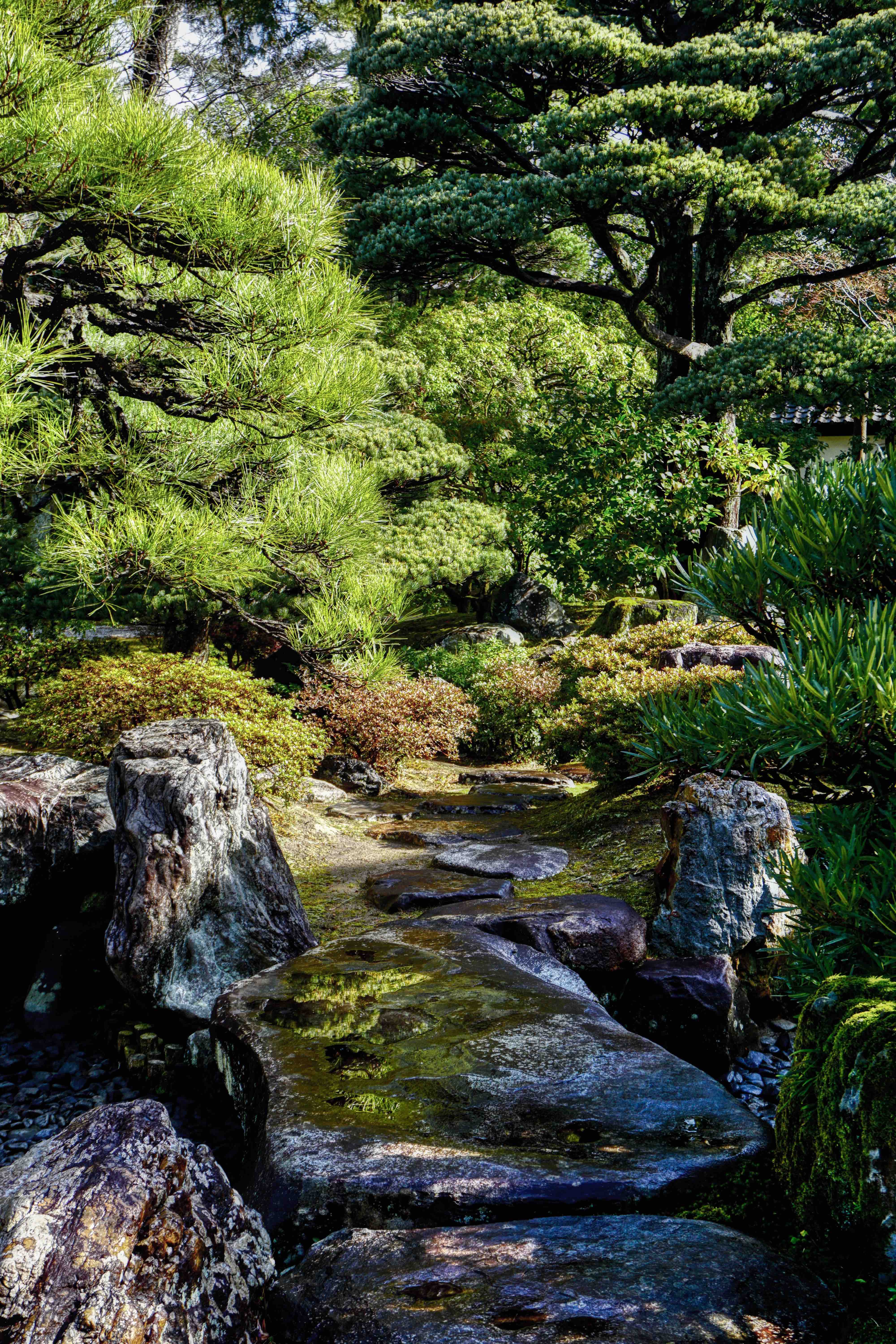
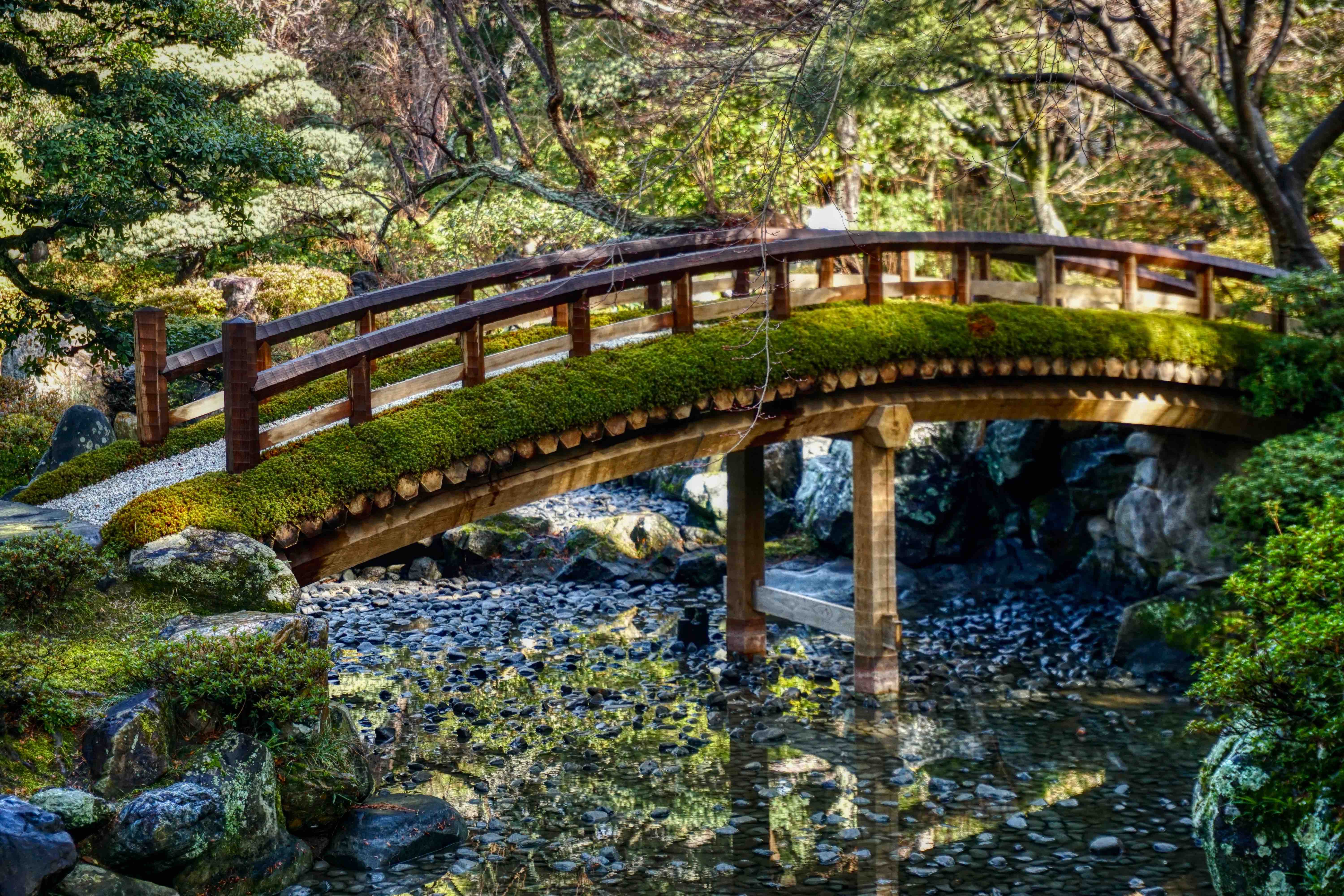
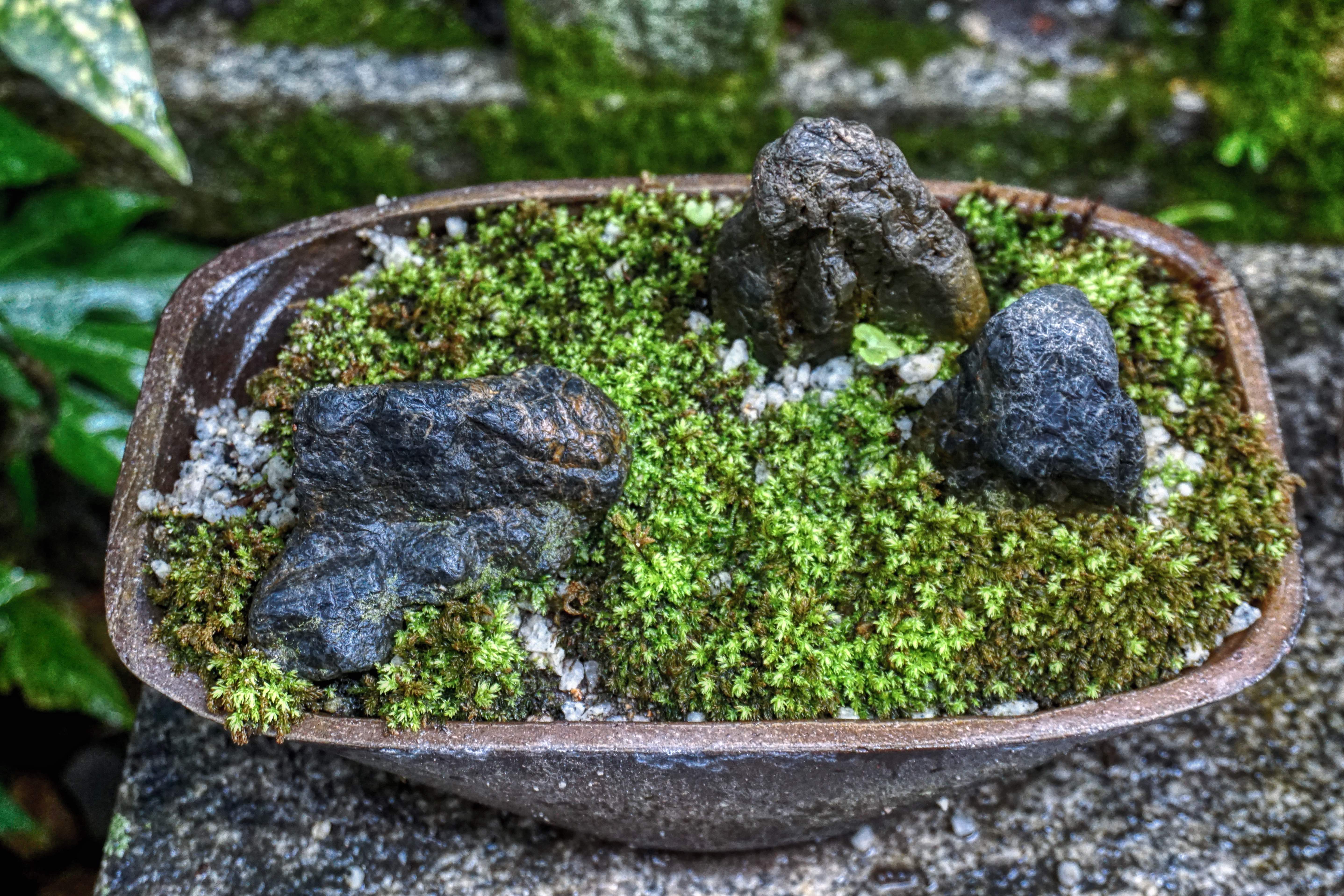
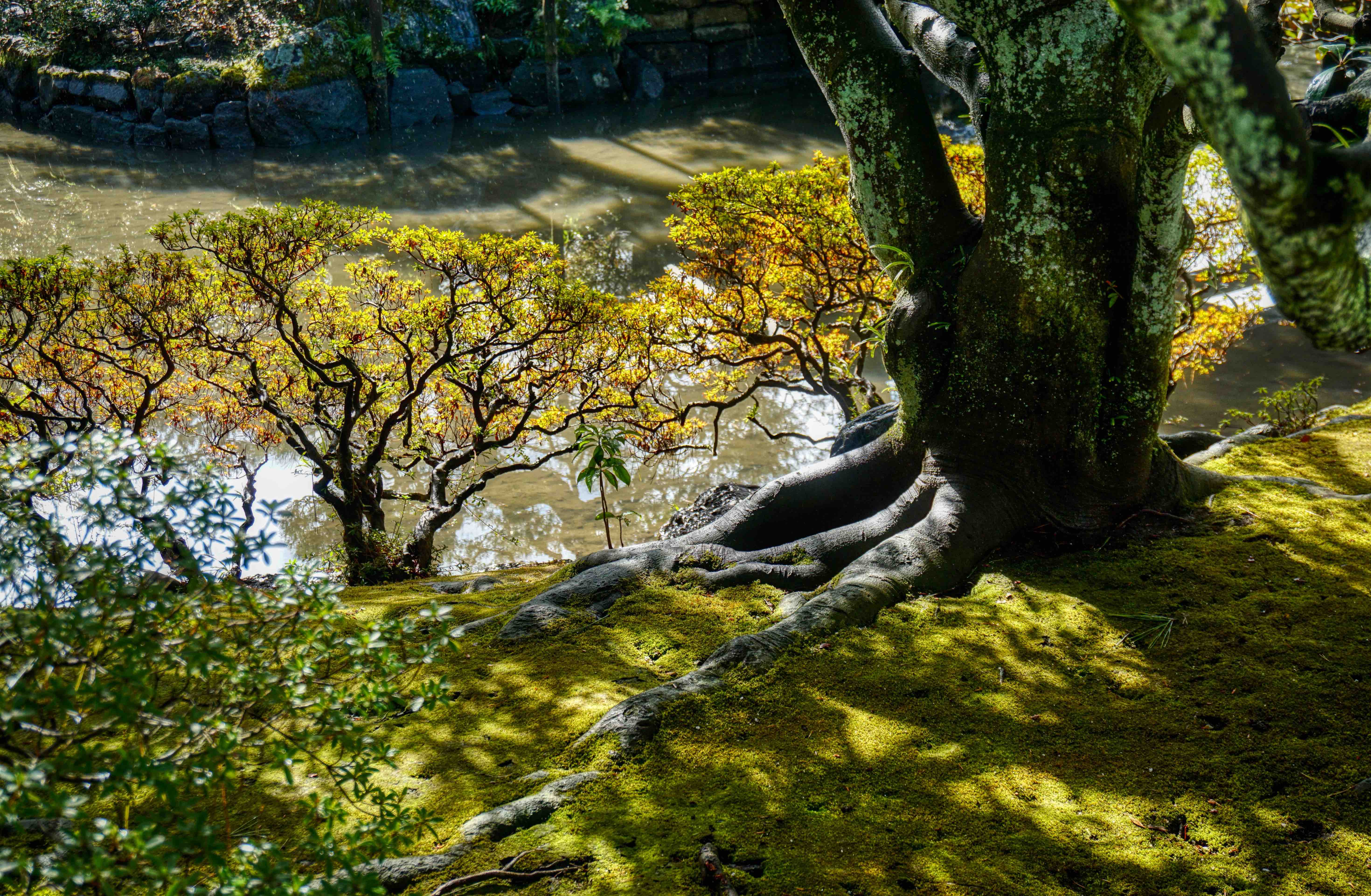
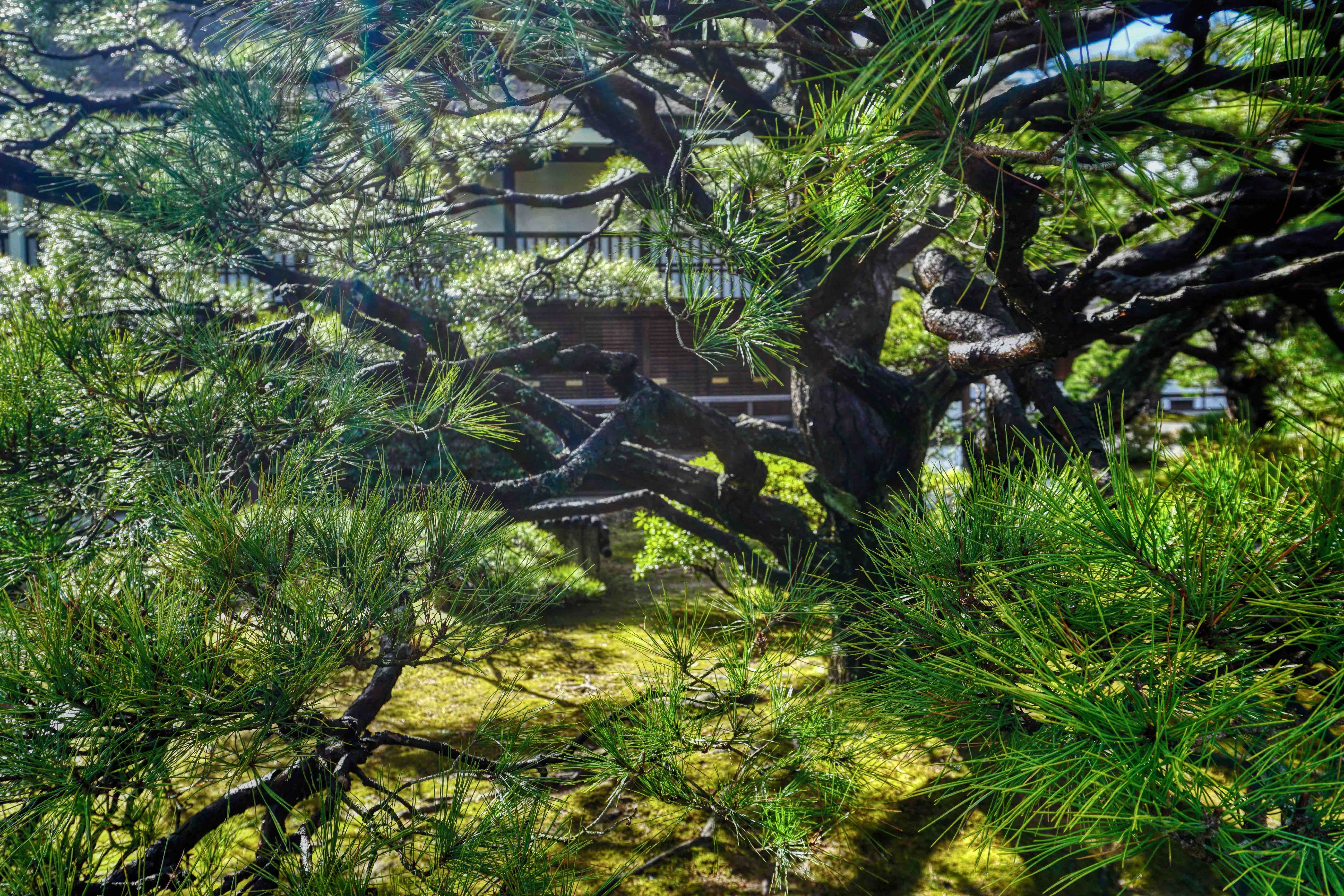
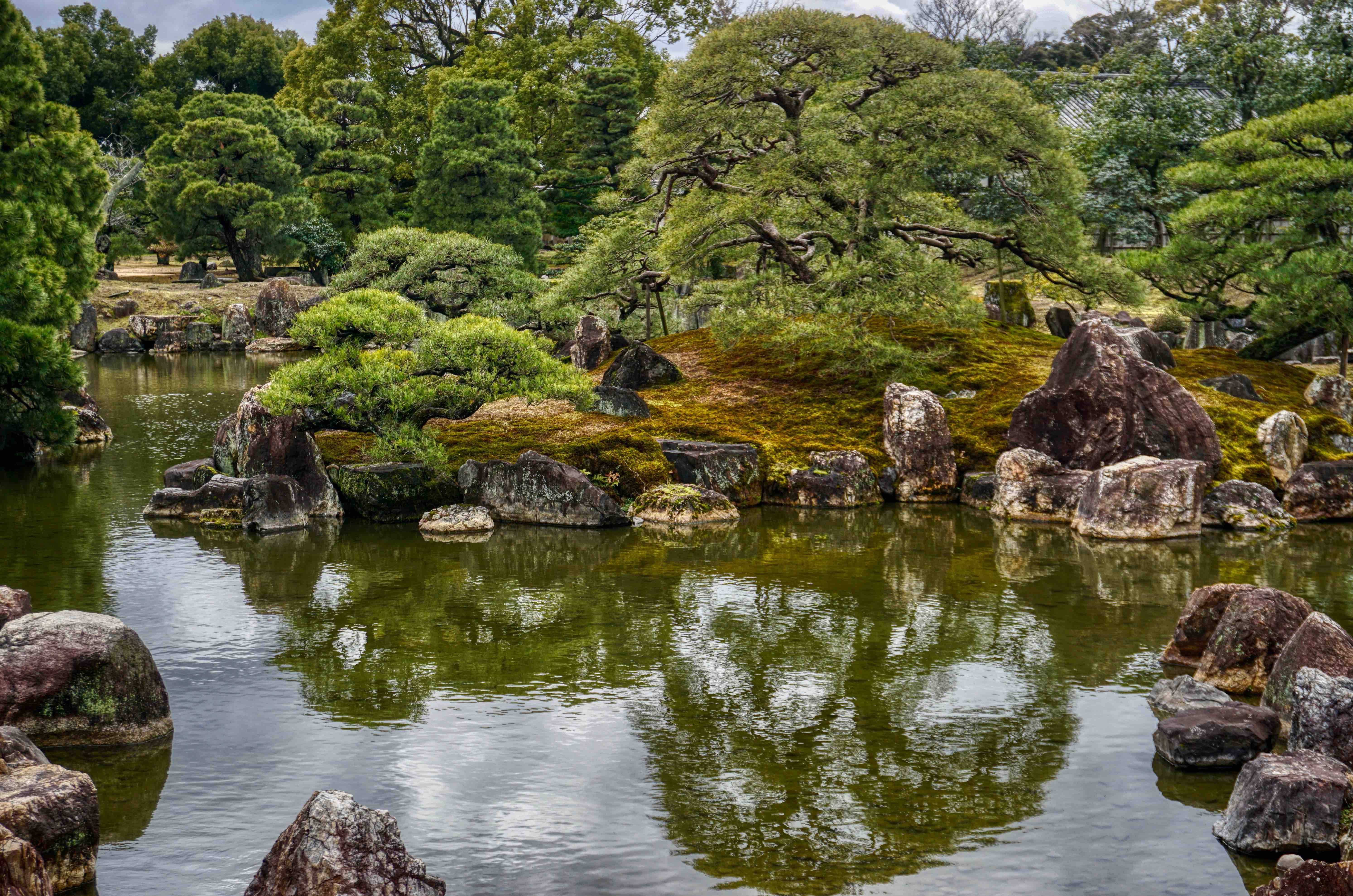
One of the most beautiful gardens in Kyoto has to be the Gonaitei Inner Garden, the Emperor’s private garden, exquisitely designed with a meandering shallow stream lined with pebbles, impossibly beautiful arched wooden bridges, short one-slab stone bridges, moss covered banks, intimate tea houses and, of course the obligatory grey herons preening themselves in the dappled cold winter light.
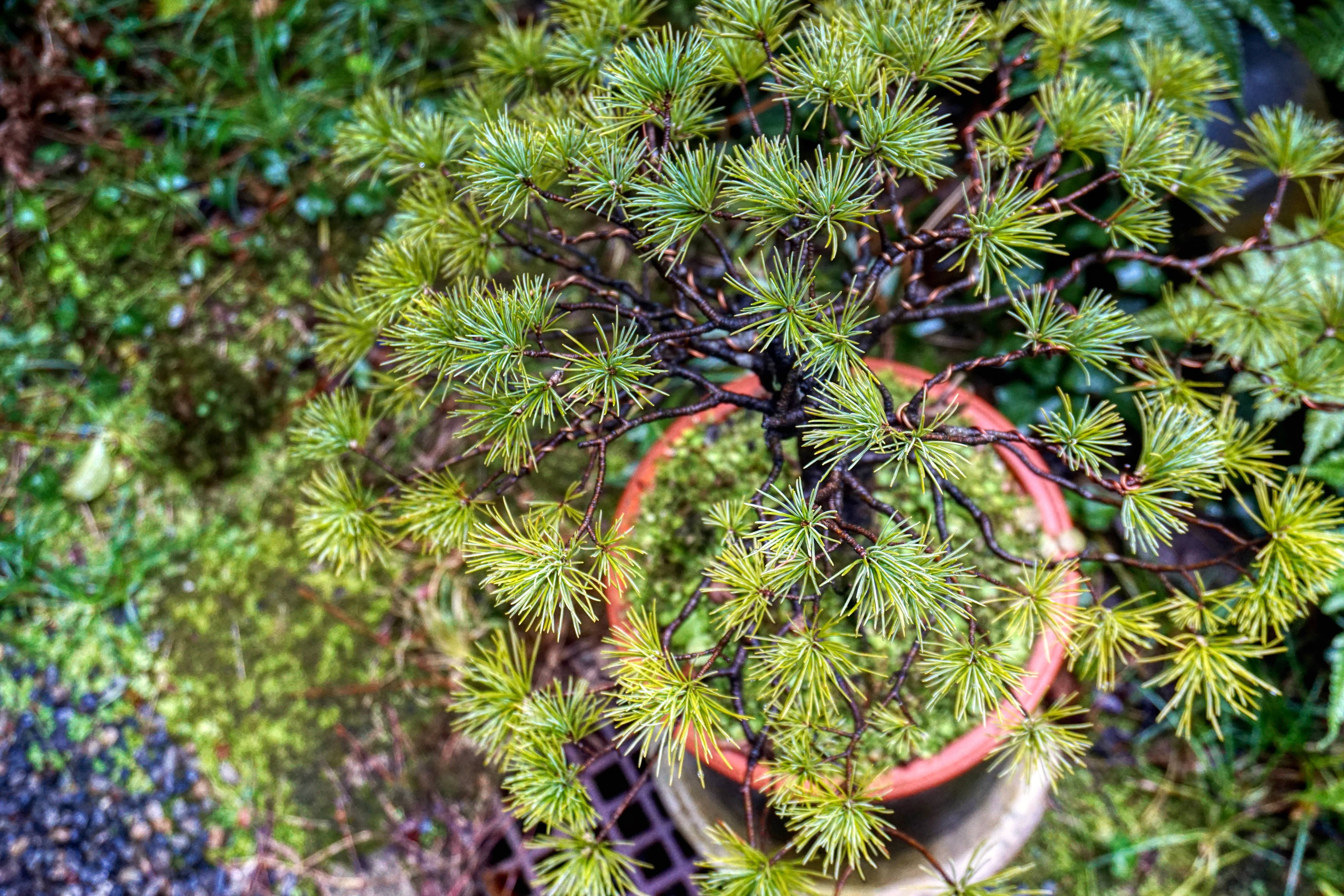
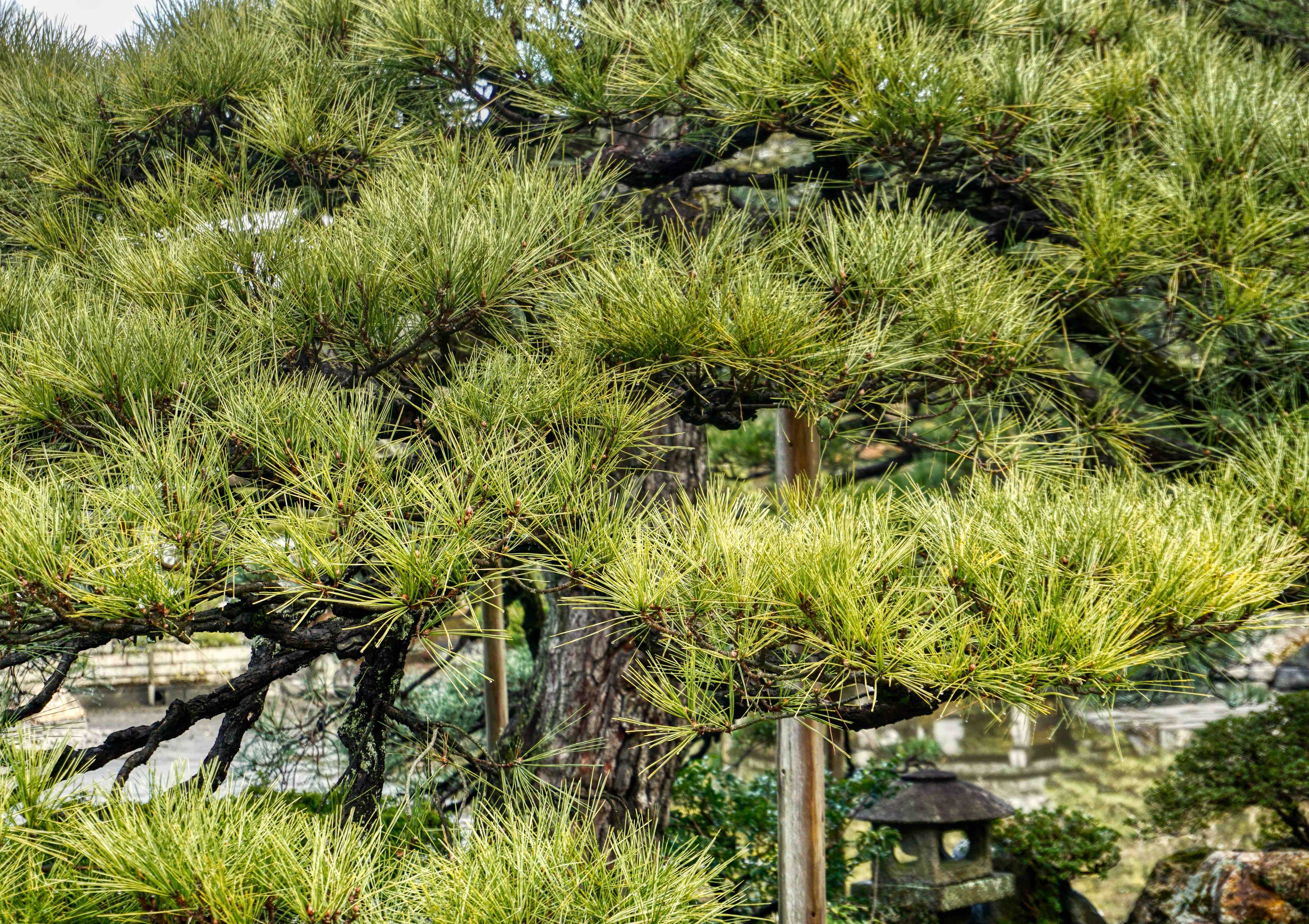
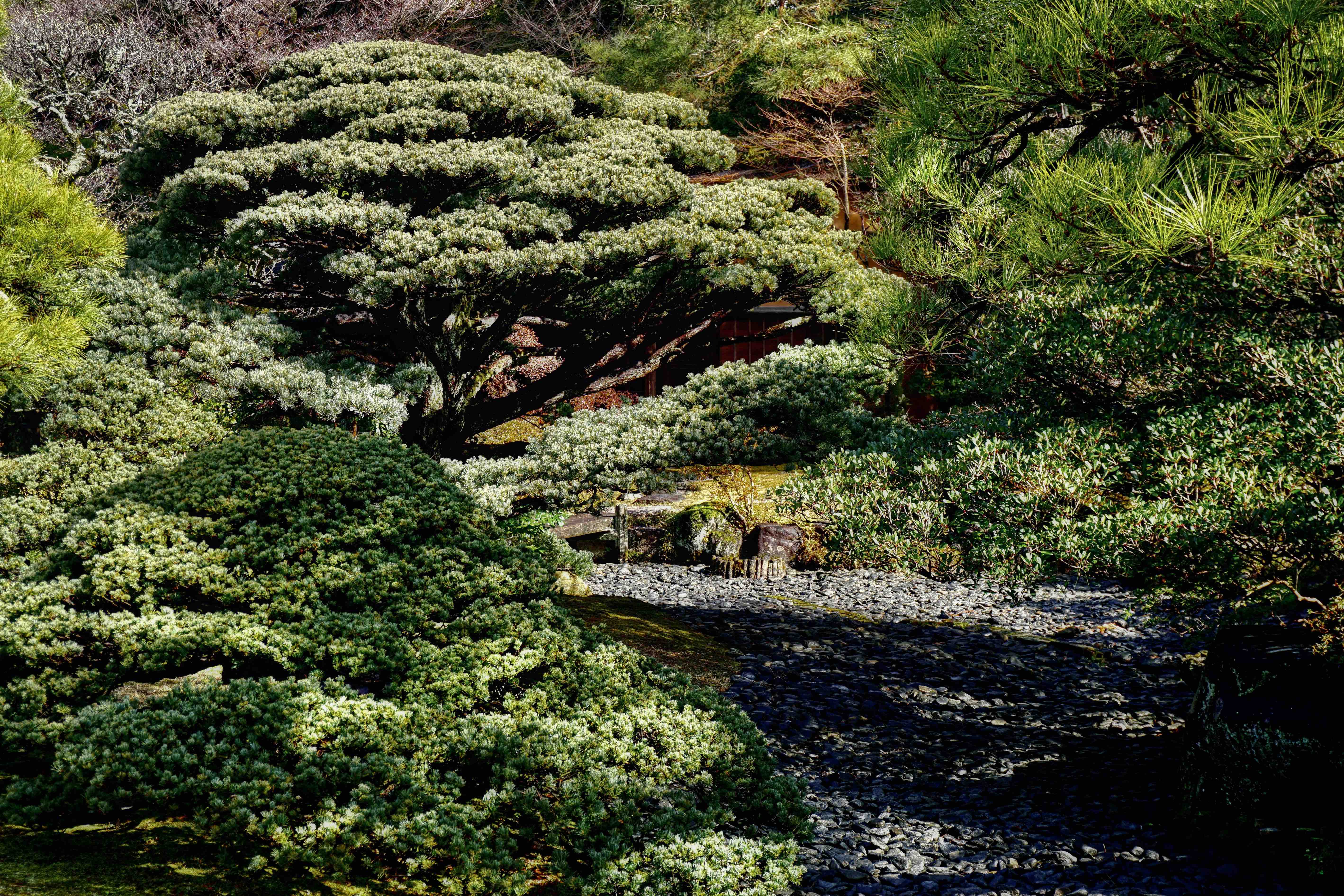
The trees are clipped and manicured within an inch of their lives, but of course presented as if nature had intended them this way – actually, whilst walking around the inner palace courtyards, we saw groups of uniformed gardeners expertly clipping trees to perfection, in absolute silence of course – a true art form if ever there was.
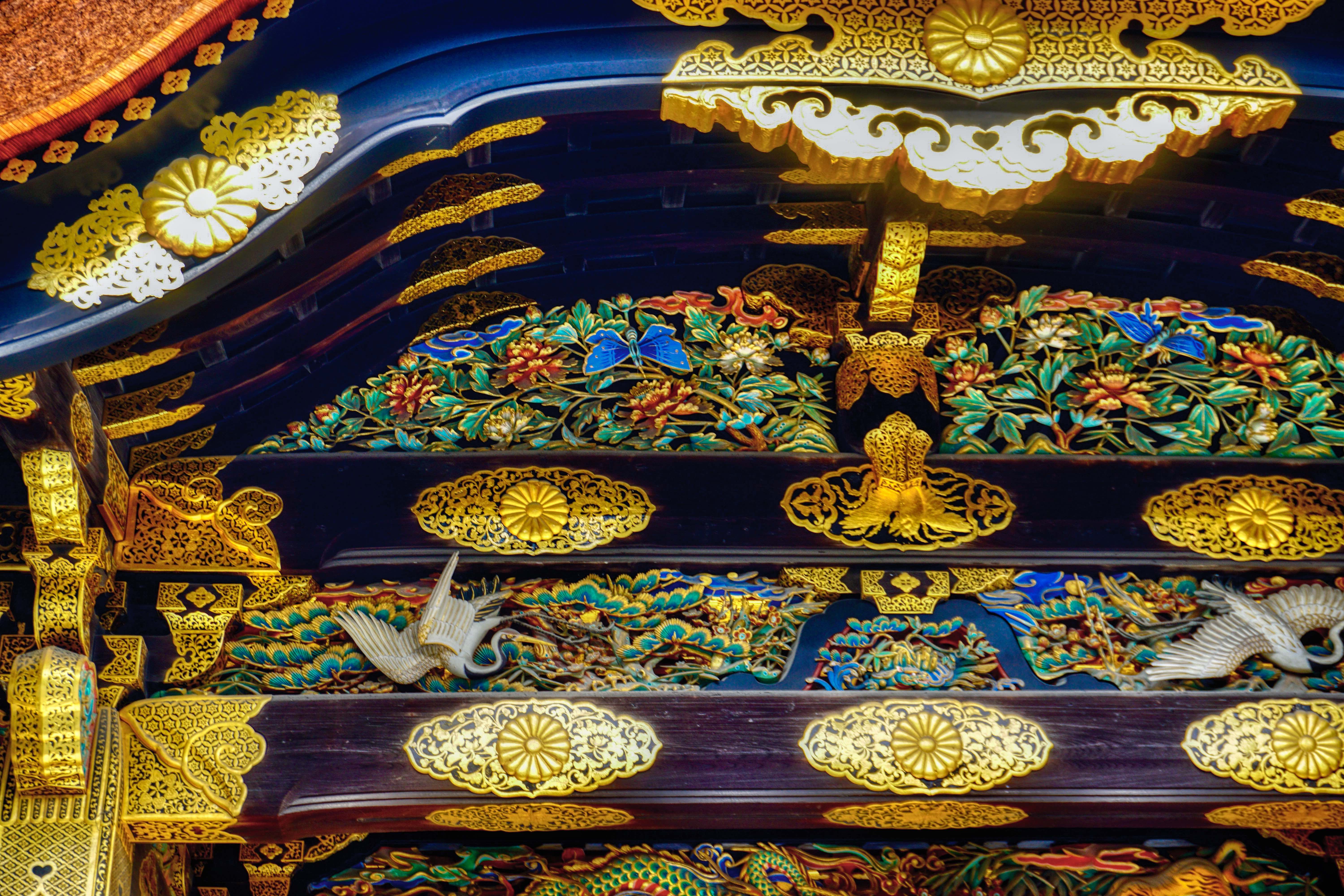
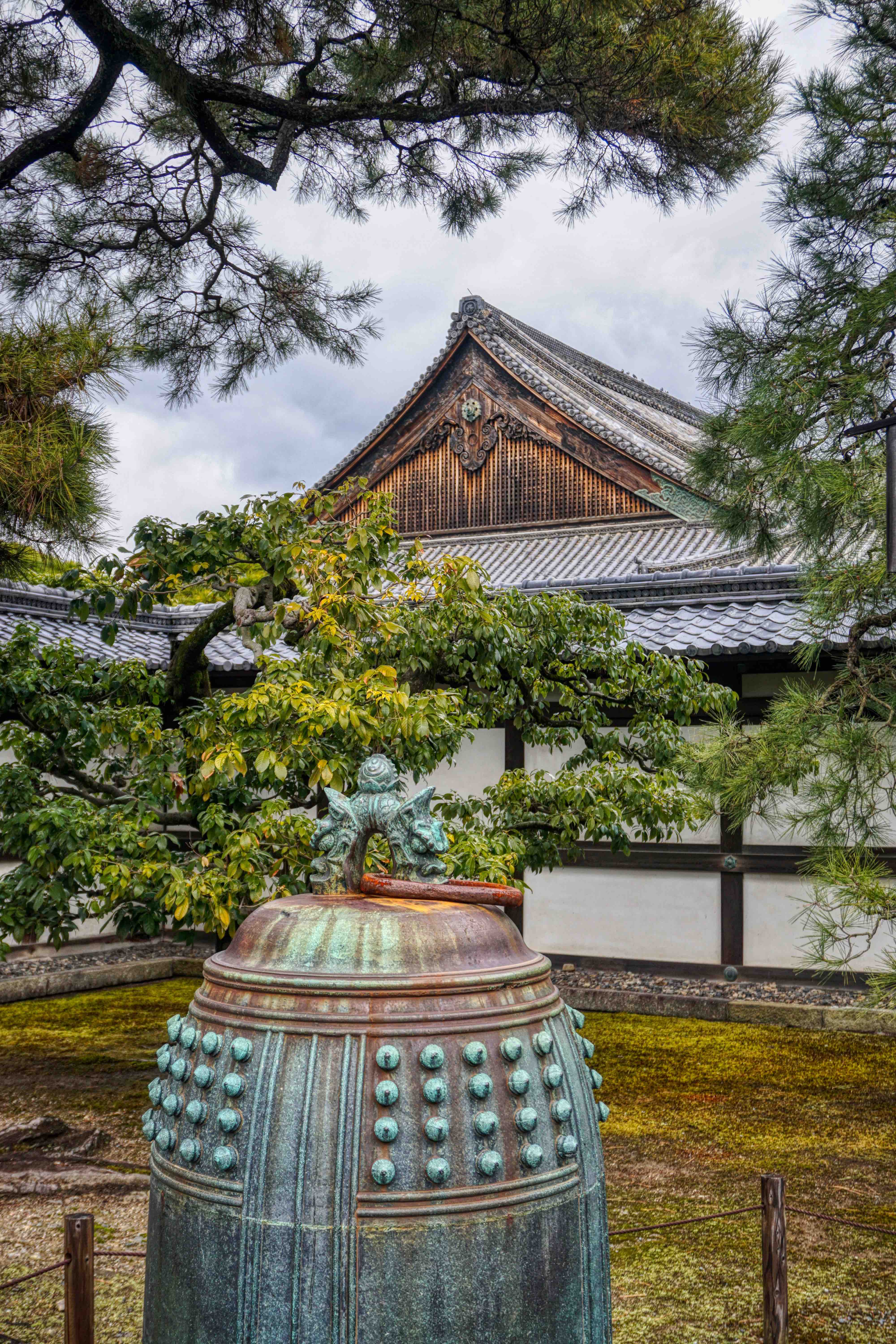
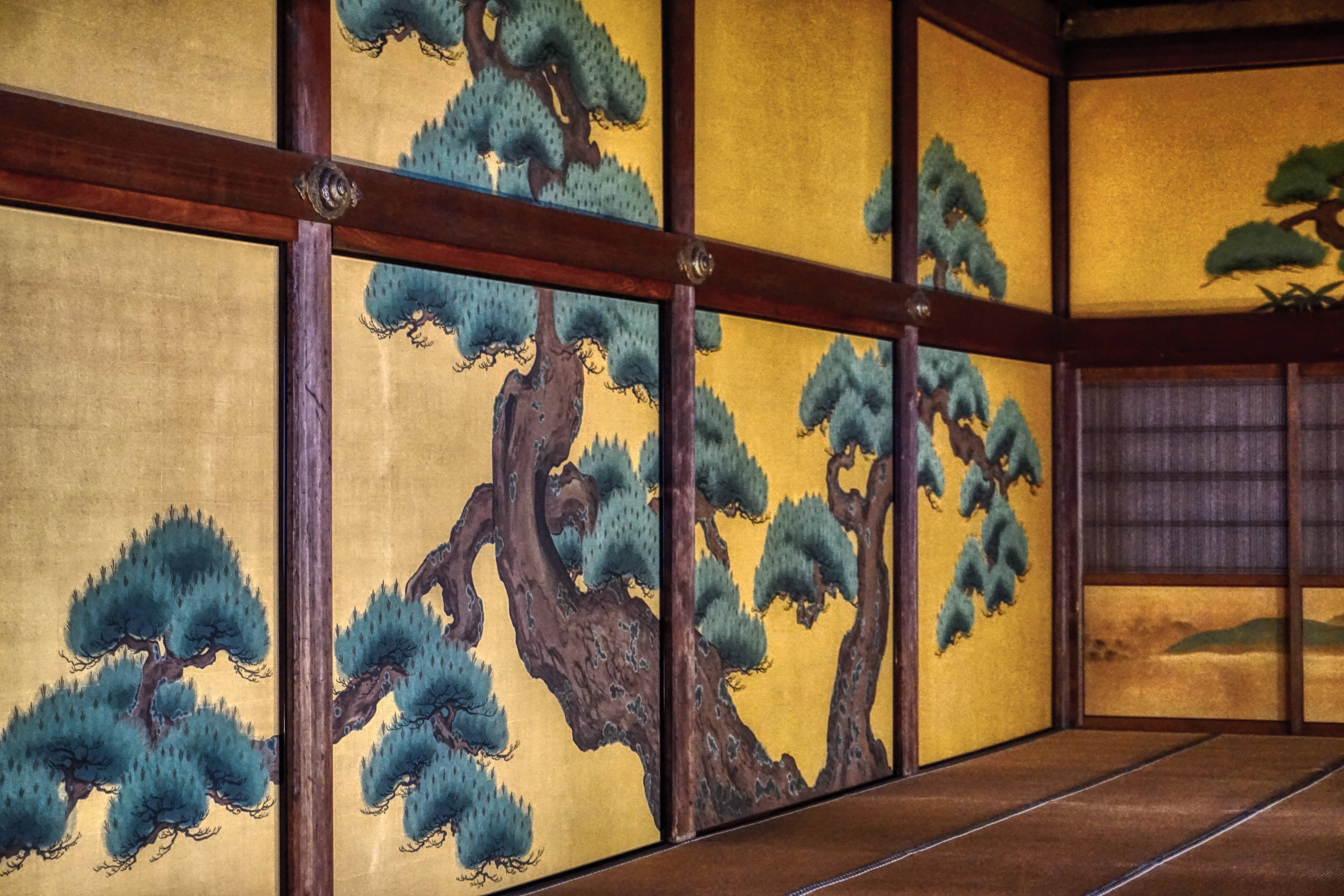
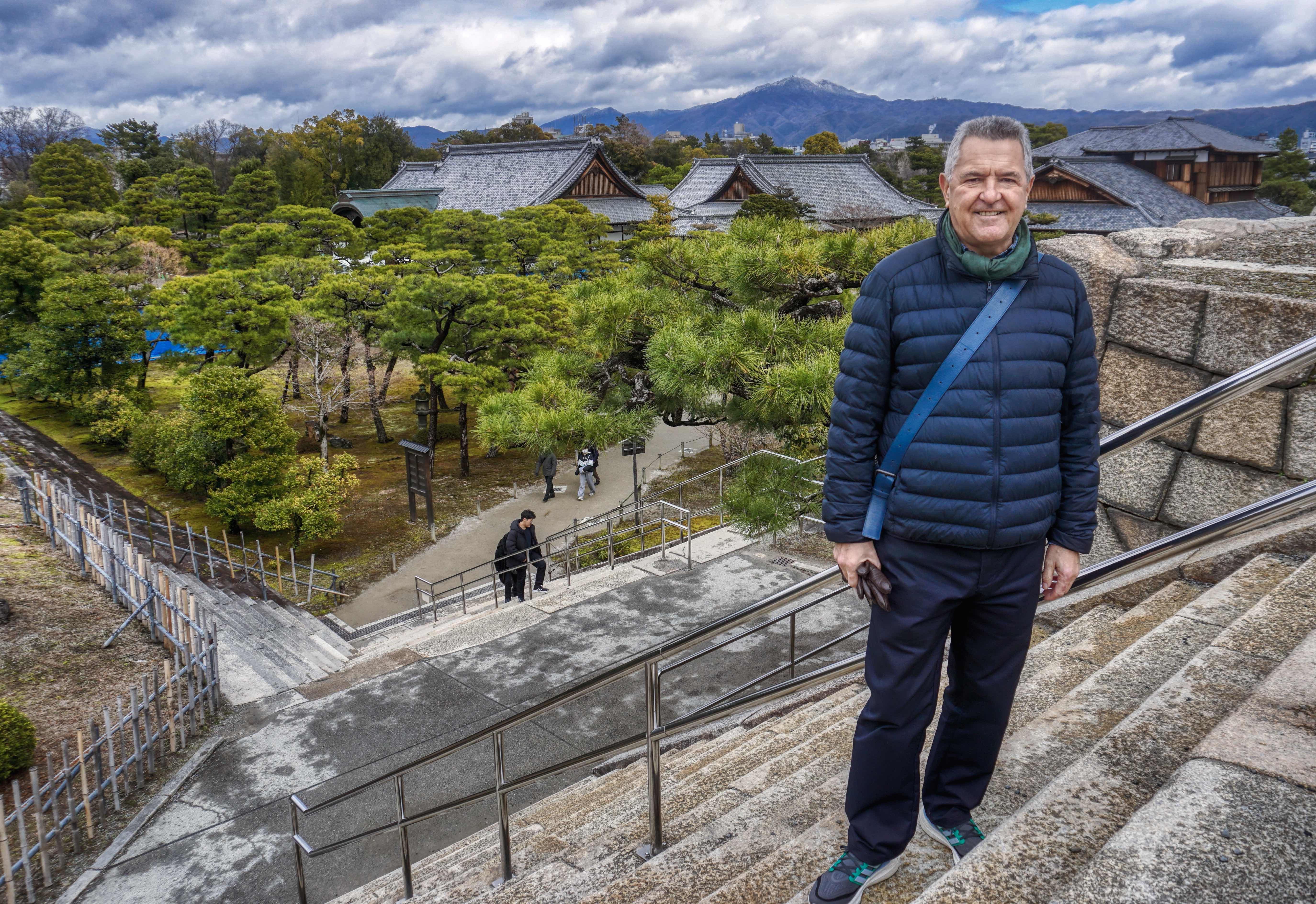
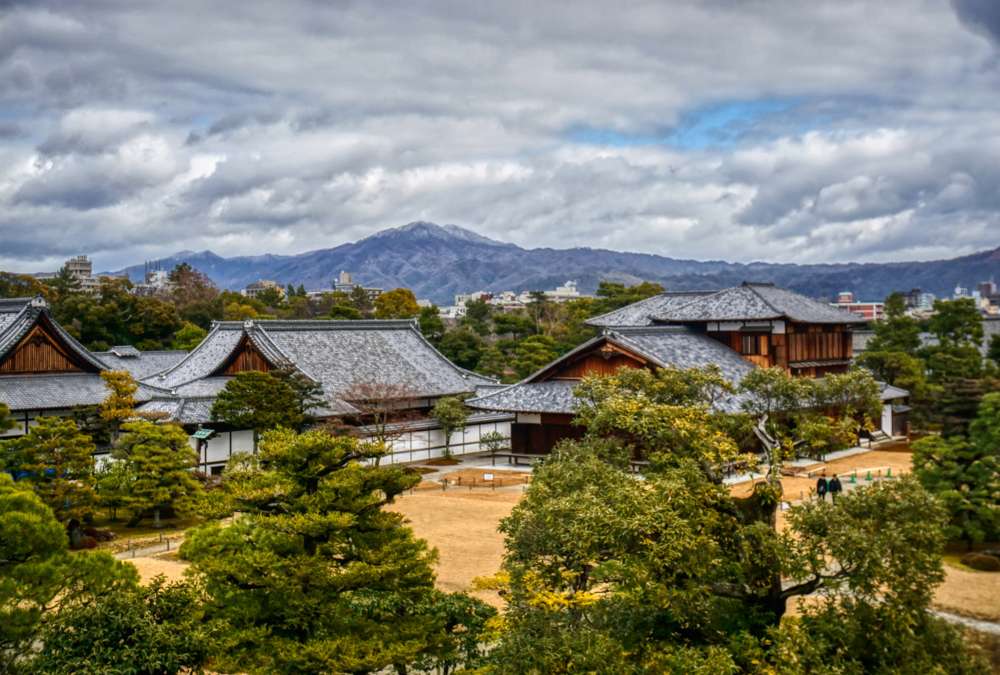
A short subway ride away from the Imperial Palace lies the Niji-jo Castle, home of the Tokugawa Shoguns from 1603 until the Meiji restoration in 1869 and the best surviving example of Japanese feudal era architecture, designated a UNESCO world heritage site in 1994. It’s an impressive moated fortress, dominated by the Ninomaru Palace, the official residence of the Shogun during his visits to Kyoto, built between 1624 and 1626. You can enter this wooden palace, first removing your shoes at the entrance and entering a series of wide corridors with so called ‘nightingale floors’ – they squeak when stepped on, sounding for all the world like bird song. It’s quite the sound, especially with crowds on the day we visited. The sound is caused by clamps moving against nails driven into wooden beams supporting the floor and is said, mistakenly, that this was intended to announce the presence of intruders. You’re not allowed to take photographs or videos of the inside, but I’ve sneaked a little grab (link attached) so you can hear the squeaking floors.
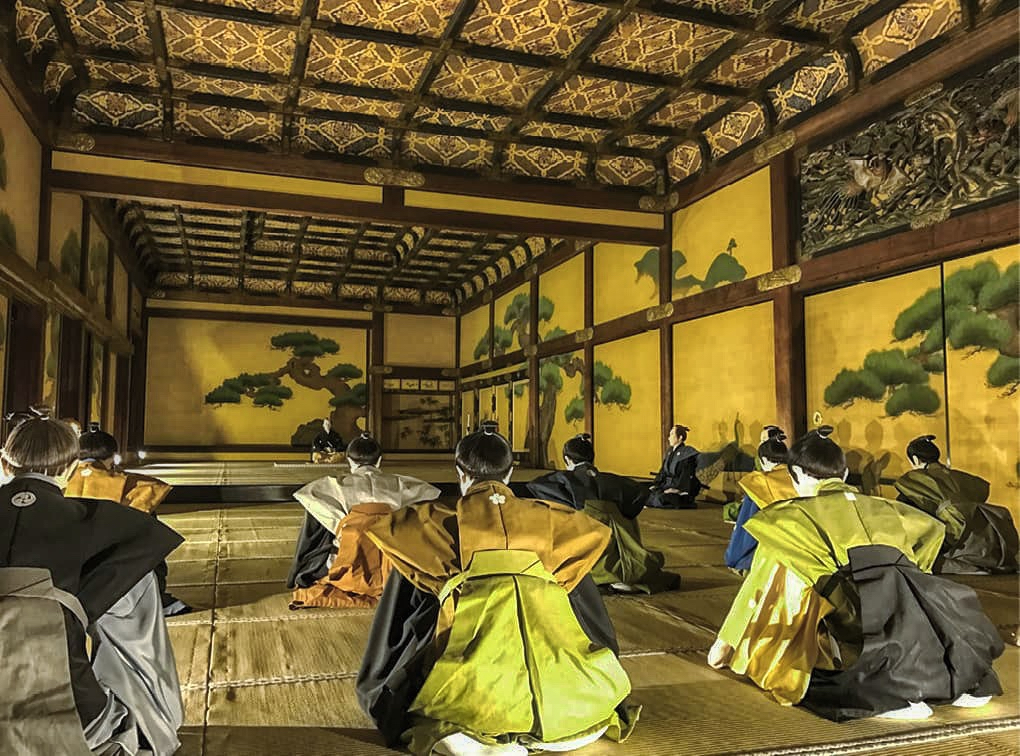
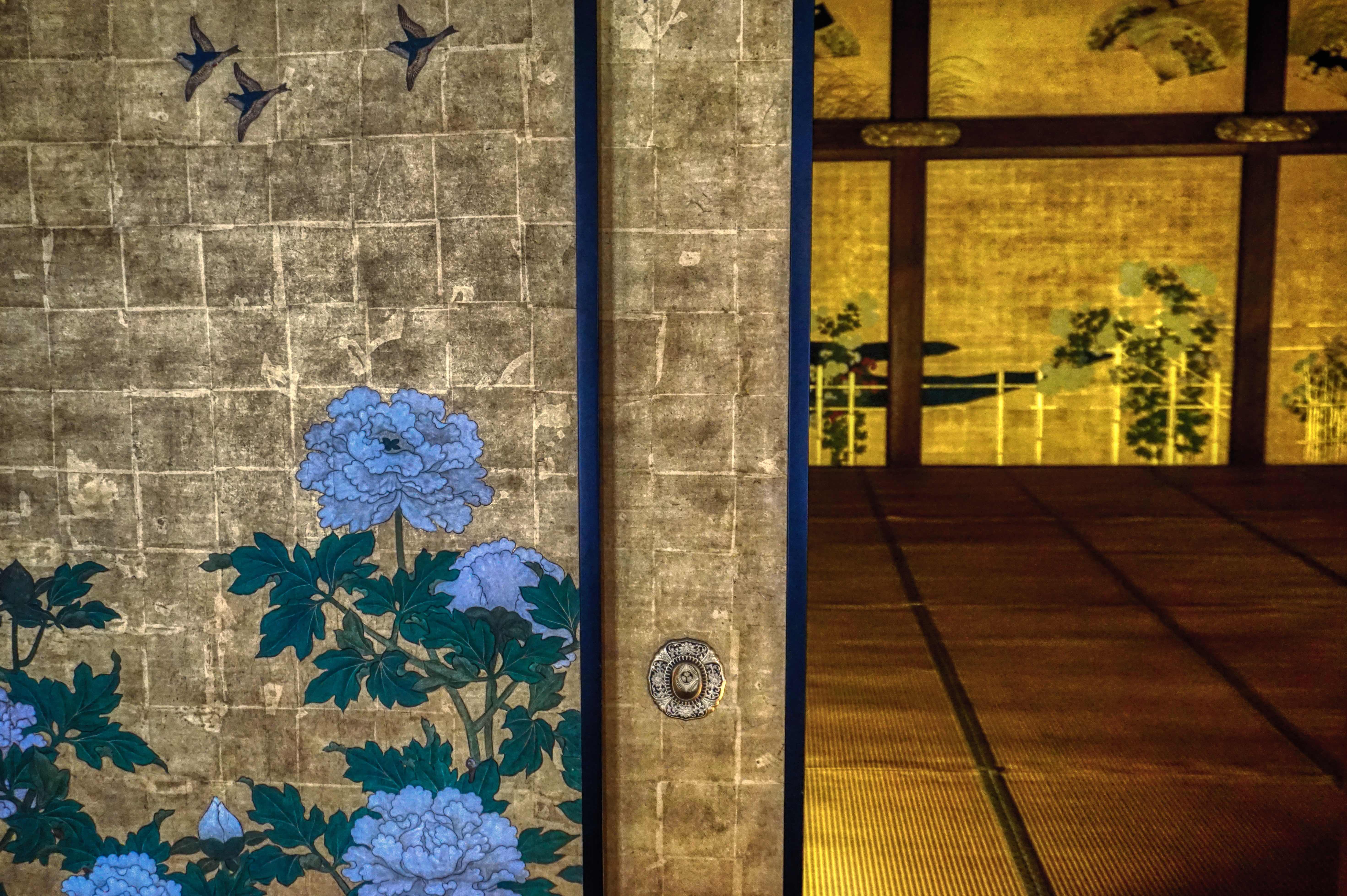
The palace rooms are covered in tatami mats with exquisite painted ceilings and sliding doors – creating rooms within rooms. The corridor walls act as lanterns, letting the light and sound of tinkling water in but obscuring views from the outside. Lower ranked visitors to the palace would only be allowed as far as the adjoining rooms without any direct view of the Shogun, whilst the innermost rooms of offices, living and private chambers were only accessible by the Shogun, his bodyguards and his female attendants. There are some wonderful recreations of the Shogun and his court – lifesize kneeling models glimpsed through slightly parted screens, giving snapshots of deference to the Shogun and his rarefied feudal life.
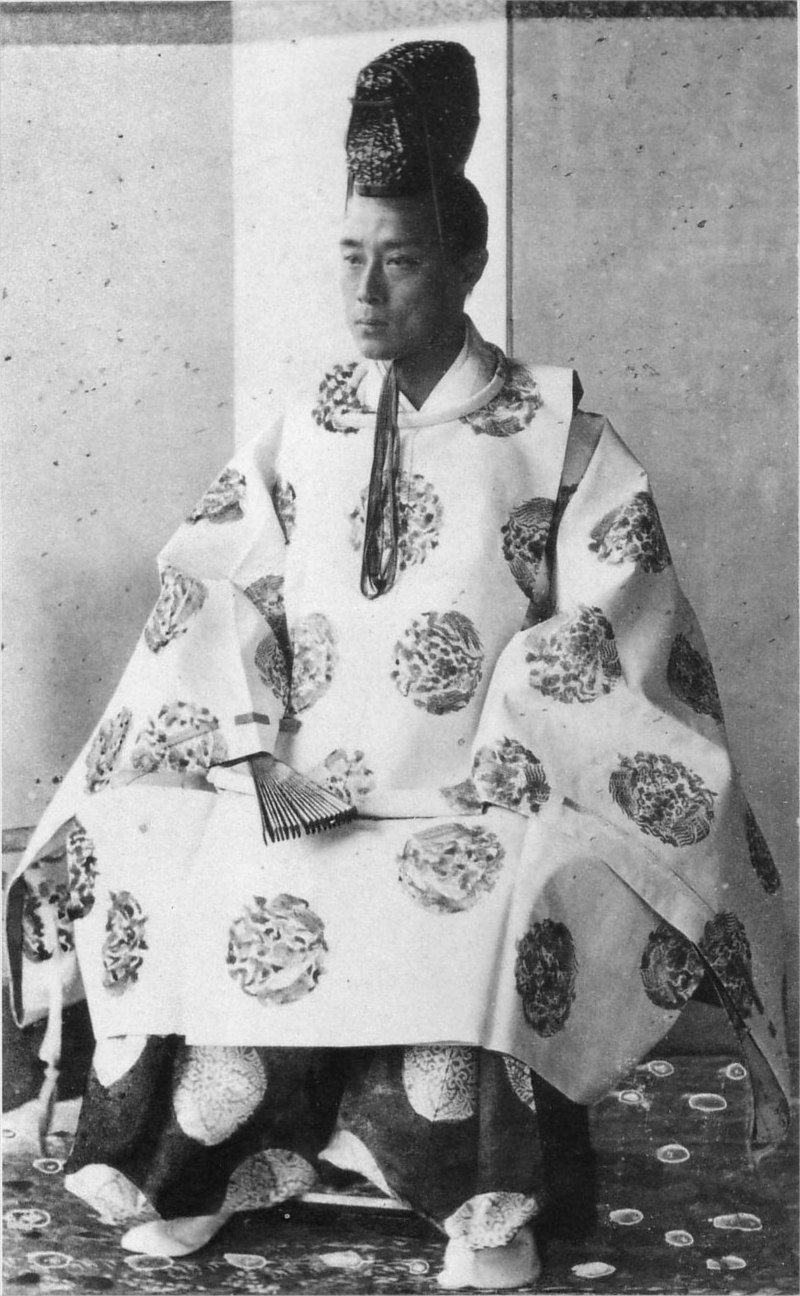
There were a series of three major Shogunates, Kamakura, Ashikaga and Tokugawa, which led Japan through most of its history (though the Imperial line continued uninterrupted) from 1192 until the Meiji restoration in 1869. The Tokugawa family still exists to this day, with the writer Iehiro Tokugawa, 59, named 19th head of the household, making him the great-great-grandson of the last Tokugawa Shogun, the first new holder of the title in some 60 years. Most of his family’s wealth was lost following the Meiji restoration with many treasures destroyed in the Second World War.
The current Emperor, His Imperial Majesty Naruhito (Tennō Heika) acceded to the Chrysanthemum Throne on 1st May 2019, beginning the Reiwa era.
He is the 126th Emperor according to Japan’s traditional order of succession.
Apologies for the ropey quality of this video as it was shot under surveillance…
 Travels With My Ant
It really is exceptionally beautiful. 😍
LikeLike